OPTIWAVE 3500 80 GHz hygienic radar level transmitter and how it is configured
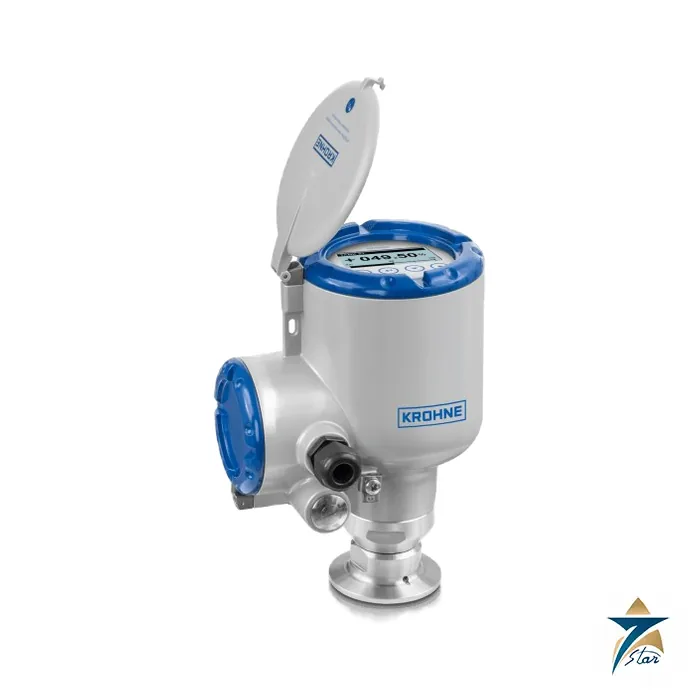
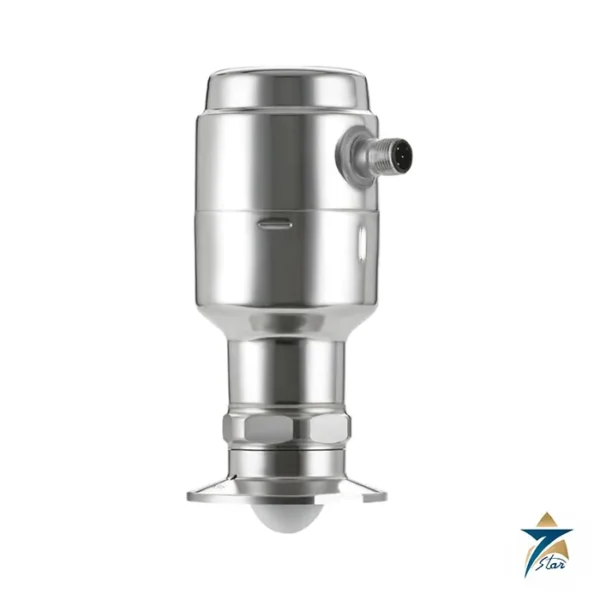
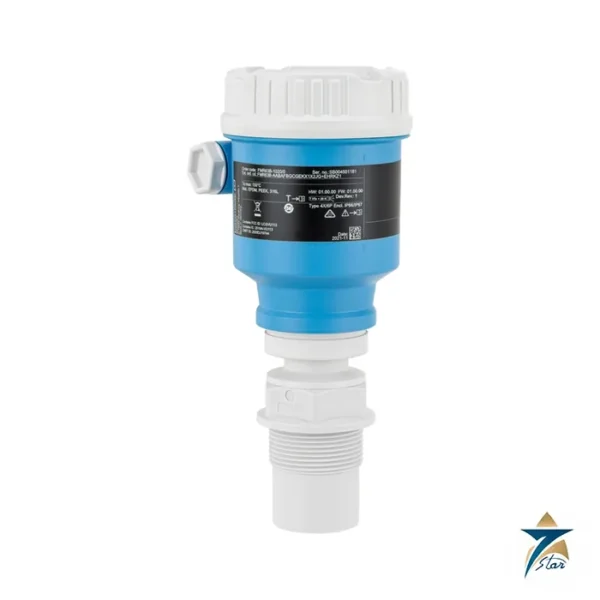
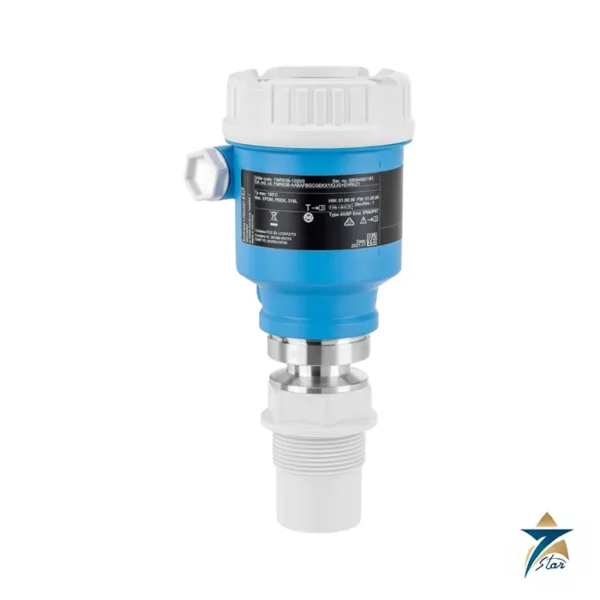
The KROHNE OPTIWAVE 3500 is a two-wire, loop-powered radar level transmitter for liquids, pastes and slurries in hygienic tanks. It operates in the 80 GHz band (78 to 82 GHz) using FMCW radar, with a flush-mounted PEEK lens antenna that does not protrude into the vessel. The tight beam and short dead zone allow it to read accurately in small, narrow tanks and agitated vessels where lower-frequency radars struggle with agitator blades, baffles and nozzle reflections. It is aimed at the food, beverage and pharmaceutical industries, and also suits process-water, chemical-dosing and utility tanks where a clean, crevice-free sensor face is an advantage.
Configuration is mainly a matter of choosing the antenna size and the process connection. The DN25 (1 in) lens antenna has a 10 degree beam angle and a 25 m measuring range, while the DN40 (1.5 in) lens has an 8 degree beam and reaches 50 m. The sanitary connections available include Tri-Clamp, DIN 11851, DIN 11864-1, SMS, VARIVENT Type N and BioControl, and the housing can be polyester-coated aluminium or, for non-Ex devices, stainless steel.
Technical specifications of the OPTIWAVE 3500
| Parameter |
Specification |
| Manufacturer / part number |
KROHNE / OPTIWAVE 3500 (C compact two-wire radar) |
| Measuring principle |
FMCW radar, W-band 78 to 82 GHz, two-wire loop powered |
| Measuring range |
DN25 lens: 25 m; DN40 lens: 50 m; minimum tank height 0.2 m |
| Beam angle |
DN25 lens 10 degrees; DN40 lens 8 degrees |
| Accuracy and repeatability |
±2 mm up to 10 m, ±0.02% of distance above 10 m; repeatability ±1 mm; resolution 1 mm |
| Process temperature |
-40 to +150 °C (higher on request, subject to gasket limits) |
| Process pressure |
-1 to 25 barg; DN25 lens with DN50 VARIVENT Type N: -1 to 10 barg |
| Wetted materials |
PEEK Victrex 450G and 316L stainless steel; surface roughness Ra below 0.8 µm |
| Output |
4-20 mA with HART 7.4; NAMUR NE 43 options; 12 to 30 V DC supply (Ex d 16 to 36 V DC) |
| Dielectric constant |
Direct mode 1.4 or higher; tank-bottom-following mode 1.1 or higher |
| Protection |
IP66/IP68, NEMA 6/6P; ambient -40 to +80 °C |
| Hygiene conformity |
Listed against EC 1935/2004, EC 2023/2006, EU 10/2011 and FDA 21 CFR 177.2600 and 177.2415 |
Data above is taken from the handbook for the compact transmitter; hazardous-area approvals (ATEX, IECEx and others) are listed there per variant, so state the approval you need in the order.
How the OPTIWAVE 3500 works and where tank bottom management helps
An FMCW radar transmits a signal whose frequency rises linearly during each sweep. The echo returns with a delay proportional to distance, and the difference between the transmitted and received frequency is converted by a Fast Fourier Transform into a spectrum from which the distance to the product surface is read. Level is the tank height minus that distance. At 80 GHz the beam is narrow enough to avoid many internal structures.
The transmitter offers three measurement modes. Direct mode works for liquids with a dielectric constant of 1.4 or above. TBF Auto handles lower values between 1.4 and 1.5 over long distances by choosing between direct and bottom-following mode. Full TBF uses the reflection from the tank bottom through the liquid for very low values, and is limited to flat-bottomed tanks or stilling wells with a reference plate. Tank bottom management algorithms and an empty-tank spectrum function filter out false echoes from internals, which makes commissioning faster, especially in small tanks.
Where the OPTIWAVE 3500 fits and related radar transmitters
Use the 3500 when the tank needs a sanitary, flush process connection and an unobstructed sensor face, for example for CIP and SIP cycles in food and pharmaceutical plants. For general process liquids and heavier duty, our site lists the KROHNE OPTIWAVE 5400 (24 GHz), OPTIWAVE 7500 (80 GHz for narrow tanks with obstructions) and OPTIWAVE 1540 (80 GHz in PVDF for corrosive tanks). The OPTIWAVE 3500 is the 80 GHz option when hygiene rules decide the choice. Guided radar alternatives such as the OPTIFLEX 7200 and OPTIFLEX 8200 suit conditions where a contact probe is acceptable.
Selection and ordering checklist for the OPTIWAVE 3500
- Product, temperature, pressure, and whether the tank is cleaned with CIP or sterilised with SIP.
- Tank height and diameter, nozzle size and any agitator or internal structures.
- Antenna: DN25 lens for narrow tanks and short ranges, or DN40 lens for longer ranges and a narrower beam.
- Hygienic connection standard and size, for example clamp, DIN 11851, VARIVENT or BioControl.
- Dielectric constant of the product, important for low-reflecting liquids.
- Housing material, weather protection, display and cable gland type.
- Hazardous-area approval and HART or monitoring requirements.
Installation, commissioning and maintenance
Keep the process connection clear of obstructions directly below the sensor, and follow the handbook for nozzle position relative to inlets and agitators. The recommended minimum blocking distance is 0.1 m for the DN25 lens and 0.2 m for the DN40 lens. Fit the weather protection for outdoor use. The backlit display and four-button keypad can be operated with a bar magnet through the cover, so the housing need not be opened in a clean area.
At commissioning, enter tank height, product dielectric constant and, if the vessel is empty, record the empty-tank spectrum so that tank internals are filtered. PACTware, HART DD and DTM files are provided at no charge. The transmitter has no wear parts; periodic checks should cover the lens for deposits or damage and the gasket where specified, and the device status follows the NAMUR NE 107 scheme.
Typical applications in Oman and the GCC
In the Gulf, hygienic radar applies to dairy and juice plants, bottled-water and beverage facilities, pharmaceutical production and food processing. It is also useful in desalination post-treatment and potable-water dosing tanks and in small chemical day tanks where agitators and narrow nozzles disturb other technologies. With strong sunlight and high ambient temperature, a weather cover keeps the display readable, while the IP66/IP68 sealing copes with washdown and dusty conditions.
Antenna options
| Antenna |
Beam angle |
Measuring range |
Connections |
| DN25 (1 in) PEEK lens |
10 degrees |
25 m |
Tri-Clamp 1.5 and 2 in, DIN 11851, DIN 11864-1, SMS 51, VARIVENT N |
| DN40 (1.5 in) PEEK lens |
8 degrees |
50 m |
BioControl DN50, Tri-Clamp 2 in |
Information to send with an RFQ for the OPTIWAVE 3500
- Product, density and dielectric constant, with temperature and pressure range.
- Tank dimensions, nozzle size and any internals or agitator.
- Antenna size and hygienic connection standard.
- Housing material, display, cable entry and weather protection.
- Hazardous-area approval and quantity.
Documents and quotation
The KROHNE OPTIWAVE 3500 C handbook is attached on this page. Send the details above and we will confirm availability and prepare a quotation for the OPTIWAVE 3500 in Oman and the GCC. Seven Star LLC is an independent supplier in Muscat.




















Reviews
There are no reviews yet.