Rosemount 1195 integral orifice primary element for small lines
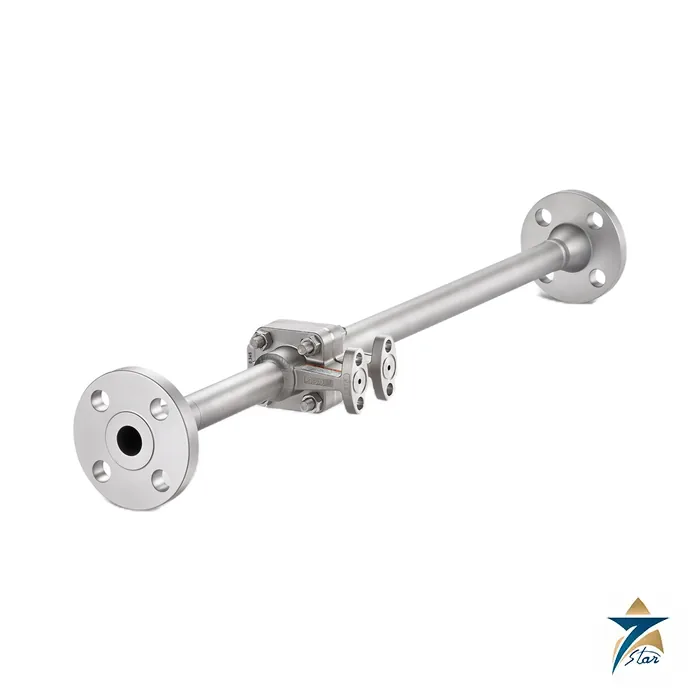
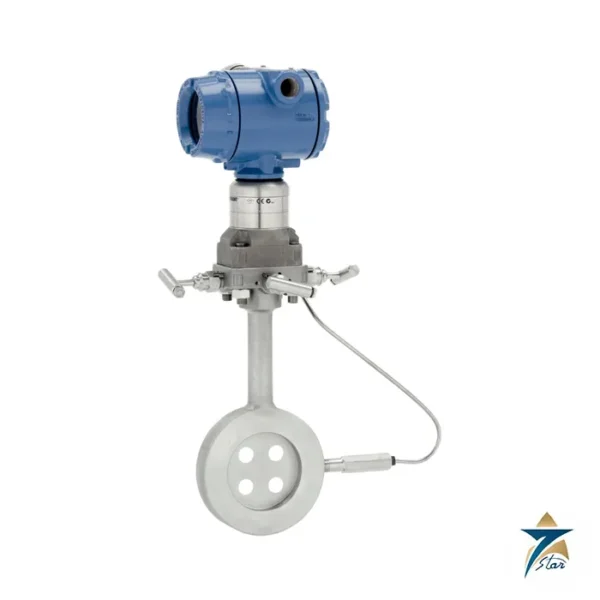
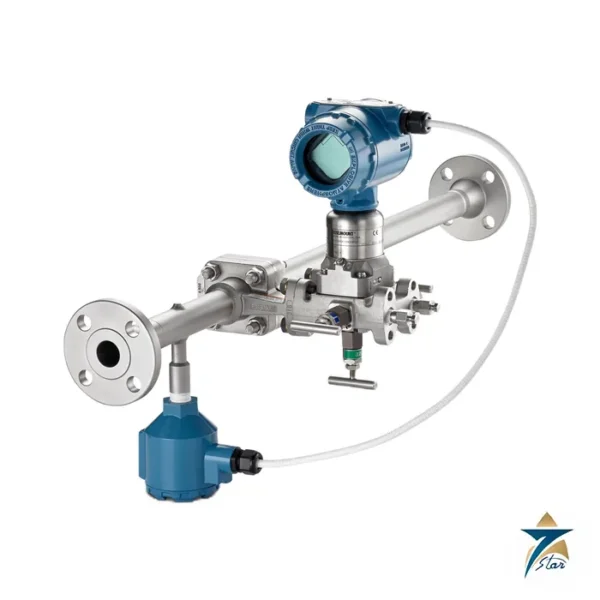
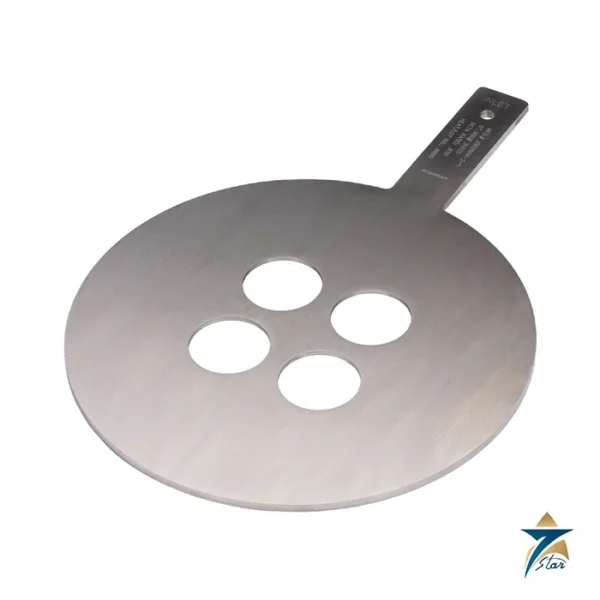
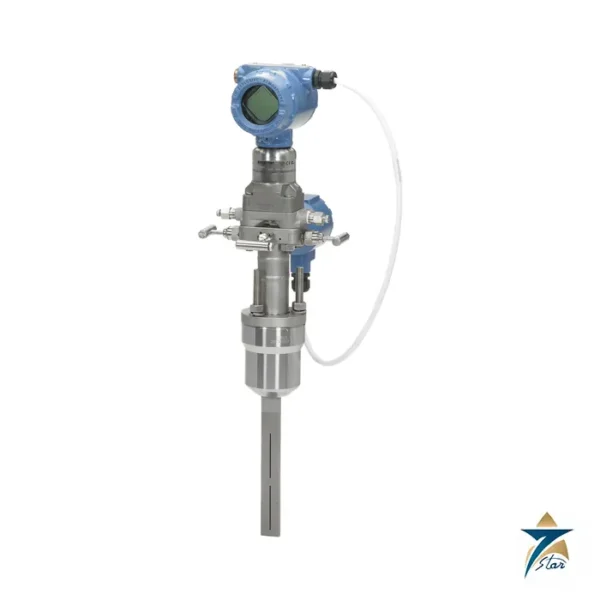
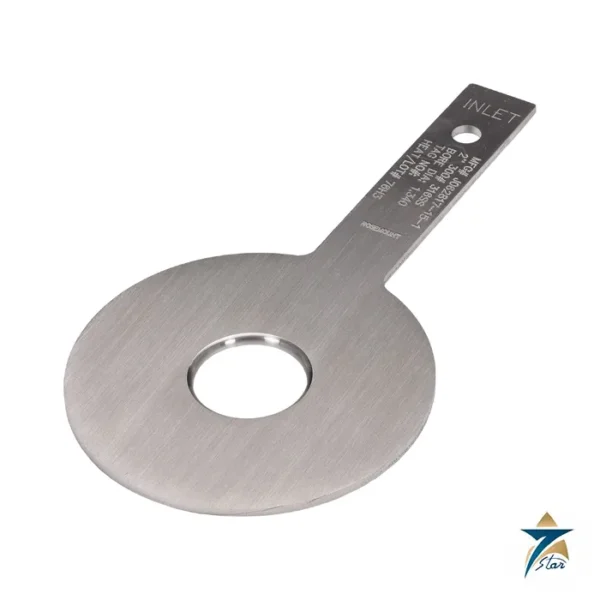
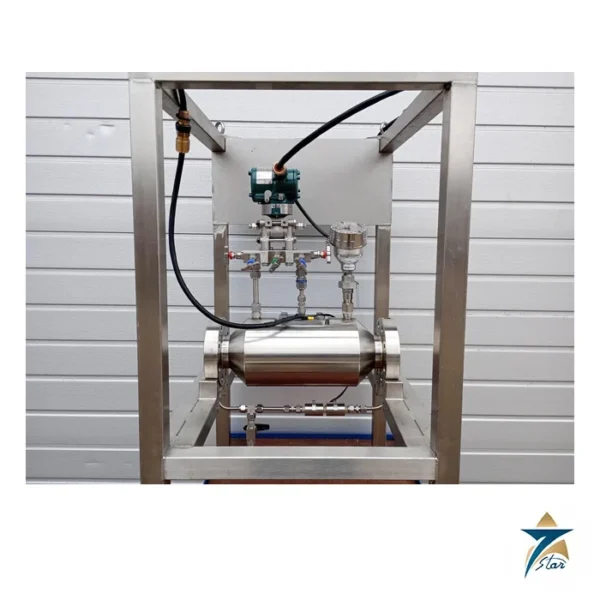
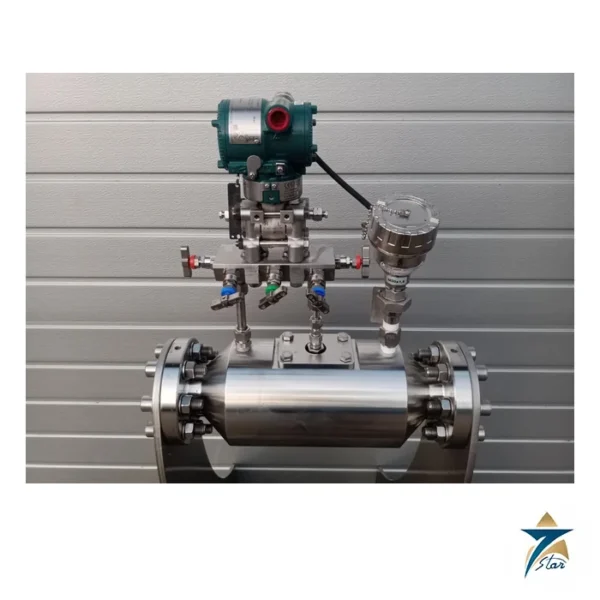
The Rosemount 1195 is an integral orifice primary flow element for 1/2, 1 and 1-1/2 in. (15, 25 and 40 mm) lines. It is a short meter run with a self-centering orifice plate and corner-tapped pressure ports, so the plate cannot be installed off-centre, which is the main source of error in small pipe. The 1195 mounts directly on a Rosemount differential pressure transmitter, and it can be ordered pre-assembled with a transmitter and manifold as a complete flow assembly.
Seven Star LLC supplies Rosemount instruments in Oman and the GCC as an independent supplier in Muscat. The 1195 is a primary element only, so the steps below separate what belongs to the element from what depends on the transmitter you pair it with.
Rosemount 1195 ordering code explained
The 1195 code is built from a short list of required positions followed by options. Each position is taken from the manufacturer ordering table.
| Position / code |
Meaning |
| 1195 |
Integral orifice primary flow element (model) |
| F |
Body material and type: 316 SST, enhanced support body |
| 005 / 010 / 015 |
Line size: 1/2 in., 1 in. or 1-1/2 in. |
| T1, S1, P1, P2 |
NPT female, socket weld, NPT threaded pipe ends, beveled pipe ends |
| D1 / D2 / D3 |
Flanged pipe ends, slip-on, EN 1092-1 PN16 / PN40 / PN100 |
| W1 / W3 / W6 / W9 |
Flanged pipe ends, weld-neck, ASME B16.5 Class 150 / 300 / 600 / 900 |
| A1 / A3 / A6 |
Flanged slip-on ASME Class 150 / 300 / 600; R1, R3, R6, R9 for RTJ faces |
| S / H / M |
Orifice plate: 316/316L SST, Alloy C-276, Alloy 400 |
| Four-digit bore |
Bore size in thousandths of an inch, for example 0150 for a 0.150 in. bore |
| C / G |
Transmitter and body bolts: 316 SST, or high temperature 850 °F option |
Rosemount 1195 technical specifications
| Parameter |
Specification |
| Manufacturer / part number |
Rosemount 1195 Integral Orifice Primary Element |
| Line sizes |
1/2 in. (15 mm), 1 in. (25 mm), 1-1/2 in. (40 mm) |
| Service |
Liquid, gas, steam |
| Orifice type |
Square edge for bores 0.066 in. and larger; quadrant edge for 1/2 in. line bores of 0.034, 0.020, 0.014, 0.010 in. |
| Body and flange |
A312 Gr 316/316L body; A182 Gr 316/316L flange; flange limits per ASME B16.5 |
| Plate material |
316/316L SST, Alloy C-276, Alloy 400 |
| Transmitter connection |
2-1/8 in. (54 mm) centres; remote adapters and DIN 19213 optional |
| Discharge coefficient uncertainty |
±2.50 % (bore < 0.160), ±1.50 % (0.160 to < 0.500), ±1.00 % (0.500 to 1.000), ±1.50 % (> 1.000) |
| Process temperature, direct mount |
–40 to 550 °F (–40 to 288 °C) |
| Process temperature, remote mount |
–40 to 572 °F (–40 to 300 °C) with PTFE O-rings |
| Extended temperature |
–112 to 850 °F (–80 to 454 °C), remote mount only, option G |
| Gaskets and O-rings |
Glass-filled PTFE; Alloy X-750 with the high-temperature option |
| Weight, 1/2 in. |
5.0 lb (2.3 kg) element only; 9.0 lb (4.1 kg) with flanged piping |
| Weight, 1 in. |
7.0 lb (3.2 kg) element only; 13.0 lb (5.9 kg) with flanged piping |
Without associated straight run piping, the manufacturer states the discharge coefficient uncertainty can add 1.5 to 5 percent of extra error, so upstream and downstream piping sections are available as part of the 1195 order.
Maximum working pressure of the Rosemount 1195 by connection
Working pressure depends on the end connection, not on the plate. The table gives the maximum working pressure and the hydro test pressure for the 1 in. line in psig; the 1/2 in. and 1-1/2 in. lines follow the same flange classes.
| Connection |
Max working pressure, psig |
Hydro pressure, psig |
| Threaded fitting (T1 / P1) |
2160 |
3240 |
| Welded fitting (S1 / P2) |
2160 |
3240 |
| Class 150 flanged |
275 |
413 |
| Class 300 flanged |
720 |
1080 |
| Class 600 flanged |
1440 |
2160 |
| Class 900 flanged |
2160 |
3240 |
| DIN PN16 / PN40 / PN100 |
232 / 580 / 1450 |
348 / 870 / 2175 |
For 1/2 in. welded fittings the table shows 3000 psig working pressure, and the 1-1/2 in. P1 threaded pipe ends are rated 1500 psig. Always read the line you need from the data sheet.
How the 1195 works with a differential pressure transmitter
The plate creates a pressure drop that rises with the square of flow. The corner taps feed that pressure difference to the transmitter, and the flow equation uses the plate bore, the fluid density and the discharge coefficient. A bore calculation sheet (option BC) is available, and a discharge coefficient verification (option WD) can be ordered, except for the smallest bores of 0.010, 0.014, 0.020, 0.034, 0.066 and 0.109 in.
A thermowell and RTD can be built into the body in SST or aluminum housing versions, but not on the threaded or socket-weld bodies. Factory assembly option S4 attaches a transmitter and manifold and is not offered with the socket weld body.
Selecting a Rosemount 1195: checklist
- Line size, pipe schedule and the end connection style that suits the line.
- Fluid, flow range, pressure and temperature so the bore can be sized.
- Plate material and body bolting, including the high-temperature option.
- Whether the transmitter is ordered with it (S4) or supplied separately; which transmitter and manifold.
- RTD thermowell, remote adapters, DIN 19213 connection, or associated straight pipe sections.
- Documentation: hydrotest, dye penetrant, radiography for weld-neck bodies, PMI, 3.1 traceability, NACE, ASME B31.1 or B31.3.
Installing and maintaining the 1195
The element is installed as a short spool in the line, with the transmitter mounted on its manifold. Gaskets and O-rings must be replaced each time the 1195 is disassembled for installation or maintenance. The flange pressure ratings follow ASME B16.5, and body studs of ASTM A193 Gr B8M are provided with the high-temperature option and with some high-pressure 1-1/2 in. connections.
For remote mounting, the optional 1/2–14 NPT adapters let you use your own impulse piping. Keep impulse lines short, sloped and free of trapped gas or liquid for the service. In shutdown, check manifold valves, bolting torque and the condition of the plate bore if the fluid is erosive.
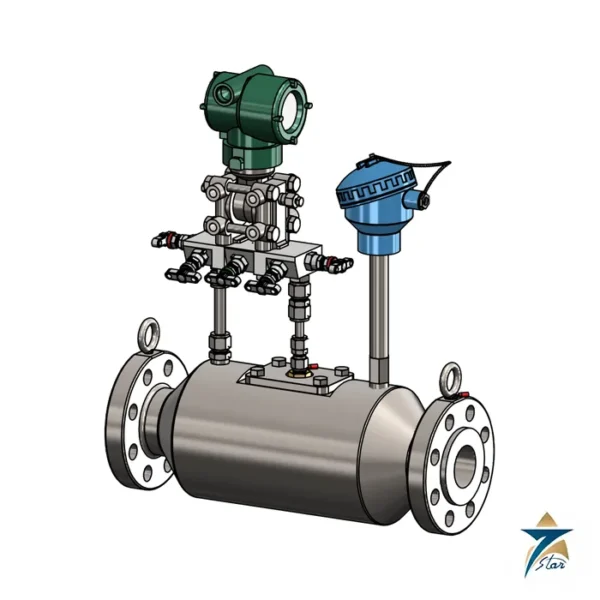
The 3051SFP is the complete flow meter that integrates the 1195 element with a 3051S transmitter. The Rosemount 3051CFP and 2051CFP flow meters are also built on this element family. For larger lines see the 3051SFC compact orifice and the 3051SFA Annubar. The 1195 suits plants that want to keep an existing transmitter or choose a different transmitter family.
1195 applications in Oman and the GCC
The 1195 suits small lines in refineries, gas plants, power stations and desalination: chemical injection, seal-oil and lube lines, fuel gas to burners, and auxiliary steam. Stainless steel body and plate resist the humid, salt-laden air on coastal sites. Where a plate is exposed to erosive fluids or sand carry-over, choose the plate material and bore with the sizing report.
Information to send with a 1195 RFQ
- Fluid, flow range, operating and design pressure and temperature.
- Line size, schedule and end connection with class and face.
- Plate material, bore size, bolting and any thermowell requirement.
- Whether a transmitter and manifold are to be factory assembled, and their model.
- Test and material certificates, quantity and delivery site.
Documents and quotation
The manufacturer product data sheet for the Rosemount DP flow meters and primary elements is attached on this page. It contains the 1195 ordering tables, pressure ratings, bore list and weights.
To request a quotation, send the order code or the process data. Seven Star LLC will check the configuration and respond with availability for Oman and the GCC.
Other Models in the Rosemount 3051sf Dp Flow Range
Seven Star LLC supplies models from the Rosemount 3051sf Dp Flow range in Oman and the GCC. Compare the related models below and request a quote for the one that matches your application.



















Reviews
There are no reviews yet.