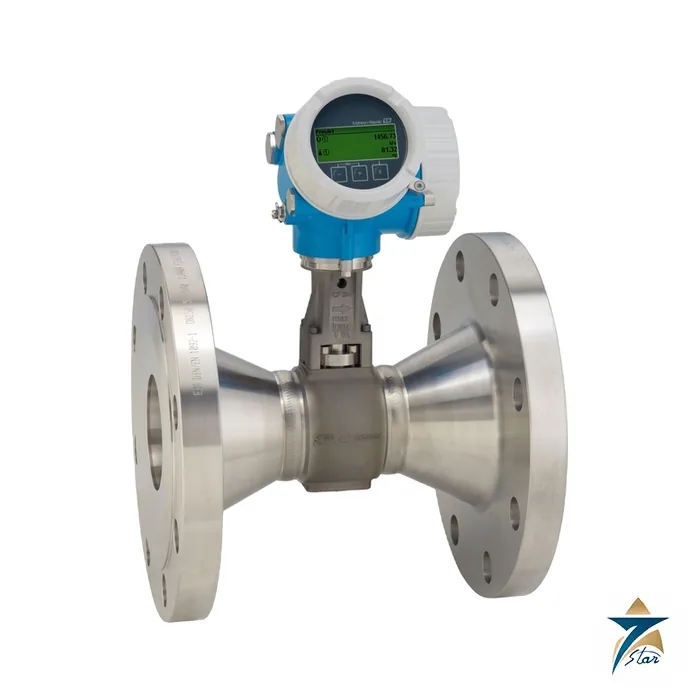
Endress+Hauser Prowirl R 200 vortex flowmeter with built-in line size reduction
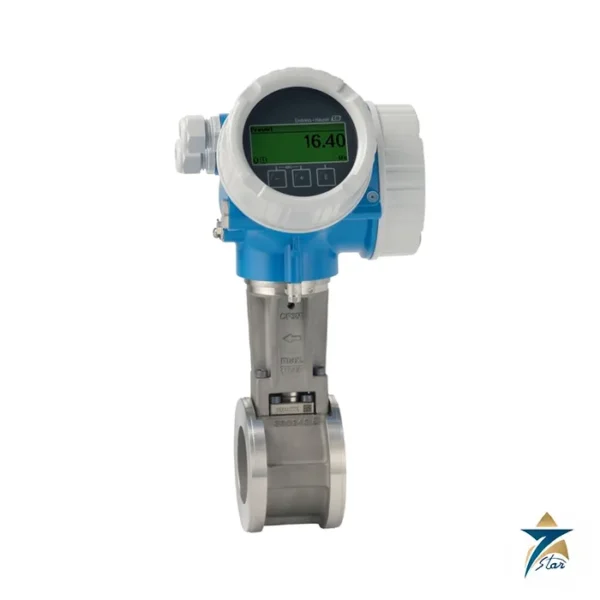
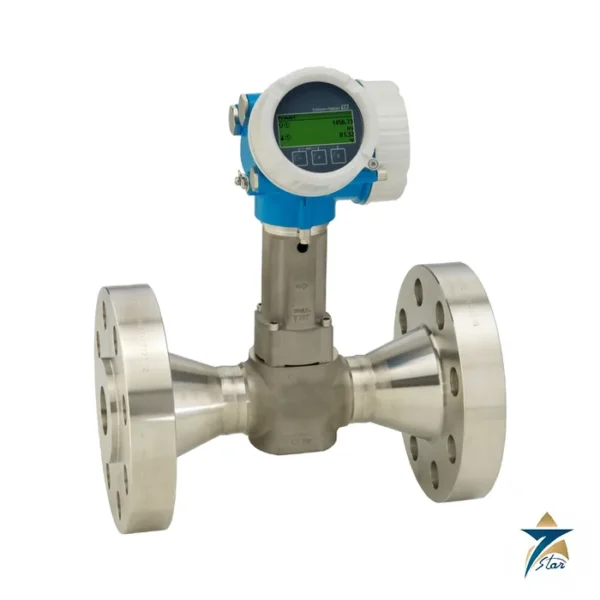
The Endress+Hauser Prowirl R 200 is a flanged vortex flowmeter whose measuring section already contains a reduction of the inner diameter. Instead of fitting a reducer, a straight run and an expander around a standard meter, the Prowirl R 200 is bolted between the existing pipe flanges and speeds the fluid up inside the meter body. The result is a stable vortex signal at low flow rates in steam, gas and liquid lines. Seven Star LLC supplies Endress+Hauser instrumentation in Oman and the GCC as an independent supplier in Muscat, and this page explains how the Prowirl R 200 is configured so that you can prepare a precise enquiry.
Prowirl R 200 is a family name, not a single order code; the exact device is defined by the Endress+Hauser order code covering sensor version, line size, flange, output, housing and approvals.
Decoding the Prowirl R 200 type designation
Two body types exist. The R-type has a reduction of one line size, and the S-type has a reduction of two line sizes. The letter after the nominal diameter tells you which one you are looking at.
| Body type |
Reduction |
Nominal diameter range (mating pipe) |
Example from the datasheet |
| R-type |
One line size |
DN 25R to 200R (1R to 8R”) |
DN 80 (3″) pipe, measuring bore of DN 50 (2″) |
| S-type |
Two line sizes |
DN 40S to 250S (1½S to 10S”) |
DN 80 (3″) pipe, measuring bore of DN 40 (1½”) |
The sensor version order code selects the sensor element, the measuring tube material and the measured variables. Options AA and AB are volume versions, BA and BB are high-temperature volume versions, CA and CB add integrated temperature measurement for mass flow, and DA and DB (mass steam, mass gas/liquid) add a pressure cell as well. The second letter changes the DSC sensor material from 316L (A) to Alloy C22 (B) on the options that offer it.
Prowirl R 200 technical specifications
| Parameter |
Specification |
| Manufacturer / part number |
Endress+Hauser / Prowirl R 200 (product root 7R2C) |
| Measuring principle |
Vortex (Karman vortex street), capacitive DSC sensor, no moving parts |
| Nominal diameter |
R-type DN 25R to 200R; S-type DN 40S to 250S (up to DN 250 / 10″ mating pipe) |
| Measured variables |
Volume flow, mass flow, corrected volume flow, energy flow, heat flow difference, temperature (pressure with options DA/DB) |
| Measuring range (typical) |
Liquid 0.2 to 540 m³/h; steam and gas 1.5 to 7260 m³/h, depending on medium and line size |
| Max. measurement error |
Volume flow liquid ±0.75 %; volume flow steam and gas ±1.00 %; mass flow of saturated steam ±1.7 % (temperature compensated) or ±1.5 % (temperature and pressure compensated) |
| Medium temperature |
Standard sensor –40 to +260 °C; high/low-temperature sensor –200 to +400 °C (options BA, BB, CA, CB) |
| Max. process pressure |
PN 40, Class 300, 20K flange ratings |
| Wetted materials |
Measuring tube 1.4408 (CF3M); DSC sensor and process connection 1.4404 / F316 / F316L |
| Housing |
Dual-compartment, aluminium (AlSi10Mg, coated) or stainless steel CF3M; compact or remote |
| Ambient temperature (compact, non-hazardous) |
–40 to +80 °C; hazardous-area versions have lower upper limits, for example +60 °C for Ex d |
| Degree of protection |
IP66/67, Type 4X enclosure |
| Outputs / communication |
4–20 mA HART, pulse/frequency/switch, second 4–20 mA, FOUNDATION Fieldbus, PROFIBUS PA, PROFINET and Modbus TCP over Ethernet-APL |
| Functional safety |
Flow monitoring up to SIL 2 single channel (additional approval option LA), SIL 3 with homogeneous redundancy |
How the vortex principle works in the Prowirl R 200
A bluff body in the flow creates vortices that detach alternately on both sides. Each vortex produces a small local pressure drop, and the capacitive DSC sensor turns those pressure fluctuations into electrical pulses. Because the shedding frequency is proportional to volume flow, the primary signal is linear. The calibration factor, or K-factor, is set at the factory and, for Reynolds numbers above 10,000, does not depend on flow velocity, viscosity, density or the type of medium. The datasheet states that the K-factor does not drift over time and that the device needs no maintenance because it has no moving parts.
The DSC sensor is burst-tested and tested against vibration and thermal shock of 150 K/s, which is relevant on steam lines where condensate can hit a hot sensor. On the mass options, Pt 1000 temperature elements sit in the sensor paddle, and on options DA and DB a pressure cell on the meter body at the level of the bluff body allows density and energy compensation from pressure and temperature measured at the same point. Cell ranges of 2, 4, 10 and 40 bar absolute are listed.
Where the meter fits and related Endress+Hauser parts
The Prowirl R 200 belongs to the Proline 200 generation of vortex meters. It is aimed at the case where the pipe was sized for pressure drop or future capacity and the actual flow is small. If the line size already suits the flow, a standard Prowirl 200 without reduction is the simpler choice, and for the largest line sizes the same family continues with Prowirl O 200 type bodies. Where mass flow of gas is the key value and the process is clean and dry, the t-mass thermal meters such as the t-mass A 150, t-mass F 300 and t-mass F 500 are an alternative principle rather than a replacement, because they measure mass flow directly without density correction.
In a plant the meter normally feeds a PLC or DCS through the 4–20 mA HART loop, or a fieldbus, and a flow computer or energy manager can take the pulse output for billing-grade totalising. The pressure and temperature inputs of the mass options reduce the need for separate transmitters on steam headers.
Selection checklist
- Medium and phase: wet, saturated or superheated steam, gas or liquid, including cryogenic liquids with the low-temperature sensor.
- Existing pipe size and flange standard (EN, ASME or JIS 20K) and pressure class.
- Minimum, normal and maximum flow in actual or mass units, with operating pressure and temperature. This decides between R-type and S-type.
- Whether volume, temperature-compensated mass, or pressure and temperature-compensated mass is needed (sensor version AA to DB).
- Medium temperature above 260 °C or below –40 °C, which calls for the high/low-temperature sensor.
- Compact or remote transmitter, housing material, cable length for remote versions, and output or fieldbus.
- Hazardous-area approval, SIL requirement, Heartbeat Verification, extended HistoROM and any oil- or grease-free cleaning requirement (not possible with DA and DB).
Installation, commissioning and maintenance
Vortex meters need a developed flow profile. The datasheet lists inlet runs from 15 × DN up to 50 × DN depending on the upstream disturbance, and an outlet run of 5 × DN. When a conventional reducer is used instead of the integrated reduction, the datasheet calls for at least 15 × DN of straight inlet and 5 × DN of outlet. Liquids need the line to stay full, and on steam the meter should be mounted so that condensate cannot collect around the sensor. Remember that the pressure measured by the integrated cell can read slightly below line pressure, and the device applies a correction for it.
Commissioning is guided through the four-line display, which has touch control and background lighting, so the housing does not need to be opened. A display module can store and transfer the configuration to a replacement device. In service there is nothing to wear out inside the flow path, so typical work is checking the loop, verifying with Heartbeat Technology if ordered, and keeping a spare transmitter or display module on the shelf. Keep the nameplate order code with every enquiry, because spare electronics must match the original build.
Typical applications in Oman and the GCC
Steam is the natural home of this meter in the region. Desalination and power plants, refinery utility blocks and petrochemical sites all run steam headers with branches that are far oversized for the present load, and the built-in reduction avoids cutting pipe to fit a smaller meter. Compressed air and nitrogen sub-headers, fuel gas to burners, and condensate or boiler feedwater lines are other common uses. In Gulf conditions the main stresses are high ambient temperature, direct sun on the transmitter and dusty, humid coastal air, so the temperature limits of the housing, correct cable gland sealing and shading of remote transmitters deserve attention during specification.
Information to send with an RFQ
To receive a correct offer, please send the full order code from the nameplate or the operating data for a new meter: fluid, minimum, normal and maximum flow, operating pressure and temperature, line size and flange rating, required output, hazardous-area classification, ambient range and any SIL or documentation needs. Photographs of the nameplate help when the request is for a replacement.
Documents and quotation
The Endress+Hauser technical information for the Prowirl R 200 is attached on this page as a datasheet, and it covers outputs, installation distances, dimensions and approvals in much more detail than this summary. Please confirm the final order code against it.
Send the order code or your process data and Seven Star LLC will return a quotation for supply to Oman and the GCC, together with delivery information.
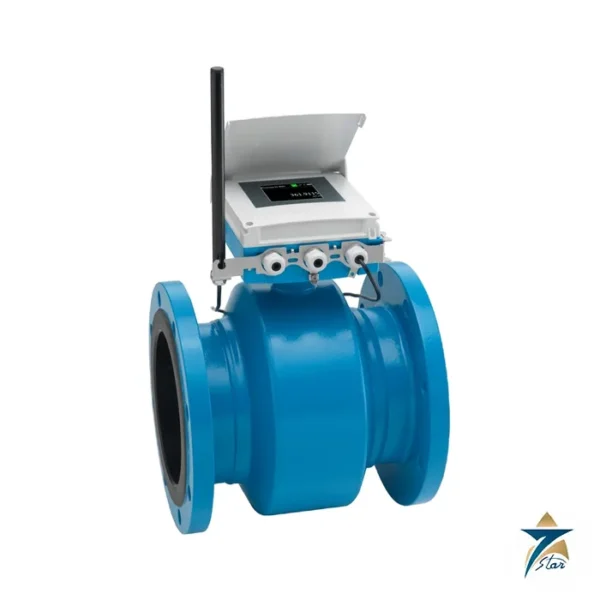
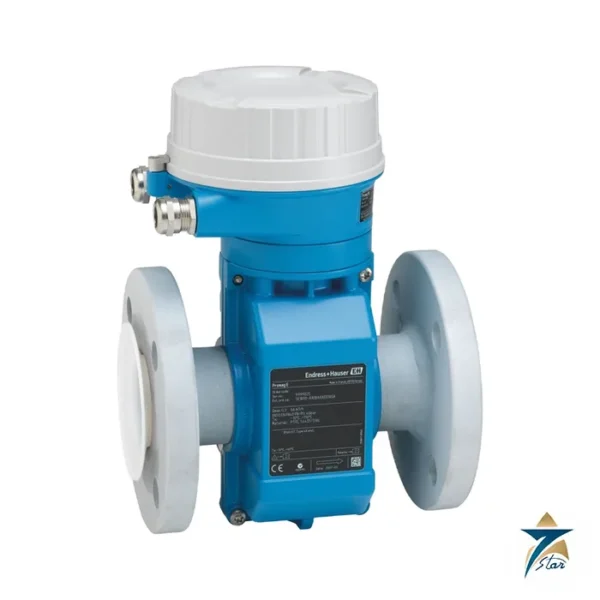
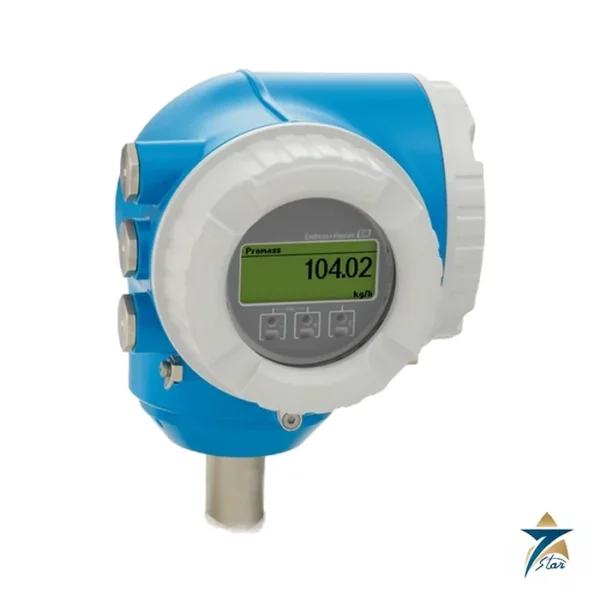
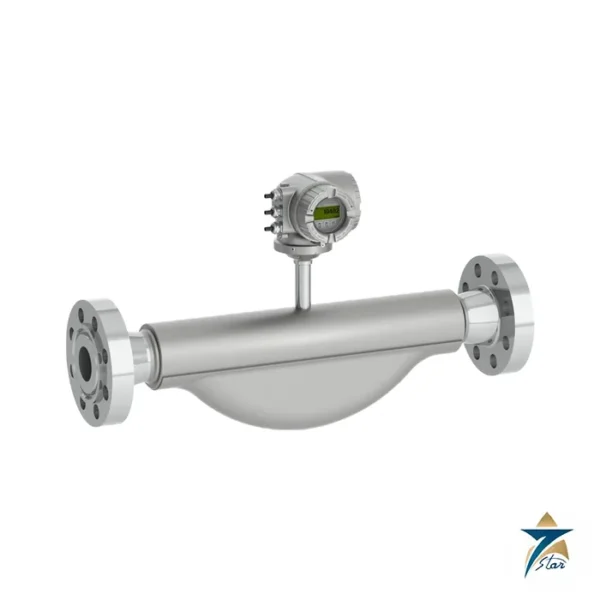
Other Models in the Eh Prowirl Vortex Range
Seven Star LLC supplies models from the Eh Prowirl Vortex range in Oman and the GCC. Compare the related models below and request a quote for the one that matches your application.





















Reviews
There are no reviews yet.