OPTIFLUX 5300 ceramic electromagnetic flowmeter and how the model is built
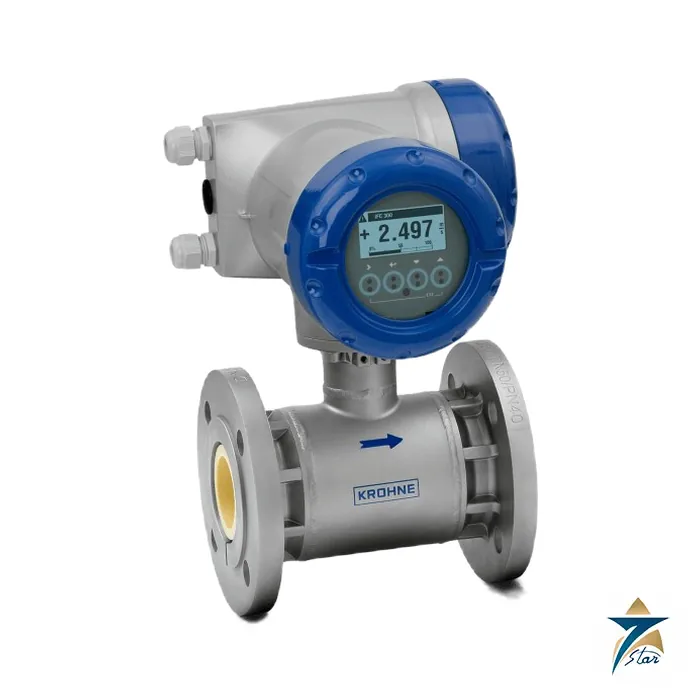
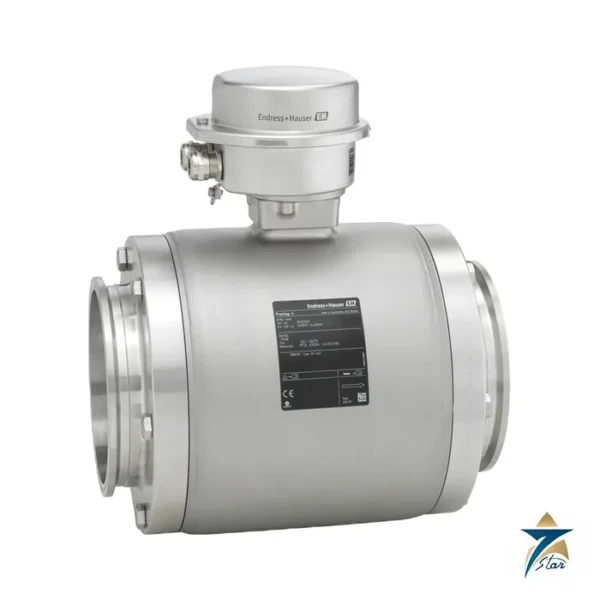
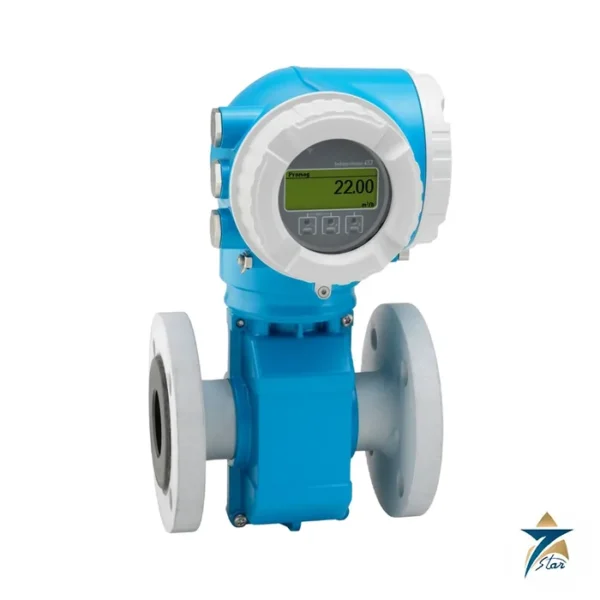
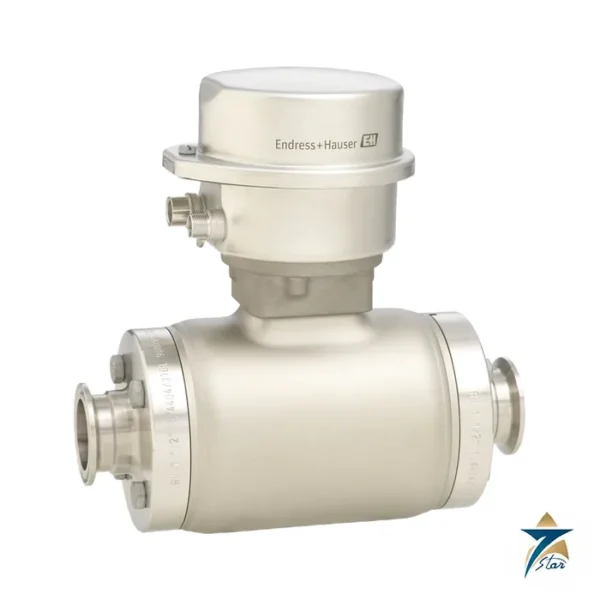
The KROHNE OPTIFLUX 5300 is an electromagnetic flowmeter for conductive liquids that pairs a ceramic measuring tube with the IFC 300 signal converter. The ceramic liner is what sets it apart: it tolerates aggressive chemicals, abrasive slurries with up to 70% solids by volume, temperature shocks and full vacuum, conditions that destroy rubber or PTFE liners. With a stated measuring error down to 0.15% of the measured value plus 1 mm/s, it sits at the precision end of the electromagnetic range, and the sensor family is used by metrological institutes as a transfer or master meter.
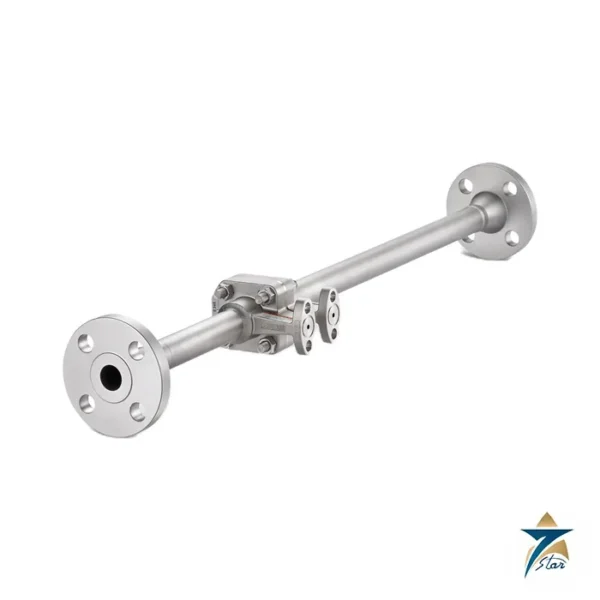
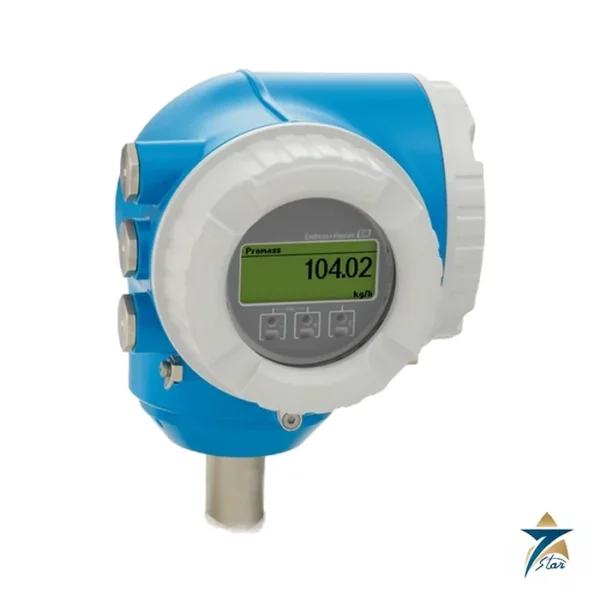
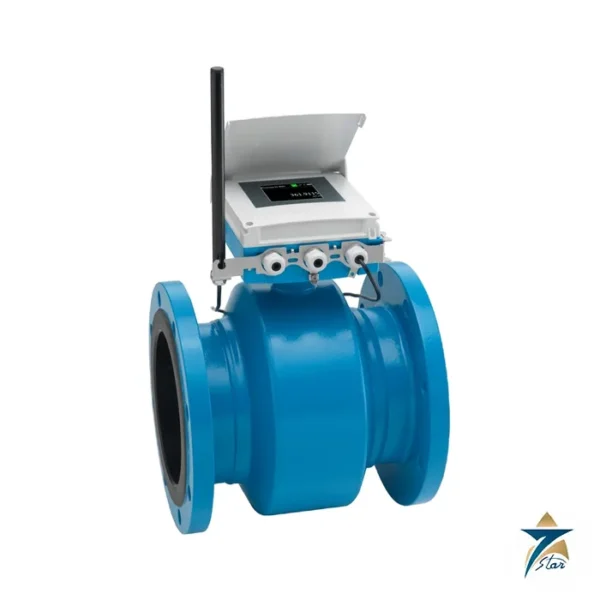
The name is a code. OPTIFLUX 5000 is the sensor family, and the last two digits identify the converter: 5050 uses IFC 050, 5100 uses IFC 100 and 5300 uses IFC 300. The letter after it gives the mounting: C for compact (converter on the sensor), and W, F or R for the remote versions with a wall, field or rack converter and a separate connection box. The sandwich (wafer) sensor covers DN2.5 to DN100, while the 5300 flanged versions are offered from DN15 to DN300.
Technical specifications of the OPTIFLUX 5300
| Parameter |
Specification |
| Manufacturer / part number |
KROHNE / OPTIFLUX 5300 (C, W, F and R versions) |
| Measuring principle |
Faraday induction, electrically conductive liquids |
| Maximum measuring error (IFC 300) |
Down to 0.15% of measured value ± 1 mm/s; repeatability ±0.1% of MV, minimum 1 mm/s |
| Nominal size |
Sandwich: DN2.5 to DN100 (1/10 to 4 in); flange: DN15 to DN300 (1/2 to 12 in) |
| Process temperature (sandwich sensor) |
Compact: -40 to +140 °C; remote: -40 to +180 °C (smallest sizes DN2.5 to 15 have narrower limits) |
| Pressure rating |
Sandwich: PN40 (DN100 PN16, option PN25) or ASME 150 lb, option 300 lb; flange up to PN40 / Class 300 |
| Measuring tube and electrodes |
Ceramic tube; fused-in-place cermet (DN2.5 to 25) or platinum (DN40 to 100) electrodes |
| Conductivity |
Non-water liquids from 1 µS/cm (larger sizes); demineralised cold water from 20 µS/cm |
| Solids and gas content |
Up to 70% solids (IFC 300); gas up to 5% by volume |
| Outputs (IFC 300) |
Up to three 4-20 mA outputs, HART, Modbus, Foundation Fieldbus, Profibus PA/DP, PROFINET |
| Protection |
IP66/67 standard; IP68 option on remote versions with stainless steel connection box |
Process-temperature, pressure and size limits above are quoted from the sandwich-sensor datasheet and the product page; the exact limits for a given order depend on size, liner, converter and any hazardous-area option, so confirm them against the order code.
How the ceramic tube and virtual reference work
A liquid moving through a magnetic field generates a voltage proportional to its mean velocity, and the electrodes pick that voltage up. The OPTIFLUX 5300 uses the same principle as any electromagnetic meter, but the flow tube is shaped with conical sections to condition the flow profile, which is a key reason for the tight accuracy figure. Because the tube is ceramic and the electrodes are fused into it, there is no soft liner to collapse under vacuum and no seal path between liner and electrode to leak.
Grounding is a frequent source of field problems on electromagnetic meters, especially in plastic or lined pipe. The IFC 300 versions of the OPTIFLUX 5300 can be ordered with a virtual reference method, which removes the need for grounding rings. Where rings are used instead, the standard material is stainless steel, with Hastelloy C, titanium or tantalum available for corrosive media. The converter supplies diagnostics in line with NAMUR NE 107, including conductivity and electrode-condition information.
Where the OPTIFLUX 5300 fits and related KROHNE meters
Choose the 5300 when a chemical, acid, caustic, abrasive slurry or mineral stream defeats a standard lined meter, or when you need a reference-grade meter for proving, dosing or custody-type duties. The product page lists custody-transfer approval routes such as OIML R117 and MI-005 for suitable configurations. Our site also lists the OPTIFLUX 2000, 2100, 2300, 4100 and 4300 families for general process and water duties, the WATERFLUX 3070, 3100 and 3300 for water, and the OPTIFLUX 6300 for hygienic service. The 5300 is the one to look at when abrasion, vacuum or accuracy decide the application.
The OPTICHECK service tool allows on-site verification of the meter without removing it from the line, which is useful for plants that must document meter health at intervals.
Selection and ordering checklist for the OPTIFLUX 5300
- Fluid, concentration, temperature range and solids loading, including particle hardness.
- Line size and whether a flanged or sandwich body is required.
- Pressure class (PN or ASME) and flange standard.
- Compact, wall, field or rack converter; for remote versions, cable length (up to 600 m is quoted for the signal cable depending on conductivity and sensor).
- Conductivity of the liquid, particularly for demineralised water.
- Electrode material: cermet or platinum are the standard choices by size.
- Grounding ring material, or virtual reference if rings are to be avoided.
- Output and fieldbus requirements, and hazardous-area approval if the meter sits in a classified zone.
Installation, commissioning and maintenance
The meter must always run full. Allow at least 5 DN of straight inlet after a single 90 degree bend, 10 DN after a double bend, and 2 DN of outlet. Keep it away from strong magnetic fields and heavy vibration, and avoid mounting it at the highest point of a pipe or directly on a pump suction or control valve outlet where air or cavitation may collect. On sandwich bodies, centre the meter with the supplied rubber sleeves and torque the stud bolts to the table in the manual.
Because the ceramic tube cannot be relined, protect it from sudden thermal shock: the datasheet limits the rate of temperature change to below 3 K/s for the smaller sizes and below 0.2 K/s for DN40 to DN100. At commissioning, check zero with the pipe full and stationary, confirm conductivity and electrode diagnostics, and record the settings. Maintenance is largely verification, since there are no moving parts or pressure loss.
Typical applications in Oman and the GCC
In the Gulf the OPTIFLUX 5300 suits chemical dosing at desalination plants, where acids, antiscalants and caustic are metered, and it can serve as a reference meter for proving process or utility meters. Mining and minerals processing, slurry transfer and brine or sludge duties also benefit from the abrasion-resistant ceramic. In power plants it can measure chemical treatment and demineralised water, and in petrochemical sites it handles aggressive process liquids. High ambient temperature and direct sun argue for a stainless converter housing or a remote converter in the shade, and humid or dusty coastal sites favour IP67 or IP68 versions.
Converter versions at a glance
| Version |
Converter |
Mounting |
| OPTIFLUX 5050 |
IFC 050 |
Compact (C) or wall (W) |
| OPTIFLUX 5100 |
IFC 100 |
Compact (C) or wall (W) |
| OPTIFLUX 5300 C |
IFC 300 |
Compact on sensor |
| OPTIFLUX 5300 W / F / R |
IFC 300 |
Wall, field or rack mount with connection box |
This page covers the OPTIFLUX 5300 with the IFC 300 converter. The 5050 and 5100 share the sensor but have simpler electronics and lower accuracy ratings.
Information to send with an RFQ for the OPTIFLUX 5300
- Fluid name, conductivity, temperature, pressure and solids content.
- Line size, flange standard and pressure class, or sandwich fit.
- Flow range (minimum, normal, maximum) and bi-directional need.
- Converter mounting and signal or fieldbus requirement.
- Hazardous-area classification and any custody or reference-meter requirement.
- Quantity and delivery schedule.
Documents and quotation
A KROHNE technical datasheet for the OPTIFLUX 5000 sandwich sensor is attached on this page. Send the model, size, fluid and the list above and we will confirm availability and prepare a quotation for the OPTIFLUX 5300 in Oman and the GCC. Seven Star LLC is an independent supplier and is not an official representative of the manufacturer.




















Reviews
There are no reviews yet.