FMD71 electronic differential pressure level system with ceramic sensors
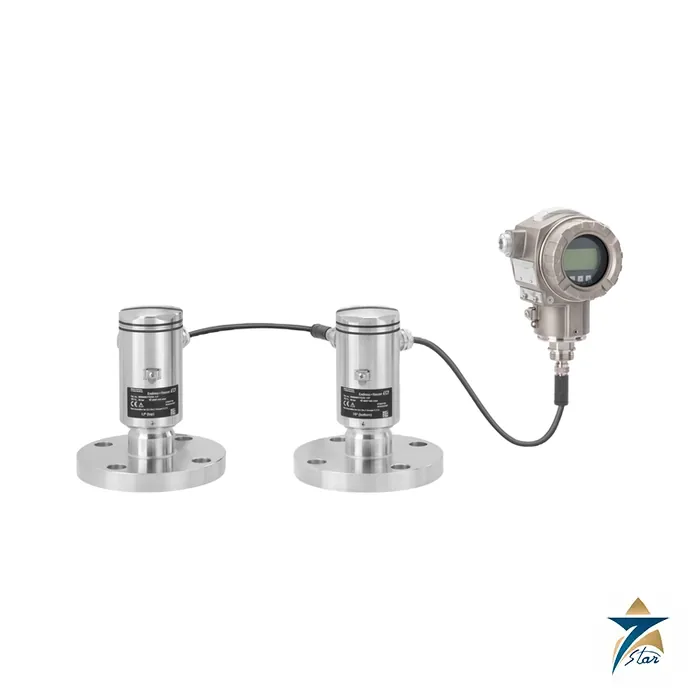
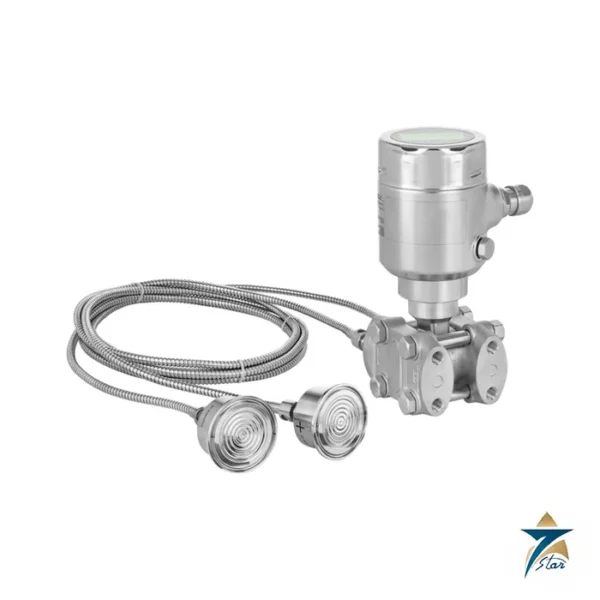
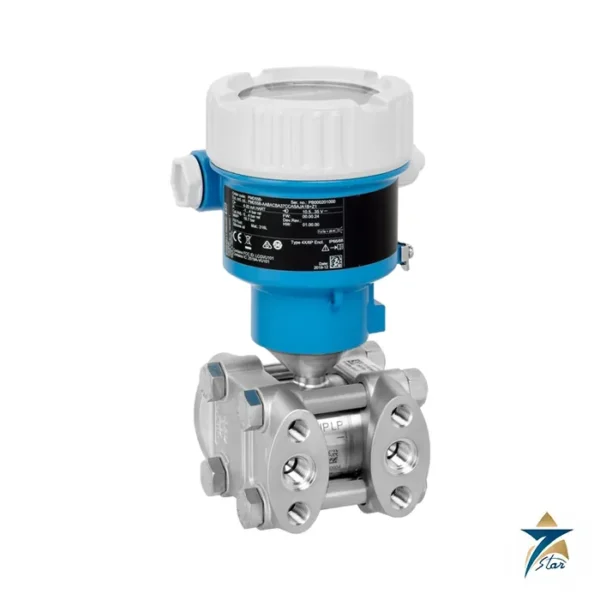
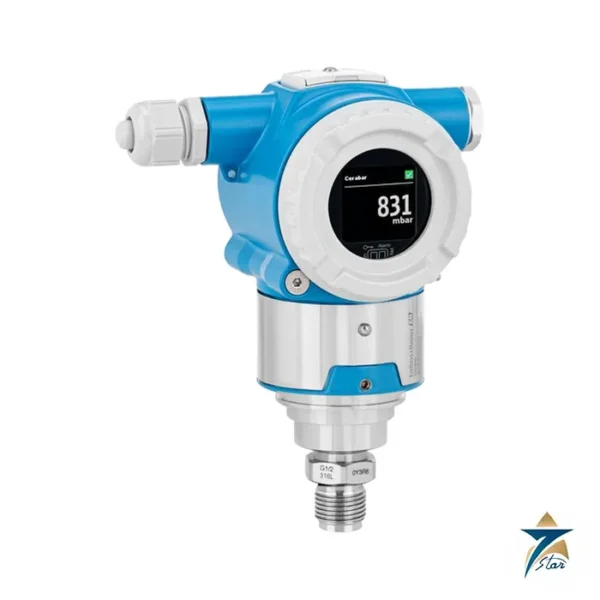
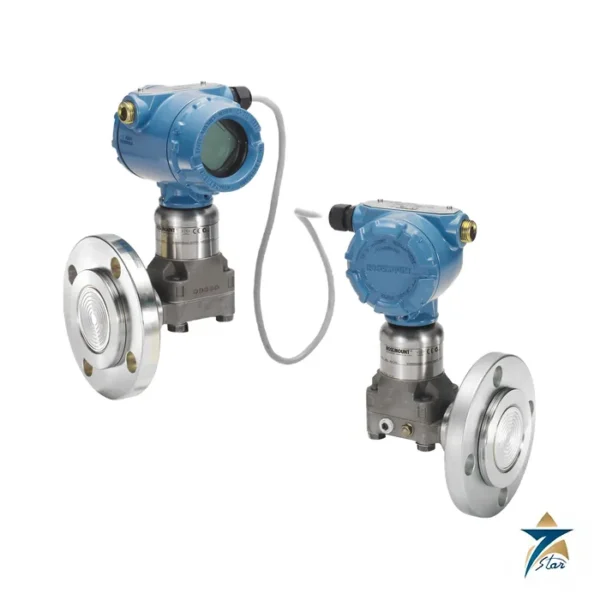
The Endress+Hauser FMD71 is part of the Deltabar family, but it does not work like a conventional differential pressure transmitter with capillaries or impulse lines. Instead, the FMD71 uses two separate digital pressure sensor modules and one transmitter. One sensor is fitted low on the vessel, the other above the highest liquid level, and the transmitter subtracts the two readings electronically. The result is a level, volume or mass signal for liquids in pressurised or vacuum vessels, delivered as 4–20 mA with HART. Seven Star LLC supplies the FMD71 in Oman and the GCC as an independent supplier based in Muscat.
The letters and digits that matter when you read an FMD71 order code are the sensor range (gauge or absolute, from 100 mbar up to 40 bar), the reference accuracy class (standard or Platinum), the seal material, the process connection, the transmitter housing and the cable entry. The FMD71 is the version with a ceramic process membrane (Ceraphire aluminium oxide), while the sister model FMD72 uses a welded metallic membrane with an oil fill.
Endress+Hauser FMD71 technical specifications
| Parameter |
Specification |
| Manufacturer / part number |
Endress+Hauser FMD71 (Deltabar FMD71, electronic differential pressure, HART) |
| Measuring system |
Two digital sensor modules (HP and LP) plus one transmitter; level calculated from the two pressure values |
| Process membrane |
Al2O3 ceramic (Ceraphire), oil-free sensor |
| Sensor ranges |
100 mbar, 250 mbar, 400 mbar, 1, 2, 4, 10 and 40 bar (1.5 to 600 psi), gauge or absolute pressure |
| Maximum span |
Equal to the upper range limit of the HP sensor |
| Output signal |
4–20 mA with HART 6.0, two-wire; signal range 3.8 to 20.5 mA; min. alarm 3.6 mA, max. alarm 21 to 23 mA |
| Supply voltage |
13 to 45 V DC with test jumper in Test position (as delivered); 12 to 45 V DC in Non-test position (non-hazardous area) |
| Reference accuracy |
Standard ±0.075 % of URL per sensor; Platinum ±0.05 % (1 bar cells and above); hygienic connections ±0.15 % |
| Process temperature |
Thread and flange −25 to +125 °C; hygienic −25 to +130 °C (150 °C for max. 60 min); high-temperature version −15 to +150 °C |
| Ambient temperature |
−40 to +80 °C without display; −20 to +70 °C with display |
| Degree of protection |
IP66/68, NEMA 4x/6P |
| Damping |
0 to 999 s, factory setting 2 s; warm-up time below 10 s |
| Housings |
Transmitter T14 (aluminium or stainless steel) or T17 (316L); sensor housing in aluminium or stainless steel |
| Wetted process connection materials |
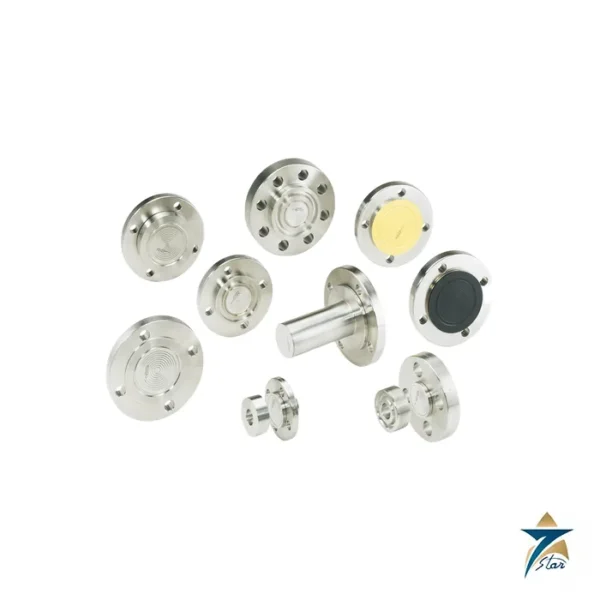
AISI 316L; Alloy C276 and Monel on selected connections; PVDF on one bracket-mounted thread version |
How the FMD71 turns two pressures into a level signal
Each ceramic sensor module measures the pressure acting on its own membrane. The ceramic measuring cell is capacitive: the membrane flexes under pressure and the gap to the ceramic substrate changes, which is read as a capacitance. There is no fill oil, so there is no oil to expand, leak or react with the medium. The datasheet quotes overload resistance up to 40 times the nominal pressure for this ceramic design, and the cell may be used in absolute vacuum at temperatures up to 150 °C.
The high-pressure sensor (HP) sees the hydrostatic column plus the head pressure above the liquid. The low-pressure sensor (LP) sees only the head pressure. Both values travel digitally to the transmitter, which subtracts them and applies the density and tank geometry to produce level, volume or mass. The FMD71 also exposes both individual pressures and both sensor temperatures over HART, so you can see where a problem sits instead of guessing from a single number.
FMD71 sensor ranges, overload and vacuum limits
Because each sensor is rated independently, sizing the HP module needs care: in a closed vessel it carries the hydrostatic pressure and the head pressure together. The table lists the gauge-pressure cells as given in the manufacturer datasheet.
| Sensor |
URL |
MWP |
OPL |
Vacuum resistance |
Code |
| 100 mbar |
+0.1 bar |
2.7 bar |
4 bar |
0.7 bar abs |
1C |
| 250 mbar |
+0.25 bar |
3.3 bar |
5 bar |
0.5 bar abs |
1E |
| 400 mbar |
+0.4 bar |
5.3 bar |
8 bar |
0 |
1F |
| 1 bar |
+1 bar |
6.7 bar |
10 bar |
0 |
1H |
| 2 bar |
+2 bar |
12 bar |
18 bar |
0 |
1K |
| 4 bar |
+4 bar |
16.7 bar |
25 bar |
0 |
1M |
| 10 bar |
+10 bar |
26.7 bar |
40 bar |
0 |
1P |
| 40 bar |
+40 bar |
40 bar |
60 bar |
0 |
1S |
Absolute-pressure cells use the codes 2C to 2S with the same sizes. The rating of the whole assembly is set by its weakest component, so check the nameplate MWP against the connection chosen.
Where the FMD71 fits and related Deltabar models
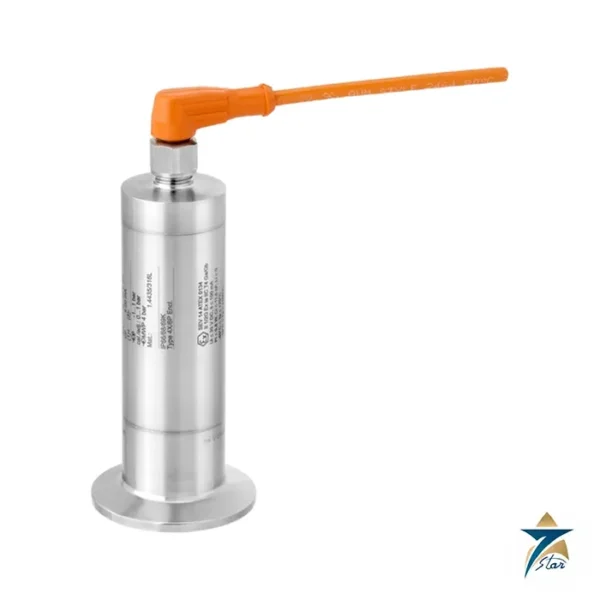
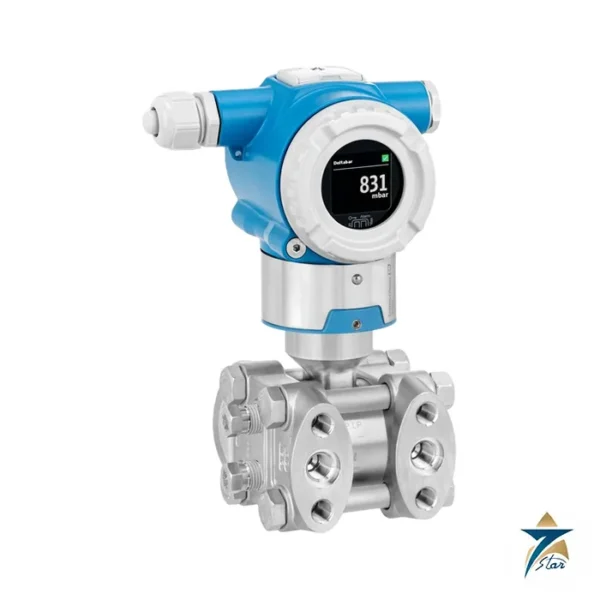
Choose the FMD71 when the medium is compatible with ceramic and the plant wants a mechanical-free installation without capillaries. It suits pressure-overlaid tanks, vacuum vessels, tall distillation columns and vessels with large ambient temperature swings, because the two sensors sit at the tapping points and are not linked by oil-filled lines. The FMD72 offers the same system concept with a welded metallic membrane and silicone oil fill; it starts at 400 mbar and tolerates lower temperatures (down to −40 °C). The FMD78 is a different product, a Deltabar S with two diaphragm seals and capillaries for hot, hazardous or viscous media up to 400 °C.
FMD71 selection and ordering checklist
- Decide gauge or absolute cells for both sensors, and size the HP cell for hydrostatic pressure plus head pressure.
- Check that the maximum ratio between level and head pressure stays within the recommended 1:10; larger ratios increase the error.
- Pick the reference accuracy class: standard (G) or Platinum (D); hygienic connections use the wider figure.
- Select the seal material against the process temperature: FKM, EPDM, NBR, FFKM grades and VMQ are listed, each with its own temperature window.
- Choose the process connection (thread, flange, clamp or hygienic type) and its material: 316L, Alloy C276 or Monel as offered per connection.
- Choose transmitter housing, sensor housing and cable entry (M20, G½ or NPT½).
- State the hazardous-area approval needed. The datasheet lists ATEX, FM, CSA, IECEx and NEPSI, with details in separate Ex documents.
- Add certificates if required: 3.1 material, NACE MR0175 conformity, helium leak, pressure or PMI test.
Installing, commissioning and maintaining the FMD71
Mount the HP sensor on the lower tapping and the LP sensor above the maximum level, and use the supplied bracket for the transmitter on a pipe or wall. For the high-temperature version, thermal insulation between vessel and sensor is required.
On commissioning, perform a position adjustment (zero correction) for the differential pressure after the sensors are fitted, since the mounting position shifts the zero. Set the 4–20 mA range and density from the operating keys, the optional display or a HART tool. The 4–20 mA test jumper lets you measure loop current through the test terminal without breaking the loop. In service, the HART diagnostics report the health of each sensor, so spare strategy can be based on the data rather than fixed intervals.
FMD71 in Oman and GCC process plants
In Oman and across the GCC the FMD71 is applied on liquid vessels where a conventional dp cell with wet legs is troublesome: pressurised separators, condensate and chemical storage tanks, distillation and stripper columns, and vessels outdoors in strong sun. Large temperature swings cause fill-fluid errors in capillary systems, which the oil-free electronic approach avoids. Desalination and water-treatment units benefit from the corrosion-resistant ceramic, and dusty coastal sites suit the IP66/68 housings. For saturated steam, the datasheet advises a metallic-membrane model or a siphon.
Information to send with an FMD71 RFQ
- Medium, density and operating temperature range, plus any steam or cleaning cycle.
- Vessel pressure, vacuum condition and expected level span (distance between the two tappings).
- Gauge or absolute cells and the required sensor ranges for HP and LP.
- Process connection type, size and rating, and the required seal material.
- Hazardous-area classification, housing material and cable entry thread.
- Required certificates and the tag number for marking.
Documents and quotation
The Endress+Hauser technical information for Deltabar FMD71 and FMD72 is attached on this page as a datasheet for reference. It contains the full range tables, connection drawings and the ordering codes described above.
To receive a quotation for the FMD71, send the part number, sensor ranges and connection details and Seven Star LLC will reply with availability and lead time for Oman and the GCC.



















Reviews
There are no reviews yet.