Honeywell STA700 SmartLine absolute pressure transmitter
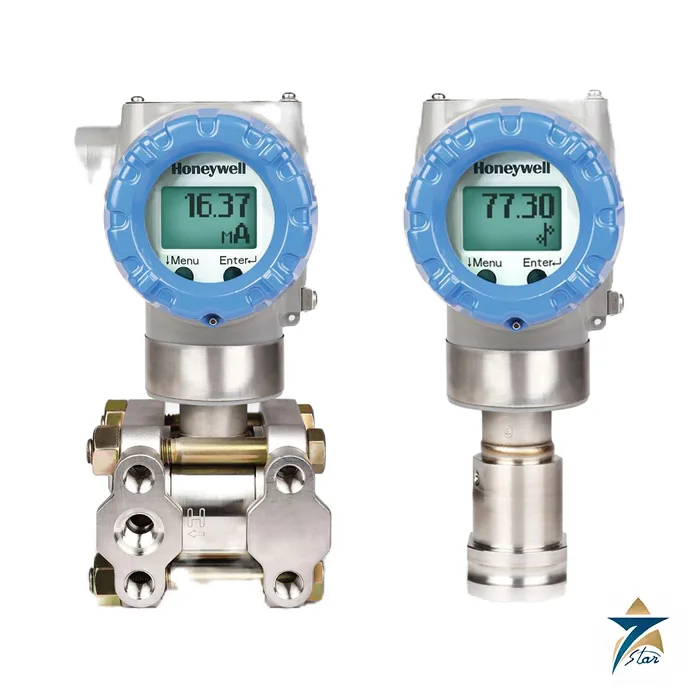
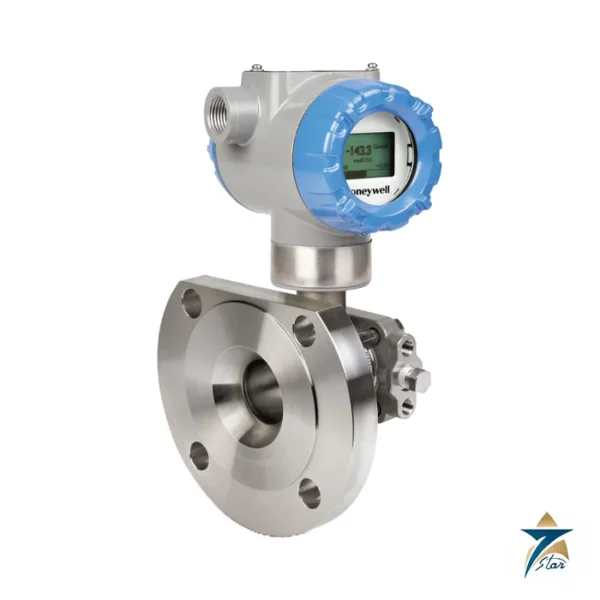
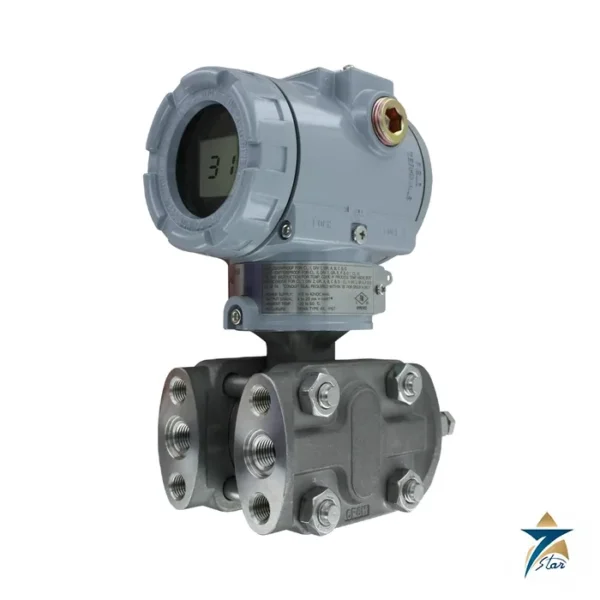
The Honeywell STA700 is an absolute pressure transmitter in the SmartLine ST 700 range. It measures process pressure relative to a perfect vacuum, which makes it the right choice for vacuum systems, evaporators, condensers, steam and gas packages where barometric changes would otherwise distort a gauge reading. Seven Star LLC supplies the STA700 in Oman and the GCC as an independent supplier in Muscat.
The sensor is a piezoresistive element with on-chip temperature compensation. The datasheet quotes accuracy of 0.065% of span, stability up to 0.02% of URL per year for ten years, rangeability up to 100:1 and response as fast as 100 ms, with HART 7 communication on a two-wire 4-20 mA loop.
Decoding the STA700 model number
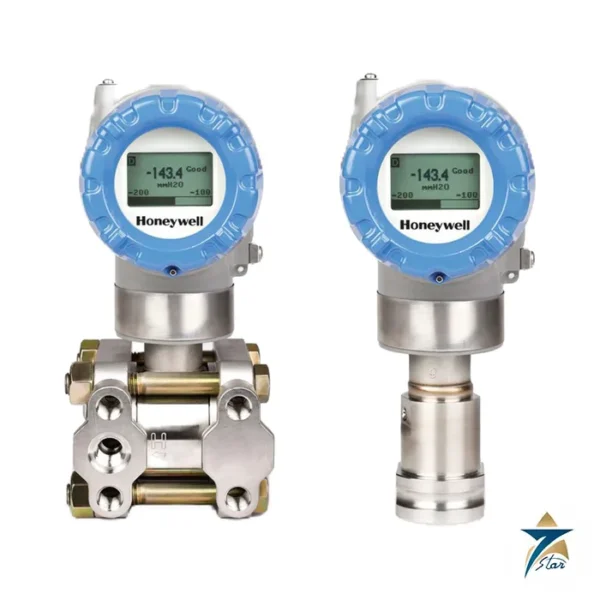
The key number reads STA7 followed by two characters. In the current datasheet these are 25 or 45 for dual head designs and 2S, 4S or 7S for in-line designs: STA725 and STA745 (dual head), STA72S, STA74S and STA77S (in-line). The first digit after STA7 shows the range class, 2 for 780 mmHgA, 4 for 500 psia and 7 for 3,000 psia. The remaining tables define diaphragm and head material, fill fluid, process connection, bolting, vent and gasket, approvals, housing and protocol, display and buttons, configuration, calibration and accessories.
STA700 technical specifications
| Parameter |
Specification |
| Manufacturer / part number |
Honeywell / STA700 (SmartLine absolute pressure transmitter family) |
| Models and ranges |
STA725 and STA72S: 0 to 780 mmHgA (1,040 mbarA), min span 50 mmHgA; STA745 and STA74S: 0 to 500 psia (35 bara), min span 5 psia; STA77S: 0 to 3,000 psia (210 bara), min span 30 psia |
| Reference accuracy |
0.065% of span (terminal based; analog output adds 0.006% of span) |
| Stability |
Up to 0.02% of URL per year for 10 years |
| Turndown |
STA725/STA72S 15.6:1; STA745/STA74S/STA77S 100:1 |
| Output and protocol |
Two-wire 4-20 mA with HART 7; NAMUR NE 43 limits 3.8 to 20.5 mA selectable; failure mode ≤3.6 mA or ≥21.0 mA |
| Supply and loop resistance |
10.8 to 42.4 VDC at terminals (IS 30 VDC), 0 to 1,440 ohm |
| Response time and damping |
100 ms; damping 0 to 32 s in 0.1 s steps (default 0.5 s); turn-on 2.5 s |
| Ambient temperature |
−40 to 85 °C rated and operative; LCD −30 to 70 °C; storage −55 to 120 °C |
| Meter body temperature |
STA745/74S/77S: −40 to 110 °C rated, −40 to 125 °C operative; STA725/72S: per datasheet chart |
| Vacuum |
Within specification above 25 mmHgA (33 mbarA); short-term full vacuum causes no damage |
| Maximum working pressure |
STA725/72S 780 mmHgA; STA745/74S 500 psia; STA77S 3,000 psia; overpressure 1.5 x MAWP |
| Diaphragm and head materials |
Diaphragm 316L SS or Hastelloy C-276; dual head process head carbon steel (zinc plated), 316 SS or Hastelloy C-276; in-line head 316L SS or Hastelloy C-276 |
| Fill fluid |
Silicone 200 or CTFE |
| Process connection |
Dual head: 1/2 inch NPT female; in-line: 1/2 inch NPT female or male, 9/16 inch Aminco, G 1/2 B male, M20 male |
| Housing |
Polyester powder coated low-copper aluminum, Type 4X / IP66 / IP67; stainless housing optional |
| Weight |
Dual head 8.3 lb (3.8 kg); in-line 3.6 lb (1.6 kg), aluminum housing |
| Safety |
IEC 61508 SIL 2 single / SIL 3 redundant (EXIDA and TUV Nord); NAMUR NE-107 diagnostics; NACE MR0175 / MR0103 / ISO 15156 option |
How the STA700 senses absolute pressure
A single silicon sensor combines the pressure element with temperature sensing, and the electronics use the temperature reading to correct the output across the rated range. Each meter body is characterized at the factory, and Honeywell states that electronics modules can be exchanged without losing in-tolerance performance.
In an absolute transmitter the reference side is sealed, so atmospheric changes do not enter the reading. The STA725 and STA72S have a minimum span of 50 mmHgA, and the datasheet states that its performance figures apply above 25 mmHgA (33 mbarA). Below that point the transmitter will survive, but the specification no longer applies.
Turndown matters more with absolute units than many buyers expect. The STA725 and STA72S are limited to 15.6:1, while the higher ranges reach 100:1, and the total performance examples in the datasheet show how the error grows with turndown: 0.163% of span for an STA745 at 100 psia against 0.187% for an STA74S, and 0.381% against 0.679% for the STA725 and STA72S at 156 mmHgA.
Where the STA700 fits and related models
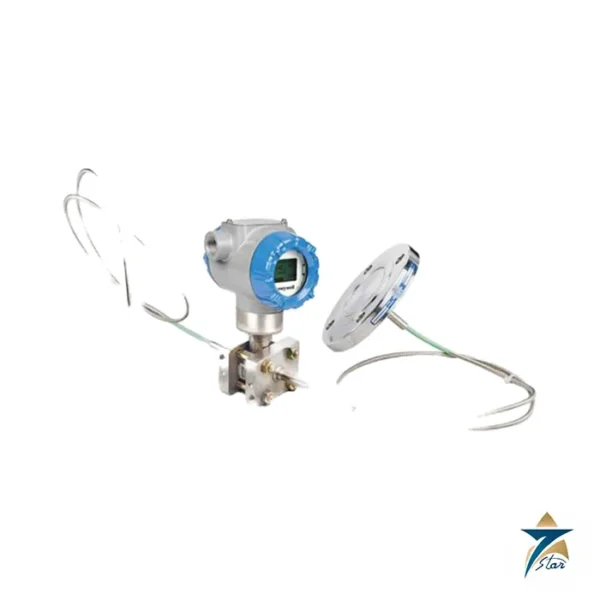
The STA700 is for absolute duty only. For gauge pressure the matching SmartLine ST 700 transmitters are the STG700 series, for differential and static-line pressure the STD700, for level on a flanged tank connection the STF700 and for hot or aggressive media the STR700 with remote seals. The STA700 uses the same electronics, display, terminal and bracket parts across the ST 700 family, which reduces spares.
Two datasheet issues exist for the absolute family. The current STA725 / STA745 / STA72S / STA74S / STA77S issue is HART only, while an earlier issue (34-ST-03-100) describes STA722, STA740, STA72L and STA74L with accuracy up to 0.055% and both HART and DE. When you replace an installed unit, read the model number from the nameplate so that the right variant and protocol are quoted.
| Model |
Design |
Range |
Min span |
| STA725 |
Dual head |
0 to 780 mmHgA (1,040 mbarA) |
50 mmHgA (66.7 mbarA) |
| STA745 |
Dual head |
0 to 500 psia (35 bara) |
5 psia (0.35 bara) |
| STA72S |
In-line |
0 to 780 mmHgA (1,040 mbarA) |
50 mmHgA (66.7 mbarA) |
| STA74S |
In-line |
0 to 500 psia (35 bara) |
5 psia (0.35 bara) |
| STA77S |
In-line |
0 to 3,000 psia (210 bara) |
30 psia (2.1 bara) |
STA700 selection checklist
- Confirm that the measurement is truly absolute, then choose the range class so that normal operation sits in the lower-middle of the span.
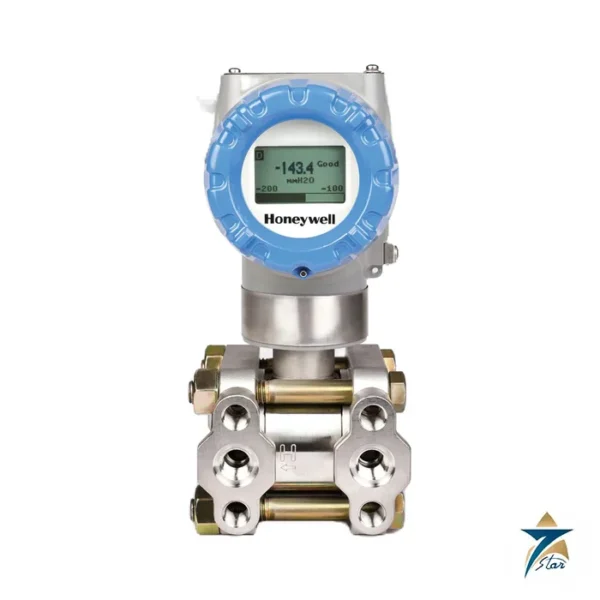
- Dual head (STA725 or STA745) for robust bolted heads with vent and drain options, or in-line (STA72S, STA74S, STA77S) for a compact, light body with a threaded or Aminco connection.
- Diaphragm and head material (316L, Hastelloy C-276, gold-plated variants) to match the media and the vacuum service.
- Fill fluid: Silicone 200 or CTFE, chosen for the process and ambient temperature.
- Bolting: carbon steel, 316 SS or NACE grade 660 for sour environments, with the vent type and gasket for dual head designs.
- Approval code for the area classification, housing and conduit thread, lightning protection if the site needs it.
- Display with or without the external zero, span and configuration buttons.
- Calibration: factory standard or custom range with unit data supplied.
Installation, commissioning and maintenance of the STA700
Mount the transmitter above the tapping on vapor lines so that condensate drains back to the process, and below the tapping on liquid lines so that gas bubbles rise out of the sensing chamber. Use the mounting bracket options from the selection guide and orient the housing so the display can be read from the walkway. Tighten the process connection to the torque appropriate to the seal type and avoid pipe wrenches on the housing.
After power-up, use the three-button interface or a HART configurator to set the lower and upper range values, damping and output limits, and run a loop test. With every STA700, keep a log of the as-found and as-left readings, since the datasheet recommends calibration verification every two years. Honeywell diagnostics report critical faults such as electronics or meter body failure, and non-critical items like sensor over-temperature or an out-of-range process variable, so a plant host or handheld can flag a developing problem before it affects the loop.
Modules for the display, terminal and electronics can be replaced in the field, so keep an electronics module and a display on the shelf instead of whole transmitters. A meter body is a matched, characterized part, so replace it as a unit instead of attempting repair.
Typical STA700 applications in Oman and the GCC
Absolute transmitters in the region are used on vacuum distillation and flash columns in refineries, steam turbine condensers and deaerators in power and desalination plants, multi-effect and flash evaporators, vacuum pumps and ejectors, compressor suction lines and gas turbine inlet and fuel systems. They are also used for barometric compensation of flow computations, where an absolute reading avoids the need to correct for atmospheric pressure.
High ambient temperatures, direct sun and dust are the main site factors. Specify the stainless housing for coastal sites and keep the transmitter shaded where possible. Where vapor condenses in the line, use a vertical impulse line with a drain so that the sensor sees pure process pressure.
Information to send with an STA700 RFQ
- Model number from the nameplate or the required type and range, plus quantity.
- Normal, minimum and maximum absolute pressure, process temperature and medium.
- Process connection and orientation, bolting and vent requirements, mounting bracket.
- Protocol, hazardous area classification and any NACE, SIL or marine requirement.
- Delivery location in Oman or the GCC and the documents needed with the shipment.
Documents and quotation
The manufacturer technical information sheet for the STA700 is attached on this page, including the model selection guide and the dimension drawings. It should be read together with your project instrument specification.
Send the model number or the pressure range and the application, and Seven Star LLC will quote against it. Delivery time and certificates are confirmed in the offer.




















Reviews
There are no reviews yet.