Brand:

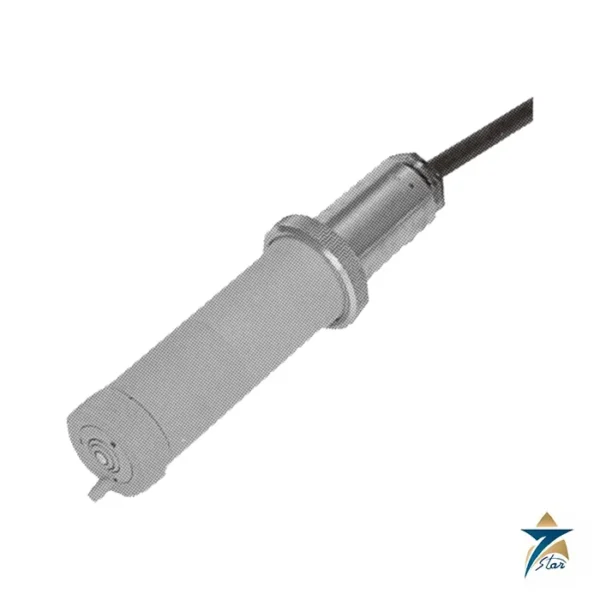
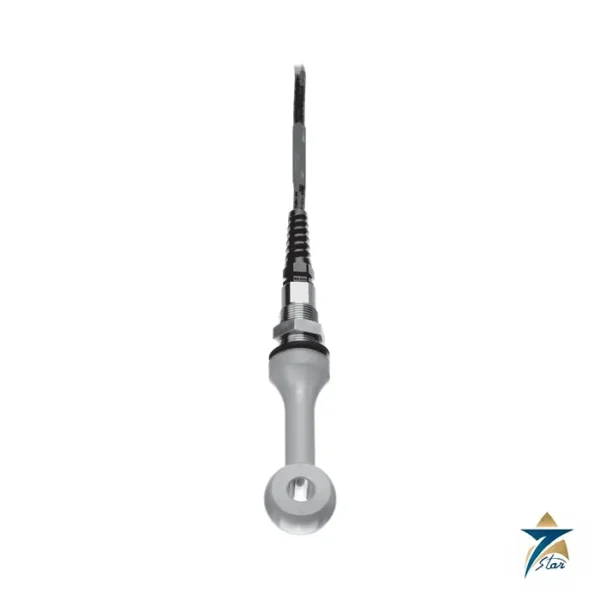
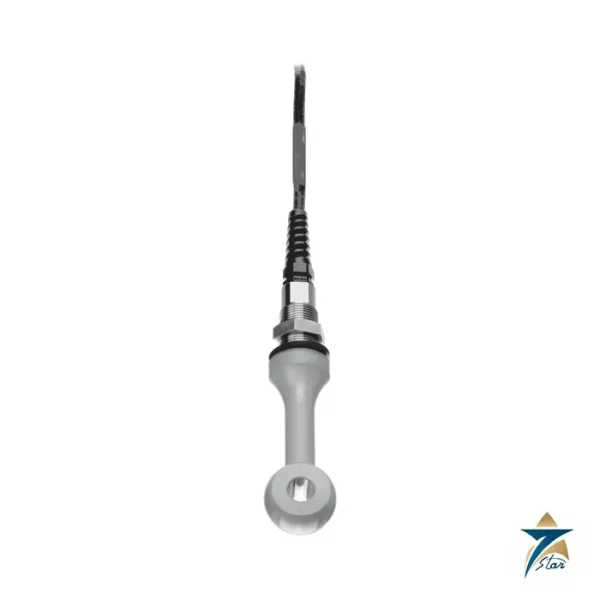
Yokogawa ISC40G-GS-T1-05 Shaft Inductive Conductivity Sensor

Description

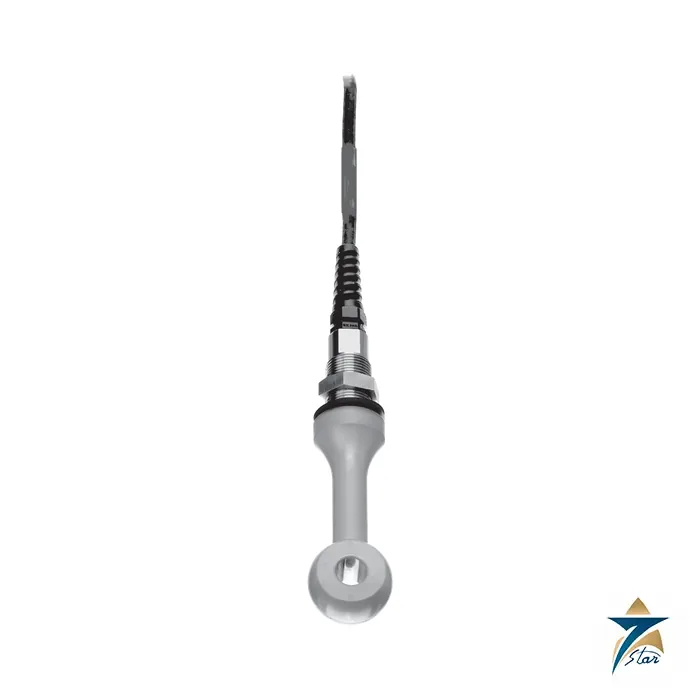
Shaft-model inductive sensor for sanitary lines

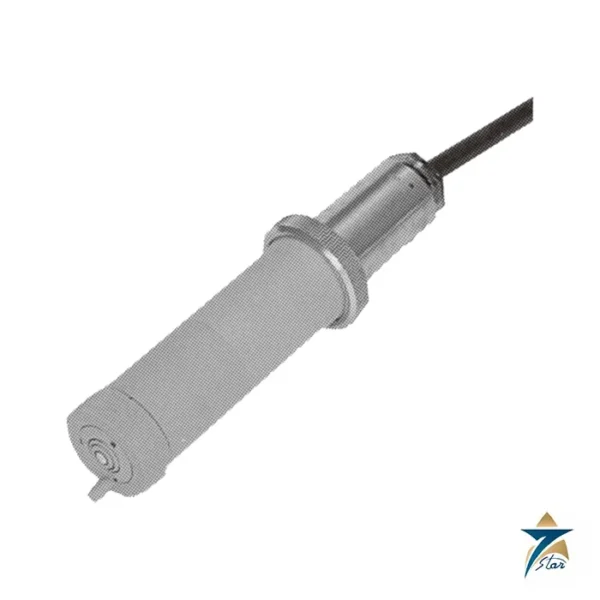
On sanitary and hygienic lines, the geometry of a sensor decides whether it passes the process audit. The ISC40G range includes a shaft model, code GS, with an extended body that fits into sanitary flange adapters. Yokogawa ISC40G-GS-T1-05 is that shaft PEEK sensor with a Pt1000 element and a 5 m cable. Dairies, breweries, beverage lines and pharmaceutical utilities use this style for CIP interface detection and product-to-water separation.

Its parts code reads GS (glass-filled PEEK shaft), T1 (Pt1000) and 05 (5 m cable).

Seven Star LLC is an independent supplier serving Oman and the GCC and is not affiliated with the manufacturer.

ISC40G-GS-T1-05 key data

Parameter Value
Body 30 percent glass-filled PEEK, FDA approved, shaft model
Metal parts AISI 316 stainless steel thread and nut
Seal Viton gasket
Conductivity range 0 to 2000 mS/cm
Accuracy 0.5 percent of reading plus 0.5 uS/cm
Temperature range -20 to 130 C
Pressure 0 to 20 bar (290 psig)
Element / cable Pt1000, 5 m, up to 50 m with extension
Weight Approx. 1.3 kg with 5 m cable
Adapters for GS /SFT Tuchenhagen, /STC1 2 inch tri-clamp, /STC2 complete tri-clamp

Shaft model compared with the general model

Compared with ISC40G-GG-T1-05, the GS shaft sensor has the same measuring elements, range and limits but a different body shape and a different adapter family. Flange adapters /SFA, /SFD, /TFD and /TFN belong to the general models; /SFT, /STC1 and /STC2 belong to the shaft model. Against ISC40G-TG-T1-10, the PFA model, ISC40G-GS-T1-05 gives faster response and higher pressure rating but is not suited for hydrofluoric acid.

Why hygienic sites pick it

A tri-clamp connection can be opened and cleaned quickly, and PEEK withstands cleaning chemicals such as caustic and hot water. The toroidal principle has no electrodes to foul with protein films or scale, so the measurement stays stable between CIP cycles. The wide range, from rinse water to concentrated caustic, lets one sensor cover both the product and the cleaning cycle.

Where it is used in the region

Typical sites are dairies and juice plants in Salalah and Muscat, bottling plants, breweries, pharmaceutical utility rooms and food ingredient lines. CIP return lines are a classic spot, since the sensor sees water, caustic and acid in turn and the controller uses conductivity to detect phase changes.

Cleaning-cycle behaviour and control use

A CIP sequence on a hygienic line usually runs a rinse, a hot caustic phase, a rinse, an acid phase and a final rinse, and conductivity is the easiest signal to follow the transitions. Caustic can rise to tens of mS/cm and acid to even more, while a final rinse falls to a few hundred uS/cm. The toroidal ISC40G-GS-T1-05 covers that whole span with one sensor and one converter range selection, which is a real advantage on a skid that serves many circuits. Controllers use the signal to dose concentrate to a setpoint, to decide when a rinse is finished, and to separate product from water at the changeover.

Response time matters here: the PEEK sensor specifies t90 under 5 minutes for conductivity, which is acceptable for transitions that last minutes rather than seconds, but for fast interface detection, check the actual time constant of the line with your process engineer. The Pt1000 element provides the cell temperature for compensation but, as the manual says, it is not intended for process temperature control, so keep a separate temperature measurement for the hot caustic loop.

Installation guidance

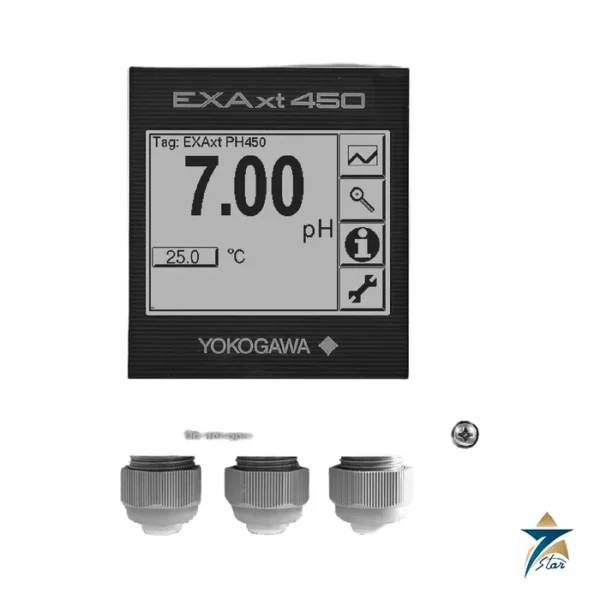
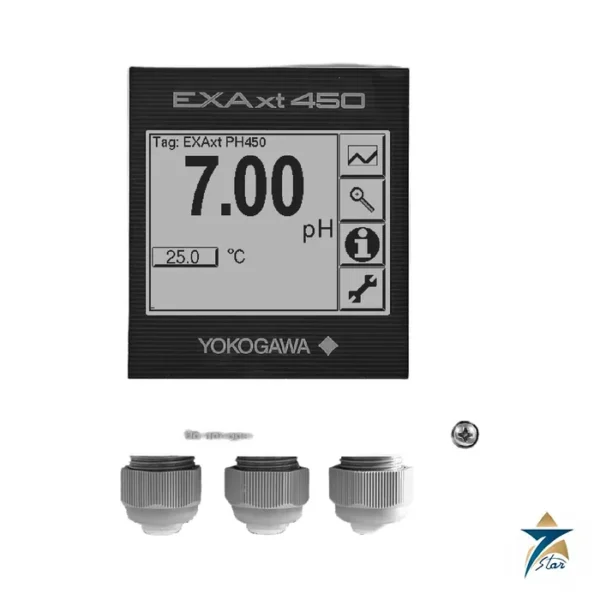
Choose the adapter that matches the sanitary connection in your line, install the sensor so its bore is aligned with flow, and keep air out of the measuring bore. Where the sensor sits close to a metal wall, in-situ calibration compensates for the change in installation factor. Use the converter to enter the nominal factor of 1.88 per cm for PEEK and adjust against a reference. With ISC40G-GS-T1-05 the shaft carries the sensor head into the process stream, so confirm the insertion depth recommended in the instruction manual, support the 5 m cable so its weight does not load the clamp, and avoid placing the sensor directly after a pump or valve where air or cavitation bubbles pass through the bore. Pressure-test the clamp joint at the plant test pressure before introducing product, and torque the clamp as the fitting supplier specifies.

Maintenance

Remove the sensor from the clamp at a planned stop, inspect the gasket and the bore for deposits, and clean it with the normal cleaning agent. Check cable integrity and the strain relief. Keep a certificate copy if the /M option was specified, because hygiene auditors may request material traceability. Replace the Viton gasket during scheduled maintenance rather than waiting for it to leak, and check that cleaning agents and temperatures used on the line stay within the sensor limits of 130 C and 20 bar. Steam sterilisation cycles should be reviewed against the temperature rating, since exceeding 130 C could damage the PEEK body. Calibrate against a reference conductivity standard at least once per audit period and file the result with the batch records.

Ordering information

Please tell us the sanitary adapter you need and the converter model. Specify whether you need the material certificate. Also tell us whether the ISC40S intrinsically safe version is wanted, since it is a separate model with a separate code. If you hold an old nameplate, send us a photograph of it so that the suffix chain, cable length and any option letters can be compared with ISC40G-GS-T1-05 before an offer is prepared, which avoids ordering a sensor that fits the pipe but not the converter.

Documents and quotation

The datasheet for ISC40G-GS-T1-05 is attached. Send your RFQ to Seven Star LLC with the part number ISC40G-GS-T1-05, quantity and delivery location.

Other Models in the ISC40G Range

Seven Star LLC supplies models from the ISC40G range in Oman and the GCC. Compare the related models below and request a quote for the one that matches your application.

ModelCategory
Yokogawa ISC40G-GG-T1-05 Inductive Conductivity SensorLiquid Analytical SystemsView details
Yokogawa ISC40G-TG-T1-10 PFA Inductive Conductivity SensorLiquid Analytical SystemsView details
Yokogawa ISC40G-GS-T1-05 Shaft Inductive Conductivity SensorLiquid Analytical SystemsYou are viewing this model
Datasheets & Documents
  • PDF Datasheet Yokogawa ISC40G-GS-T1-05 Shaft Inductive Conductivity Sensor Datasheet Download
Reviews (0)

Reviews

There are no reviews yet.

How would you rate this product?

It takes about 10 seconds — just tap a star. Your email is never published.

About brand

Yokogawa is the Japanese measurement and industrial automation company behind the DPharp EJA and EJX pressure transmitters, CENTUM distributed control systems and ProSafe-RS safety systems. Tamisuke Yokogawa set it up in 1915 as an electric meter research institute in Shibuya, Tokyo. It began selling electric meters in 1917, was incorporated as Yokogawa Electric Works in 1920, and has been Yokogawa Electric Corporation since 1986. In 1975 it released CENTUM, which it describes as the world's first distributed control system.

Seven Star LLC is an independent supplier in Muscat. We list Yokogawa transmitters, flowmeters, analysers, controllers, recorders and CENTUM and ProSafe spare modules, and supply them to oil and gas, power, water and process plants in Oman and the GCC by model code.

Yokogawa at a glance

Established 1915, Shibuya, Tokyo, by Tamisuke Yokogawa with Ichiro Yokogawa and Shin Aoki
Milestones Electric meters from 1917; incorporated in 1920; CENTUM DCS in 1975; renamed Yokogawa Electric Corporation in 1986
Headquarters Tokyo, Japan
Product families Pressure and temperature transmitters, magnetic, vortex and Coriolis flowmeters, liquid and gas analysers, controllers and recorders, CENTUM VP DCS, ProSafe-RS safety systems and STARDOM controllers

Yokogawa products we list

Family Models Typical use
Pressure and DP transmitters EJA110E, EJA430E, EJA530E, EJX110A, EJX530A, EJX910A multivariable Pressure, level and DP flow measurement in process plants
Temperature transmitters YTA610, YTA710 RTD and thermocouple signals converted to 4-20 mA, HART or fieldbus
Flowmeters ADMAG AXG, ADMAG AXW, ROTAMASS TI, VY vortex, VF701 Water and conductive liquids, mass flow of hydrocarbons, steam and gas
Analysers TDLS8000 laser gas analyser, FLXA402, FLXA21 DO, E7042UD zirconia cell, K9471DS cover Combustion O2, in-situ gas analysis, pH, conductivity and dissolved oxygen
Controllers and recorders UT35A/UT32A, UT32A-D, UT55A/UT52A, UT75A, UP35A/UP32A, UP55A, YS1700, GX10/GX20, GP10/GP20, GM10, µR20000 Single-loop control, furnace programs and data recording
Control and safety systems CP451-10 processor, ADV161, ADV551, node interface unit, ProSafe-RS, ProSafe-RS Lite, ProSafe-SLS, FCN-500 Spares and expansions for CENTUM DCS, safety systems and STARDOM
Battery packs S9129FA, S9185FA, S9548FA Memory backup batteries for DCS and controller modules

The EJA and EJX transmitters use Yokogawa's DPharp sensor: two silicon resonators whose vibration frequency changes with pressure, so the output is a digital frequency rather than an analogue strain signal. The model code describes the instrument completely. In EJA110E, "110" is a differential pressure transmitter, and the letters after the dash set the span, wetted materials, process connection, electrical output and approvals. When you replace a transmitter, sending the full code from the nameplate avoids a mismatch in range or materials.

Where Yokogawa products are used

In Oman and the GCC, Yokogawa transmitters, analysers and control systems are found in oil and gas production, gas processing and LNG, refineries and petrochemical plants, power and desalination stations, and water treatment. Many plants still run CENTUM CS 3000 and CENTUM VP systems that need spare I/O modules and batteries.

Ordering Yokogawa products: what we need

Send the full model and suffix code from the nameplate (for example EJA110E-JMS5J-912NN/KF22) and the style code. For DCS modules, add the module type and system version. For analysers, send the sensor type, measuring range and process conditions.

Facts checked against Yokogawa's corporate history, October 2026.

FAQ

Questions about the Yokogawa ISC40G-GS-T1-05 Shaft Inductive

Answers from our engineering team on installation, compatibility and integration.

01What is special about the GS sensor type of ISC40G-GS-T1-05?
GS is the glass-filled PEEK shaft model. Its flange adapter options are /SFT Tuchenhagen sanitary, /STC1 2-inch tri-clamp and /STC2 tri-clamp complete, which belong to the shaft version.
02Does ISC40G-GS-T1-05 have a material certificate option?
Yes, the /M material certificate option is offered, and the datasheet states it is not available for the GR retractable model.
03What cable and temperature element does ISC40G-GS-T1-05 have?
A 5 m cable and a Pt1000 element to IEC 751. A 30k thermistor (T3) exists only for IC200 converters and is not in this code.
04What process limits apply to ISC40G-GS-T1-05?
Being a PEEK sensor, -20 to 130 C and 0 to 20 bar (290 psig), with a conductivity range of 0 to 2000 mS/cm.
05Is ISC40G-GS-T1-05 intrinsically safe?
The ISC40G is the general purpose model. The datasheet covers intrinsically safe approvals for the ISC40S version; ask us if you need that variant.