- Automation & ControlView all 2,923 products
- Automation Accessories
- AC Drives
- PLC & I/O Cards
- Industrial Communications
- Vibration Monitoring
- Controllers & Data Acquisition
- Isolator & Barrier
- Safety Switches & Guard Locking
- Motor Soft Starters
- CCTV & Security
- Encoders
- Pneumatic Cylinders
- HMI Displays
- Servo Drives
- Industrial Computers
- Machine Vision
- Automation Software
- Robotics
Brand: Honeywell
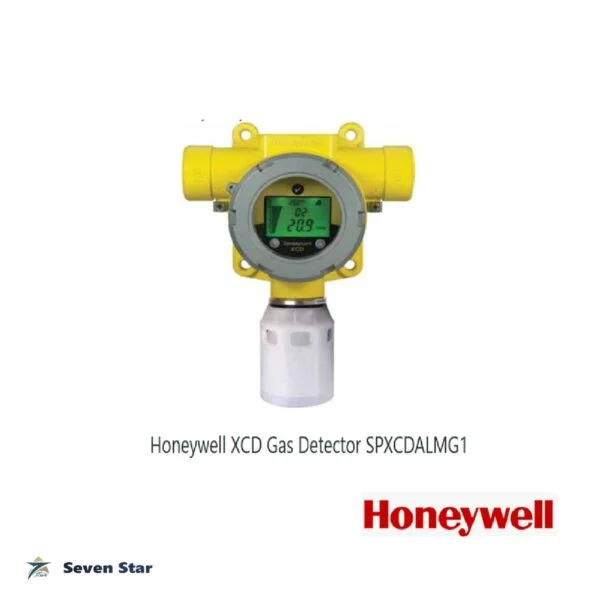
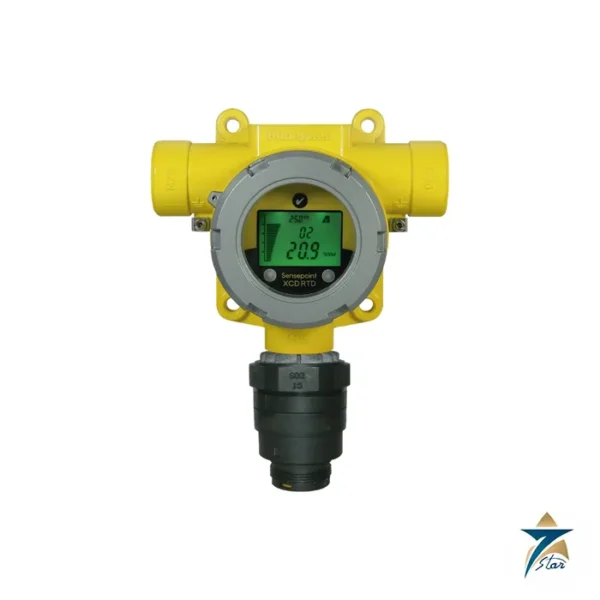
Honeywell SPXCDALMFX Sensepoint XCD Flammable Detector
Description
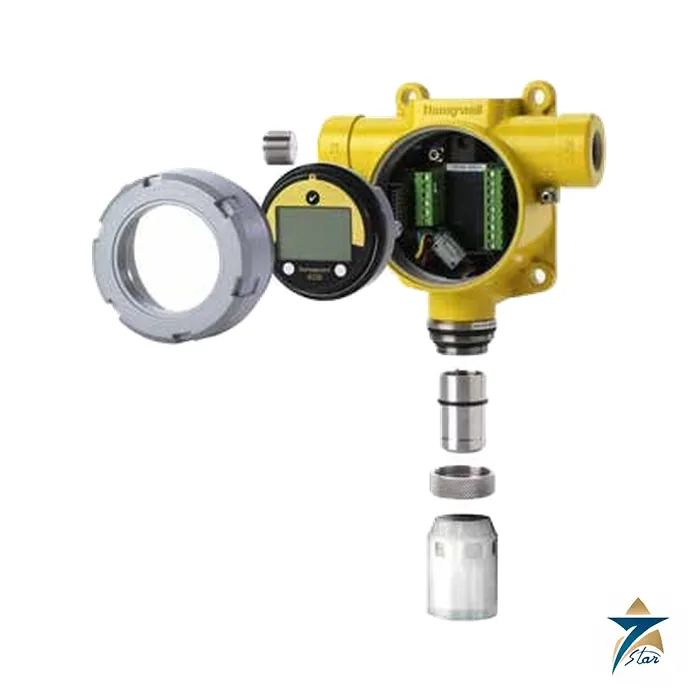
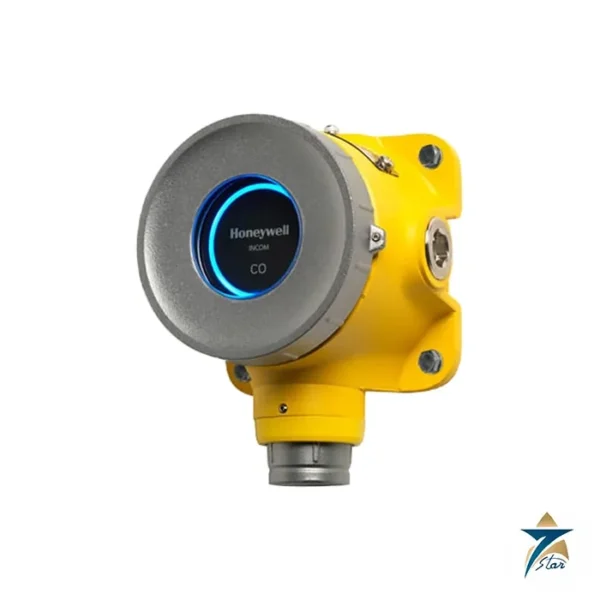
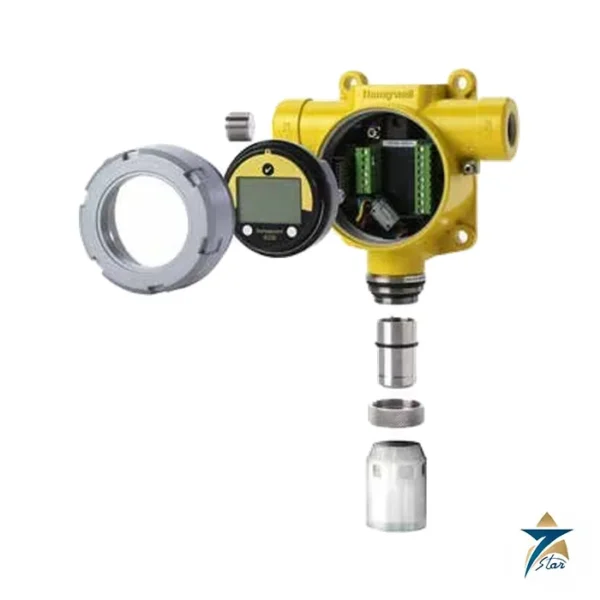
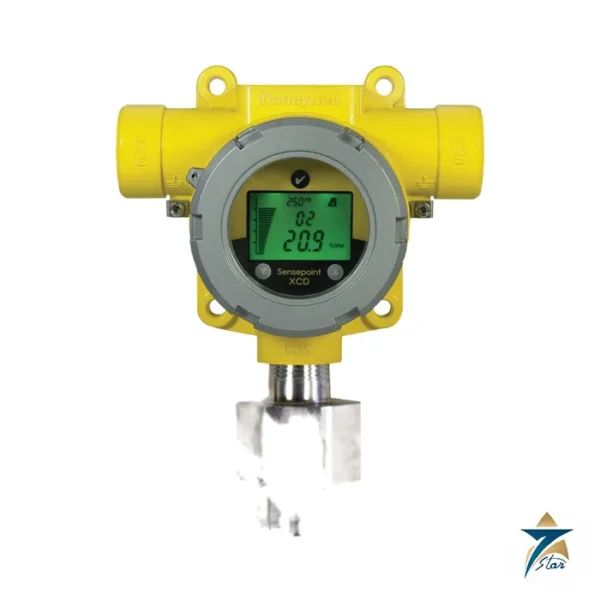
Honeywell SPXCDALMFX: stand-alone catalytic flammable gas detector
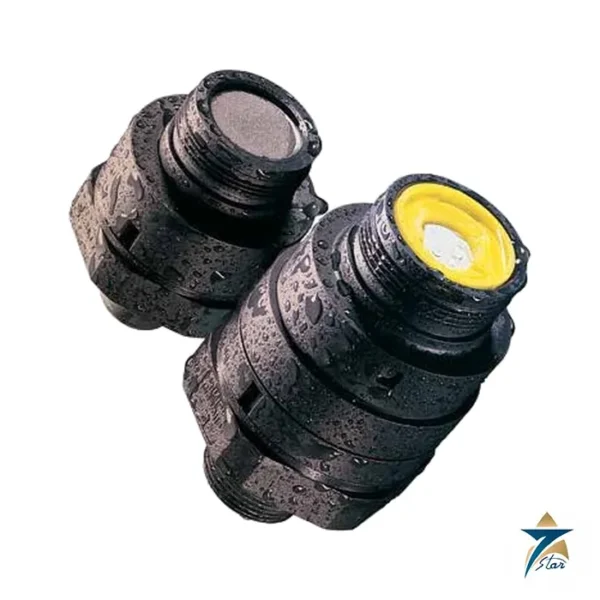
The Honeywell SPXCDALMFX is the Sensepoint XCD detector fitted with a plug-in catalytic bead sensor for flammable gas. Its part code reads as: A for ATEX and IECEx, LM for the LM25 aluminium housing with M20 entries, and FX for the flammable catalytic sensor with a user-adjustable range. It combines a poison-resistant catalytic bead with a transmitter that has a tri-colour LCD, two alarm relays and one fault relay, giving a complete point detector that needs only power and, optionally, a 4 to 20 mA connection to a control system.
Key datasheet values for SPXCDALMFX
| Parameter | Value |
|---|---|
| Sensor type | Catalytic bead, plug-in, flammable gas types 1 to 8 |
| Default range | 0 to 100 percent LEL (methane default) |
| Selectable full scale | 20 to 100 percent LEL, 10 percent LEL steps |
| Calibration point | Default 50 percent LEL; calibration gas range 25 to 95 percent of selected full scale |
| Response T90 | Less than 25 s |
| Accuracy | Better than +/-1.5 percent LEL |
| Operating temperature | -20 to +55 degrees C; extended -40 to +65 degrees C with +/-30 percent accuracy |
| Default alarms | A1 20 percent LEL, A2 40 percent LEL, rising |
| Power | Up to 4.9 W |
| Supply | 16 to 32 VDC |
| Housing | LM25 aluminium, approx. 2.0 kg |
| Rating | IP66, ATEX II 2 GD Ex d IIC Gb T6 / T5, Ex tb IIIC T85 degrees C Db |
| Calibration flow | 1 litre per minute through calibration cup S3KCAL |
How SPXCDALMFX differs from the infrared XCD versions
The SPXCDALMFX uses a catalytic bead sensor, whereas SPXCDALMRX uses infrared methane and SPXCDALMPX uses infrared propane. The catalytic type draws the most power in the family, up to 4.9 W against 3.7 W for infrared and electrochemical heads, responds in under 25 seconds against under 30, and keeps the wider extended temperature range down to -40 degrees C, which the datasheet withholds from the IR and hydrogen sensors. Infrared types work in oxygen-poor atmospheres and do not suffer from poisoning, while catalytic beads are the economical choice for general hydrocarbon monitoring.
Flammable gas groups 1 to 8 in SPXCDALMFX
The datasheet describes the catalytic sensor as flammable gases 1 to 8, with methane selected by default. The transmitter handles the calibration-gas selection, so the same SPXCDALMFX unit can be set up for different gases at commissioning. It is important to calibrate with the same gas that is expected in the plant, because a catalytic bead responds differently to each hydrocarbon.
Typical applications for SPXCDALMFX
Pump and compressor enclosures, gas metering skids, LPG and condensate loading bays, boiler house fuel trains, gas turbine ancillary rooms, solvent stores and paint areas in the Gulf’s process and manufacturing plants. Honeywell lists refineries, chemical plants, onshore terminals, production platforms, power plants, waste water facilities and food and beverage production among the typical uses of the XCD range.
Installation of SPXCDALMFX
Fix the unit to a surface using four M8 mounting holes, or use bracket SPXCDMTBR on a 1.5 to 3 inch pipe. The detector has two M20 entries with a blanking plug for the unused one, and 15 plug-and-socket terminals accepting 0.5 to 2.5 mm squared cable. For the catalytic version the datasheet’s cable chart gives 356 metres at 0.5 mm squared, 671 metres at 1.0, 1031 metres at 1.5, 1296 metres at 2.0 and 1636 metres at 2.5 mm squared, on the assumption of a 24 VDC controller supply and 250 ohm maximum load. Collecting cone SPXCDCC, duct kit SPXCDDMK and sunshade SPXCDSDP are optional.
Commissioning and spares
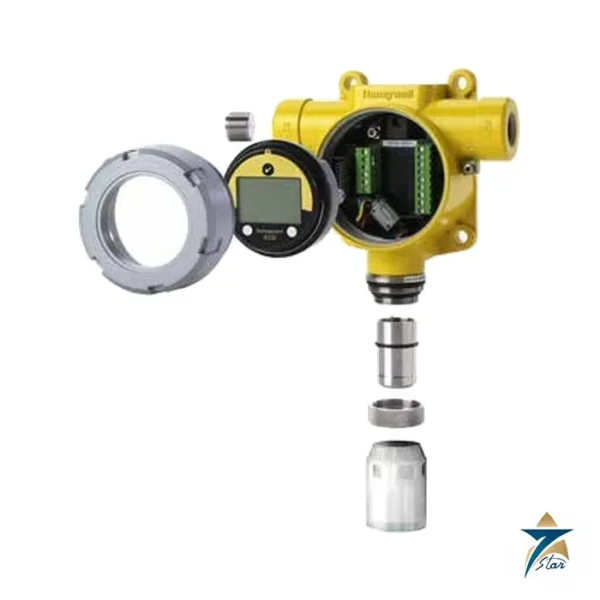
Zero the SPXCDALMFX in clean air, then apply gas at a flow of 1 litre per minute through the calibration cup. The sensor plugs into the base of the transmitter and is auto-recognised, so no hot work permit is needed to change it. The replacement cartridge is SPXCDXSFXSS, flammable catalytic bead 0 to 100 percent LEL. Add the suffix M if an RS485 Modbus RTU output is required, giving SPXCDALMFXM.
Because SPXCDALMFX is a catalytic detector, the transmitter configuration for flammable gas is unusual in one respect: the user selects the calibration gas number and the full-scale range, and the unit then applies the right correction for the gas. The span gas is applied between 25 and 95 percent of the selected full scale, and the default calibration point is 50 percent LEL. Setting a lower full scale, down to 20 percent LEL, increases resolution for low alarms but the alarm points must be moved accordingly, because the defaults of 20 and 40 percent LEL assume the standard 0 to 100 percent LEL range.
The housing is an epoxy-painted aluminium alloy LM25 enclosure with a 316 stainless steel sensor, plastic weather protection and an integral mounting plate. Certification for Europe is ATEX II 2 GD Ex d IIC Gb T6 for Ta up to +65 degrees C, T5 up to +75 degrees C and Ex tb IIIC T85 degrees C Db with IP66. IECEx matches the same markings. The datasheet adds GB, PA, CCCF and KTL approvals for Asian markets, and UL and c-UL ratings for Class I Division 1 Groups B, C and D in the UL version. These approvals allow the SPXCDALMFX to sit in the same hazardous-area documentation as other Sensepoint XCD detectors on a Gulf site.
Output and alarm behaviour
Normal readings produce 4 to 20 mA, a fault gives less than 1 mA, and the inhibit state gives 2 or 4 mA. Over range is signalled at 22 mA. The SPXCDALMFX defaults to 20 percent LEL for alarm 1 and 40 percent LEL for alarm 2; the two alarm relays default to normally open and de-energised, and the fault relay to normally open and energised.
Documents and quotation
Seven Star LLC is an independent supplier serving Oman and the GCC and is not affiliated with the manufacturer. The Sensepoint XCD datasheet can be sent with our quotation. Please send an RFQ naming SPXCDALMFX, the quantity, the target gas for calibration and the delivery location.
Other Models in the Xcd Detector Range
Seven Star LLC supplies models from the Xcd Detector range in Oman and the GCC. Compare the related models below and request a quote for the one that matches your application.
| Model | Category | |
|---|---|---|
| Honeywell SPXCDALMHX Sensepoint XCD H2S Detector LM25 | Fire & Gas Detectors | View details |
| Honeywell SPXCDASMHX Sensepoint XCD H2S Detector 316SS | Fire & Gas Detectors | View details |
| Honeywell SPXCDALMFX Sensepoint XCD Flammable Detector | Fire & Gas Detectors | You are viewing this model |
Datasheets & Documents
- Datasheet Sensepoint XCD Datasheet Download
Reviews (0)
How would you rate this product? Cancel reply
About brand
Honeywell is the American industrial technology group whose products on this site cover gas and flame detection, pressure transmitters, flow measurement, gas metering, fire alarm systems and helicopter rotor balancing equipment. Its roots go back to a thermostat business in Minneapolis in 1885 and to Mark Honeywell's heating company, which merged with it in 1927. Several brands we list have joined Honeywell over the years: Gent fire systems of Leicester (part of Honeywell since 2005), Chadwick-Helmuth (a Honeywell business unit from 2002) and Elster gas metering (acquired around the end of 2015).
Seven Star LLC is an independent supplier in Muscat. We list Honeywell gas detectors and sensors, transmitters, Elster gas meters and flow computers, Gent fire alarm equipment and Chadwick-Helmuth balancers, and supply them and their spares in Oman and the GCC by part number.
Honeywell company profile
| Origins | 1885, Minneapolis (Butz thermostat business); merged with Mark Honeywell's company in 1927 |
|---|---|
| Brands in our range | Honeywell Analytics gas detection, SmartLine transmitters, Elster gas metering, Gent fire detection, Chadwick-Helmuth rotor track and balance |
| Gent | Founded in Leicester, UK, around 1872 by John Thomas Gent; part of Honeywell since 2005 |
| Elster | Gas, water and electricity metering; bought by Honeywell from Melrose, deal completed around the end of 2015 |
Milestones
- 1885: The Butz thermostat business starts in Minneapolis.
- 1927: It merges with Mark Honeywell's company.
- 2005: Gent fire detection (Leicester, UK) becomes part of Honeywell.
- 2015: Honeywell completes the purchase of Elster from Melrose around the end of the year.
Honeywell products we list
| Family | Models | Typical use |
|---|---|---|
| Fixed gas detectors | Searchline Excel, Searchline Excel Plus, 02104-N-XSSA, Sensepoint XCD RTD, Sensepoint XCD IR, XCD H2, Sensepoint XCL, Sensepoint XRL, OmniPoint, RAEGuard 2 PID | Flammable, toxic and VOC gas detection in process areas |
| Sensors, flame detection and control | SR-W-MP75C LEL sensor, SR-X2V O2 sensor, FS24X Plus flame detector, R4343E flame switch, System 57 card, 5704FS panel | Replacement sensors, fire detection and gas detection control panels |
| Transmitters and flow | SmartLine STG700, STG800, STR82D remote seal, VersaFlow Coriolis | Process pressure and mass flow measurement |
| Elster gas metering | Q.Sonic plus, TRZ2, Quantometer, RABO, IRM-3 DUO, EK280, EC 350, enCore FC1, enCore ZM1, gas-net F1, gas-net D2, GasLab Q2, USM display | Gas meters, volume correction and fiscal flow computing |
| Gent fire alarm systems | Vigilon Plus, Vigilon Compact Plus, Nano, Xenex, S-Quad detector, S-Cubed, ALD302 base, S4-34420 interfaces, loop card, repeat panel, mimic panel, XENS-850 call point, 74430 bell | Addressable and conventional fire alarm systems in buildings and plants |
| Chadwick-Helmuth rotor track and balance | 8500C, 8500C Plus, Vibrex 2000, Model 11, photocell system, printer, bracket, protractor | Helicopter rotor track and balance and propeller balancing |
Gas detection uses two basic approaches. Point detectors such as the Sensepoint XCD measure the gas at one location, with a catalytic or infrared sensor for flammable gas and an electrochemical cell for toxic gas such as H2S. Open path detectors such as the Searchline Excel send an infrared beam across an area up to a few hundred metres long and detect a gas cloud anywhere along it. Infrared sensors cannot be poisoned the way catalytic beads can, which matters on sites with silicones or H2S.
Where Honeywell products are used
In Oman and the GCC, Honeywell gas detectors protect wellheads, gas plants, refineries and tank farms. Elster meters and flow computers measure gas at city gate stations and in industry. Gent systems are installed in commercial buildings, hospitals and hotels, and Chadwick-Helmuth balancers are used by helicopter operators.
Ordering Honeywell products: what we need
Send the part number from the label (for example 02104-N-XSSA or SPXCDASMTXF). For gas detectors, add the gas, range, output and certification. For gas meters, add size (DN), flow range and pressure rating. For Gent equipment, add the panel type and loop protocol.
Facts checked against Honeywell press releases and SEC filings, and published histories of Gent and Chadwick-Helmuth, October 2026.
Browse Honeywell products by category: Fire & Gas Detector, Vibration, Flowmeters, Pressure Instrumentation, Temperature Instrumentation.
FAQ
Questions about the Honeywell SPXCDALMFX Sensepoint XCD Flammable
Answers from our engineering team on installation, compatibility and integration.
01What sensor technology does Honeywell SPXCDALMFX use?
It uses a plug-in catalytic bead sensor for flammable gases 1 to 8, with a default range of 0 to 100 percent LEL and methane as the default gas.
02What is the power consumption of SPXCDALMFX?
The datasheet gives up to 4.9 W for catalytic versions, compared with 3.7 W for the infrared and electrochemical XCD versions.
03What alarm defaults does SPXCDALMFX have?
Alarm 1 is set to 20 percent LEL and alarm 2 to 40 percent LEL, both rising, and they are adjustable using the magnet switches and display.
04What is the replacement sensor for SPXCDALMFX?
The spare plug-in sensor is SPXCDXSFXSS, a flammable catalytic bead cartridge for 0 to 100 percent LEL.
05How is SPXCDALMFX calibrated?
Calibration is done with gas through calibration cup S3KCAL at 1 litre per minute for catalytic bead sensors, with a default calibration point of 50 percent LEL.


Reviews
There are no reviews yet.