Brand:

Honeywell 2106B1405 Sensepoint CO Sensor 0-100 ppm M20

Description

Honeywell 2106B1405 at a glance

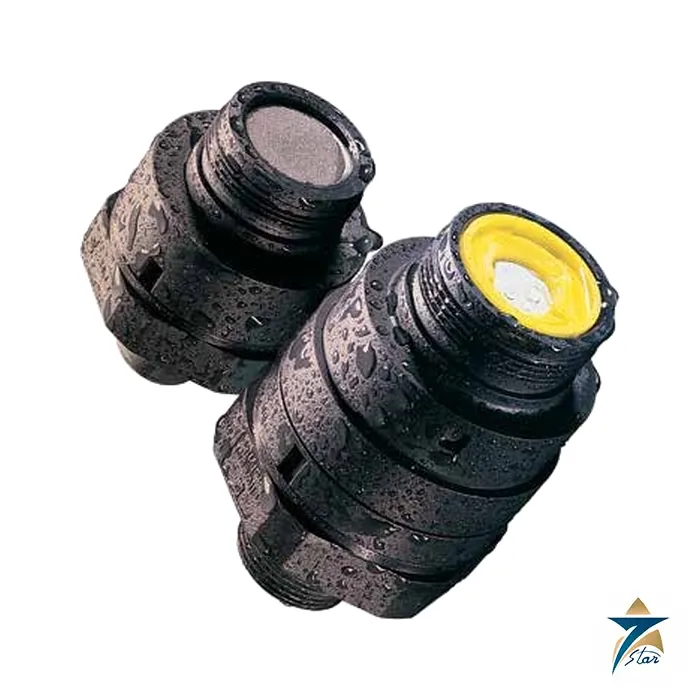
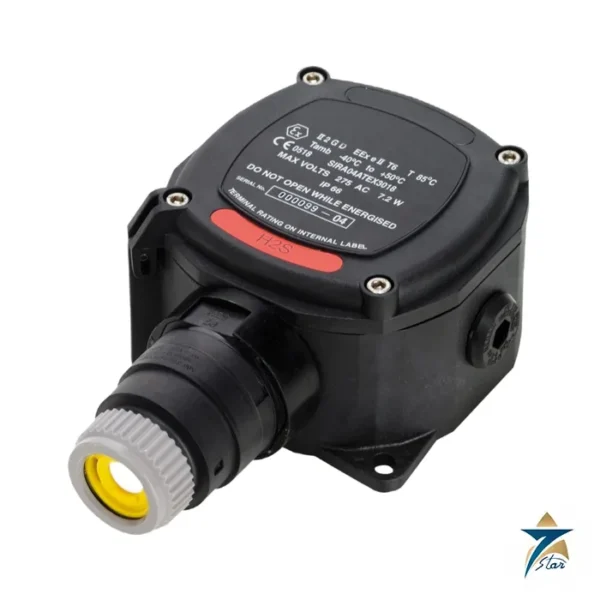
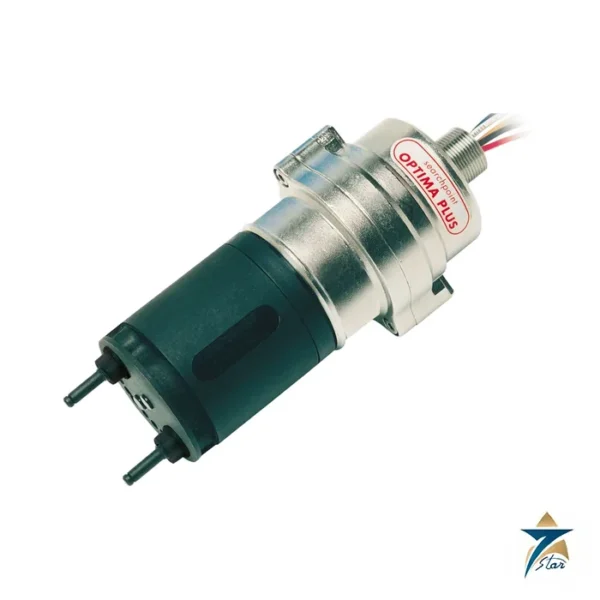
Honeywell 2106B1405 is the Sensepoint carbon monoxide sensor for the 0 to 100 ppm span, supplied with an M20 thread. In the Sensepoint catalogue it sits in the CO group of three spans, and it is the one chosen when the alarm points are set close to occupational exposure limits, for example in plant rooms, tunnels and car-park style ventilated spaces around Gulf facilities. It is a loop-powered 4 to 20 mA head that mounts in a suitable Ex d or Ex e junction box.

Parameter Value
Gas and span Carbon monoxide, 0 to 100 ppm
Thread M20
Output Loop powered 4 to 20 mA
Supply 18 to 30 VDC, 0.9 W maximum
Operating temperature -20 to +50 degrees C
Response T20 less than 5 s; T50 less than 12 s; T90 less than 30 s
Warm-up Less than 3 minutes
Typical life 2 years
Zero drift Less than +/-2 percent fsd per year; less than +/-5 percent fsd over temperature; less than +/-2 percent over humidity
Span drift Less than +/-4 percent fsd per year; less than +/-20 percent over temperature; less than +/-2 percent over humidity
Weight and material 185 g, polyphenylene sulphide
Protection IP65; IP67 with weather protection
Storage 0 to 25 degrees C, 30 to 70 percent RH, six months

Why the 100 ppm version of 2106B1405 is selected

Most CO alarm schemes use a low alarm in the tens of ppm and a high alarm at roughly double. When the head is run from an XCD RTD transmitter, Honeywell lists default alarms for the 100 ppm span of 30 ppm low and 60 ppm high, with a lowest selectable alarm of 10 ppm. The 200 ppm span moves those defaults to 40 and 80 ppm, and the 500 ppm span to 100 and 200 ppm. Choosing 0 to 100 ppm keeps resolution fine at the low end, which matters for early warning from combustion equipment.

Differences within the Sensepoint CO family

  • 2106B1405: 0 to 100 ppm, M20 (this item).
  • 2106B1406: 0 to 200 ppm, M20.
  • 2106B1407: 0 to 500 ppm, M20.
  • 2106B1505, 1506 and 1507: the same three spans with an M25 thread.
  • 2106B1705, 1706 and 1707: the same three spans with a three-quarter inch NPT thread.
  • Cell exchange kit 2106B1548 is the listed replacement electrochemical cell for the CO group.

Applications around 2106B1405

Boiler houses and gas-turbine auxiliary rooms, diesel generator enclosures, workshops with combustion heaters, enclosed loading bays, battery and switch rooms next to engine-driven plant, and water-treatment buildings with gas-fired heating all appear in the application mix for CO monitoring. In oil and gas facilities the sensor is also used near flare knock-out areas and incinerator housings where incomplete combustion can raise CO inside nearby service buildings.

Wiring and mechanical details for 2106B1405

Wiring follows the standard toxic pattern: red is the positive supply conductor, blue is the negative, and the cable screen is connected at one end. Honeywell’s installation drawing shows the head screwing into the bottom of a junction box, with the output carried to the controller on a single signal path. The IS front end allows the cell to be changed while energised, and the head is certified II 2 GD Ex d ia IIC T4 Gb for ambient temperatures from -40 to +65 degrees C, with dust protection Ex tb IIIC and IP67 T135 degrees C. Keep in mind that the operating range of the CO cell itself is narrower, at -20 to +50 degrees C.

Commissioning, calibration and maintenance

After power-up the head needs under three minutes to stabilise. Calibration is carried out with CO span gas through a calibration cover; the Sensepoint toxic calibration kit 2106B2114 contains the cover, a removal tool and the potentiometer tool for adjustment. Honeywell gives CO sensors a typical operating life of two years and a storage life of six months, so stock should be rotated. Replace the cell with kit 2106B1548 when span no longer reaches the target.

Controller and accessory pairing

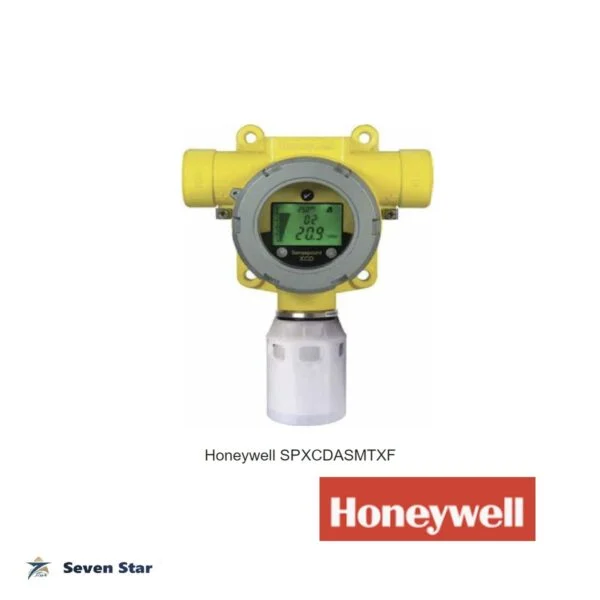
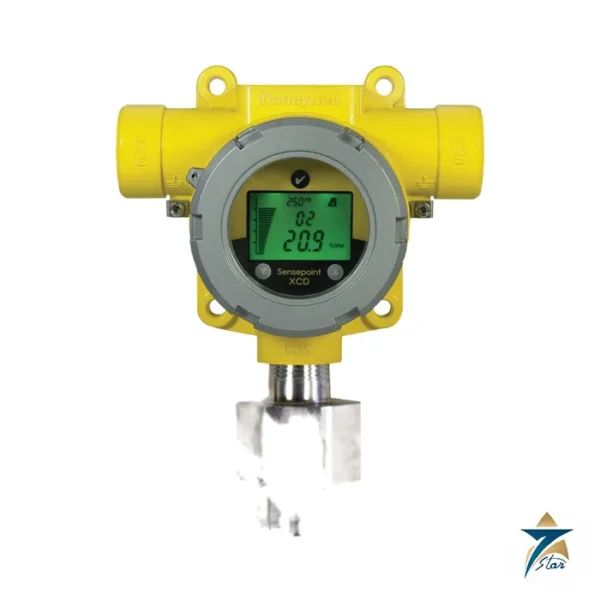
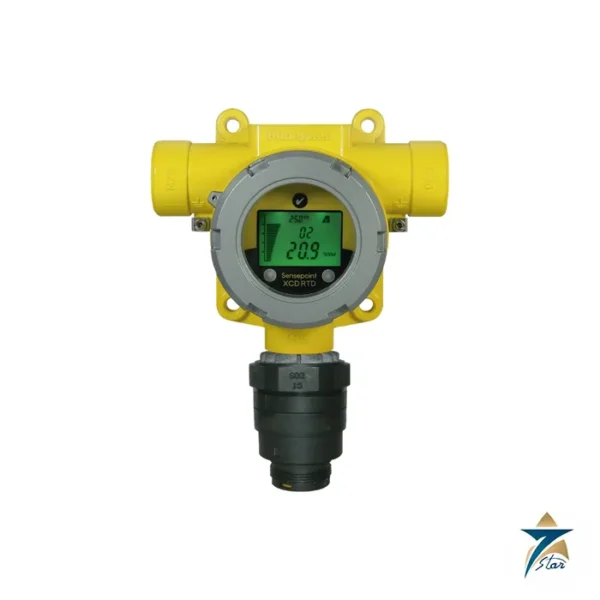
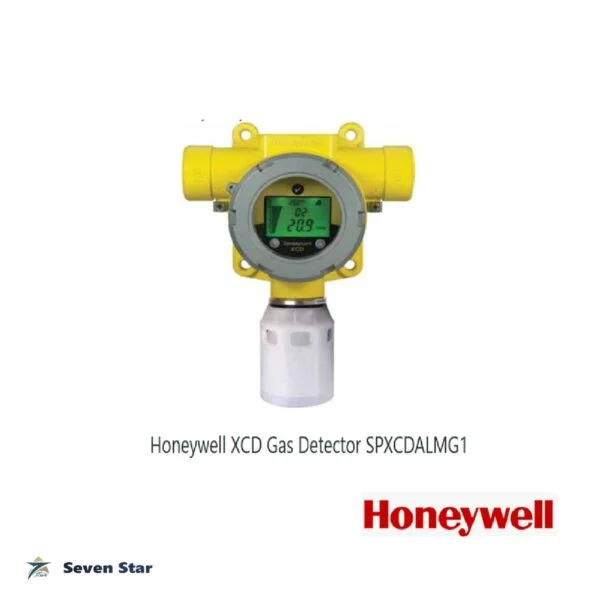
The head can be used with Honeywell controllers or with third-party DCS and PLC equipment that accepts a two-wire 4 to 20 mA loop. The XCD RTD transmitter accepts it directly in its M25 bottom entry or remotely, adding a local tri-colour display, relays and a Modbus option. Accessories noted by Honeywell for this range include a weatherproof cap, flow adaptor, duct mounting kit and collecting cone; for lighter or heavier-than-air gas behaviour CO is close to air density, so duct or ceiling-level placement should follow your hazard study.

Ordering checklist: before sending an RFQ for 2106B1405, confirm three things: the span, the thread of the enclosure or junction box, and the controller input. Thread M20 is common in ATEX and IECEx installations across the GCC; if the existing box has an M25 entry the 2106B1505 is the correct equivalent instead.

Reading the alarm and signal behaviour of 2106B1405

The 2106B1405 is a pure current-loop device: the controller sees a 4 to 20 mA signal that is linear with concentration across the 0 to 100 ppm span, and the datasheet quotes linearity of less than 5 percent of full scale deflection. There is no on-head display or relay, so alarm levels, inhibit behaviour and fault handling live in the receiving controller or in the XCD RTD transmitter. If the head is wired to a PLC, scale the analogue input so that 4 mA equals zero ppm and 20 mA equals 100 ppm, and set the low alarm with enough margin above any normal ambient CO from nearby combustion plant.

Environmental limits and handling for 2106B1405

Humidity is specified as continuous 20 to 90 percent RH non-condensing, with intermittent excursions between 10 and 99 percent RH, and the pressure window is 90 to 110 kPa. Store unopened heads at 0 to 25 degrees C and 30 to 70 percent RH, away from solvent vapours that could poison the cell, and fit them close to the commissioning date. Because the span drift over temperature is quoted at up to plus or minus 20 percent of the applied concentration, calibrate at a temperature close to the real service condition where practical.

Documents and quotation

Seven Star LLC is an independent supplier serving Oman and the GCC and is not affiliated with the manufacturer. We can attach the Sensepoint datasheet to your quotation. Send an RFQ stating part number 2106B1405, the quantity and the delivery point, together with the junction box thread and the receiving controller, and we will confirm the correct variant.

Datasheets & Documents
  • PDF Datasheet Sensepoint Gas Detector Datasheet Download
Reviews (0)

Reviews

There are no reviews yet.

How would you rate this product?

It takes about 10 seconds — just tap a star. Your email is never published.

About brand

Honeywell is the American industrial technology group whose products on this site cover gas and flame detection, pressure transmitters, flow measurement, gas metering, fire alarm systems and helicopter rotor balancing equipment. Its roots go back to a thermostat business in Minneapolis in 1885 and to Mark Honeywell's heating company, which merged with it in 1927. Several brands we list have joined Honeywell over the years: Gent fire systems of Leicester (part of Honeywell since 2005), Chadwick-Helmuth (a Honeywell business unit from 2002) and Elster gas metering (acquired around the end of 2015).

Seven Star LLC is an independent supplier in Muscat. We list Honeywell gas detectors and sensors, transmitters, Elster gas meters and flow computers, Gent fire alarm equipment and Chadwick-Helmuth balancers, and supply them and their spares in Oman and the GCC by part number.

Honeywell company profile

Origins 1885, Minneapolis (Butz thermostat business); merged with Mark Honeywell's company in 1927
Brands in our range Honeywell Analytics gas detection, SmartLine transmitters, Elster gas metering, Gent fire detection, Chadwick-Helmuth rotor track and balance
Gent Founded in Leicester, UK, around 1872 by John Thomas Gent; part of Honeywell since 2005
Elster Gas, water and electricity metering; bought by Honeywell from Melrose, deal completed around the end of 2015

Milestones

  • 1885: The Butz thermostat business starts in Minneapolis.
  • 1927: It merges with Mark Honeywell's company.
  • 2005: Gent fire detection (Leicester, UK) becomes part of Honeywell.
  • 2015: Honeywell completes the purchase of Elster from Melrose around the end of the year.

Honeywell products we list

Family Models Typical use
Fixed gas detectors Searchline Excel, Searchline Excel Plus, 02104-N-XSSA, Sensepoint XCD RTD, Sensepoint XCD IR, XCD H2, Sensepoint XCL, Sensepoint XRL, OmniPoint, RAEGuard 2 PID Flammable, toxic and VOC gas detection in process areas
Sensors, flame detection and control SR-W-MP75C LEL sensor, SR-X2V O2 sensor, FS24X Plus flame detector, R4343E flame switch, System 57 card, 5704FS panel Replacement sensors, fire detection and gas detection control panels
Transmitters and flow SmartLine STG700, STG800, STR82D remote seal, VersaFlow Coriolis Process pressure and mass flow measurement
Elster gas metering Q.Sonic plus, TRZ2, Quantometer, RABO, IRM-3 DUO, EK280, EC 350, enCore FC1, enCore ZM1, gas-net F1, gas-net D2, GasLab Q2, USM display Gas meters, volume correction and fiscal flow computing
Gent fire alarm systems Vigilon Plus, Vigilon Compact Plus, Nano, Xenex, S-Quad detector, S-Cubed, ALD302 base, S4-34420 interfaces, loop card, repeat panel, mimic panel, XENS-850 call point, 74430 bell Addressable and conventional fire alarm systems in buildings and plants
Chadwick-Helmuth rotor track and balance 8500C, 8500C Plus, Vibrex 2000, Model 11, photocell system, printer, bracket, protractor Helicopter rotor track and balance and propeller balancing

Gas detection uses two basic approaches. Point detectors such as the Sensepoint XCD measure the gas at one location, with a catalytic or infrared sensor for flammable gas and an electrochemical cell for toxic gas such as H2S. Open path detectors such as the Searchline Excel send an infrared beam across an area up to a few hundred metres long and detect a gas cloud anywhere along it. Infrared sensors cannot be poisoned the way catalytic beads can, which matters on sites with silicones or H2S.

Where Honeywell products are used

In Oman and the GCC, Honeywell gas detectors protect wellheads, gas plants, refineries and tank farms. Elster meters and flow computers measure gas at city gate stations and in industry. Gent systems are installed in commercial buildings, hospitals and hotels, and Chadwick-Helmuth balancers are used by helicopter operators.

Ordering Honeywell products: what we need

Send the part number from the label (for example 02104-N-XSSA or SPXCDASMTXF). For gas detectors, add the gas, range, output and certification. For gas meters, add size (DN), flow range and pressure rating. For Gent equipment, add the panel type and loop protocol.

Facts checked against Honeywell press releases and SEC filings, and published histories of Gent and Chadwick-Helmuth, October 2026.

FAQ

Questions about the Honeywell 2106B1405 Sensepoint CO Sensor 0-100 ppm

Answers from our engineering team on installation, compatibility and integration.

01What does Honeywell 2106B1405 measure?
It is the Sensepoint electrochemical carbon monoxide sensor with a 0 to 100 ppm range and an M20 mounting thread, outputting a loop-powered 4 to 20 mA signal.
02Which other CO spans exist beside 2106B1405?
The Sensepoint CO group also includes 2106B1406 for 0 to 200 ppm and 2106B1407 for 0 to 500 ppm, both M20, with M25 and NPT versions listed separately.
03What are the default alarms for the 100 ppm CO span?
On the XCD RTD transmitter the 100 ppm span has a default low alarm of 30 ppm, a high alarm of 60 ppm and a lowest selectable alarm level of 10 ppm.
04What temperature range does the 2106B1405 operate in?
The CO cell operates from -20 to +50 degrees C according to the Sensepoint datasheet, with the housing certified more widely for hazardous areas.
05What replacement cell is listed for the CO sensor?
Honeywell lists CO electrochemical cell exchange kit 2106B1548 for the Sensepoint CO group, so the cell can be changed without replacing the whole head.