Brand:

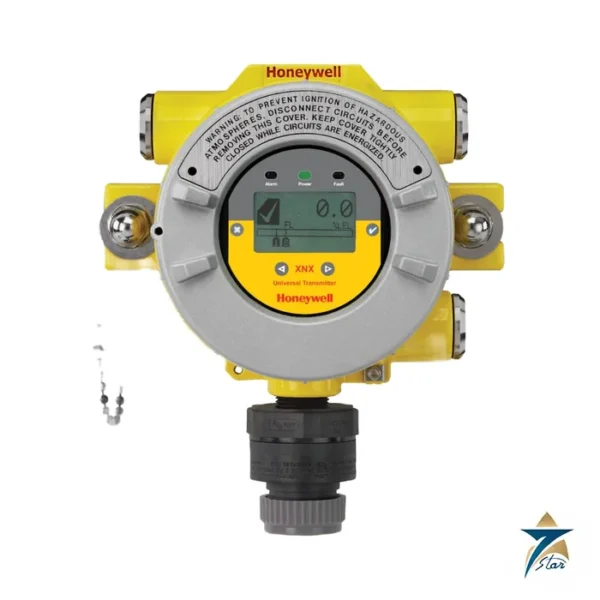
Honeywell XNX-UTAI-NNNNN XNX Universal Transmitter IR

Description

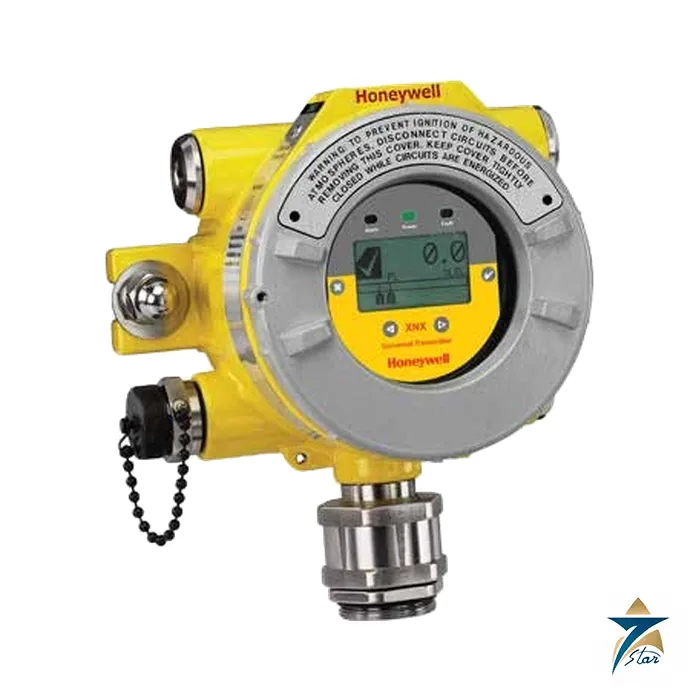
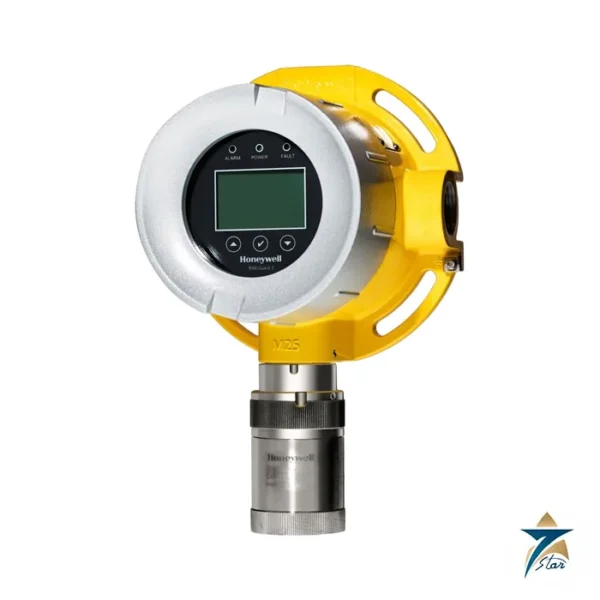
Honeywell XNX-UTAI-NNNNN is the XNX Universal Transmitter in its infrared personality, for North American hazardous-area certification. It is a transmitter only: it carries no sensor of its own, and it is designed to supply and read the Searchline Excel open path detector and the Searchpoint Optima Plus point infrared detector, with a local multilingual display, a HART 6.0 enabled 4 to 20 mA output and magnet-switch configuration.

Reading the XNX-UTAI-NNNNN code

Segment Letter Meaning
Approval U UL and CSA
Entry type T 3/4 inch NPT, five entries
Material A Painted marine-grade aluminium
Personality I Infrared, for Searchline Excel, Searchpoint Optima Plus and generic 4-20 mA inputs
Option N No output option installed (no relay, Modbus or Foundation Fieldbus)
Local HART N No local IS HART port
Sensor and range NNN None; sensors ordered separately

Electrical and mechanical data for XNX-UTAI-NNNNN

Parameter Value
Input voltage 18 to 32 VDC for the IR version, 24 VDC nominal
Power with Searchpoint Optima Plus 9.7 W maximum
Power with Searchline Excel receiver 13.2 W maximum
Weight Aluminium alloy, approx. 2.8 kg
Housing Marine-finish painted aluminium alloy or 316 stainless steel, flameproof
Dimensions 160 x 197 x 114 mm
Entries 5 entries: 2 right, 2 left, 1 bottom
Ingress protection IP66, NEMA 4X
Operating temperature -40 to +65 degrees C
Humidity 0 to 99 percent RH, non-condensing
Output Isolated 4 to 20 mA with HART 6.0, sink, source or isolated
Accuracy of 4-20 mA +/-1 percent of full scale
Safety IEC 61508 SIL 2 assessment

How XNX-UTAI-NNNNN differs from other XNX variants

The XNX family has three personalities. The EC board serves electrochemical toxic and oxygen sensors, the mV board serves catalytic and Sensepoint-type bridge sensors, and the IR board, selected by the letter I in the part number, serves the infrared detectors. The IR version uses an 18 to 32 VDC range rather than the 16 to 32 VDC range of the mV and EC versions, and it draws more power, up to 13.2 W when a Searchline Excel receiver is attached, against 6.2 W for an EC unit and 6.5 W for an mV unit. Within IR, the XNX-UTAI-NNNNN uses NPT entries and UL and CSA approvals; the ATEX and IECEx equivalent starts with A and M instead.

Where the infrared XNX fits

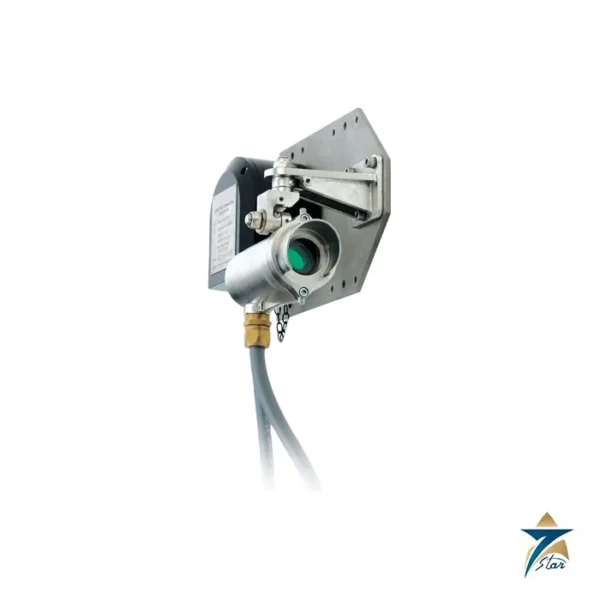
The Searchline Excel open path detector and the Searchpoint Optima Plus both interface with the IR personality, so a site that has chosen those detectors for flammable gas can specify the XNX-UTAI-NNNNN as the common transmitter on the control side. Honeywell lists offshore platforms, drilling, refineries, petrochemical plants, onshore terminals, gas transmission and power stations among typical XNX applications. The Searchline Excel receiver connects as an XNX IR with a 5 to 40 metre open path in the outline drawings.

Installation notes

The XNX-UTAI-NNNNN enclosure has two integral mounting lugs for surface mounting, and a pipe mount kit suitable for pipes of 100 to 150 mm diameter. A ceiling mount bracket kit and a remote mounting kit for XNX EC sensors are also available. Five NPT entries allow sensor, power and output cabling, and the plug-in POD module removes to give access to removable plug-and-socket terminals accepting wire of 0.5 to 2.5 mm squared. Honeywell’s maximum cable length table lists 347 metres on 1.0 mm squared up to 1408 metres on 2.5 mm squared for mV and EC arrangements.

The Searchline Excel is the detector that most often sits behind an XNX infrared transmitter. Honeywell’s Searchline Excel datasheet describes an open path detector for flammable hydrocarbons that covers 0 to 5 LEL.m, with path lengths of 5 to 40 metres for short range, 40 to 120 metres for medium range and 120 to 200 metres for long range, and a response of T90 under 3 seconds. Pairing it with an XNX-UTAI-NNNNN adds a local display, relays, HART and the choice of Modbus or Foundation Fieldbus, which the receiver alone does not offer. In the XNX literature the combination is sold as a kit, and the XNX-UTAI-NNNNN is the base transmitter from which such an arrangement is built in NPT and UL or CSA form.

Because the infrared personality of the XNX-UTAI-NNNNN powers the detector from the transmitter, voltage and cable length need more care than for a mV or EC unit. The IR input range starts at 18 VDC, not 16, and the 13.2 W peak draw with a Searchline Excel receiver means the supply should be sized for the worst case, including heater start-up in cold weather. Remote status and 4 to 20 mA signals share the same cable run, and Honeywell’s wiring diagrams show terminals 1-7, 1-8 and 1-9 carrying the infrared sensor connection, with terminals 2-1 and 2-2 carrying the Modbus A and B communications to Optima or Excel.

Outputs, HART and options

On the XNX-UTAI-NNNNN the standard output module gives isolated 4 to 20 mA with HART, which can be set to current source, sink or isolated modes by a switch behind the POD. HART reports gas reading, optical signal level, dynamic reserve for Searchline Excel, temperature, supply voltage and fault history. Options of relays (2 alarms plus fault, rated 240 VAC 5 A), Modbus RTU RS485 or Foundation Fieldbus FF cannot be combined with one another in one unit, and none is fitted in this NNNNN configuration.

Spare and accessory parts for the XNX family, and so for the XNX-UTAI-NNNNN, are listed in the datasheet: pipe mount kit 1226A0358, ceiling mount bracket kit 1226A0355 and the remote EC sensor mounting kit S3KRMK with 15 metres of shielded cable. For the XNX-UTAI-NNNNN, the remote kit is not applicable because it is for electrochemical sensors, but the pipe and ceiling kits are. A magnetic wand and screwdriver, an Allen key, three blanking plugs, a quick start guide and a manual CD are supplied as standard, with the carton measuring 370 by 280 by 180 mm and weighing about 4.4 kg packed in aluminium.

A few ordering cautions apply to the XNX-AMSV-NNCB1, and the XNX-AMSV-NNCB1 should be compared with the neighbouring codes before you place an order. First, the datasheet notes that certain combinations are not available, for example ATEX with three-quarter inch NPT entries, and that valid configurations are checked against the supplier price list. Second, if a later project needs relays, Modbus or Foundation Fieldbus, the option field must be changed from N, and the options cannot be mixed. Third, the CB1 sensor is a catalytic type, so if the application requires an infrared MPD, the codes IF1, IV1 or IC1 are used instead, making a different part number.

Documents and quotation

Seven Star LLC is an independent supplier serving Oman and the GCC and is not affiliated with the manufacturer. The XNX datasheet can be attached to our quotation. Please send an RFQ naming XNX-UTAI-NNNNN, the quantity and the delivery location, and tell us which detector the XNX-UTAI-NNNNN will serve. Confirm also that UL and CSA approval and NPT entries are what your project needs, since this code is the UL and CSA version and the ATEX and IECEx equivalent starts with A and M.

Datasheets & Documents
  • PDF Datasheet XNX Universal Transmitter Datasheet Download
Reviews (0)

Reviews

There are no reviews yet.

How would you rate this product?

It takes about 10 seconds — just tap a star. Your email is never published.

About brand

Honeywell is the American industrial technology group whose products on this site cover gas and flame detection, pressure transmitters, flow measurement, gas metering, fire alarm systems and helicopter rotor balancing equipment. Its roots go back to a thermostat business in Minneapolis in 1885 and to Mark Honeywell's heating company, which merged with it in 1927. Several brands we list have joined Honeywell over the years: Gent fire systems of Leicester (part of Honeywell since 2005), Chadwick-Helmuth (a Honeywell business unit from 2002) and Elster gas metering (acquired around the end of 2015).

Seven Star LLC is an independent supplier in Muscat. We list Honeywell gas detectors and sensors, transmitters, Elster gas meters and flow computers, Gent fire alarm equipment and Chadwick-Helmuth balancers, and supply them and their spares in Oman and the GCC by part number.

Honeywell company profile

Origins 1885, Minneapolis (Butz thermostat business); merged with Mark Honeywell's company in 1927
Brands in our range Honeywell Analytics gas detection, SmartLine transmitters, Elster gas metering, Gent fire detection, Chadwick-Helmuth rotor track and balance
Gent Founded in Leicester, UK, around 1872 by John Thomas Gent; part of Honeywell since 2005
Elster Gas, water and electricity metering; bought by Honeywell from Melrose, deal completed around the end of 2015

Milestones

  • 1885: The Butz thermostat business starts in Minneapolis.
  • 1927: It merges with Mark Honeywell's company.
  • 2005: Gent fire detection (Leicester, UK) becomes part of Honeywell.
  • 2015: Honeywell completes the purchase of Elster from Melrose around the end of the year.

Honeywell products we list

Family Models Typical use
Fixed gas detectors Searchline Excel, Searchline Excel Plus, 02104-N-XSSA, Sensepoint XCD RTD, Sensepoint XCD IR, XCD H2, Sensepoint XCL, Sensepoint XRL, OmniPoint, RAEGuard 2 PID Flammable, toxic and VOC gas detection in process areas
Sensors, flame detection and control SR-W-MP75C LEL sensor, SR-X2V O2 sensor, FS24X Plus flame detector, R4343E flame switch, System 57 card, 5704FS panel Replacement sensors, fire detection and gas detection control panels
Transmitters and flow SmartLine STG700, STG800, STR82D remote seal, VersaFlow Coriolis Process pressure and mass flow measurement
Elster gas metering Q.Sonic plus, TRZ2, Quantometer, RABO, IRM-3 DUO, EK280, EC 350, enCore FC1, enCore ZM1, gas-net F1, gas-net D2, GasLab Q2, USM display Gas meters, volume correction and fiscal flow computing
Gent fire alarm systems Vigilon Plus, Vigilon Compact Plus, Nano, Xenex, S-Quad detector, S-Cubed, ALD302 base, S4-34420 interfaces, loop card, repeat panel, mimic panel, XENS-850 call point, 74430 bell Addressable and conventional fire alarm systems in buildings and plants
Chadwick-Helmuth rotor track and balance 8500C, 8500C Plus, Vibrex 2000, Model 11, photocell system, printer, bracket, protractor Helicopter rotor track and balance and propeller balancing

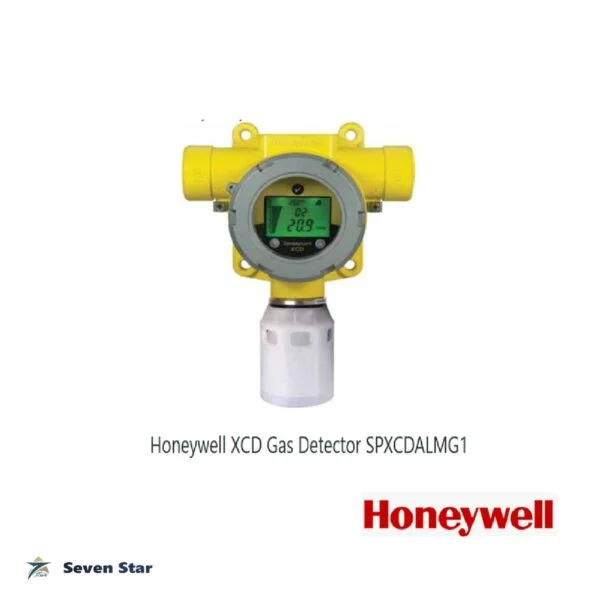
Gas detection uses two basic approaches. Point detectors such as the Sensepoint XCD measure the gas at one location, with a catalytic or infrared sensor for flammable gas and an electrochemical cell for toxic gas such as H2S. Open path detectors such as the Searchline Excel send an infrared beam across an area up to a few hundred metres long and detect a gas cloud anywhere along it. Infrared sensors cannot be poisoned the way catalytic beads can, which matters on sites with silicones or H2S.

Where Honeywell products are used

In Oman and the GCC, Honeywell gas detectors protect wellheads, gas plants, refineries and tank farms. Elster meters and flow computers measure gas at city gate stations and in industry. Gent systems are installed in commercial buildings, hospitals and hotels, and Chadwick-Helmuth balancers are used by helicopter operators.

Ordering Honeywell products: what we need

Send the part number from the label (for example 02104-N-XSSA or SPXCDASMTXF). For gas detectors, add the gas, range, output and certification. For gas meters, add size (DN), flow range and pressure rating. For Gent equipment, add the panel type and loop protocol.

Facts checked against Honeywell press releases and SEC filings, and published histories of Gent and Chadwick-Helmuth, October 2026.

FAQ

Questions about the Honeywell XNX-UTAI-NNNNN XNX Universal Transmitter

Answers from our engineering team on installation, compatibility and integration.

01What does the I in XNX-UTAI-NNNNN stand for?
It selects the infrared personality, used with Searchline Excel and Searchpoint Optima Plus, as well as generic 4 to 20 mA inputs.
02Does XNX-UTAI-NNNNN include a sensor?
No. NNN in the sensor field means none, and the detector, such as a Searchline Excel or Searchpoint Optima Plus, is ordered separately.
03What certifications does the U in XNX-UTAI-NNNNN indicate?
U indicates UL and CSA approval, paired with T for three-quarter inch NPT entries, whereas A and M denote ATEX and IECEx with M25 entries.
04What supply voltage does XNX-UTAI-NNNNN need?
The IR version operates from 18 to 32 VDC, with 24 VDC nominal, and draws up to 13.2 W with a Searchline Excel receiver.
05Which output options are installed on XNX-UTAI-NNNNN?
None. The N in the option field means that no relay, Modbus or Foundation Fieldbus module is fitted, though HART over 4 to 20 mA is standard.