- Automation & ControlView all 2,904 products
- Automation Accessories
- AC Drives
- PLC & I/O Cards
- Industrial Communications
- Vibration Monitoring
- Controllers & Data Acquisition
- Isolator & Barrier
- Safety Switches & Guard Locking
- Motor Soft Starters
- CCTV & Security
- Encoders
- Pneumatic Cylinders
- HMI Displays
- Servo Drives
- Industrial Computers
- Machine Vision
- Automation Software
- Robotics
Brand: Honeywell
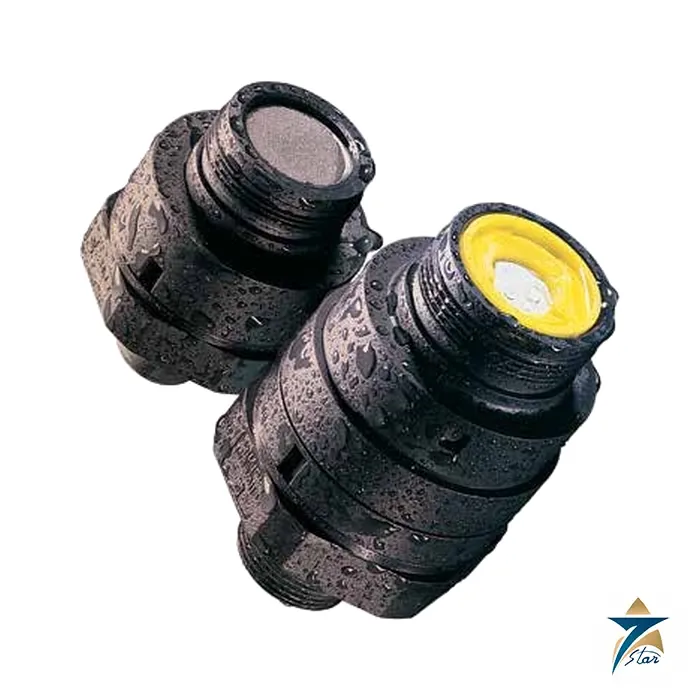
Honeywell 2106B1413 Sensepoint NH3 Sensor 0-50 ppm M20
Description
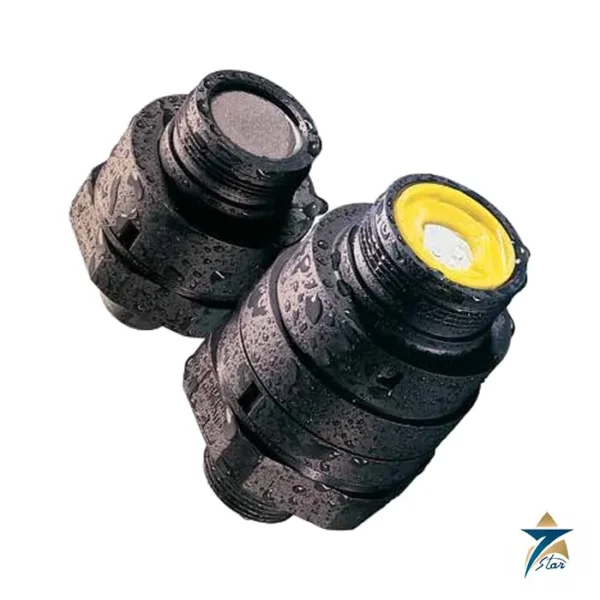
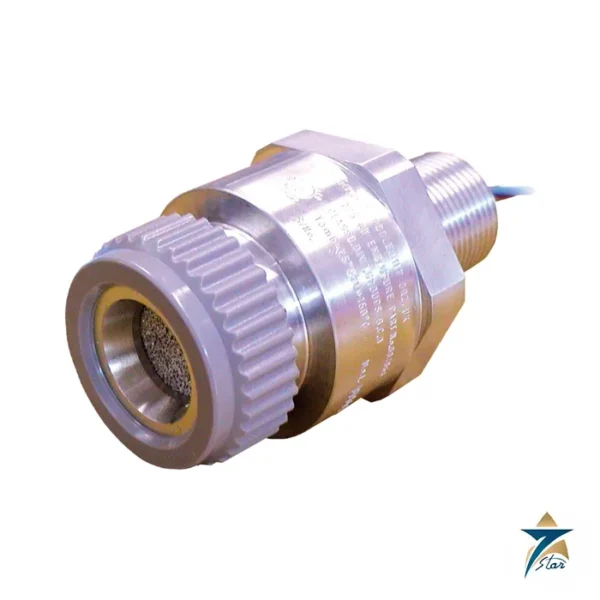
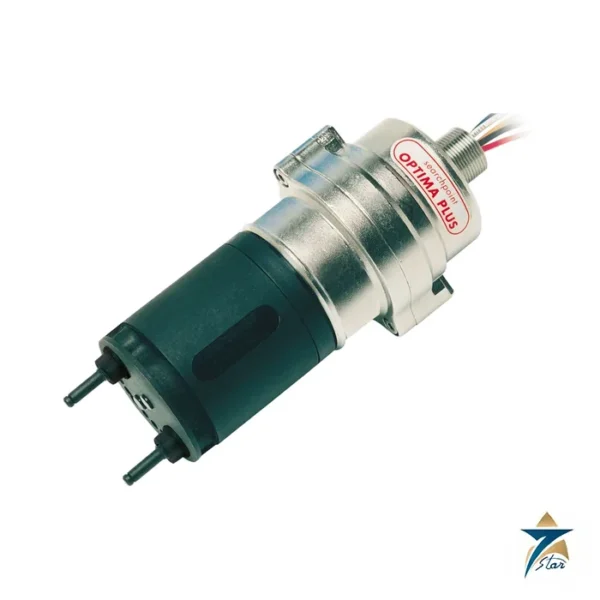
Honeywell 2106B1413 detects ammonia. It is the 0 to 50 ppm member of the Sensepoint NH3 group with an M20 thread, and it is the narrowest of the three ammonia spans, the others being 0 to 100 ppm and 0 to 1000 ppm. Ammonia is a sticky gas that is hard to measure through a sintered filter, so the Sensepoint construction, which omits the sinter on the intrinsically safe front end, is one reason this head is specified for refrigeration, fertiliser and water-treatment duties.
2106B1413 variants compared
| Part number | Span | Thread |
|---|---|---|
| Part number | Span | Thread |
| 2106B1413 | 0 to 50 ppm | M20 |
| 2106B1415 | 0 to 100 ppm | M20 |
| 2106B1414 | 0 to 1000 ppm | M20 |
| 2106B1513 / 1515 / 1514 | 50 / 100 / 1000 ppm | M25 |
| 2106B1713 / 1715 / 1714 | 50 / 100 / 1000 ppm | 3/4 inch NPT |
Within this table, the 2106B1413 is the one to choose for personnel protection near occupational limits. On an XCD RTD transmitter the 50 ppm span defaults to a 20 ppm low alarm and a 30 ppm high alarm, the 100 ppm span to 20 and 40 ppm, and the 1000 ppm span to 200 and 400 ppm.
Datasheet values for 2106B1413
| Parameter | Value |
|---|---|
| Output | Loop powered 4 to 20 mA |
| Supply | 18 to 30 VDC, 0.9 W maximum |
| Operating temperature | -20 to +40 degrees C |
| Response | T50 less than 10 s; T90 less than 65 s |
| Warm-up | Less than 3 minutes |
| Typical life | 18 months |
| Zero stability | Less than +/-2 percent fsd per year; less than +/-6 percent fsd over temperature; less than +/-10 percent over humidity |
| Span stability | Less than +/-20 percent fsd per year; less than +/-20 percent over temperature; less than +/-10 percent over humidity |
| Mass | 185 g |
| Body | Polyphenylene sulphide, IP65, IP67 with weather protection |
| Hazardous-area marking | II 2 GD Ex d ia IIC T4 Gb, Tamb -40 to +65 degrees C |
Ammonia-specific cautions with 2106B1413
The temperature window for the ammonia cell, -20 to +40 degrees C, is the narrowest among the Sensepoint toxic heads, and its stated span drift of up to 20 percent of full scale per year is the largest. In practice this means more frequent calibration checks than for CO or H2S heads and a tighter control on where the head is mounted: keep it out of direct summer sun on exposed roof-level pipework in Oman, and avoid cold-room evaporator discharge where temperatures leave the window.
Typical locations
- Ammonia refrigeration machine rooms and ice plants in food, fish and cold-chain facilities.
- Fertiliser, urea and ammonia storage areas in petrochemical zones.
- Potable-water and wastewater treatment where ammonia dosing or chloramination is used.
- Pharmaceutical and chemical batch rooms with ammonia reagents.
Installation notes for the 2106B1413 head
The 2106B1413 mounts through a junction box that is certified Ex d or Ex e. The head shares the toxic wiring colours of the family: red for positive, blue for negative, plus a cable screen at one end. Honeywell’s standard box 00780-A-0100 offers one 25 mm and three 20 mm entries and an earth continuity plate. Weather protection raises the rating from IP65 to IP67, and a collecting cone or a flow adaptor can be fitted from the accessory range.
Calibration and spares
A warm-up of less than three minutes precedes the first calibration, which uses the toxic calibration kit 2106B2114. Because the typical life is 18 months and storage life is six months, replacement cells are sold as exchange kit 2106B1596 for the 0 to 50 ppm group and 2106B1595 for the 0 to 1000 ppm group. Record the date of each exchange so that the drift behaviour can be tracked.
Choosing between 2106B1413 and its neighbours
Pick 2106B1413 where the worst credible leak stays in the tens of ppm. Where a machinery-room release could reach hundreds of ppm, the 100 ppm head 2106B1415 or the 1000 ppm head 2106B1414 keeps the reading on scale instead of saturating at 50 ppm.
Ammonia detection practice for the Gulf
Ammonia is lighter than air, so detector height normally sits in the upper part of a room, while a leak from a pressurised liquid line can briefly form a dense cold cloud near the floor. Site hazard studies set the mounting level, not the sensor datasheet, but the 2106B1413 mounts from either direction because it is a compact PPS head on a junction box. In Omani cold-chain and desalination plants it is common to pair a 50 ppm head near personnel positions with a higher-range head close to the compressor.
Maintenance interval thinking for 2106B1413
The combination of an 18 month life and large span drift calls for a recorded maintenance plan. Many sites perform a bump test at start-up, a calibration after the first month, and a calibration at each planned shutdown. Keep a spare head or exchange kit in stock when ammonia detection protects a critical refrigeration area, because lead times for obsolete or specialised heads can be long. When a head is replaced, check that the new 2106B1413 carries the same M20 thread as the one removed, confirm the span label reads 50 ppm, and update the controller scaling record so that the 4 to 20 mA input still corresponds to zero and 50 ppm. If the plant ever moves to a 100 ppm or 1000 ppm head the controller scaling and alarm set points must be changed at the same time.
Documents and quotation
Seven Star LLC is an independent supplier serving Oman and the GCC and is not affiliated with the manufacturer. Ask us for the Sensepoint datasheet with your quote. Send an RFQ listing part number 2106B1413, quantity, delivery location and the junction box thread so that we can confirm the correct ammonia head.
Spares and Lifecycle Considerations
For critical service, many plants hold one Honeywell 2106B1413 as an operational spare rather than waiting for a failure. When you plan spares, look at how many identical fire & gas detectors units are installed, how long a replacement would take to arrive, and the cost of an unplanned stop. Store spare units in their original packaging in a dry, temperature-controlled area and record the part number and serial number in your maintenance system. We can quote single units or a small spares package and confirm the lead time for each item in writing.
Datasheets & Documents
- Datasheet Sensepoint Gas Detector Datasheet Download
Reviews (0)
How would you rate this product? Cancel reply
About brand
Honeywell is the American industrial technology group whose products on this site cover gas and flame detection, pressure transmitters, flow measurement, gas metering, fire alarm systems and helicopter rotor balancing equipment. Its roots go back to a thermostat business in Minneapolis in 1885 and to Mark Honeywell's heating company, which merged with it in 1927. Several brands we list have joined Honeywell over the years: Gent fire systems of Leicester (part of Honeywell since 2005), Chadwick-Helmuth (a Honeywell business unit from 2002) and Elster gas metering (acquired around the end of 2015).
Seven Star LLC is an independent supplier in Muscat. We list Honeywell gas detectors and sensors, transmitters, Elster gas meters and flow computers, Gent fire alarm equipment and Chadwick-Helmuth balancers, and supply them and their spares in Oman and the GCC by part number.
Honeywell company profile
| Origins | 1885, Minneapolis (Butz thermostat business); merged with Mark Honeywell's company in 1927 |
|---|---|
| Brands in our range | Honeywell Analytics gas detection, SmartLine transmitters, Elster gas metering, Gent fire detection, Chadwick-Helmuth rotor track and balance |
| Gent | Founded in Leicester, UK, around 1872 by John Thomas Gent; part of Honeywell since 2005 |
| Elster | Gas, water and electricity metering; bought by Honeywell from Melrose, deal completed around the end of 2015 |
Milestones
- 1885: The Butz thermostat business starts in Minneapolis.
- 1927: It merges with Mark Honeywell's company.
- 2005: Gent fire detection (Leicester, UK) becomes part of Honeywell.
- 2015: Honeywell completes the purchase of Elster from Melrose around the end of the year.
Honeywell products we list
| Family | Models | Typical use |
|---|---|---|
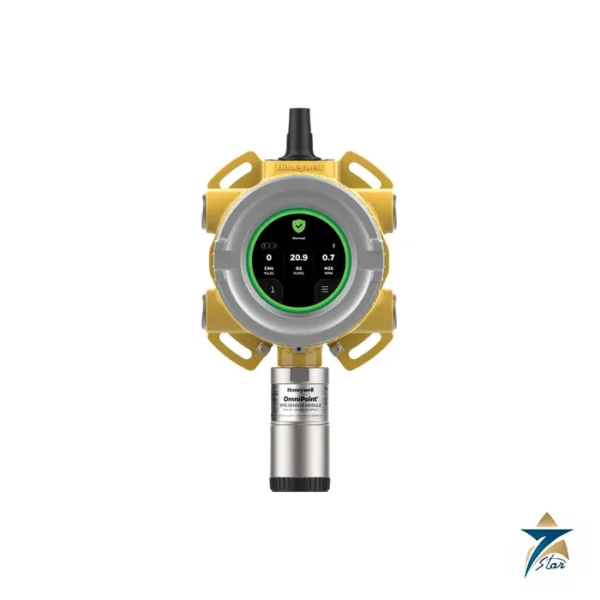
| Fixed gas detectors | Searchline Excel, Searchline Excel Plus, 02104-N-XSSA, Sensepoint XCD RTD, Sensepoint XCD IR, XCD H2, Sensepoint XCL, Sensepoint XRL, OmniPoint, RAEGuard 2 PID | Flammable, toxic and VOC gas detection in process areas |
| Sensors, flame detection and control | SR-W-MP75C LEL sensor, SR-X2V O2 sensor, FS24X Plus flame detector, R4343E flame switch, System 57 card, 5704FS panel | Replacement sensors, fire detection and gas detection control panels |
| Transmitters and flow | SmartLine STG700, STG800, STR82D remote seal, VersaFlow Coriolis | Process pressure and mass flow measurement |
| Elster gas metering | Q.Sonic plus, TRZ2, Quantometer, RABO, IRM-3 DUO, EK280, EC 350, enCore FC1, enCore ZM1, gas-net F1, gas-net D2, GasLab Q2, USM display | Gas meters, volume correction and fiscal flow computing |
| Gent fire alarm systems | Vigilon Plus, Vigilon Compact Plus, Nano, Xenex, S-Quad detector, S-Cubed, ALD302 base, S4-34420 interfaces, loop card, repeat panel, mimic panel, XENS-850 call point, 74430 bell | Addressable and conventional fire alarm systems in buildings and plants |
| Chadwick-Helmuth rotor track and balance | 8500C, 8500C Plus, Vibrex 2000, Model 11, photocell system, printer, bracket, protractor | Helicopter rotor track and balance and propeller balancing |
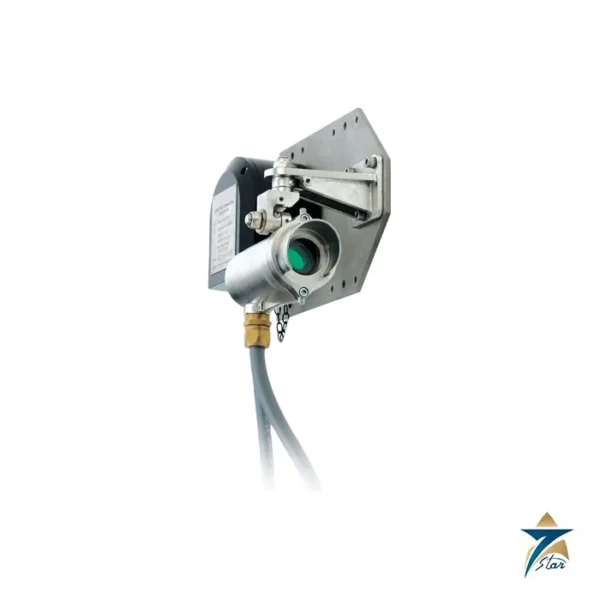
Gas detection uses two basic approaches. Point detectors such as the Sensepoint XCD measure the gas at one location, with a catalytic or infrared sensor for flammable gas and an electrochemical cell for toxic gas such as H2S. Open path detectors such as the Searchline Excel send an infrared beam across an area up to a few hundred metres long and detect a gas cloud anywhere along it. Infrared sensors cannot be poisoned the way catalytic beads can, which matters on sites with silicones or H2S.
Where Honeywell products are used
In Oman and the GCC, Honeywell gas detectors protect wellheads, gas plants, refineries and tank farms. Elster meters and flow computers measure gas at city gate stations and in industry. Gent systems are installed in commercial buildings, hospitals and hotels, and Chadwick-Helmuth balancers are used by helicopter operators.
Ordering Honeywell products: what we need
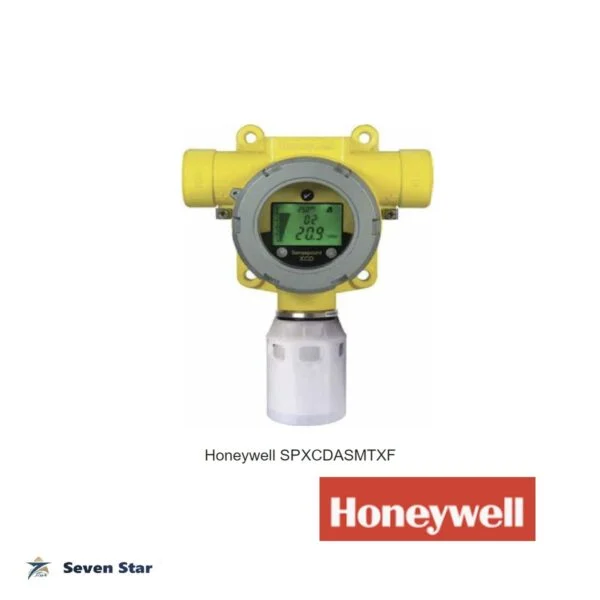
Send the part number from the label (for example 02104-N-XSSA or SPXCDASMTXF). For gas detectors, add the gas, range, output and certification. For gas meters, add size (DN), flow range and pressure rating. For Gent equipment, add the panel type and loop protocol.
Facts checked against Honeywell press releases and SEC filings, and published histories of Gent and Chadwick-Helmuth, October 2026.
Browse Honeywell products by category: Fire & Gas Detector, Vibration, Flowmeters, Pressure Instrumentation, Temperature Instrumentation.
FAQ
Questions about the Honeywell 2106B1413 Sensepoint NH3 Sensor 0-50 ppm
Answers from our engineering team on installation, compatibility and integration.
01What range does Honeywell 2106B1413 cover?
It is the Sensepoint ammonia sensor with a 0 to 50 ppm range and an M20 thread, outputting a loop-powered 4 to 20 mA signal.
02What temperature window applies to the ammonia sensor?
The datasheet gives -20 to +40 degrees C as the operating range for the Sensepoint ammonia cell, narrower than the CO and H2S heads.
03What is the typical life of the 2106B1413?
Honeywell quotes a typical operating life of 18 months for the ammonia cell, with a storage life of six months, so spares should not be stocked for years.
04Which exchange kit replaces the cell in 2106B1413?
Exchange kit 2106B1596 is listed for NH3 0 to 50 ppm cells, while 2106B1595 is listed for the 0 to 1000 ppm version.
05What are the default alarms for the 50 ppm ammonia span?
With the XCD RTD transmitter the 50 ppm span defaults to a 20 ppm low alarm and a 30 ppm high alarm.


Reviews
There are no reviews yet.