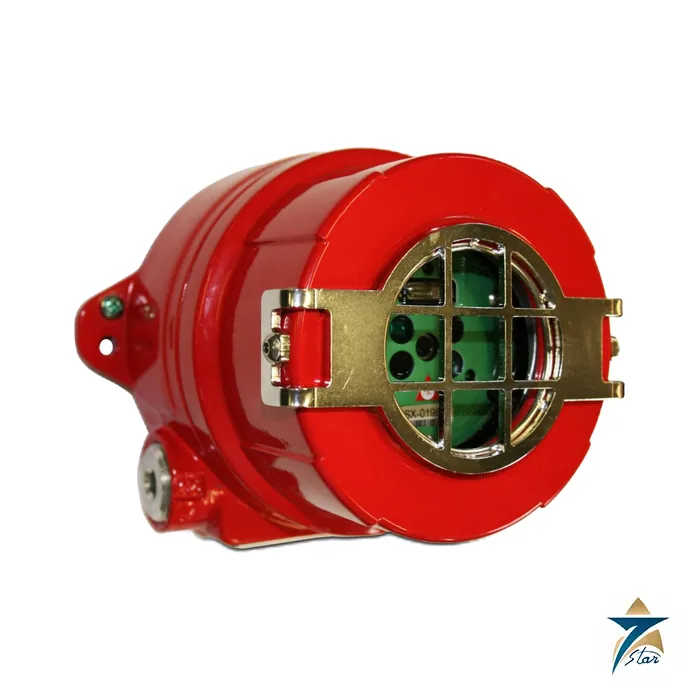
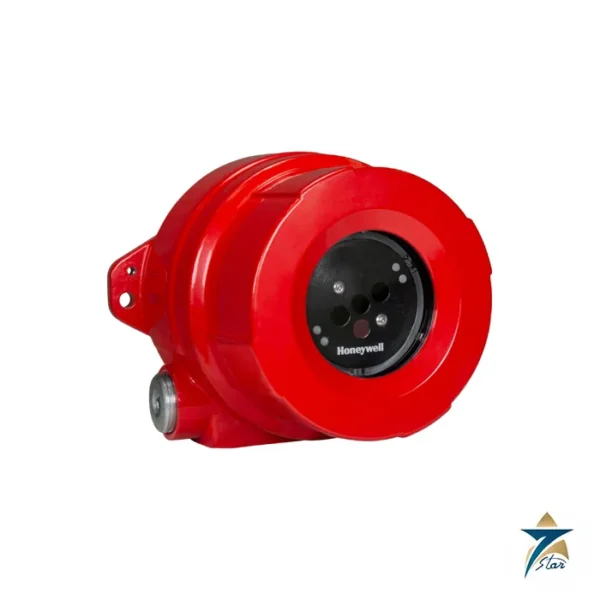
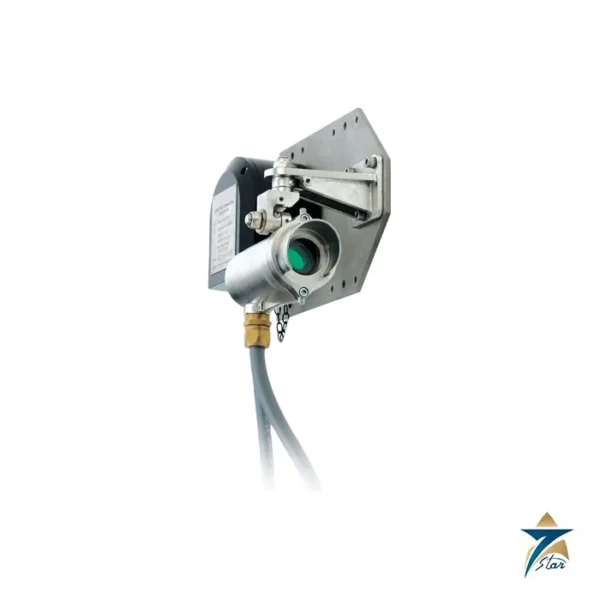
FS20X multi-spectrum UV/dual IR/visible flame detector
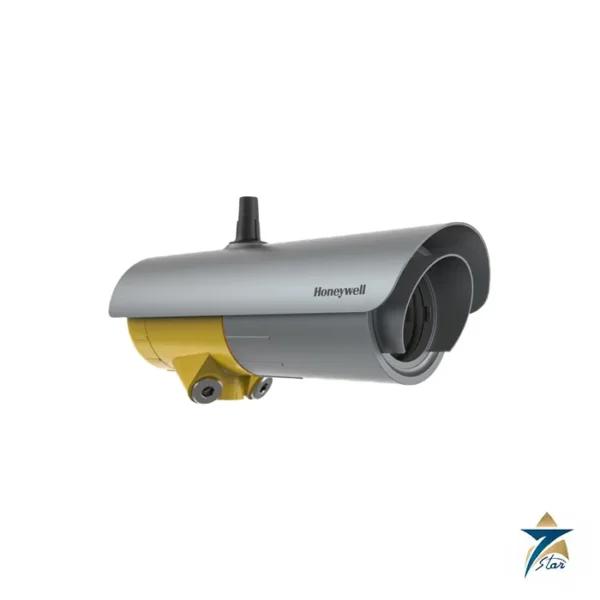
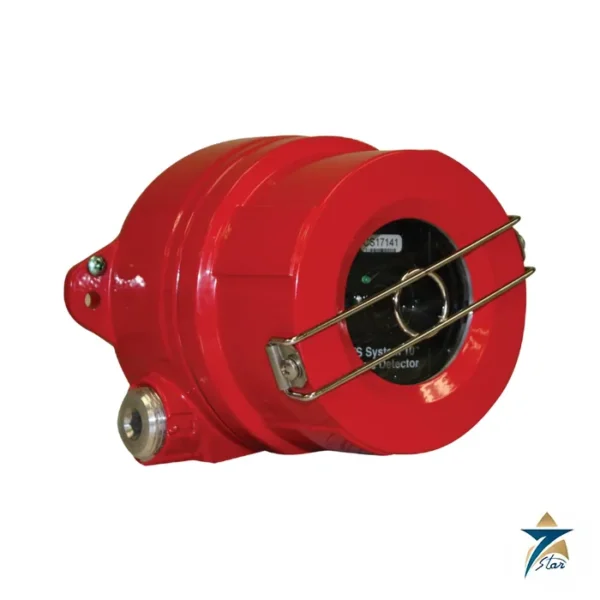
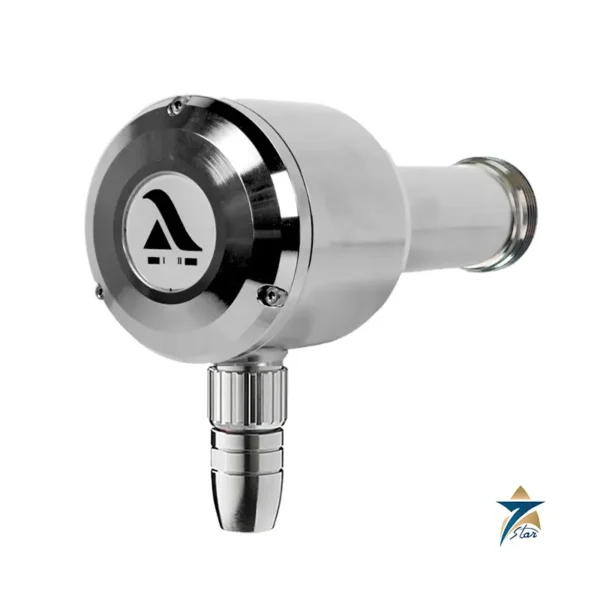
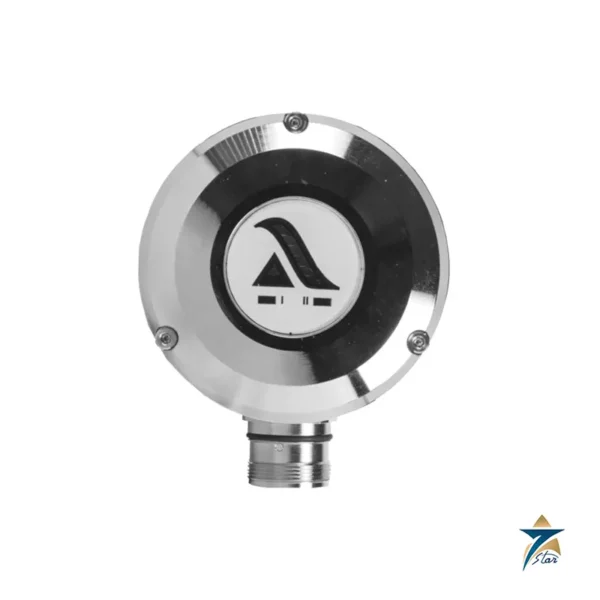
The Honeywell FS20X is a multi-spectrum flame detector for hydrocarbon and non-hydrocarbon fires in hazardous industrial areas. It belongs to the FSX family of electro-optical flame detectors and builds on the earlier SS4 design, adding wide-band infrared, near-band infrared and visible sensing around a solar-blind ultraviolet cell. The name is easy to read: FS is the flame-sensor series, 20 is the model generation in this line, and X marks the FSX family. Seven Star LLC supplies the FS20X in Oman and the GCC as an independent supplier in Muscat.
Older UV/IR detectors that rely on a narrow 4.3 micron IR band can go blind when thick smoke or an oily lens attenuates both channels at once, and they will not alarm behind ordinary window glass. The FS20X was designed to stay alert in those conditions, so it suits the dirty, smoky, hot environments typical of oil and gas plants.
FS20X technical specifications
| Parameter |
Specification |
| Manufacturer / part number |
Honeywell / FS20X |
| Detection technology |
UV, wide-band IR, near-band IR and visible (UV/dual IR/VIS) |
| Spectral sensitivity |
UV 185 to 260 nm; visible 400 to 700 nm; near-band IR 0.7 to 1.1 µm; wide-band IR 1.1 to 3.5 µm |
| Field of view |
90° horizontal cone, ±45° from the axis |
| Sensitivity settings |
Very high 60 m, high 45 m, medium 30 m, low 15 m (switch selectable) |
| Response time |
3 to 5 s at 30 m and 3 to 10 s at 60 m to a 0.1 m² n-heptane fire |
| Supply voltage |
24 Vdc nominal, 18 to 32 Vdc, regulated |
| Current draw |
85 mA operating, 135 mA in alarm, +155 mA with heater on (heater starts at -17 °C) |
| Relays |
Fire alarm SPDT, fault SPST (NO), auxiliary SPDT; 1 A at 24 Vdc; energised or de-energised, latching or non-latching |
| Analog output |
0 to 20 mA stepped, source or sink, loop resistance 50 to 400 Ω |
| Communication |
RS-485 Modbus or FireBus II (selectable), optional RS-485 special; optional plug-in HART (not on EN54-10 units) |
| Operating / storage temperature |
-40 to +85 °C / -55 to +110 °C |
| Humidity |
5 to 98 % RH, non-condensing |
| Enclosure |
Copper-free powder-coated aluminium or 316 stainless steel; IP66, Type 4X, NEMA 4 |
| Conduit entries |
Two M25 or two 3/4 in NPT |
| Shipping weight |
Aluminium 1.6 kg, stainless steel 3.2 kg |
| Vibration |
Meets or exceeds MilSpec 810C Method 514.2, Curve AW12 |
How the FS20X decides it is looking at a fire
Two microprocessors split the work. The master processor samples the sensors at high speed and runs the signal-processing algorithms, including electronic frequency analysis that looks for the flicker pattern of a real flame. The slave processor handles sensor housekeeping, communications, self-diagnostics and storage of the event log and FirePic data. This division is what the datasheet describes as the basis of its fail-safe behaviour.
The ultraviolet cell gives a fast, solar-blind response, while the visible and infrared channels add the discrimination that keeps welding arcs, hot surfaces and reflected sunlight from raising a false alarm. An automatic optical-path test and electronic self-test run in the background, so a contaminated lens or a failed element is reported as a fault rather than leaving the detector silently blind.
Where the FS20X fits in a fire and gas system
The FS20X normally lands on a fire and gas panel or a PLC input through its relays or the 4-20 mA loop, or on a Modbus network for status and event data. Because the analog output is stepped, the same loop carries normal, fault and alarm states. Related Honeywell flame detectors in the same range include the FS20X Plus, a newer UV/3IR design, and the FSL100 series, a compact GRP-housed detector for lighter-duty and indoor zones. The Honeywell Touchpoint Pro controller is shown in its datasheet with flame detectors as part of a combined gas and flame system.
Mounting uses an optional swivel bracket assembly, which lets you aim the 90° cone at the hazard without moving the housing. Wiring accepts 2.5 mm² (14 AWG) down to 0.326 mm² (22 AWG), and shielded cable is recommended.
Selecting an FS20X: checklist
- Housing material: aluminium for most onshore plant, 316 stainless steel for offshore, coastal or corrosive duty.
- Conduit entry type: M25 or 3/4 in NPT, to match your gland and conduit standard.
- Hazardous-area approvals required at site: the datasheet lists FM, ATEX/IECEx Ex db IIC, CU-TR and INMETRO.
- Sensitivity needed: choose the setting from the distance to the farthest credible fire, then confirm coverage with a site fire mapping study.
- Output and protocol: relay-only, 4-20 mA source or sink, Modbus, FireBus II or optional HART. HART is not offered on EN54-10 units.
- Whether EN54-10 certification is required, as it is an option rather than the default build.
- Mounting: swivel bracket assembly, ordered as an option.
Installing and maintaining the FS20X
Aim the detector so the 90° cone covers the fire risk, keep it clear of obstructions, and remember that the useful range is set by the sensitivity switch, not by the cone alone. Power must be regulated 24 Vdc within 18 to 32 Vdc, and the supply should be sized for the alarm and heater current in cold climates. Plug-in terminations on the electronics module make field wiring and replacement quicker.
Routine care is mostly keeping the window clean and running the periodic function check your site procedure calls for. The datasheet describes the detector as low-maintenance, and the FSIM interface with PC software lets engineers read real-time graphs, fault diagnostics, the 200-event log and up to six FirePic records after an incident.
Typical FS20X applications in Oman and the GCC
The datasheet lists refineries, offshore platforms, turbine and compressor enclosures, pipelines and pumping stations, LNG/LPG loading, tank farms, hydrogen plants, chemical plants, power plants and aircraft hangars. In Oman and the wider Gulf, that translates into upstream oil and gas facilities, gas processing, petrochemical sites, power stations and storage terminals, where high ambient temperature, dust and humidity near the coast all put pressure on optical detectors. The -40 to +85 °C rating and the sensing that tolerates smoke and a dirty lens are the reasons buyers shortlist the FS20X for these sites.
FS20X compared with its flame-detector relatives
| Model |
Technology |
Typical use |
| FS20X |
UV, dual IR and visible, 90° cone, 15 to 60 m sensitivity steps |
Hydrocarbon and non-hydrocarbon fires in harsh outdoor and offshore areas |
| FS20X Plus |
UV/3IR, oval 100° x 90° view, Modbus, HART 7 and isolated mA |
Newer all-in-one detector for hydrocarbon, non-hydrocarbon and hydrogen fires |
| FSL100 |
UV, UV/IR or IR3 in a GRP housing, IP65 |
Indoor and lighter-duty zones, engine rooms, storage, laboratories |
Information to send with an FS20X RFQ
- Required housing material and conduit entry type.
- Hazardous-area classification and the approval you must show (ATEX, IECEx, FM or others).
- Output and communication needs: relays, 4-20 mA source or sink, Modbus, FireBus II or HART.
- Whether EN54-10 is needed.
- Quantity, mounting brackets, and the project timeline.
- The fuels present and the longest viewing distance, if you want us to flag the sensitivity setting to confirm.
Documents and quotation
A Honeywell FS20X datasheet is attached on this page. It lists the approvals, relay ratings and communication options used above, so you can check them against your project specification.
To quote the FS20X, send the housing material, entry type, approvals and quantity. Seven Star LLC will confirm availability and lead time and reply with a quotation.
























Reviews
There are no reviews yet.