Brand:

Honeywell Sensepoint XCL Fixed Gas Detector

Description

Overview

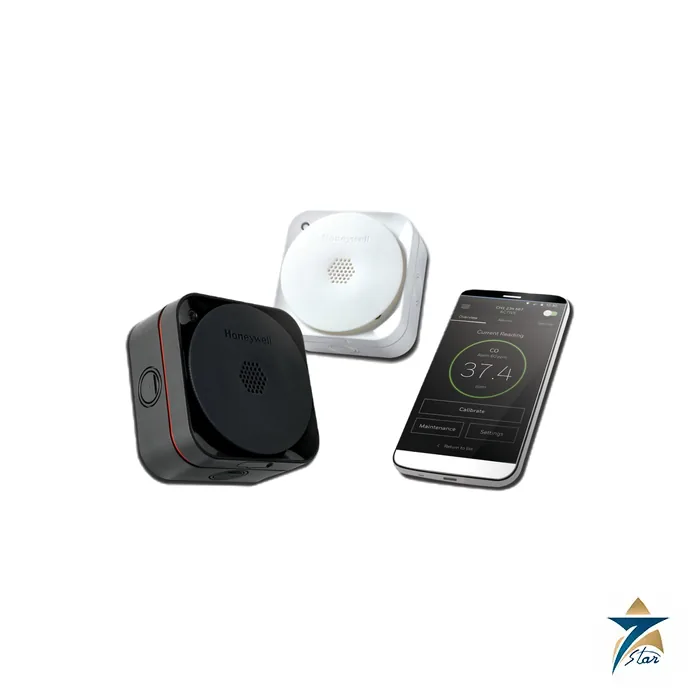
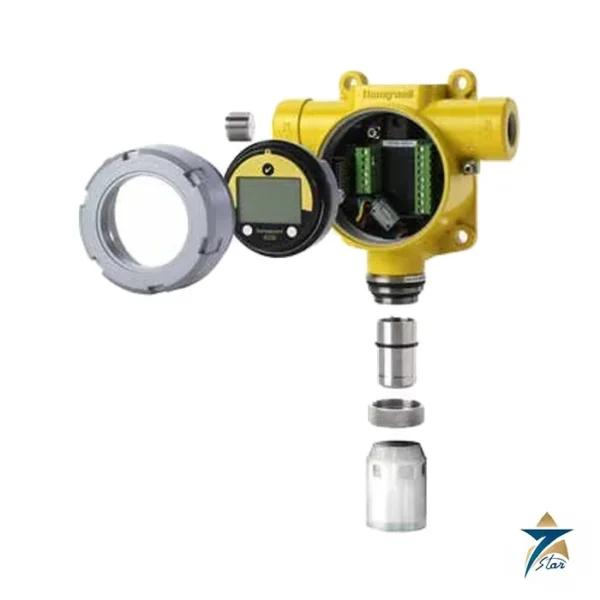
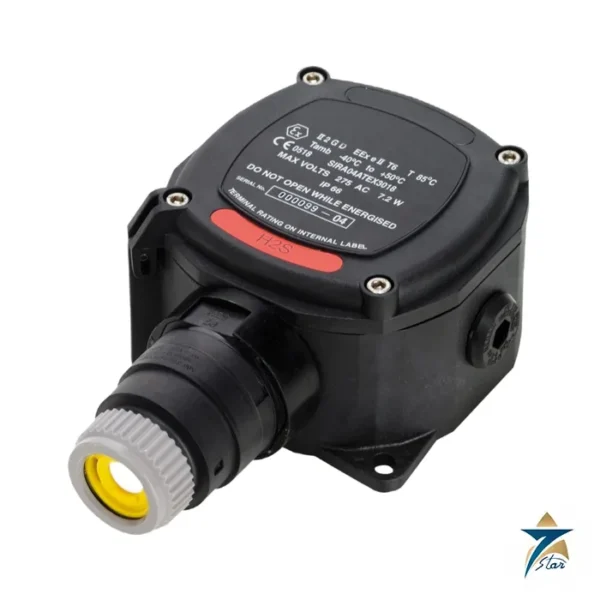
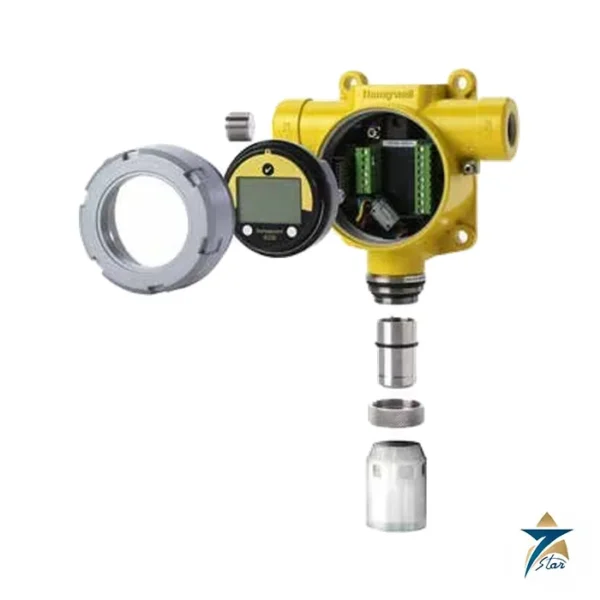
The Honeywell Sensepoint XCL is a fixed point gas leak detector designed for commercial and light industrial applications. Honeywell built it around four goals stated in the data sheet: quicker installation, rapid configuration, simple operation and straightforward maintenance. Versions are available for combustible gas, oxygen, carbon monoxide, hydrogen, hydrogen sulphide, nitrogen dioxide, ammonia and carbon dioxide, so one detector platform can cover kitchens, plant rooms, car parks, laboratories and light manufacturing areas. The detector pairs with a smartphone over Bluetooth, and the mobile app is used for installation, commissioning, bump tests, calibration and reporting.

Seven Star LLC supplies the Honeywell Sensepoint XCL to building services contractors, facility managers and safety consultants in the Sultanate of Oman and the GCC. Demand comes from hotels and mixed-use developments in Muscat, hospital and laboratory projects, central kitchens and food factories, underground parking structures and light industrial units in Sohar, Rusayl and Salalah. With engineering support in Muscat, our team helps select the correct gas, output and relay version for each zone and coordinates detectors with the control panel.

Measurement Principle

Each Honeywell Sensepoint XCL carries a sensor matched to the target gas. In general terms, combustible versions use a sensor that responds to flammable gas and are factory calibrated to methane over 0 to 100% LEL, toxic versions use electrochemical cells that produce a current proportional to the gas concentration, the oxygen version measures 0 to 25% volume, and carbon dioxide versions measure either 0 to 5,000 ppm or 0 to 5.0% volume. The detector electronics convert the sensor signal into a gas reading, compare it with the configured alarm levels and drive the output, relays and the multi-colour LED ring.

On the Honeywell Sensepoint XCL many ranges are adjustable within limits listed by Honeywell, for example carbon monoxide at 300 ppm adjustable between 50 and 1000 ppm, hydrogen sulphide high range at 100 ppm adjustable between 50 and 200 ppm, and ammonia at 200 ppm adjustable between 50 and 200 ppm. This lets engineers match the range to the hazard and local exposure limits. The practical consequence is a single installation method, a single app and a single spares approach for several gas types across a building.

Engineering Design of the Honeywell Sensepoint XCL

The Honeywell Sensepoint XCL housing is polycarbonate in charcoal or white, measuring 113 x 113 x 59 mm and weighing 500 g, with IP65 and NEMA 250 Type 4 ingress protection so that units can be installed in wash-down areas. Honeywell states a 10-year lifetime for the detector, excluding the sensor. Connection is by pluggable rising-clamp terminals for 0.5 to 1.5 mm² wire, and everything needed for installation, including drilling templates, is supplied in the box. A built-in gassing port makes bump testing easier on units installed in hard-to-reach places.

Output options for the Honeywell Sensepoint XCL are a 0 to 22 mA analog loop with selectable source or sink current, or Modbus RTU, and both can be ordered with two relays rated 24 V DC / 240 V AC, 5 A. Nominal supply is 24 V DC (11 to 32 V DC for mA versions, 9 to 32 V DC for Modbus versions) or 24 V AC (20 to 27 V AC). The Bluetooth 4.0 Low Energy interface connects up to about 10 m away, depending on the mobile device, and the LED ring shows normal, warning, alarm, fault, inhibit and pairing states in different colours.

Key Features

The features below are summarised from the Honeywell Sensepoint XCL data sheet.

  • Sensor versions cover combustible gas, oxygen, CO, H2, H2S, NO2, NH3 and CO2 in ppm or percent volume ranges.
  • Output can be mA loop or Modbus RTU, which suits both legacy panels and new networked systems.
  • Optional relay outputs on the Honeywell Sensepoint XCL allow local alarm devices or external controls such as ventilation fans to be driven directly.
  • Selectable source or sink current lets one detector suit both analog system configurations.
  • The smartphone app reads live gas values, changes settings, checks unit history and generates calibration reports.
  • A multi-colour LED ring shows detector status at a glance and helps identify units that need attention.
  • An integrated gassing port supports bump tests without buying a separate accessory.
  • IP65 protection and a clean architectural design suit both plant rooms and public spaces such as lobbies and retail areas.

Industrial Applications

Honeywell lists typical applications for the Honeywell Sensepoint XCL as kitchens and food processing, manufacturing facilities and factories, hospitals, retail sites, transportation and parking, laboratories, hotels and leisure, and apartments and accommodation blocks. In Oman these map directly onto CO monitoring in basement car parks, LPG and natural gas detection in commercial kitchens, ammonia detection in cold stores and food plants, CO2 monitoring in beverage dispensing and plant rooms, and oxygen depletion monitoring where nitrogen or other inert gases are stored. Note that the Honeywell Sensepoint XCL is intended for commercial and light industrial areas; certified hazardous-area detectors should be selected for classified zones.

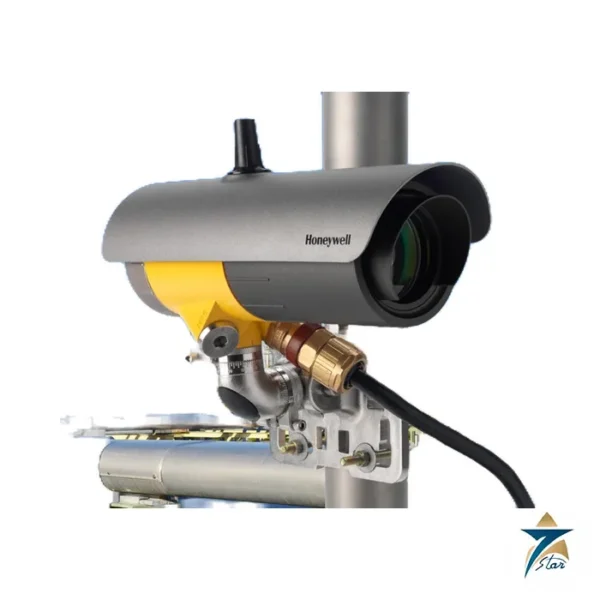
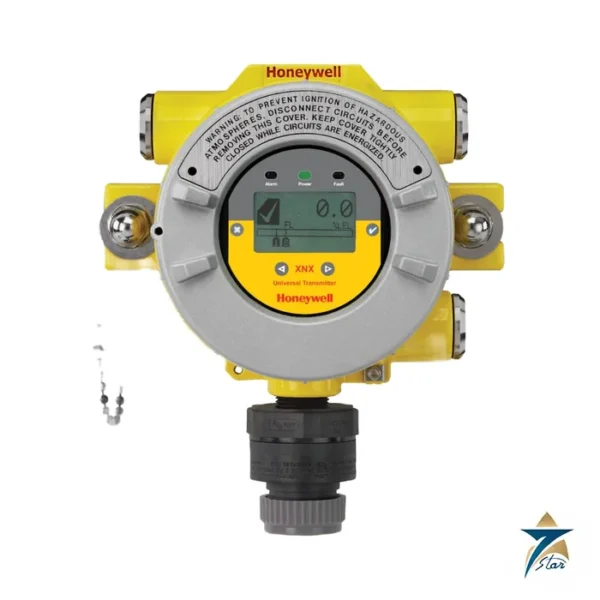
For industrial and hazardous-area duties Seven Star LLC also supplies the Honeywell Sensepoint XRL fixed gas detector, the Honeywell XNX Excel gas detector and the Honeywell Searchline Excel open path detector. Our engineers in Muscat help clients across Oman and the GCC combine the right detectors for each area of a project, from public spaces to process plant.

Technical Specifications

The Honeywell Sensepoint XCL data below are taken from Honeywell data sheet DS_01178 Rev. 01.

Parameter Specification
Model Honeywell Sensepoint XCL
Type Fixed point gas detector for commercial and light industrial use
Combustible 0 to 100% LEL (factory calibrated to methane)
Oxygen 0 to 25% vol
Toxic CO 300 ppm (50 to 1000); H2 1000 ppm; H2S 50 ppm (10 to 50) or 100 ppm (50 to 200); NO2 20 ppm (5 to 50); NH3 200 ppm (50 to 200)
Carbon dioxide 5,000 ppm (1,000 to 5,000) or 5.0% vol (1.0 to 5.0)
Power supply 24 V DC (11 to 32 V mA, 9 to 32 V Modbus) or 24 V AC (20 to 27 V), 50/60 Hz
Outputs 0 to 22 mA analog or Modbus RTU; optional 2 relays 24 V DC / 240 V AC, 5 A
Power consumption mA: below 1.2 W toxic, below 1.7 W flammable/CO2; Modbus: below 0.7 W / 1.2 W; relays add 0.6 W
Wireless Bluetooth 4.0 Low Energy, up to approx. 10 m
Housing Polycarbonate, charcoal or white; 113 x 113 x 59 mm; 500 g
Ingress protection IP65; Type 4 (NEMA 250)
Operating temperature –20 to 50 °C
Humidity / pressure 15 to 90% RH non-condensing; 90 to 110 kPa
Approvals EN/UL/IEC 61010-1, CSA C22.2 No. 61010-1-12, EN 50270, RED, FCC, UL2075 (CO and CH4), AS 1668.2

How to Order

To order the Honeywell Sensepoint XCL, send Seven Star LLC the gas type, range, output (mA or Modbus), relay option and housing colour for each detector, or share your gas detection layout. Our team in Muscat will confirm the configuration, provide the technical datasheet for download and prepare a formal quotation. Seven Star LLC supplies Honeywell gas detection products to customers in Oman and the GCC with engineering support.

Datasheets & Documents
  • PDF Datasheet Honeywell Sensepoint XCL Fixed Gas Detector Data Sheet (DS_01178 Rev. 01) Download
Reviews (0)

Reviews

There are no reviews yet.

How would you rate this product?

It takes about 10 seconds — just tap a star. Your email is never published.

About brand

Honeywell is the American industrial technology group whose products on this site cover gas and flame detection, pressure transmitters, flow measurement, gas metering, fire alarm systems and helicopter rotor balancing equipment. Its roots go back to a thermostat business in Minneapolis in 1885 and to Mark Honeywell's heating company, which merged with it in 1927. Several brands we list have joined Honeywell over the years: Gent fire systems of Leicester (part of Honeywell since 2005), Chadwick-Helmuth (a Honeywell business unit from 2002) and Elster gas metering (acquired around the end of 2015).

Seven Star LLC is an independent supplier in Muscat. We list Honeywell gas detectors and sensors, transmitters, Elster gas meters and flow computers, Gent fire alarm equipment and Chadwick-Helmuth balancers, and supply them and their spares in Oman and the GCC by part number.

Honeywell company profile

Origins 1885, Minneapolis (Butz thermostat business); merged with Mark Honeywell's company in 1927
Brands in our range Honeywell Analytics gas detection, SmartLine transmitters, Elster gas metering, Gent fire detection, Chadwick-Helmuth rotor track and balance
Gent Founded in Leicester, UK, around 1872 by John Thomas Gent; part of Honeywell since 2005
Elster Gas, water and electricity metering; bought by Honeywell from Melrose, deal completed around the end of 2015

Milestones

  • 1885: The Butz thermostat business starts in Minneapolis.
  • 1927: It merges with Mark Honeywell's company.
  • 2005: Gent fire detection (Leicester, UK) becomes part of Honeywell.
  • 2015: Honeywell completes the purchase of Elster from Melrose around the end of the year.

Honeywell products we list

Family Models Typical use
Fixed gas detectors Searchline Excel, Searchline Excel Plus, 02104-N-XSSA, Sensepoint XCD RTD, Sensepoint XCD IR, XCD H2, Sensepoint XCL, Sensepoint XRL, OmniPoint, RAEGuard 2 PID Flammable, toxic and VOC gas detection in process areas
Sensors, flame detection and control SR-W-MP75C LEL sensor, SR-X2V O2 sensor, FS24X Plus flame detector, R4343E flame switch, System 57 card, 5704FS panel Replacement sensors, fire detection and gas detection control panels
Transmitters and flow SmartLine STG700, STG800, STR82D remote seal, VersaFlow Coriolis Process pressure and mass flow measurement
Elster gas metering Q.Sonic plus, TRZ2, Quantometer, RABO, IRM-3 DUO, EK280, EC 350, enCore FC1, enCore ZM1, gas-net F1, gas-net D2, GasLab Q2, USM display Gas meters, volume correction and fiscal flow computing
Gent fire alarm systems Vigilon Plus, Vigilon Compact Plus, Nano, Xenex, S-Quad detector, S-Cubed, ALD302 base, S4-34420 interfaces, loop card, repeat panel, mimic panel, XENS-850 call point, 74430 bell Addressable and conventional fire alarm systems in buildings and plants
Chadwick-Helmuth rotor track and balance 8500C, 8500C Plus, Vibrex 2000, Model 11, photocell system, printer, bracket, protractor Helicopter rotor track and balance and propeller balancing

Gas detection uses two basic approaches. Point detectors such as the Sensepoint XCD measure the gas at one location, with a catalytic or infrared sensor for flammable gas and an electrochemical cell for toxic gas such as H2S. Open path detectors such as the Searchline Excel send an infrared beam across an area up to a few hundred metres long and detect a gas cloud anywhere along it. Infrared sensors cannot be poisoned the way catalytic beads can, which matters on sites with silicones or H2S.

Where Honeywell products are used

In Oman and the GCC, Honeywell gas detectors protect wellheads, gas plants, refineries and tank farms. Elster meters and flow computers measure gas at city gate stations and in industry. Gent systems are installed in commercial buildings, hospitals and hotels, and Chadwick-Helmuth balancers are used by helicopter operators.

Ordering Honeywell products: what we need

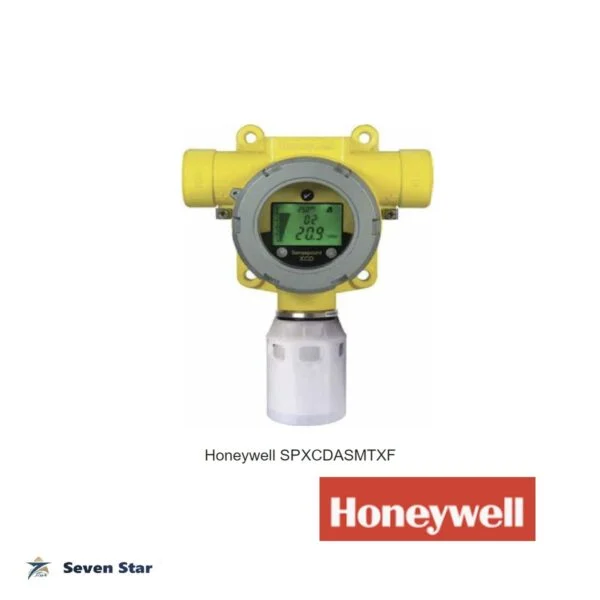
Send the part number from the label (for example 02104-N-XSSA or SPXCDASMTXF). For gas detectors, add the gas, range, output and certification. For gas meters, add size (DN), flow range and pressure rating. For Gent equipment, add the panel type and loop protocol.

Facts checked against Honeywell press releases and SEC filings, and published histories of Gent and Chadwick-Helmuth, October 2026.

FAQ

Questions about the Honeywell Sensepoint XCL Fixed Gas Detector

Answers from our engineering team on installation, compatibility and integration.

01Which gases can the Honeywell Sensepoint XCL detect?
Honeywell offers versions for combustible gas (0 to 100% LEL, calibrated to methane), oxygen, carbon monoxide, hydrogen, hydrogen sulphide, nitrogen dioxide, ammonia and carbon dioxide in ppm or percent volume ranges.
02Can the detector connect to my existing gas detection panel?
Yes. Choose the 0 to 22 mA analog version with selectable source or sink current for conventional panels, or the Modbus RTU version for networked systems. Both can include two relays for local alarms or fan control.
03Is the Sensepoint XCL suitable for hazardous areas?
No. Honeywell designs the Sensepoint XCL for commercial and light industrial applications such as car parks, kitchens and plant rooms. For classified hazardous zones, a certified detector such as the Sensepoint XRL or XNX should be used.
04How is the detector calibrated and tested?
Bump tests and calibration are carried out with gas through the built-in gassing port, while the Bluetooth app guides the procedure and generates calibration reports, reducing the need for physical access to the unit.
05Does Seven Star LLC supply Honeywell gas detectors in Oman?
Yes. Seven Star LLC supplies Honeywell fixed and portable gas detection products to customers in Oman and the GCC, with engineering support in Muscat for selection and system integration.