Endress+Hauser CPS61E Memosens pH sensor for bioreactors and hygienic lines
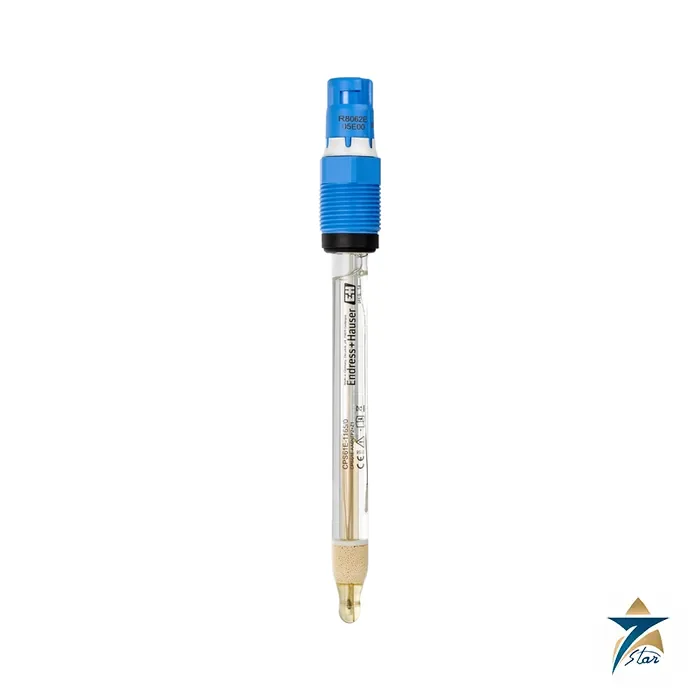
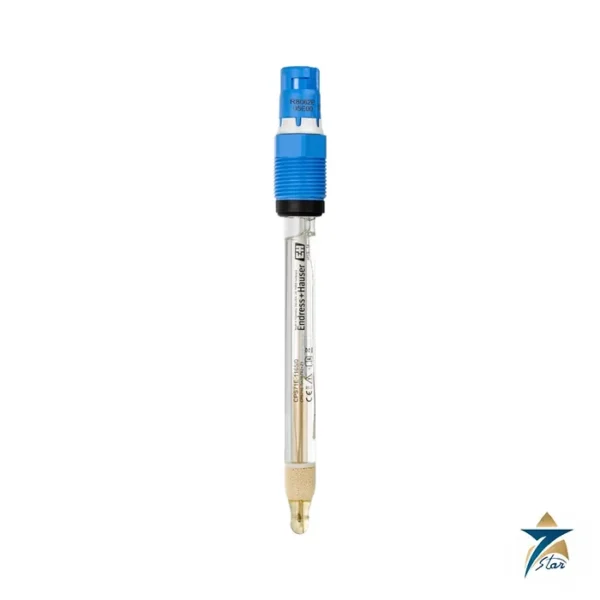
The Endress+Hauser CPS61E is a digital glass pH sensor with Memosens 2.0 technology for life-science and food production. It is built to survive steam sterilisation and autoclaving and has an ion trap in the reference so that the zero point stays stable over long runs. Seven Star LLC supplies the CPS61E in Oman and the GCC as an independent supplier in Muscat.
In the model name, CPS is the pH sensor line, 61 is the hygienic and sterile design and E marks the Memosens 2.0 generation. The detailed order code is generated in the configurator and includes the application range (M or N), the reference system (TB, TC, TW, TP or TU) and the installed length of 120, 225, 360 or 425 mm.
Compared with the chemical-process CPS71E, the CPS61E gives up the highest temperature and chemical duty in exchange for materials and certificates suited to bioreactors, fermenters and food lines.
CPS61E technical specifications
| Parameter |
Specification |
| Manufacturer / part number |
Endress+Hauser / CPS61E (Memosens 2.0) |
| Measuring range |
pH 0 to 14; temperature 0 to 100 °C (32 to 212 °F) |
| Application M |
0 to 100 °C, up to 130 °C for sterilisation; 0.8 to 14 bar absolute |
| Application N |
0 to 100 °C, up to 140 °C for sterilisation; 0.8 to 7 bar absolute |
| Measuring principle |
Potentiometric, glass membrane type N, Ag/AgCl reference with ion trap |
| Reference electrolyte |
3 M KCl, acrylamide-free gel (flowable or solidified depending on version) |
| Minimum conductivity |
100 µS/cm (minimised flow, stable pressure and temperature) |
| Temperature sensor |
NTC 30K, integrated |
| Materials |
Glass shaft, Ag/AgCl lead, ceramic junction (zirconium dioxide), FKM O-ring, PPS fibre-glass reinforced coupling |
| Process connection |
Pg 13.5; Memosens plug-in head rated 16 bar (232 psi) relative |
| Installed lengths / weight |
120 mm 40 g; 225 mm 60 g; 360 mm 90 g; 425 mm 100 g |
| Degree of protection |
IP 68 (10 m water column, 25 °C, 45 days, 1 M KCl) |
| Ambient / storage temperature |
Not below 0 °C in use; storage 0 to 50 °C |
| Certificate options |
ASME BPE CoC, cGMP-derived compliance, FDA 21 CFR, EU 1935/2004, GB 4806, 3-A, EHEDG, substances and allergens, depending on order version |
| Hazardous-area options |
Ex ia IIC T3/T4/T6 Ga versions (ATEX, IECEx, NEPSI, CSA C/US, Japan Ex, INMETRO, Korea Ex, EAC Ex, UKCA Ex) depending on order version |
CPS61E reference systems TB, TC, TW, TP and TU explained
The CPS61E offers five reference designs. They determine how the sensor is mounted and how it behaves in fermentation broth.
| Code |
Design |
Notes |
| TB |
Flowable gel, one ceramic junction |
Mount with at least 15° inclination from horizontal |
| TC |
Flowable gel, three ceramic junctions |
Same mounting rule as TB; more junction area |
| TP |
Flowable gel, pressurised to 7 bar absolute, one junction, pressure indicator |
Intended for fermentation; wear protective goggles; same mounting rule as TB |
| TU |
Solidified gel, one ceramic junction |
Any mounting angle, including upside-down |
| TW |
Solidified gel, three ceramic junctions |
Any mounting angle, including upside-down |
The pressure indicator on the TP version shows whether the reference still holds its overpressure, which gives a visual check on the state of the sensor without removing it from a vessel.
How the CPS61E achieves a stable reference
A standard pH sensor drifts when ions from the process creep into the reference. The CPS61E has an ion trap between the silver lead and the junction, which holds those ions back and keeps the reference potential steady. The reference electrolyte is an acrylamide-free 3 M KCl gel. Parts that touch the process are free of animal-derived materials, which keeps the TSE and BSE risk low as required in biopharmaceutical work.
Heat sterilisation is the other design driver. Application M tolerates up to 130 °C for sterilisation, application N up to 140 °C, both in short periods. The pressure and temperature charts in the datasheet show the allowed envelope, and exceeding it risks cracking the glass or damaging the reference.
Where the CPS61E fits in the measuring system
The CPS61E is connected with a Memosens data cable (CYK10, or the laboratory cable CYK20) to a transmitter with a Memosens input. The datasheet mentions Liquiline CM82, CM42 and CM42B for the hazardous-area versions. Digital sensors will not connect to analogue pH transmitters.
Assemblies named in the datasheet are the Unifit CPA842 permanent installation assembly, which is listed with EHEDG and 3-A certification, and the Cleanfit CPA875 retractable assembly for sterile and hygienic applications. Both take standard 12 mm sensors. The datasheet also lists a Liquiline Control CDC90 automatic cleaning and calibration system as an option.
Related sensors from the same family are the CPS71E for chemical streams with poisons and the CPS77E, an ISFET sensor with no glass. Choose the CPS61E when a glass membrane is acceptable and a pressurised or upside-down reference is useful.
CPS61E selection and ordering checklist
- Application range: M (to 14 bar abs., 130 °C sterilisation) or N (to 7 bar abs., 140 °C sterilisation).
- Reference code: TB, TC, TW, TP or TU, based on mounting angle and fermentation needs.
- Installed length: 120, 225, 360 or 425 mm to match the assembly.
- Certificates: select the hygienic or pharmaceutical documents that the project requires, such as ASME BPE, FDA, 3-A or EHEDG.
- Hazardous area: classify the zone for the Ex versions (red or orange ring on the head).
- Medium: minimum conductivity of 100 µS/cm and a process that stays within 0 to 100 °C in normal use.
- Transmitter, cable and assembly compatibility.
Installing, commissioning and maintaining the CPS61E
Clean the assembly thread and seat, check the O-rings and screw in the sensor by hand to 3 Nm when using Endress+Hauser assemblies. For easy-clean installation, use a certified assembly, keep the installation self-draining and avoid dead areas. For 3-A applications the assembly should include a protective guard around the glass.
With the TP version, open the packaging by the red tear tab, remove the wetting cap and netting and put on eye protection. Condition the sensor in buffer solution for 15 to 20 minutes before calibration. Do not use the sensor in temperatures below 0 °C.
Calibrate in the laboratory where possible and swap sensors at the point of use. The sensor stores the number of sterilisations, CIP count and sensor load, so a planned replacement interval can be based on actual use. Keep at least one pre-calibrated spare per critical measuring point.
Typical CPS61E applications in Oman and the GCC
In Oman and the GCC the CPS61E is relevant to pharmaceutical and nutraceutical production, dairy and beverage plants, food processing with CIP cycles, and research or pilot fermentation. Warm ambient conditions raise cooling load and microbial risk, so reliable pH control during fermentation and cleaning cycles matters. Replacement demand also comes from existing Memosens installations where sensors have reached the end of their sterilisation life.
What to send with a CPS61E request for quotation
- Application range (M or N), reference code and installed length
- Quantity and whether the sensor is for a bioreactor, a pipeline or a flow cell
- Required certificates and hygienic approvals
- Hazardous-area classification, if any
- Transmitter and assembly model, plus nameplate photo of a sensor being replaced
Documents and quotation
The manufacturer’s datasheet for the CPS61E is attached on this page, with the reference system table, dimension drawings and pressure and temperature charts.
Send the details listed above and Seven Star LLC will return a quotation for the CPS61E, with lead time and delivery to Oman and the GCC.
Other Models in the Eh Memosens Sensor Range
Seven Star LLC supplies models from the Eh Memosens Sensor range in Oman and the GCC. Compare the related models below and request a quote for the one that matches your application.


























Reviews
There are no reviews yet.