Endress+Hauser CPS77E Memosens ISFET pH sensor without a glass membrane
The Endress+Hauser CPS77E is a digital pH sensor that replaces the fragile glass bulb with an ISFET chip, a silicon device whose gate responds to hydrogen ions. The chip and the reference are embedded in a PEEK shaft, so there is no glass to break in a filling line or fermenter. The CPS77E uses the Memosens 2.0 plug-in head and is built for hygienic and sterile production. Seven Star LLC supplies the CPS77E in Oman and the GCC as an independent supplier in Muscat.
Reading the name: CPS is the pH sensor line, 77 identifies the ISFET design and E marks the Memosens 2.0 generation. Three installed lengths are offered, 120, 225 and 360 mm, and the final order code is generated in the manufacturer’s configurator.
Where a glass sensor would be a contamination risk, the CPS77E is the sensor to consider. It is aimed at the food, pharmaceutical and biotechnology sectors, and at any measuring point where a broken electrode would mean a lost batch.
CPS77E technical specifications
| Parameter |
Specification |
| Manufacturer / part number |
Endress+Hauser / CPS77E (Memosens 2.0) |
| Measuring principle |
ISFET, tantalum-pentoxide based gate insulator |
| Measuring range |
pH 0 to 14; temperature −15 to 135 °C (5 to 275 °F) |
| Process pressure |
0.8 to 11 bar (11.6 to 159.5 psi) absolute; maximum 11 bar abs. at 100 °C |
| Sterilisation |
4 bar (58 psi) absolute at 135 °C for 1 hour |
| Repeatability |
±0.01 pH |
| Response time t90 |
Below 5 seconds (buffer change pH 4 to pH 7, reference conditions) |
| Minimum conductivity |
50 µS/cm (under the stated reference conditions) |
| Reference system |
Ag/AgCl lead, liquid 3 M KCl bridging electrolyte, AgCl-free |
| Temperature sensor |
Pt1000, Class A to DIN IEC 60751 |
| Materials |
PEEK shaft, FFKM seal, epoxy adhesive, ceramic junction (zirconium dioxide), FKM O-ring on thrust collar, PPS fibre-glass coupling |
| Surface roughness |
Ra below 0.76 µm (30 µin) |
| Process connection |
Pg 13.5, Memosens plug-in head rated 16 bar (232 psi) relative |
| Installed lengths / weight |
120 mm 35 g; 225 mm 50 g; 360 mm 66 g |
| Degree of protection |
IP 68 (10 m water column, 25 °C, 45 days, up to 135 °C) |
| Ambient / storage temperature |
Not below −15 °C in use; storage 0 to 50 °C |
| Hazardous-area options |
ATEX, IECEx, CSA C/US, NEPSI, JPN Ex, INMETRO, UKCA and Korea Ex, Zone 0, 1 and 2 versions |
How the CPS77E ISFET principle differs from a glass electrode
In an ISFET the medium touches an insulating gate layer directly. Hydrogen ions at this surface gain or lose charge depending on whether the liquid is acidic or alkaline, and the resulting surface charge changes the current flowing through a channel in the silicon underneath. The sensor circuit turns that effect into a signal that follows the Nernst relationship, with a slope of −59.16 mV per pH unit at 25 °C.
The practical consequences are listed in the datasheet. The response is very quick, with a t90 below five seconds, and it stays quick at low temperature because there is no thick hydrated glass layer to equilibrate. Hysteresis after a temperature change is shorter, errors after hot cycles are smaller, and the acid and alkaline errors that affect glass at the extremes are almost absent: between pH 1 and pH 13 the mean error is about 0.02 pH at 25 °C.
There are trade-offs. The chip is light-sensitive like any semiconductor, so direct sunlight during calibration or operation should be avoided. After a voltage interruption the ISFET needs a few minutes to settle, and after a long dry storage up to 30 minutes.
CPS77E operating limits that affect selection
The ISFET insulator can be attacked by strong alkali at high temperature. The datasheet includes a temperature versus pH chart marking a trouble-free zone, a limited-life zone and a zone not recommended. As a clear example, continuous exposure to 1 molar NaOH above 65 °C shortens the life of the sensor so much that continuous use there is not recommended.
The sensor is also not intended for abrasive media. Where some abrasion is unavoidable, the chip should be shielded from direct flow, accepting that the reading will then be less stable. Finally, the liquid should have at least 50 µS/cm of conductivity, so ultra-pure water is outside the intended range.
Where the CPS77E fits in the measuring system
A complete loop contains the CPS77E, a Memosens cable (CYK10, or CYK20 for laboratory use), a Liquiline transmitter with Memosens input such as the CM44x or CM42, and an assembly. The datasheet names the Unifit CPA842 permanent installation assembly, the Cleanfit CPA875 retractable assembly for sterile service, the Dipfit CPA111, the Cleanfit CPA871 and CPA450, and the Flowfit CPA250.
For hygienic piping, the Unifit CPA842 is listed with EHEDG and 3-A certification. Installing the CPS77E in a certified assembly with a protective guard, self-draining position and no dead legs is the route the manufacturer recommends for an easy-clean installation.
The sibling CPS61E is the glass-membrane sensor for the same type of sterile duty, offering a pressurised reference. The CPS71E is aimed at chemical streams that contain electrode poisons. Choose the CPS77E when break-resistance and speed matter more than a glass-electrode reference.
CPS77E selection and ordering checklist
- Process pH and temperature: pH 0 to 14, −15 to 135 °C, with the alkali and temperature limitation in mind.
- Pressure: up to 11 bar absolute at 100 °C, and 4 bar absolute for a one-hour steam sterilisation at 135 °C.
- Installed length: 120, 225 or 360 mm to suit the assembly.
- Cleaning regime: the datasheet recommends changing the sensor after 40 CIP cycles, so plan the replacement interval.
- Hygienic certification: confirm whether the assembly and installation must meet 3-A or EHEDG requirements.
- Hazardous area: specify the zone and scheme if the sensor goes into a classified area.
- Medium: confirm minimum conductivity of 50 µS/cm and absence of abrasive solids.
Installing and commissioning the CPS77E
Fit the sensor in an assembly following that assembly’s instructions. Check the thread, O-rings and seat before screwing in, and tighten by hand to 3 Nm in Endress+Hauser assemblies. Align the sensor so that the ISFET chip points at an angle of roughly 30 to 45 degrees to the flow direction. The serial number engraved on the head lies in the same plane as the chip and nameplate, so it can be used as an alignment mark.
An ISFET sensor can technically be installed in any position, but upside-down mounting can trap a bubble in the reference path. The datasheet advises leaving a mounted sensor in dry conditions for no more than six hours, which matters when vessels are emptied under vacuum.
Calibration, maintenance and spares for CPS77E
Calibration data, number of sterilisations and the CIP counter are stored in the sensor head, so calibration can take place in a clean laboratory. The sensor typically needs less frequent calibration than a glass pH electrode, according to the manufacturer. Useful spares are a second sensor of the same length, a spare Memosens cable and certified buffers.
Typical CPS77E applications in Oman and the GCC
In the Gulf region the CPS77E is relevant to food and beverage plants, dairies, juice and water bottling, pharmaceutical and nutrition production, and laboratory-scale fermentation. Hot ambient conditions and frequent steam or caustic cleaning put a heavy load on glass sensors, which is where a break-resistant PEEK body is attractive. Seven Star LLC receives requests for the CPS77E both for new hygienic lines and for replacement of sensors on existing Memosens transmitters.
What to send with a CPS77E request for quotation
- Installed length and quantity
- Process medium, pH range, temperature and pressure, and the CIP and SIP routine
- Hygienic or certificate requirements such as 3-A, EHEDG or material declarations
- Hazardous-area details if applicable
- Transmitter and assembly model, nameplate photo of any sensor being replaced
Documents and quotation
The manufacturer’s datasheet for the CPS77E is attached on this page, including the pH versus temperature chart for the ISFET and the full accessory list.
Send the length, application details and delivery location, and Seven Star LLC will quote the CPS77E with lead time for Oman and the GCC.
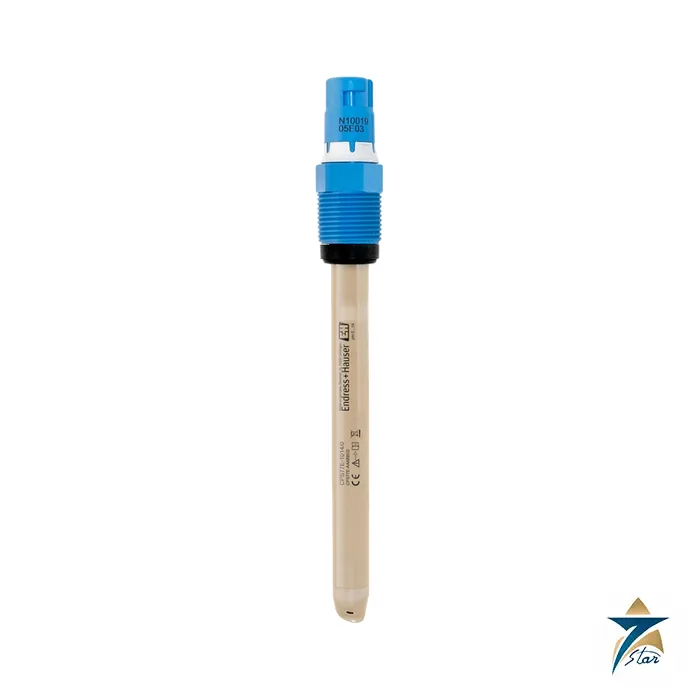
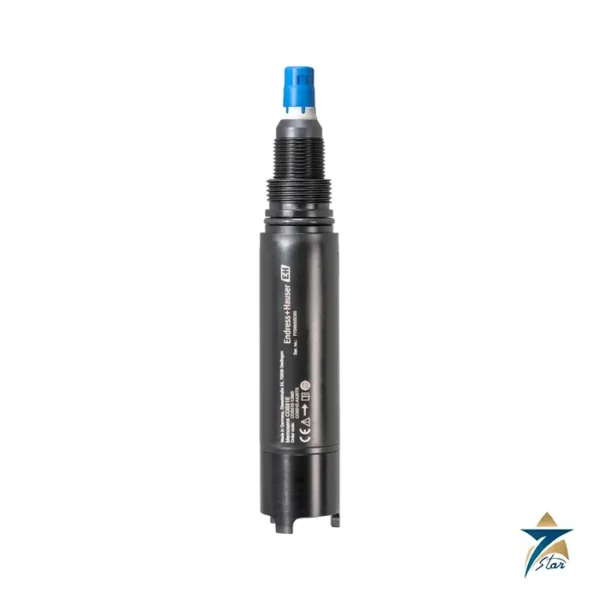
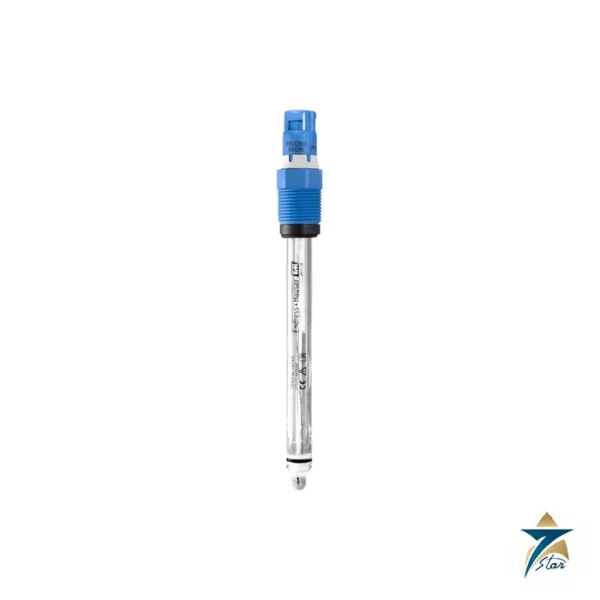
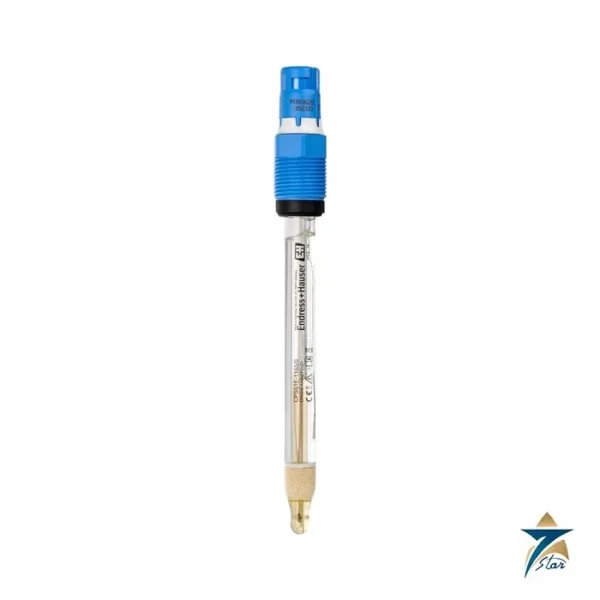
Other Models in the Eh Memosens Sensor Range
Seven Star LLC supplies models from the Eh Memosens Sensor range in Oman and the GCC. Compare the related models below and request a quote for the one that matches your application.


























Reviews
There are no reviews yet.