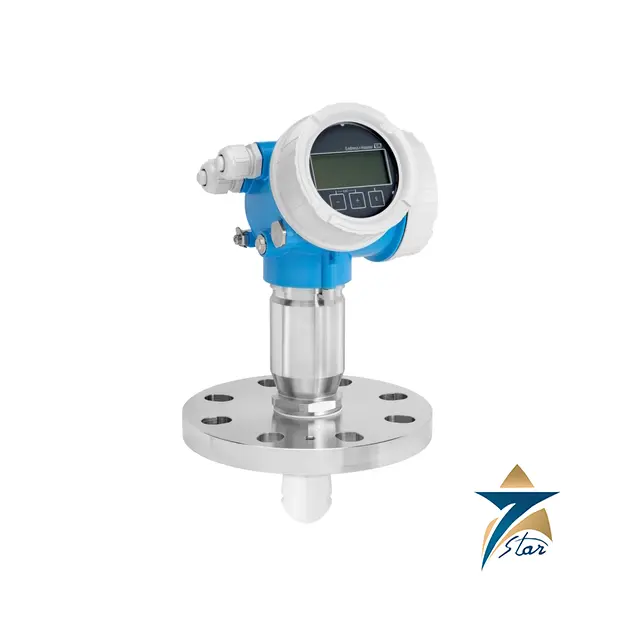
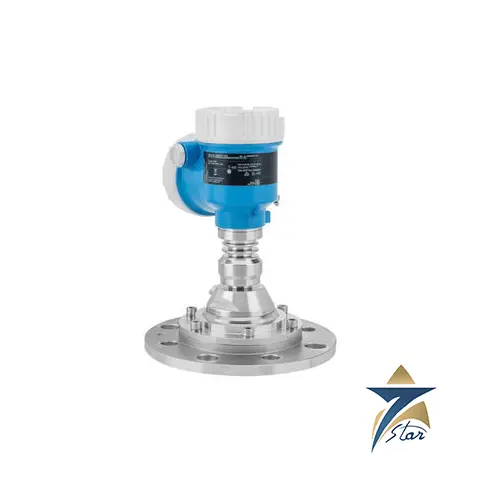
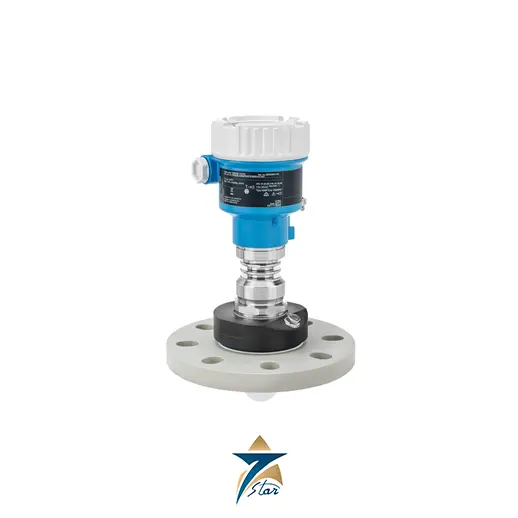
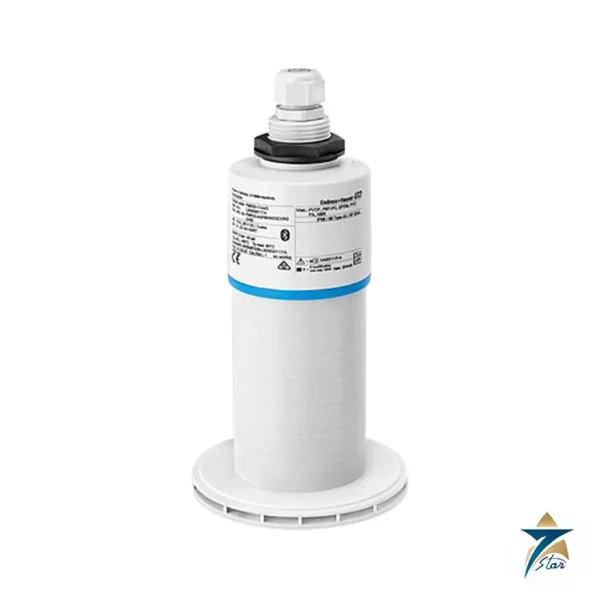
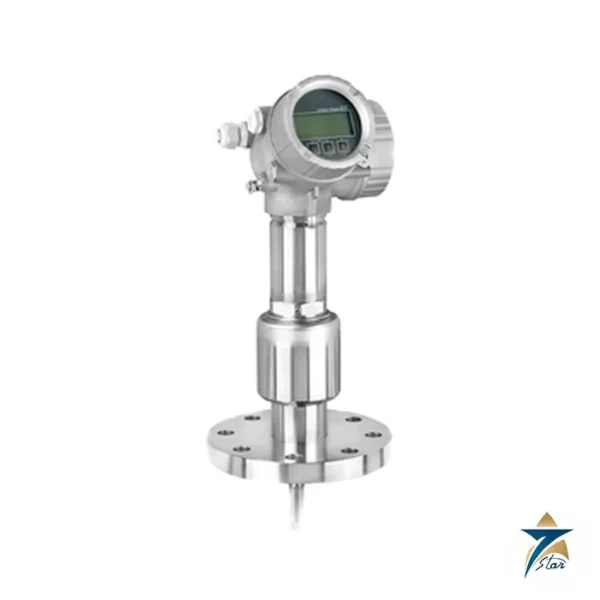
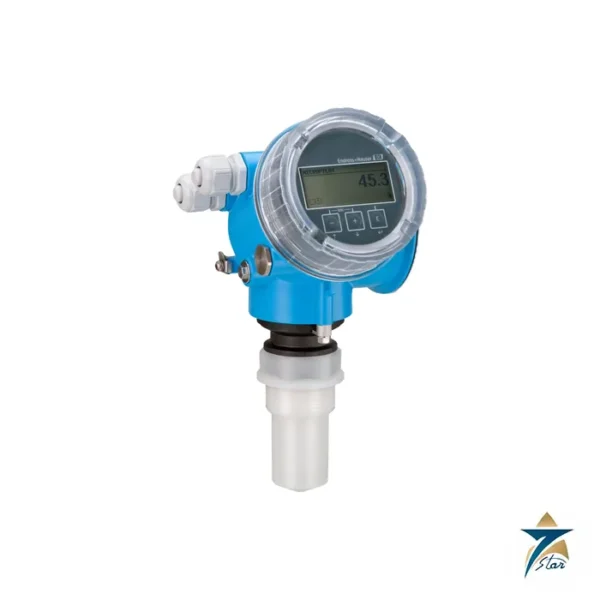
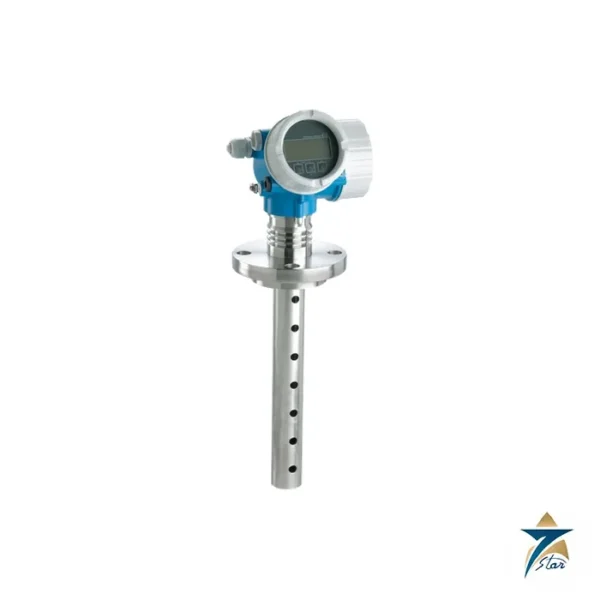
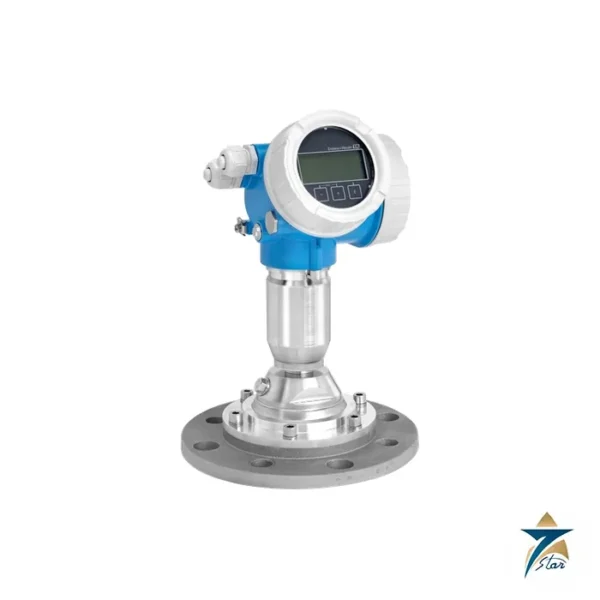
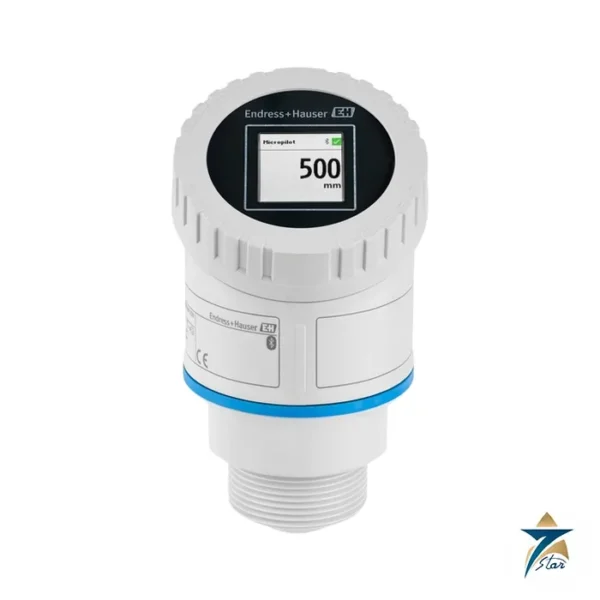
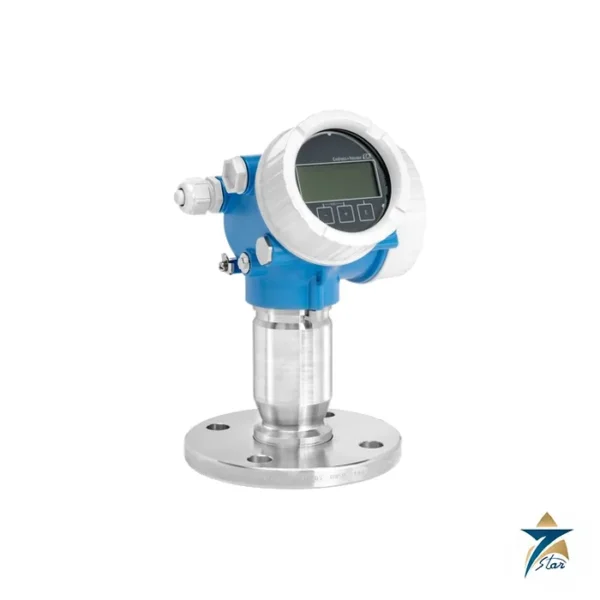
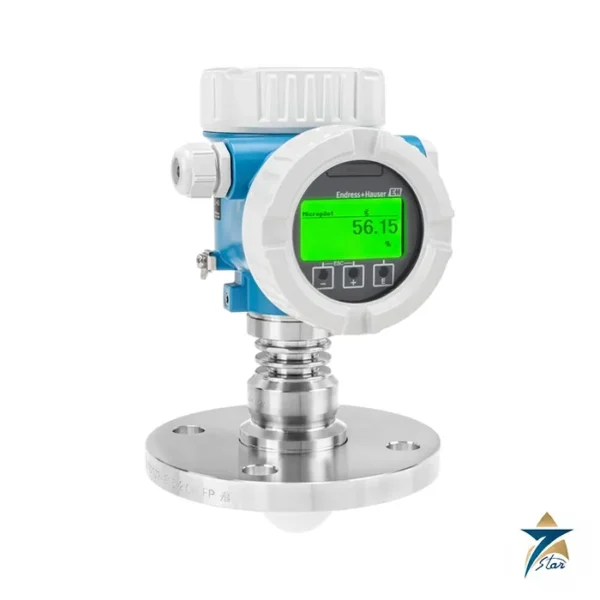
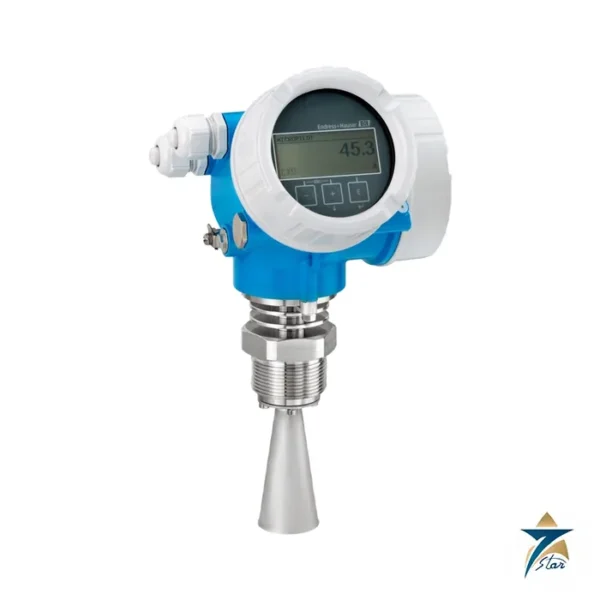
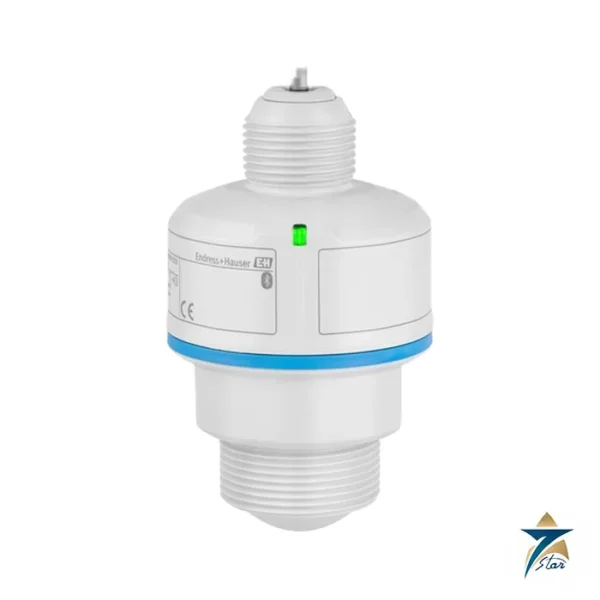
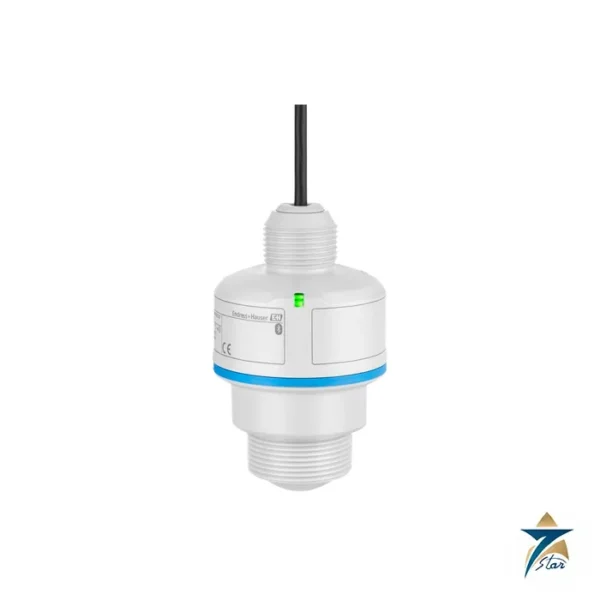
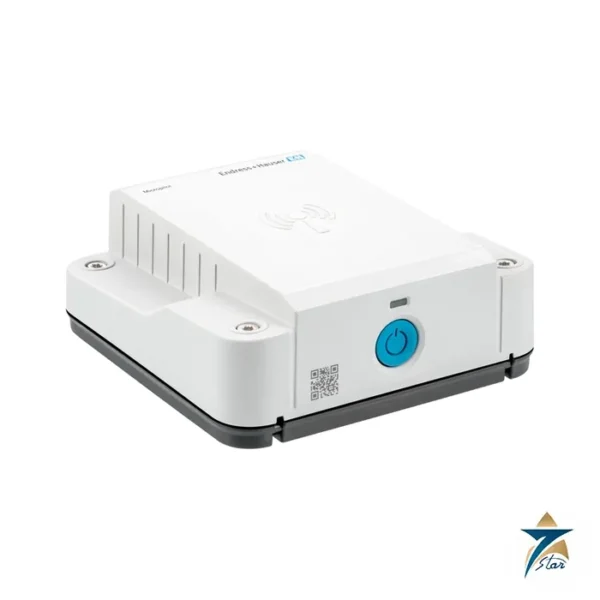
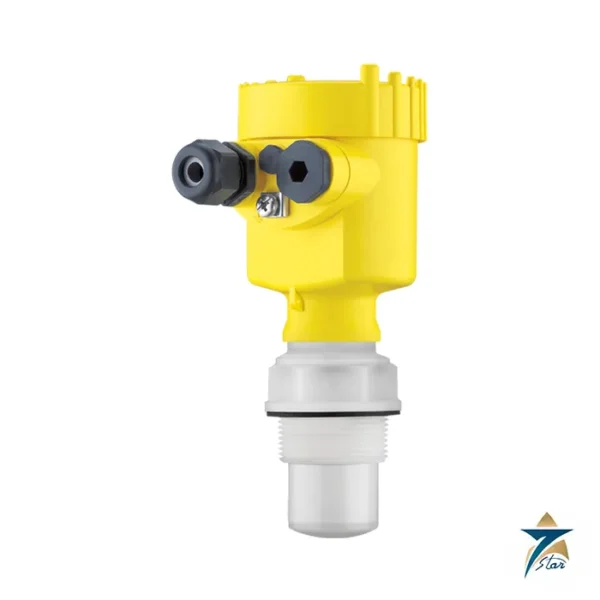
Micropilot FMR60 80 GHz Radar Level Transmitter

Description

Overview

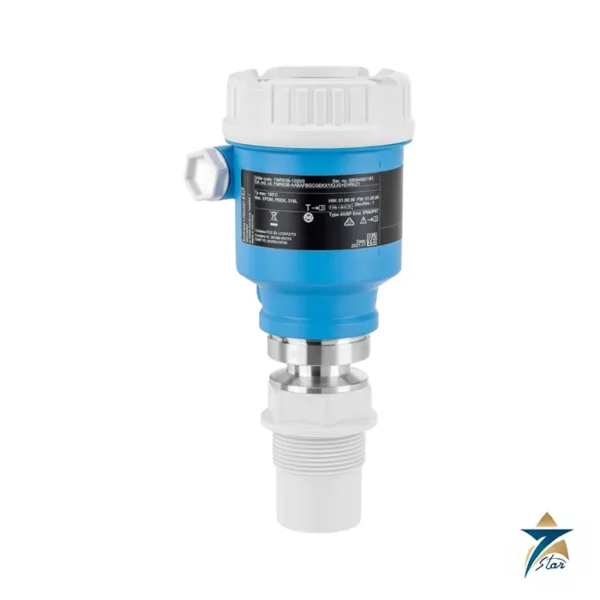
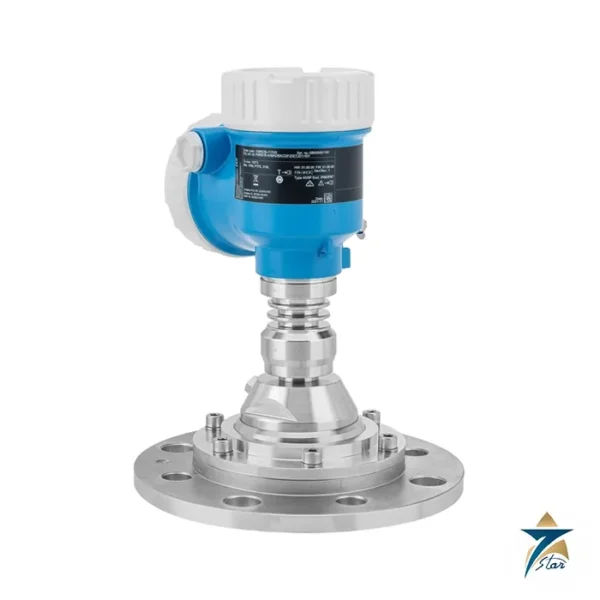
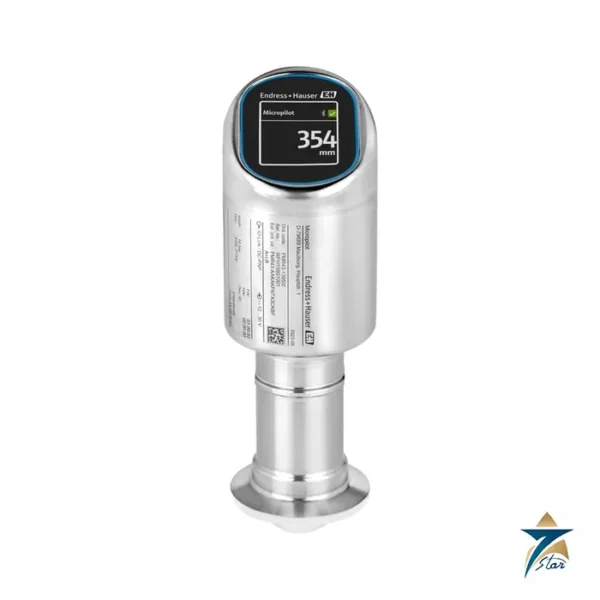
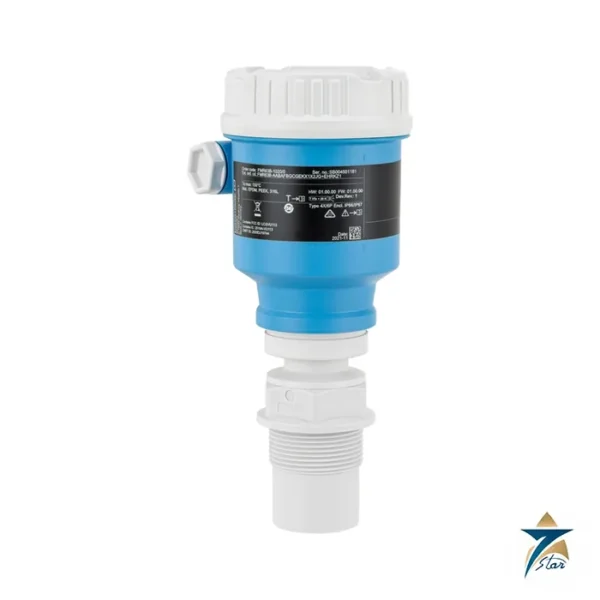
The Endress+Hauser Micropilot FMR60 is a free-space radar level transmitter operating at about 80 GHz (W-band) using the FMCW measuring principle. It is used for continuous, non-contact level measurement of liquids, pastes and slurries, and is part of the Micropilot family of radar level instruments.

The narrow 80 GHz beam and PTFE drip-off antenna allow measurement in vessels with internals, and the measurement is not affected by changing media, temperature changes, gas blankets or vapours. The FMR60 provides a 4–20 mA HART output with an additional switch output, Bluetooth commissioning via the SmartBlue app, and Heartbeat Technology for verification and monitoring. Endress+Hauser also offers the newer Micropilot FMR60B, which is a separate order code.

Key Features

  • 80 GHz free-space radar with narrow beam
  • Measuring range up to 50 m with ±1 mm accuracy
  • PTFE drip-off antenna
  • 4–20 mA HART output plus additional switch output
  • Bluetooth commissioning and remote operation via the SmartBlue app
  • Heartbeat Technology; SIL 2 / SIL 3 per IEC 61508

Technical Specifications

Parameter Value
Model Micropilot FMR60 (full order code defines antenna, connection and approvals)
Measuring principle Free-space radar, FMCW, W-band (~80 GHz)
Maximum measuring range 50 m (164 ft)
Accuracy ±1 mm (±4 mm for distances up to 0.8 m)
Process temperature -40 to +130 °C
Process pressure Vacuum to 16 bar (threaded connections); -1 to 3 bar with UNI flanges
Ambient temperature -40 to +80 °C
Antenna PTFE drip-off antenna
Process connections Thread G1-1/2″, MNPT1-1/2″; flange UNI DN80–DN150 (3″–6″)
Output / communication 4–20 mA HART, additional switch output, Bluetooth
Functional safety SIL 2, SIL 3 (IEC 61508)
Ex approvals ATEX, FM, CSA C/US, IECEx, JPN Ex, INMETRO, NEPSI, KC, EAC, UK Ex
Beam angle 6 degrees with the 50 mm / 2 in PTFE drip-off antenna (beam diameter = distance × 0.10)
Range, storage vessel Media group A0 7 m, A 12 m, B 23 m, C 40 m, D 50 m
Range, buffer vessel A0 4 m, A 7 m, B 13 m, C 28 m, D 44 m
Range, vessel with agitator A0 2 m, A 4 m, B 7 m, C 15 m, D 25 m
Non-repeatability 1 mm or better
Supply voltage (terminal) HART: 14 to 35 V (Ex ia 14 to 30 V); HART + switch output: 16 to 35 V; HART + 4-20 mA: 16 to 30 V; +2 V with Bluetooth module
Power consumption Less than 0.9 W (2-wire HART)
Switch output Open collector, 16 to 35 V DC, 0 to 40 mA
Process limits by connection Thread G1-1/2 / MNPT1-1/2: -40 to +130 °C, -1 to 16 bar; UNI flange 316L: -40 to +130 °C, -1 to 3 bar; UNI flange PP: -40 to +80 °C, -1 to 3 bar
Wetted materials Antenna PTFE, antenna seal FKM (Viton); process connection 316L (1.4404); PP for PP flange version
Housings / protection GT19 dual compartment plastic PBT; GT20 dual compartment aluminium coated; IP66/IP68, NEMA 4X/6P
Nozzle length limits Nozzle diameter 50-80 mm: max 750 mm; 80-100 mm: 1150 mm; 100-150 mm: 1450 mm; 150 mm and above: 2200 mm
Minimum dielectric constant 1.9 for free-space measurement of group B media; group A and A0 with reduced range

Applications

  • Level measurement in storage and buffer tanks for hydrocarbons, chemicals and water
  • Process vessels with agitators, heating coils or other internals
  • Tanks with vapours, gas blankets or temperature changes in oil & gas and petrochemical plants
  • SIL-rated level and overfill protection loops

FMR60 Measuring Range by Medium Group and Vessel Type

The headline 50 m range of the Micropilot FMR60 applies to conductive, high-permittivity liquids in a calm storage vessel. Endress+Hauser tabulates the usable range by medium group: in a storage vessel the drip-off antenna reaches 7 m in group A0 (DC 1.2 to 1.4), 12 m in group A (1.4 to 1.9), 23 m in group B (1.9 to 4), 40 m in group C (4 to 10) and 50 m in group D (above 10). If the permittivity is unknown the manufacturer advises assuming group B.

Surface movement reduces these figures. In a buffer vessel with continuous free filling or mixing jets the values are 4, 7, 13, 28 and 44 m for groups A0 to D, and in a vessel with an agitator they fall to 2, 4, 7, 15 and 25 m. For media with a permittivity of 4 or less the tank bottom can become visible through the liquid, so a minimum level of 80 mm above the bottom is specified for full accuracy.

The 50 mm PTFE drip-off antenna has a beam angle of only 6 degrees, so the beam diameter is one tenth of the distance: about 1 m at 10 m and 3 m at 30 m. This narrow beam is what allows mounting near walls and internals and even measuring through an open full-bore ball valve. Certain absorbing gas phases, such as pure ammonia, acetone, methylene chloride or VCM, are named by the manufacturer as unsuitable for 80 GHz measurement.

FMR60 Installation Conditions and Electrical Connection

Endress+Hauser recommends placing the FMR60 about one sixth of the vessel diameter from the wall and never closer than 15 cm, away from the centre and the filling curtain. Radial alignment is not required for the drip-off antenna, but the antenna axis must be perpendicular to the product surface. Long nozzles are tolerated: up to 750 mm for 50 to 80 mm diameter, 1150 mm for 80 to 100 mm, 1450 mm for 100 to 150 mm and 2200 mm from 150 mm upward, provided the nozzle end is smooth and a mapping is performed.

The transmitter is a 2-wire loop device. With plain HART output it needs 14 to 35 V at the terminals (14 to 30 V for Ex ia), and 16 V minimum when the switch output or a second current output is fitted; the Bluetooth module raises the minimum by 2 V. Pressure rating depends on the connection: 16 bar applies to the threaded versions only, while UNI flanges are limited to 3 bar, and the PP flange additionally to +80 °C. SIL 3 use requires homogeneous or diverse redundancy.

Why Seven Star LLC

Seven Star LLC supplies Endress+Hauser level instruments across Oman and the GCC. Before quoting, we check the full order code or nameplate data, including antenna, process connection and approvals, against your tank data so the supplied unit fits the installation.

Ordering details for FMR60

For the FMR60 with a PTFE antenna, identify the antenna size and process connection on the nameplate. Include nozzle height and tank geometry when comparing the usable measuring distance with the published maximum.

Technical reference

Request a Quote for Micropilot FMR60 80 GHz Radar Level Transmitter

Send your request through our inquiry form with the order code (or nameplate photo), quantity, medium, process temperature and pressure, tank height, nozzle size and type, and required Ex and SIL approvals. Seven Star LLC will confirm the configuration and quote lead time.

Related Products

Datasheets & Documents
  • PDF Technical Information Endress+Hauser Micropilot FMR60 Technical Information TI01302F/00/EN/07.20 (September 2020) Download
Reviews (0)

Reviews

There are no reviews yet.

How would you rate this product?

It takes about 10 seconds — just tap a star. Your email is never published.

About brand

Endress+Hauser makes process measurement instruments for flow, level, pressure, temperature and liquid analysis. Georg H. Endress and Ludwig Hauser started the business in Lörrach, Germany, on 1 February 1953, first selling level meters, and the Endress+Hauser name has been used since 1957. The group is headquartered in Reinach, Switzerland, and has been wholly owned by the Endress family since 1975.

Seven Star LLC is an independent supplier listing Endress+Hauser flowmeters, level and pressure transmitters, temperature assemblies and liquid analysis products for buyers in Oman and the GCC. Instruments are matched from the full order code on the nameplate.

Endress+Hauser company profile

Origin Founded in Lörrach, Germany, on 1 February 1953 by the Swiss engineer Georg H. Endress and Ludwig Hauser
Headquarters Endress+Hauser AG, Reinach (Basel-Landschaft), Switzerland
Ownership Family owned; the Endress family has been the sole shareholder since 1975, and a family charter commits the company to stay family owned
Size About 16,500 employees and sales of about EUR 3.7 billion (2023, as reported by the company)
Product families Proline flowmeters, Micropilot and Levelflex radar, Liquiphant switches, Cerabar and Deltabar pressure, iTEMP and iTHERM temperature, Liquiline and Memosens liquid analysis

Milestones

  • 1953: Georg H. Endress and Ludwig Hauser start the business in Lörrach on 1 February, first selling level meters.
  • 1957: The Endress+Hauser name comes into use.
  • 1975: The Endress family becomes sole shareholder.
  • 2023: About 16,500 employees and sales of about EUR 3.7 billion, as reported by the company.

Endress+Hauser product lines

Line Measuring principle Typical use
Promass F 300, Promass 80F, 83F/84F Coriolis mass flow Direct mass flow and density of liquids and gases, hydrocarbon transfer and chemical dosing
Promag P 300, P 500, H 300, W 400, W 10, 50P Electromagnetic flow Water, wastewater, slurries and other conductive liquids
Prowirl F 200, 72F Vortex flow Steam, gas and low-viscosity liquids
Prosonic Flow 92F, t-mass 65F Ultrasonic and thermal mass flow Water lines; compressed air and industrial gases
Micropilot FMR62, FMR67, FMR60, FMR10B, FMR20, FMR50, FMR52 Free-space radar level, 80 GHz and 26 GHz Tanks, process vessels, silos and open water channels
Levelflex FMP51, FMP50, FMP54, FMP55 Guided wave radar level Level and interface in vessels, separators and bypass chambers
Liquiphant FTL51, Prosonic S FMU90 Vibronic point level; ultrasonic level High and low level alarms, pump protection, open channel flow
Cerabar PMC71B, PMP51B, PMP71, Deltabar PMD78B, PMD75 Pressure and differential pressure Process pressure, hydrostatic level and DP flow
iTEMP TMT82, TMT162, iTHERM TM101, TR66, TR10 Temperature transmitters and thermometers RTD and thermocouple points with thermowells
Liquiline CM444, CM442, Memosens CPS11E, Stamolys reagents Liquid analysis pH, ORP, conductivity, dissolved oxygen and nutrient analysis in water treatment and process

Where Endress+Hauser instruments are used

In Oman and the GCC, Endress+Hauser instruments are common in oil and gas production and processing, refineries and petrochemicals, desalination and water networks, wastewater treatment, power plants and food and beverage plants. Coriolis meters measure hydrocarbon and chemical flows, electromagnetic meters cover water and wastewater, radar transmitters handle tank and silo level, and Liquiline analysers monitor water quality. Proline 300 and 500 flowmeters include Heartbeat Technology for in-situ verification, which reduces the need to remove a meter for checks.

Ordering Endress+Hauser instruments: what we need

The order code on the nameplate (for example PMP71-1QA1S11RDADU) defines every option: measuring range, process connection, materials, output, approvals and display. Send it with the serial number; Endress+Hauser can retrieve the original configuration from the serial number. For a new instrument add the medium, operating and design pressure and temperature, range, line size or tank geometry, process connection, wetted materials, output or protocol (4-20 mA HART, PROFIBUS, FOUNDATION Fieldbus, Modbus) and the hazardous-area approval required. Older models such as Promass 80/83 or Micropilot M are replaced by current Proline or 80 GHz Micropilot devices.

Facts checked against Endress+Hauser company history and product information, October 2026.

FAQ

Questions about the Micropilot FMR60 80 GHz Radar Level Transmitter

Answers from our engineering team on installation, compatibility and integration.

01Does 80 GHz help in tanks with internals?
Yes—its small beam angle improves target separation and echo quality in cluttered vessels.
02What is Heartbeat Technology?
On-board verification/monitoring to prove measurement integrity and detect anomalies without process interruption.
03What is the measuring range of the FMR60?
Up to 50 m in a calm storage vessel for media group D. The usable range is lower for low-permittivity media, for example 23 m for group B.
04Is it SIL-capable?
Yes—SIL options are available; we’ll confirm the exact code vs. your SRS.
05What outputs are supported?
4–20 mA + HART standard; local display and diagnostic features available by option.