Endress+Hauser CLS16E Memosens conductivity sensor for pure and ultrapure water
The Endress+Hauser CLS16E is a hygienic two-electrode conductivity sensor with a digital Memosens interface and a cell constant of k = 0.1 cm−1. That low cell constant is what makes it suitable for water with very few dissolved ions: reverse osmosis permeate, deionised water, distillate and water for injection. Seven Star LLC supplies the CLS16E in Oman and the GCC as an independent supplier in Muscat.
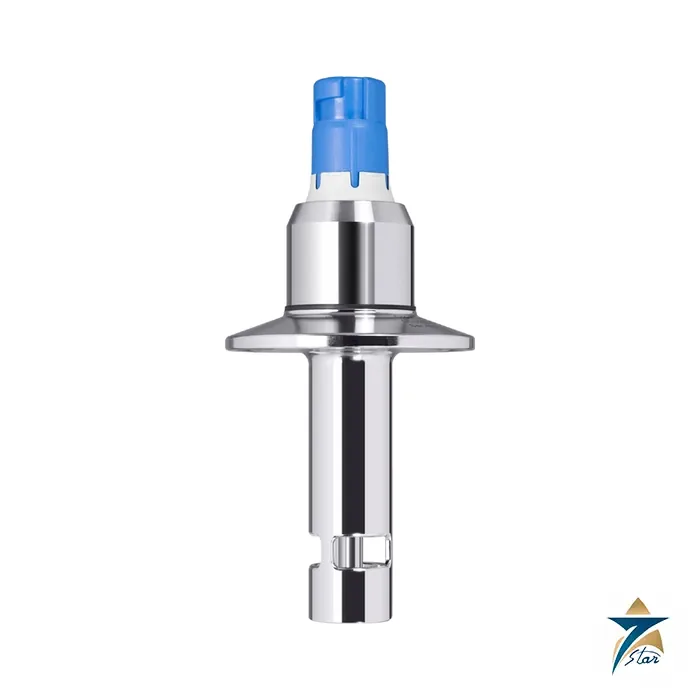
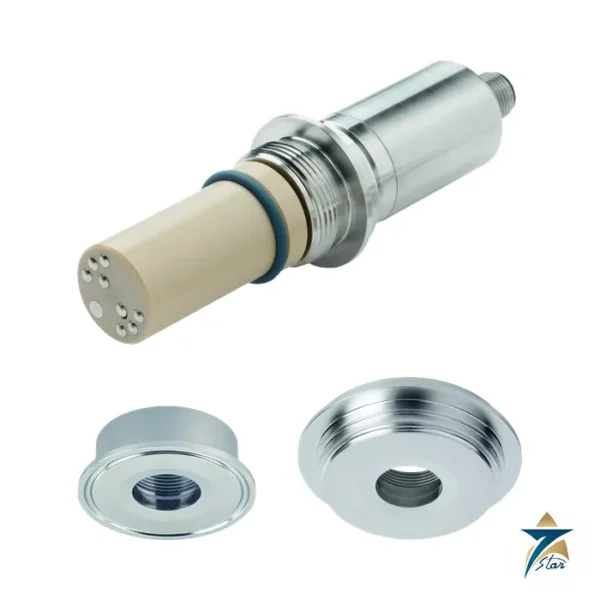
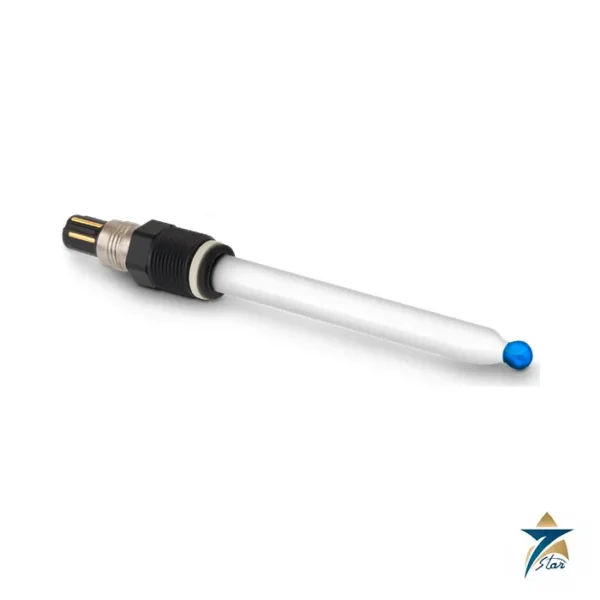
The sensor consists of coaxially arranged electrodes in electropolished stainless steel 1.4435 (AISI 316L), with a PEEK insulator and a plug-in Memosens head. The process connection is chosen when ordering: a Clamp to ISO 2852 in 1½ or 2 inch, a Tuchenhagen Varivent N, or a NEUMO BioControl D50 connection.
Every CLS16E is measured individually in the factory and delivered with a certificate stating its exact cell constant, with a stated uncertainty of 1.0 % for that determination. This is important for water-quality documentation where the measuring chain has to be traceable.
CLS16E technical specifications
| Parameter |
Specification |
| Manufacturer / part number |
Endress+Hauser / CLS16E (Memosens) |
| Measuring principle |
Conductive, two coaxial electrodes |
| Cell constant |
k = 0.1 cm−1, individually measured |
| Conductivity range |
40 nS/cm to 500 µS/cm (referred to water at 25 °C) |
| Temperature range (measuring) |
−5 to 150 °C (23 to 302 °F) |
| Temperature compensation |
Pt1000, Class A to IEC 60751 |
| Process temperature, normal operation |
−5 to 120 °C (23 to 248 °F) |
| Sterilisation |
Maximum 150 °C at 6 bar (87 psi) absolute, maximum 45 minutes |
| Process pressure |
13 bar absolute at 20 °C; 9 bar absolute at 120 °C; vacuum to 0.1 bar absolute at 20 °C |
| Response time |
Conductivity t95 up to 2 s; temperature t90 up to 9 s |
| Measurement error |
Conductivity up to 2 % of reading; temperature up to 0.5 K (−5 to 120 °C), up to 1.0 K (120 to 150 °C) |
| Repeatability |
Conductivity up to 0.2 % of reading; temperature up to 0.05 K |
| Wetted materials |
Stainless steel 1.4435 (AISI 316L), electropolished, and PEEK; seal FFKM or EPDM by order version |
| Surface roughness |
Ra up to 0.38 µm, electropolished |
| Process connections |
Clamp 1½ and 2 in (ISO 2852, also suits TRI-CLAMP, DIN 32676); Varivent N DN 50 to 125; BioControl D50 |
| Weight |
Approx. 0.13 to 0.75 kg depending on version |
| Degree of protection |
IP 68 / NEMA type 6P (1 m water column, 25 °C, 24 h) |
| Ambient / storage temperature |
−20 to 60 °C / −25 to 80 °C |
| Hygienic approvals |
EHEDG Type EL Class I connections; Regulation (EC) 1935/2004; FDA conformity of wetted materials; GB 4806.1-2016; produced to ASME BPE criteria |
| Ex versions (order dependent) |
ATEX II 1 G Ex ia IIC T3/T4/T6 Ga; CSA C/US IS Cl. I Div. 1 and Zone 0; EAC Ex; IECEx; NEPSI |
How the CLS16E measures conductivity
An alternating voltage is applied across the two electrodes and the current that flows through the liquid is measured. From the voltage and current the transmitter calculates conductance, and the cell constant converts that figure to specific conductivity. Alternating current is used to avoid polarisation of the metal surfaces.
For pure water, a cell with a low constant is needed because the conductance is tiny. With k = 0.1 cm−1 the CLS16E can resolve conductivity down to 40 nS/cm, which corresponds to resistivity in the multi-megohm range. The datasheet notes that the resistivity in MΩ·cm can also be displayed by the Liquiline transmitters that support it.
Because the conductivity of water rises with temperature, a Pt1000 probe is built into the CLS16E and the transmitter applies automatic temperature compensation. Compensation only works properly when the transmitter supports it, which the datasheet states for the Liquiline CM442, CM444, CM448, CM42 and CM14.
Where the CLS16E fits in a water system
The datasheet lists the following uses: monitoring of ion exchangers, reverse osmosis, distillation, electrodeionisation and water for injection in the pharmaceutical industry. In a typical lineup, one CLS16E is installed after each stage and a second at the final polishing step, so the loss of performance of a resin bed or membrane is seen immediately.
The measuring chain is the CLS16E, a Memosens data cable (CYK10 for the fixed connection, CYK11 as an extension) and a Liquiline transmitter such as the CM42. Recalibration or replacement of seals can be done at the manufacturer under a regeneration service, and CLY11 conductivity calibration solutions and the CLY421 Conducal calibration set are available for verification.
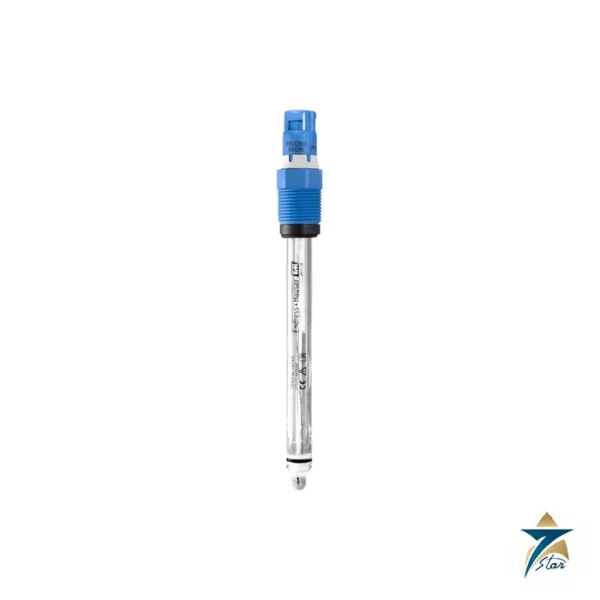
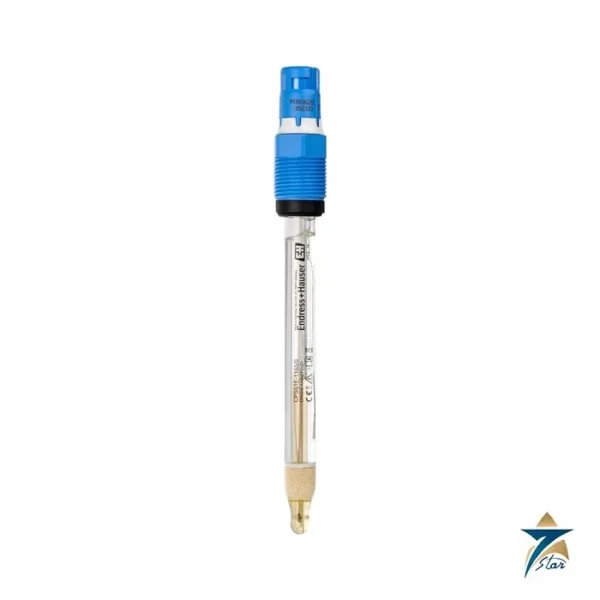
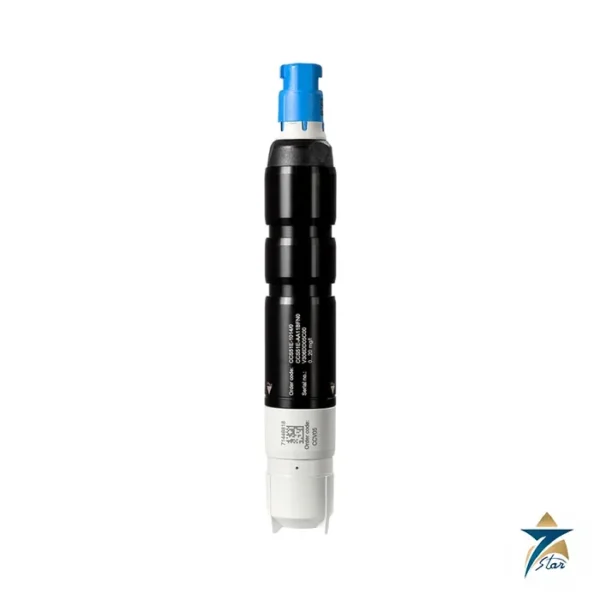
Other Memosens sensors from the same family cover pH, such as the CPS61E, and dissolved oxygen, such as the COS81E, so a hygienic water-for-injection skid can use one transmitter platform for the whole set.
CLS16E selection and ordering checklist
- Process connection: Clamp (1½ or 2 inch), Varivent N or BioControl D50, matched to the existing tee or flow cell.
- Seal material: FFKM or EPDM, chosen for the cleaning chemicals and temperature.
- Conductivity range: 40 nS/cm to 500 µS/cm. Water above this range needs a sensor with a higher cell constant.
- Temperature: up to 120 °C normal; 150 °C only for short sterilisation at 6 bar absolute.
- Certificates: ask for EN 10204 3.1, surface roughness test or pharmaceutical compliance papers if the project needs them.
- Hazardous area: state whether an Ex version is required and which scheme.
- Transmitter: confirm Memosens input with temperature compensation.
Installing and maintaining the CLS16E
The sensor is installed directly through its hygienic process connection and requires a minimum immersion depth into the pipe or flow vessel, shown in the dimensional drawing. Choose a position that keeps the measuring electrodes in constantly flowing liquid, free of trapped air. Gas bubbles on the electrodes cause unstable readings in ultra-pure water.
In use, the main maintenance task is checking the cell against a reference. Conductivity solutions such as CLY11 (74 µS/cm and 149.6 µS/cm at 25 °C) are available for verification. For ultra-pure water the datasheet points to a Conducal CLY421 set that supports comparison up to 20 µS/cm. The sensor stores its calibration history, the cell constant and the number of calibrations, so a laboratory check can be done off-line.
Replacement of seals and recalibration in the factory is offered as a service. Keep a spare set of seals and a spare Memosens cable on site.
Typical CLS16E applications in Oman and the GCC
Desalination is the regional anchor for conductivity measurement. After reverse osmosis, permeate quality is tracked by conductivity, and mixed-bed or EDI polishing for power plant boiler make-up needs measurements at very low levels. The CLS16E is a candidate for these post-RO and demineralised water stations. Pharmaceutical and hospital supply plants in the GCC also need WFI and purified water loops with hygienic connections. Seven Star LLC receives requests for the CLS16E both for these new loops and as replacements on existing Memosens transmitters.
What to send with a CLS16E request for quotation
- Process connection type and size
- Seal material and required certificates
- Water type, expected conductivity range, temperature and pressure
- Hazardous-area requirement, if any
- Transmitter model, cable length and quantity
Documents and quotation
The manufacturer’s datasheet for the CLS16E is attached on this page, including the dimension drawings for each connection and the list of approvals.
Send the connection type, seal material and application details and Seven Star LLC will quote the CLS16E with lead time for Oman and the GCC.
Other Models in the Eh Memosens Sensor Range
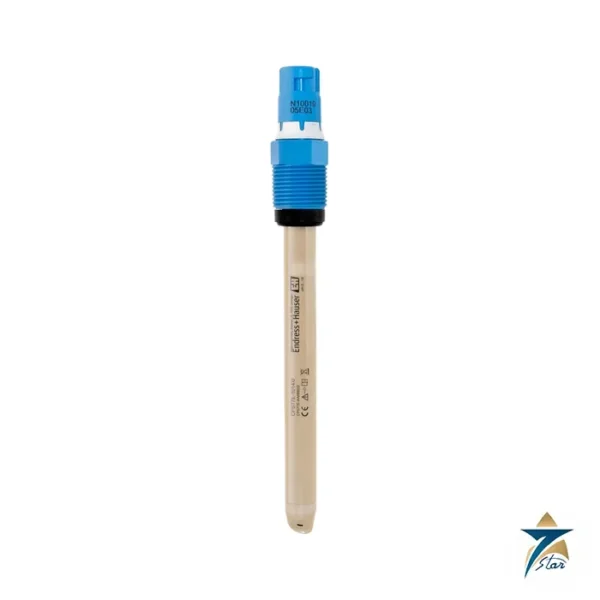
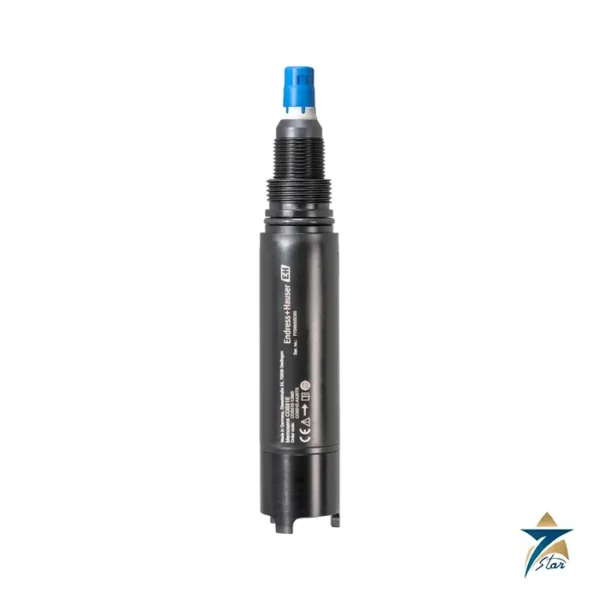
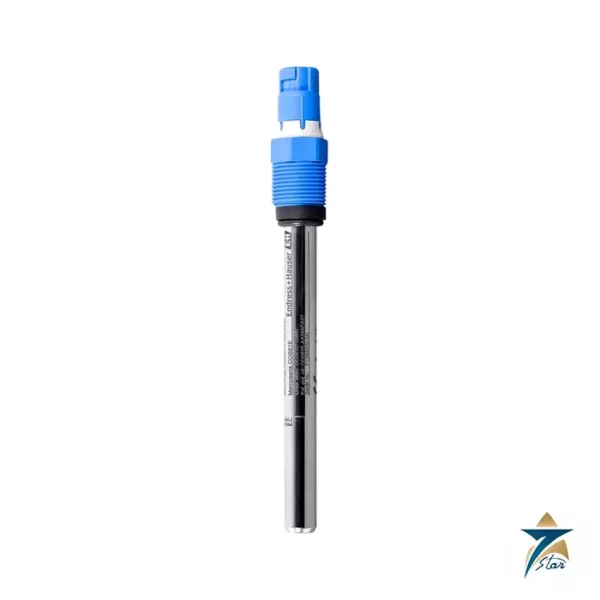
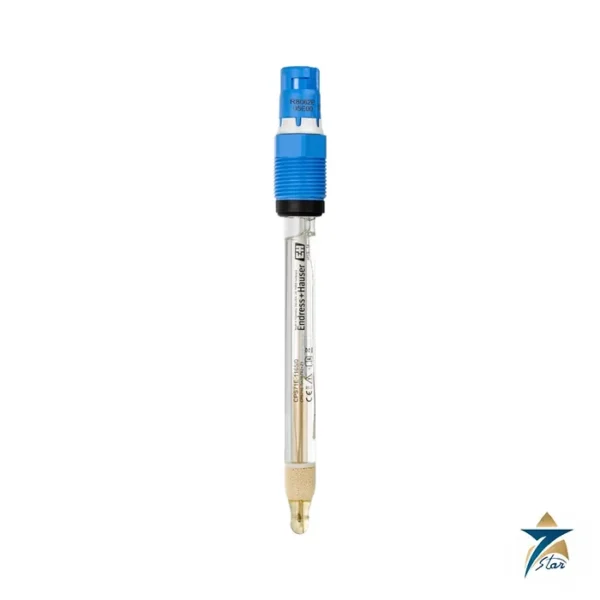
Seven Star LLC supplies models from the Eh Memosens Sensor range in Oman and the GCC. Compare the related models below and request a quote for the one that matches your application.

























Reviews
There are no reviews yet.