Endress+Hauser CPS71E Memosens pH sensor for chemical process duty
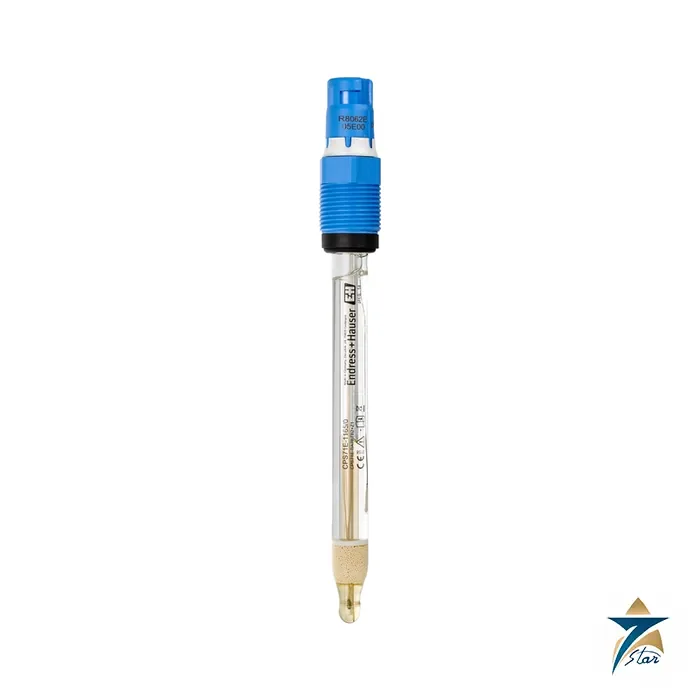
The Endress+Hauser CPS71E is a digital pH sensor with a glass membrane and a plug-in Memosens 2.0 head. It is designed for chemical process measuring points where the pH changes quickly or where the process liquid contains substances that poison an ordinary reference electrode, hydrogen sulphide being the standard example. Seven Star LLC supplies the CPS71E in Oman and the GCC as an independent supplier in Muscat.
The name is a family code rather than a full order code. CPS stands for the pH sensor line, 71 is the chemical-process model and E marks the Memosens 2.0 generation. The exact configuration, covering the application range, reference system, installed length and approvals, is fixed through the manufacturer’s product configurator, so the page you are reading describes the whole CPS71E range and the choices inside it.
Four installed lengths are offered: 120, 225, 360 and 425 mm. Two application ranges exist, called B and H, and four reference systems, called TB, TC, TP and TU. Each of these choices changes what the sensor can survive, so they are worth understanding before you request a quotation.
CPS71E technical specifications
| Parameter |
Specification |
| Manufacturer / part number |
Endress+Hauser / CPS71E (Memosens 2.0) |
| Measured variables |
pH value and temperature |
| Measuring range, application B |
pH 0 to 14, temperature 0 to 140 °C (32 to 284 °F) |
| Measuring range, application H |
pH 0 to 12, temperature 0 to 140 °C (32 to 284 °F) |
| Process pressure, application B |
0.8 to 14 bar (11.6 to 203 psi) absolute |
| Process pressure, application H |
0.8 to 7 bar (11.6 to 101.5 psi) absolute |
| Continuous temperature, TU and TP versions |
140 °C for sterilisation only; maximum 100 °C in continuous operation |
| Minimum conductivity |
10 µS/cm (atmospheric pressure, minimised flow, stable pressure and temperature) |
| Measuring principle |
Potentiometric, glass membrane with Ag/AgCl reference |
| Reference electrolyte |
3 M KCl, acrylamide-free gel, with ion trap |
| Temperature sensor |
NTC 30K, integrated |
| Membrane glass |
Type B |
| Wetted materials |
Glass shaft, ceramic junction (zirconium dioxide), FKM O-ring, Ag/AgCl lead |
| Plug-in head and coupling |
Memosens plug-in head, PPS fibre-glass reinforced coupling, 16 bar (232 psi) relative head pressure resistance |
| Process connection |
Pg 13.5 |
| Installed lengths / weight |
120 mm 40 g; 225 mm 60 g; 360 mm 90 g; 425 mm 100 g |
| Degree of protection |
IP 68 (10 m water column, 25 °C, 45 days, 1 M KCl) |
| Ambient / storage temperature |
Not below −15 °C in use; storage 0 to 50 °C |
| Hazardous-area options |
Ex ia IIC T3/T4/T6 Ga versions (ATEX, IECEx, NEPSI, CSA C/US, Japan Ex, INMETRO, Korea Ex, EAC Ex, UKCA Ex) depending on order version |
| Other optional certificates |
FDA 21 CFR, pressure CRN, depending on order version |
How the CPS71E measures pH and why the ion trap matters
Inside the glass membrane the sensor develops a small electrochemical voltage that depends on the hydrogen-ion activity of the liquid. The voltage is compared with the potential of an Ag/AgCl reference system, and the difference is converted to a pH value with the Nernst relationship. The converting electronics sit in the sensor head itself, so the signal that leaves the CPS71E is already digital.
In many chemical streams the weak point is the reference, not the glass. Sulphide and similar species migrate into the reference electrolyte, attack the silver chloride and shift the zero point until the sensor reads wrongly or stops responding. The CPS71E places an ion trap in front of the silver lead. The trap holds back those species, so the reference stays usable for much longer than in a plain gel electrode. This is the central reason to choose the CPS71E over a general-purpose pH sensor.
The temperature probe is read at the same time, which allows the transmitter to compensate the slope for the actual process temperature. Because the calibration values, the temperature history and the operating-hours counters are stored inside the sensor, a replacement that has been calibrated in the laboratory can be fitted in minutes.
CPS71E reference system versions TB, TC, TP and TU
The reference code is the most important ordering decision after the application range. It decides how the reference electrolyte contacts the process, whether the sensor can be mounted upside-down and whether the reference is pressurised.
| Code |
Reference design |
Mounting and use |
| TB |
Flowable gel, one ceramic junction |
Inclination of at least 15° from the horizontal; no upside-down mounting |
| TC |
Flowable gel, three ceramic junctions |
Same mounting rule as TB; the extra junctions suit demanding flow conditions |
| TP |
Flowable gel, reference pressurised to 7 bar absolute, with pressure indicator |
For media that tend to block the junction, such as dispersions; protective goggles are required when handling |
| TU |
Solidified gel electrolyte |
May be mounted at any angle, including upside-down |
For the TP version the shaft carries a visible pressure indicator, and the sensor must be treated as a glass body under pressure. Fast heating of such a sensor after long service at higher process pressure should be avoided if it is later used at lower pressure.
Where the CPS71E fits in the measuring system
A complete loop needs the CPS71E sensor, a Memosens data cable (CYK10 for fixed wiring or CYK20 for laboratory use), a transmitter with Memosens inputs such as the Liquiline CM44 or CM42, and an assembly. Digital Memosens sensors cannot be wired to a transmitter built for analogue pH sensors, which is worth checking in an existing plant.
Assemblies named in the datasheet for this sensor include the Dipfit CPA111 immersion assembly, the Flowfit CPA250 flow assembly, the Cleanfit CPA871 retractable assembly and the Unifit CPA842 permanent installation assembly. A retractable assembly is often the best fit on a live process line because the sensor can be pulled out for inspection without stopping the plant.
Within the same family, the CPS61E is the sibling for hygienic and sterile duty with a pressurised option, and the CPS77E is the ISFET version without a glass membrane. For aggressive chemical streams with sulphide, the CPS71E is the one aimed at that task.
CPS71E selection and ordering checklist
- Application range: choose B (pH 0 to 14, up to 14 bar abs.) or H (pH 0 to 12, up to 7 bar abs.) according to your pH span and line pressure.
- Reference system: TB or TC for standard flow, TP where the junction may block, TU where upside-down mounting is needed.
- Installed length: 120, 225, 360 or 425 mm, matched to the assembly or the immersion depth.
- Process temperature: up to 140 °C, but TU and TP versions only to 100 °C continuously, with 140 °C reserved for sterilisation.
- Conductivity: confirm that the liquid is above 10 µS/cm, otherwise the reference cannot work reliably.
- Hazardous area: state the zone and the certification scheme so that the correct Ex version, marked by a red or orange ring on the head, is selected.
- Transmitter and cable: confirm that a Memosens input and a CYK10 or CYK20 cable are available.
Installing and commissioning the CPS71E
Before fitting the sensor, check that the assembly thread, the O-rings and the sealing surface are clean and undamaged. In Endress+Hauser assemblies the sensor is tightened by hand to a torque of 3 Nm. Do not use tools on the plug-in head.
For the TB, TC and TP reference systems keep an inclination of at least 15° from the horizontal. A shallower angle allows an air bubble to separate the reference from the membrane glass and the measurement is lost. Only the TU version tolerates any angle.
Remove the wetting cap and the protective netting just before use. The datasheet recommends conditioning the sensor in a buffer solution for 15 to 20 minutes before calibration. Avoid exposing the sensor to frost, since the glass and gel are not designed for temperatures below −15 °C.
Calibration, maintenance and spares for CPS71E
Because the CPS71E stores its own calibration, the usual routine is to calibrate in the workshop with fresh buffers, then swap the sensor at the measuring point. The sensor also records hours at extreme conditions and the sensor load, so a transmitter such as the Liquiline CM42 or CM44 can show how much life has been consumed. This makes planned replacement possible instead of waiting for a drifting reading.
A yellowish, milky colouring of the electrolyte does not indicate a fault and does not change the measurement. A cracked or heavily coated glass membrane does. Typical spares to hold are a second sensor in the same length and reference version, a spare data cable, buffer solutions of at least two pH values and the O-rings for the assembly.
Typical CPS71E applications in Oman and the GCC
In the Gulf the CPS71E is relevant wherever a chemical process stream has to be controlled by pH and the liquor is not clean. Examples include neutralisation of acid or caustic streams in refineries and petrochemical units, scrubber and sour-water duty where hydrogen sulphide is present, chemical dosing loops and effluent treatment before discharge. High ambient temperature and dust at outdoor skids make a sealed digital connection attractive, because moisture on a conventional analogue plug is a common cause of unstable readings.
Seven Star LLC sees pH sensors requested both for new projects and as like-for-like replacements on existing Memosens transmitters, so the exact version printed on the old sensor nameplate is the most useful starting information.
What to send with a CPS71E request for quotation
- Full order code or nameplate photo of the existing sensor, if replacing
- Application range (B or H), reference code (TB, TC, TP, TU) and installed length
- Process liquid, pH span, temperature and pressure range, and presence of H2S or other poisons
- Hazardous-area classification and required approvals
- Transmitter model and assembly type, quantity and delivery location
Documents and quotation
The manufacturer’s datasheet for the CPS71E is attached on this page. It contains the dimension drawings, the pressure and temperature diagram and the list of compatible assemblies.
Send the application range, reference system and length you need and Seven Star LLC will prepare a quotation for the CPS71E, with lead time and delivery to Oman and the GCC.
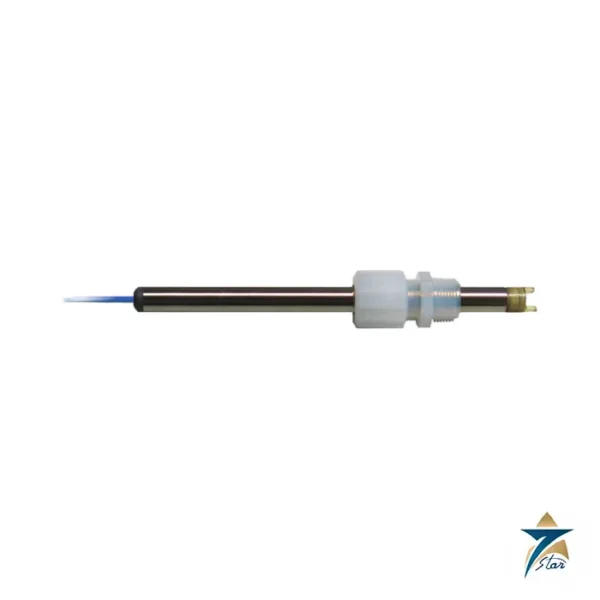
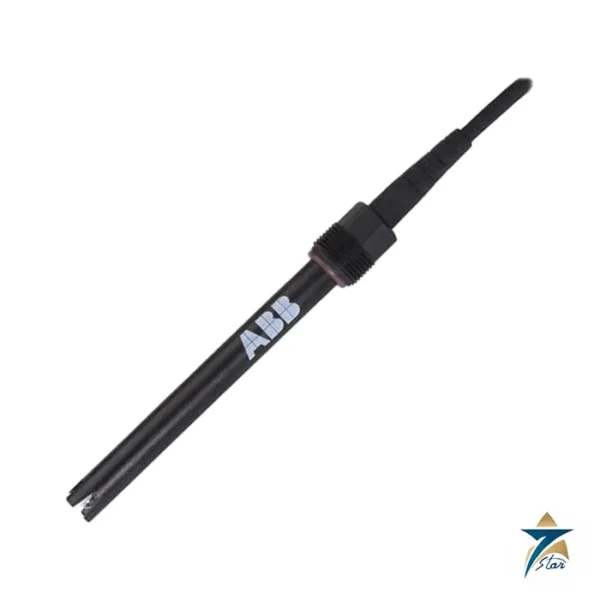
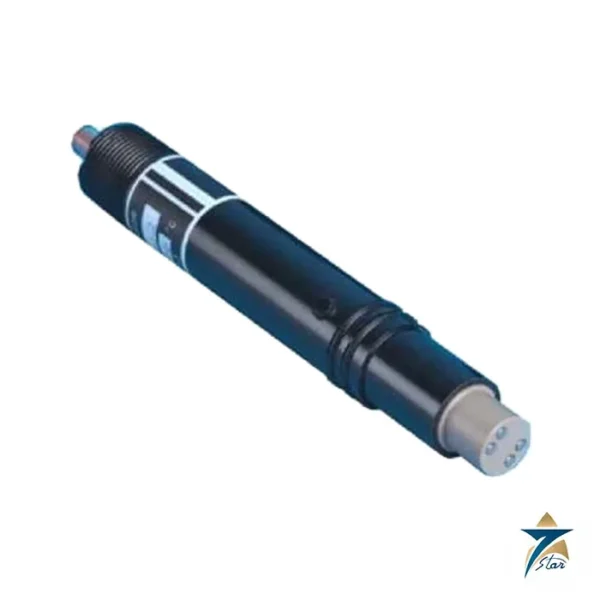
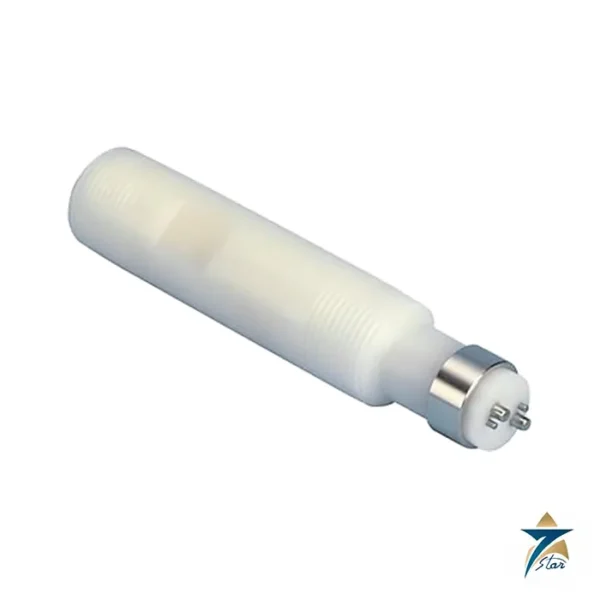
Other Models in the Eh Memosens Sensor Range
Seven Star LLC supplies models from the Eh Memosens Sensor range in Oman and the GCC. Compare the related models below and request a quote for the one that matches your application.






















Reviews
There are no reviews yet.