Honeywell GasAlertMicro 5 series: five-gas portable detector in three versions
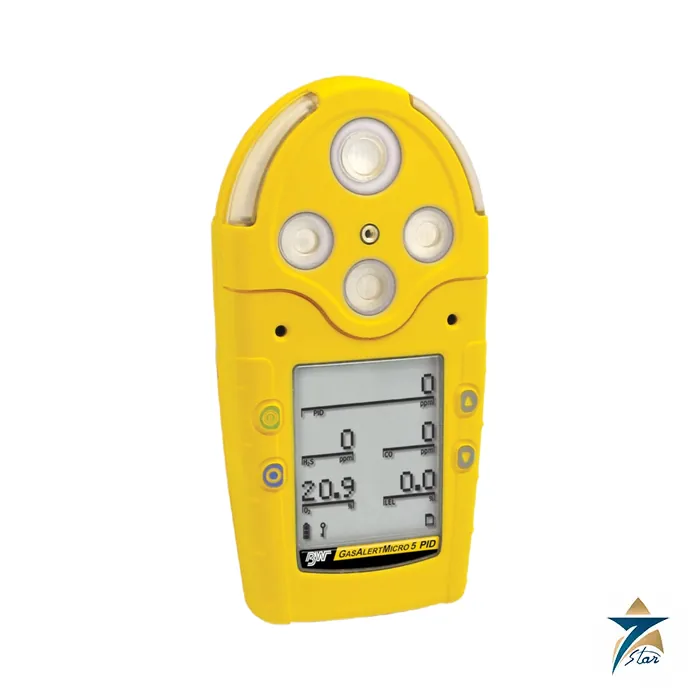
The GasAlertMicro 5 is a compact portable multi-gas detector from Honeywell BW Technologies. It can display up to five atmospheric hazards at the same time. The datasheet describes three versions of the series: the standard GasAlertMicro 5 with electrochemical and catalytic sensors, the GasAlertMicro 5 PID with a photoionisation detector for volatile organic compounds, and the GasAlertMicro 5 IR with an infrared sensor for carbon dioxide. The yellow housing is a familiar sight on confined-space entry teams worldwide. Seven Star LLC supplies these detectors in Oman and the GCC as an independent supplier in Muscat.
Each unit is configured at the factory. Because of board and sensor configuration, the three versions are not interchangeable; a PID sensor cannot be fitted to an IR-configured unit, for example.
GasAlertMicro 5 model differences
| Model |
Gases detected |
Sensors |
Typical battery life |
| GasAlertMicro 5 |
H2S, CO, O2, SO2, PH3, NH3, NO2, HCN, Cl2, ClO2, O3 and combustibles (LEL) |
Plug-in electrochemical cells (toxic and oxygen); catalytic (LEL) |
About 20 hours |
| GasAlertMicro 5 PID |
Toxic, oxygen and LEL gases as listed, plus VOCs by PID |
Electrochemical, catalytic, plus 10.6 eV PID lamp for VOCs |
About 15 hours |
| GasAlertMicro 5 IR |
H2S, CO, O2, SO2, NH3, O3, combustibles (LEL) and CO2 |
Electrochemical, catalytic, plus infrared sensor for CO2 |
About 15 hours |
Battery life is based on a five-gas instrument in diffusion mode at 20 °C; other configurations and conditions change it.
GasAlertMicro 5 technical specifications
| Parameter |
Specification |
| Manufacturer / part number |
Honeywell BW Technologies / GasAlertMicro 5, GasAlertMicro 5 PID, GasAlertMicro 5 IR |
| Size / weight |
14.5 × 7.4 × 3.8 cm (5.7 × 2.9 × 1.5 in); 370 g (13.1 oz) |
| Operating temperature |
–20 to +50 °C; PID model –10 to +40 °C |
| Alarms |
Visual alarm bars, vibrating, audible 95 dB; low, high, STEL, TWA and over-limit |
| Pump |
Optional integral motorised pump; sampling from up to 20 m (66 ft) |
| Ingress protection |
IP 65/66 |
| Power |
AA alkaline cells or hot-swappable rechargeable battery pack |
| Self-test |
On start-up: sensor integrity, circuitry, battery status and audible/visual alarms |
| Languages |
English, French, German, Spanish and Portuguese |
| Approvals listed |
Class I Div 1 Groups A-D; ATEX II 1 G Ex ia IIC T4 Ga (IR model: II 2 G Ex d ia IIC T4); IECEx Ex ia IIC T4 Ga; ABS for toxic and PID models |
| Warranty |
Two years including sensors; one year for NH3, Cl2, O3, ClO2 and the PID lamp |
Temperature codes depend on the batteries installed, so check the owner’s manual for the correct combination.
Measuring ranges available on the series
| Gas |
Default range |
Resolution |
| H2S |
0 to 500 ppm |
1.0 ppm (0.1 ppm high resolution) |
| CO |
0 to 999 ppm |
1.0 ppm |
| TwinTox (H2S / CO) |
0 to 500 ppm |
1.0 ppm |
| O2 |
0 to 30.0 % |
0.1 % |
| SO2 |
0 to 150 ppm |
1.0 ppm (0.1 ppm high resolution) |
| PH3 |
0 to 5.0 ppm |
1.0 ppm (0.1 ppm high resolution) |
| NH3 |
0 to 100 ppm |
1.0 ppm (0.1 ppm high resolution) |
| NO2 |
0 to 99.9 ppm |
1.0 ppm (0.1 ppm high resolution) |
| HCN |
0 to 30.0 ppm |
1.0 ppm (0.1 ppm high resolution) |
| Cl2 |
0 to 50.0 ppm |
1.0 ppm (0.1 ppm high resolution) |
| ClO2 / O3 |
0 to 1.0 ppm |
0.1 ppm (0.01 ppm high resolution) |
| PID (VOCs) |
0 to 1,000 ppm |
1 ppm |
| IR (CO2) |
0 to 5.0 % v/v |
0.01 % |
| Combustible gases |
0 to 100 % LEL or 0 to 5.0 % v/v methane |
1 % LEL; 0.1 % v/v |
Alarm set points are user adjustable and are shown at start-up.
Using the detector in the field: diffusion or pumped
The base instrument works by diffusion, with gas reaching the sensors through the filter window on the front. An optional integral motorised pump turns it into a sampling instrument, which allows testing a confined space from outside the entry point with a probe and tubing, up to 20 m (66 ft) away according to the datasheet. The Generation 2 pump has a visible, replaceable filter so the operator can see whether dust or water is accumulating. The datasheet also notes that both diffusion and pumped versions are compatible with the MicroDock II automatic bump test and calibration system, which saves time before each shift.
Selecting the GasAlertMicro 5: gas list and options
- Hazard list. Start from the work permit. The common confined-space set is LEL, O2, CO and H2S, and the fifth channel can be a second toxic gas, a PID or CO2.
- Toxic variants. The TwinTox sensor reads H2S and CO on one cell, which frees a position for another gas.
- PID or IR version. Choose the PID unit when hydrocarbon vapour such as fuel or solvent is the concern; choose the IR version where CO2 build-up is expected, for example in fermentation or refrigeration areas.
- Pump option. Required when sampling from outside the space; state the requirement when ordering.
- Power. Alkaline AA cells or a hot-swappable rechargeable pack; the latter allows a fresh pack to be fitted in the field.
- Accessories. Integral pump, confined-space kit, belt holster, collapsible sampling probe and battery charger are listed.
Calibration and maintenance routine
- Bump test the instrument before each day of use, and calibrate according to your site procedure; the instrument has an automatic calibration procedure and a calibration due lockout option.
- User options include a daily bump test reminder, passcode protection to prevent unauthorised changes, and user-settable calibration gas levels.
- Inspect the filter window regularly and replace it when contaminated, particularly on the pumped model.
- Observe the shorter life and warranty of ammonia, chlorine, ozone, chlorine dioxide and PID lamp components, which carry one-year warranties.
- Use a MicroDock II station if available to log results and keep records.
Typical applications in Oman and the GCC
The datasheet (a 2010 issue, so confirm current options) lists confined-space entry, wastewater plants, steel and iron production, pulp and paper, food and beverage, construction, oil and gas, chemical plants and landfill among industries. For Oman and the Gulf this maps to tank, vessel and pit entry in refineries and gas plants, sewage and desalination pretreatment, cooling-water systems (chlorine and chlorine dioxide), cold storage and ammonia refrigeration, and fumigated grain stores where phosphine is a hazard. The 95 dB alarm, vibrating alert and bright alarm bars cope with noisy environments, and the operating range up to 50 °C covers most outdoor Gulf work, although the PID version is limited to 40 °C ambient and should be kept shaded in summer.
Information to send with an RFQ for the GasAlertMicro 5
- Version (standard, PID or IR) and the exact gas list with ranges.
- Diffusion or pumped, and the accessories required (holster, probe, confined-space kit).
- Battery type: alkaline or rechargeable, and charger type.
- Calibration gas and docking station requirements.
- Approval requirements and quantity.
Documents and quotation for the GasAlertMicro 5
A GasAlertMicro 5 series datasheet is attached on this page.
Send the version and gas configuration to Seven Star LLC and we will confirm availability, lead time and any further documents for the quotation.
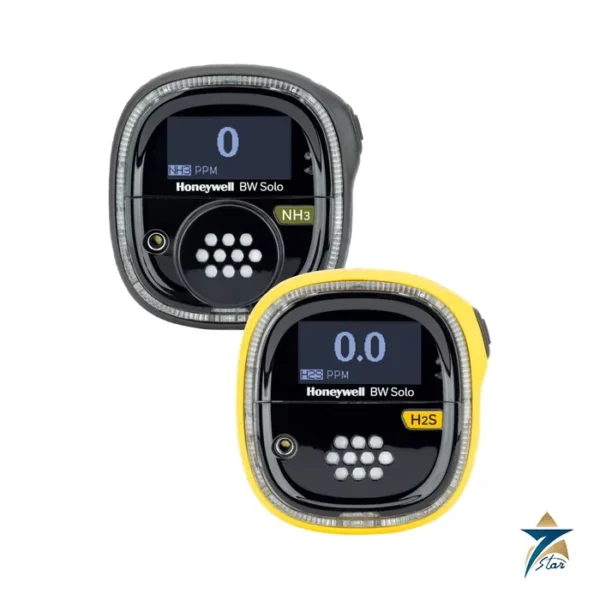
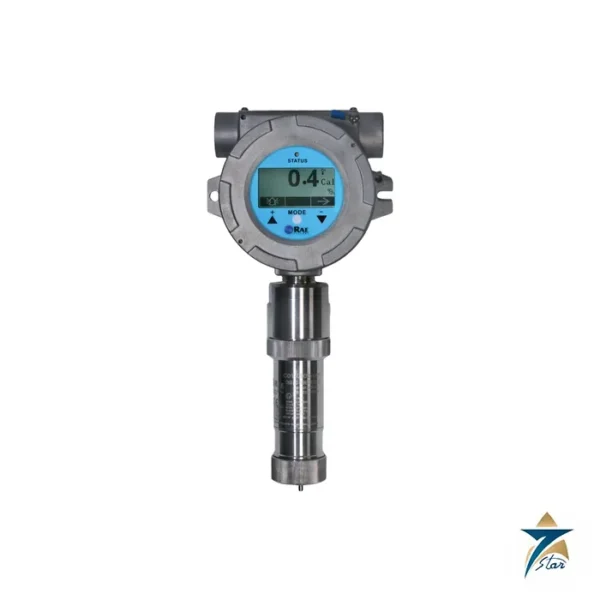
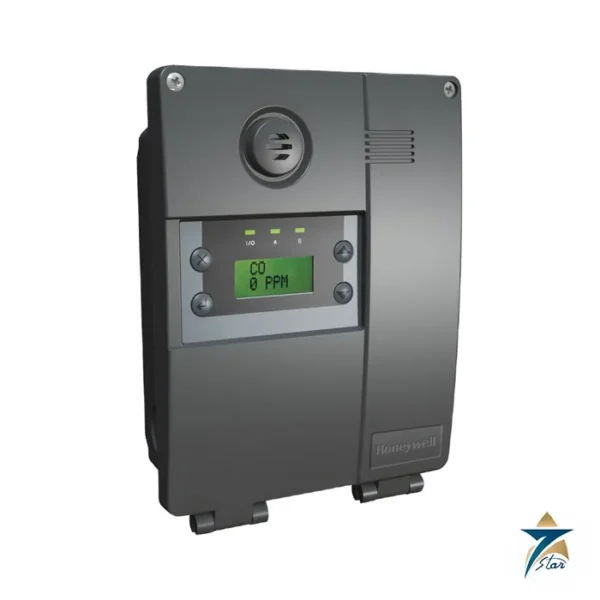
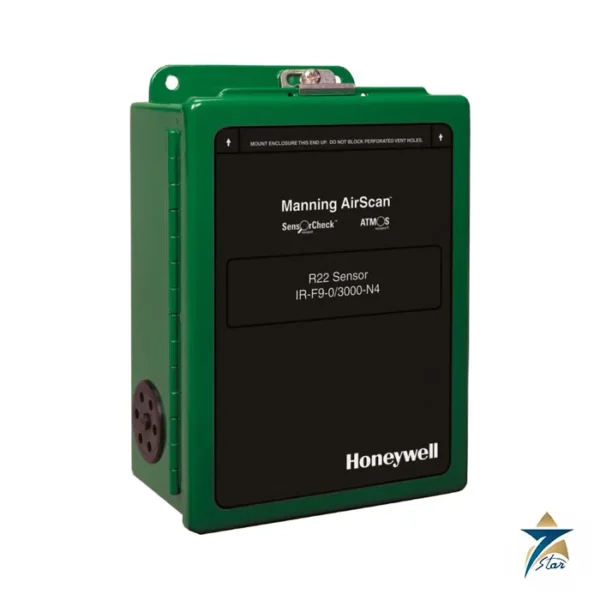
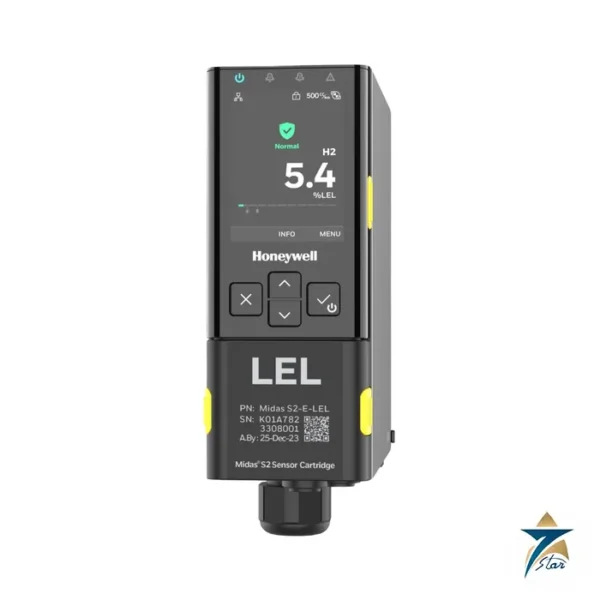
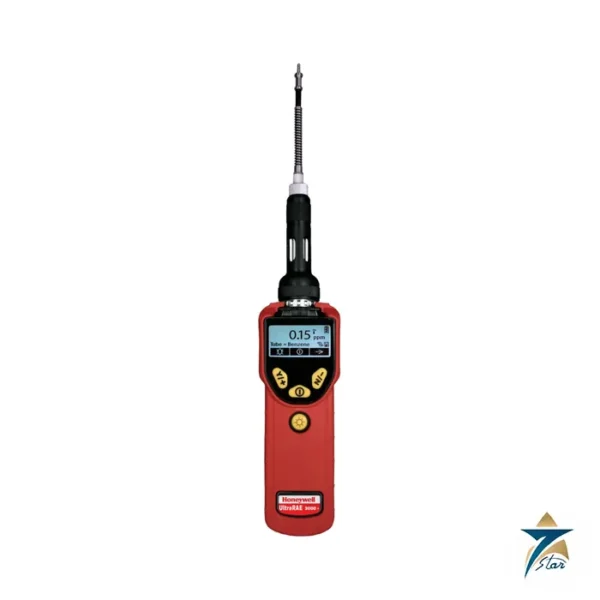
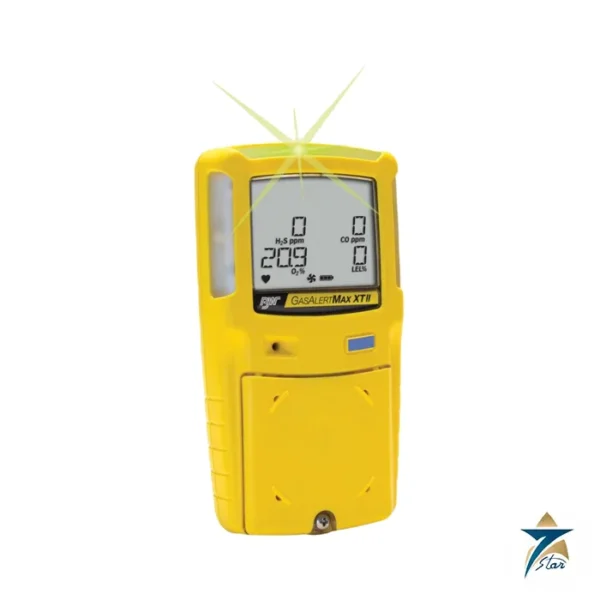
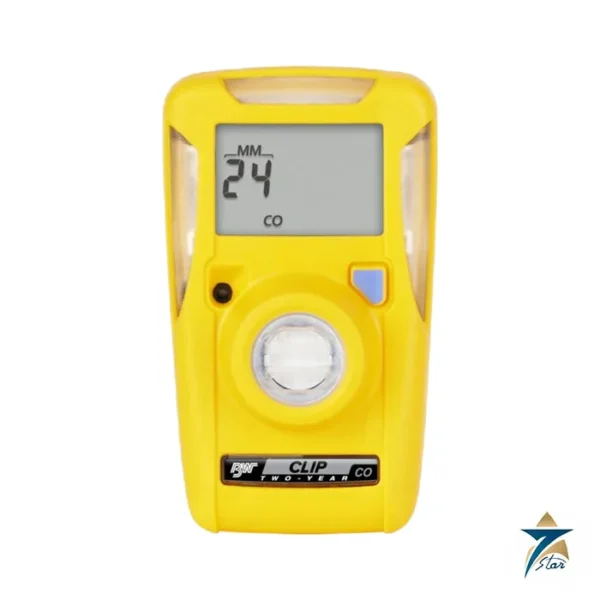
Other Models in the Honeywell Bw Portable Range
Seven Star LLC supplies models from the Honeywell Bw Portable range in Oman and the GCC. Compare the related models below and request a quote for the one that matches your application.




















Reviews
There are no reviews yet.