Brand:

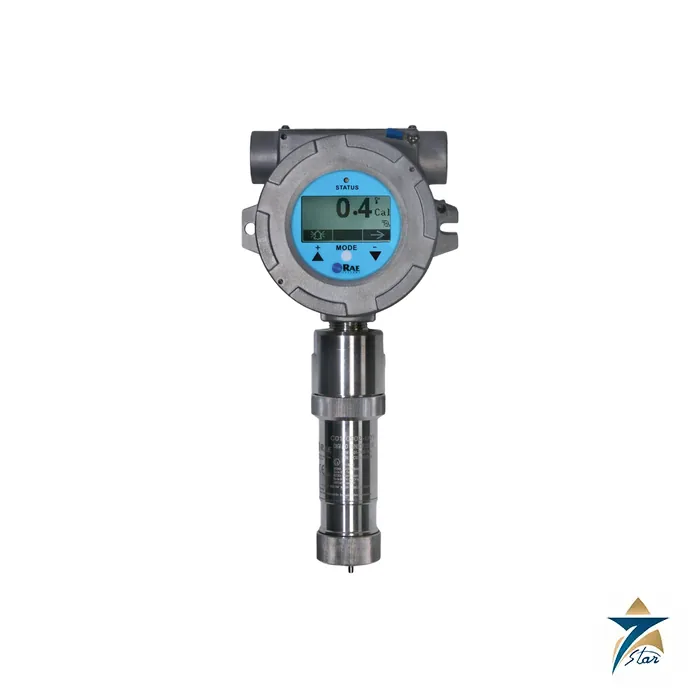
Honeywell RAEGuard 2 PID Fixed VOC Gas Detector

Description

Overview

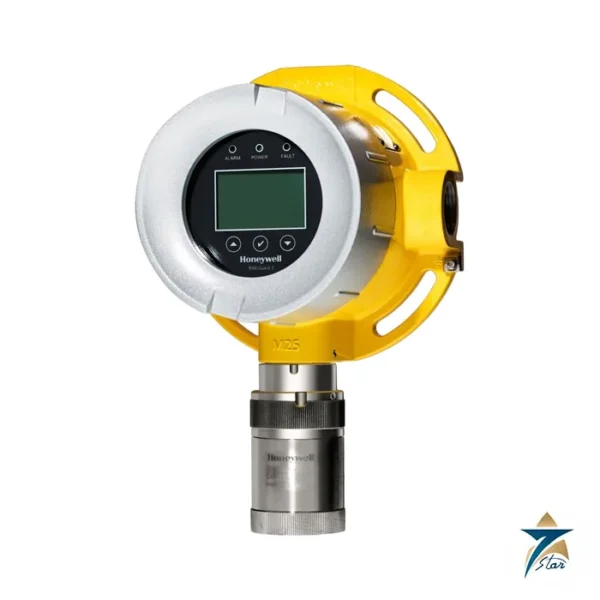
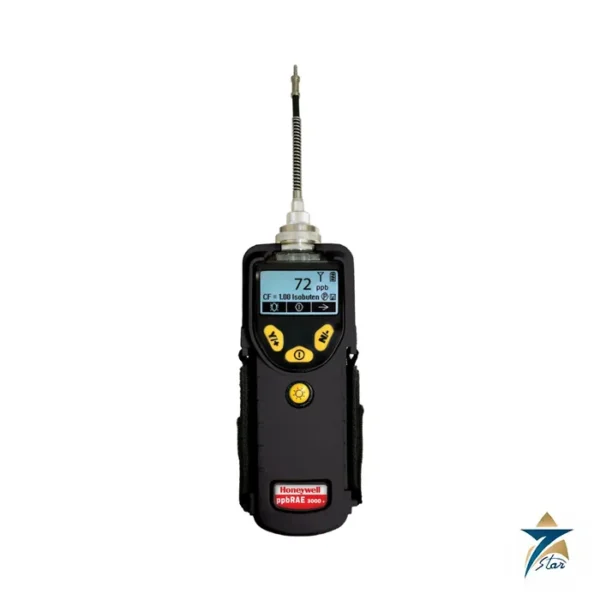
The Honeywell RAEGuard 2 PID is a fixed photoionisation detector for continuous monitoring of volatile organic compounds (VOCs) in hazardous and non-hazardous locations. Where catalytic and infrared LEL detectors look for flammable concentrations, a PID responds to VOCs at toxic exposure levels, down to parts per billion with the most sensitive sensor module. Honeywell offers the detector as a pumped model for sticky gases and as a diffusion model for high-humidity ambients, both housed in an explosion-proof 316 stainless steel enclosure with a graphic display.

Seven Star LLC supplies the Honeywell RAEGuard 2 PID to refineries, petrochemical plants, terminals, chemical manufacturers and laboratories in the Sultanate of Oman and the GCC. Benzene monitoring in analyser shelters and around aromatics units, solvent vapour monitoring in storage areas and fenceline or process-area VOC monitoring are typical requests from Sohar, Duqm and Muscat. Our team provides engineering support in Muscat, helping choose the right DigiPID range, sampling mode and correction factor for the target compound.

Measurement Principle

In general terms, in a photoionisation detector an ultraviolet lamp emits photons with enough energy to ionise many organic molecules. As gas passes the lamp, VOC molecules are ionised and the resulting ions are collected on electrodes, producing a current proportional to concentration. The Honeywell RAEGuard 2 PID applies this principle in its DigiPID sensor module, which is offered with measuring ranges of 0.01 to 100 ppm, 0.1 to 1000 ppm or 1 to 1000 ppm, a resolution of 10 ppb or 1 ppm depending on model, and a response time (T90) below 30 seconds.

As general background, a PID responds to many compounds, so in common practice the reading is calibrated with a reference gas and converted for the target compound using a correction factor. For the Honeywell RAEGuard 2 PID, Honeywell pre-programs more than 200 correction factors so that the display can show the concentration of a specific target gas. The detector also uses Honeywell patents such as Electronic Auto-Zero for baseline stability, a patented pump duty cycle that extends sensor and lamp cleaning intervals, humidity compensation, and 3D sensor technology that reduces quenching and humidity response. Relays and correction factors are disabled with the 1 to 1000 ppm DigiPID version.

Engineering Design of the Honeywell RAEGuard 2 PID

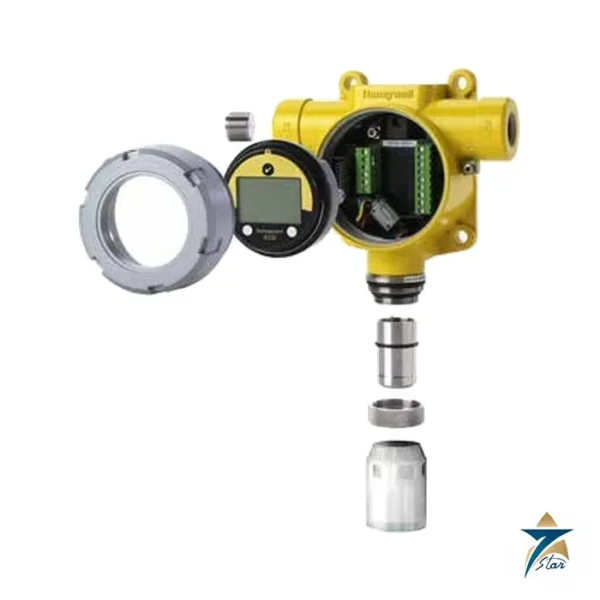
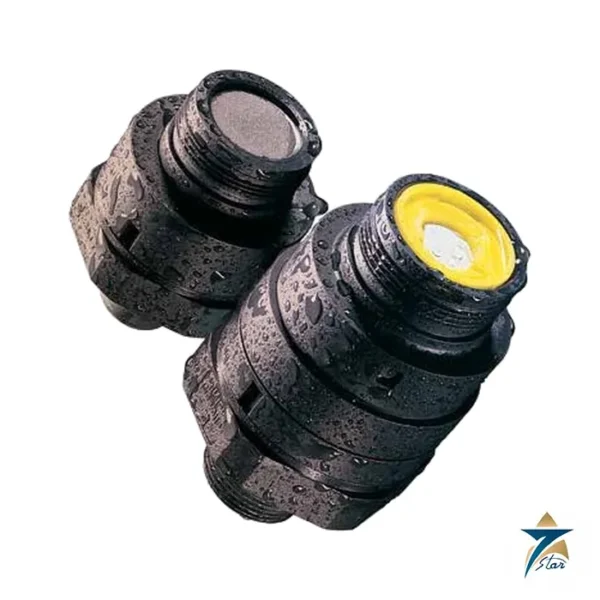
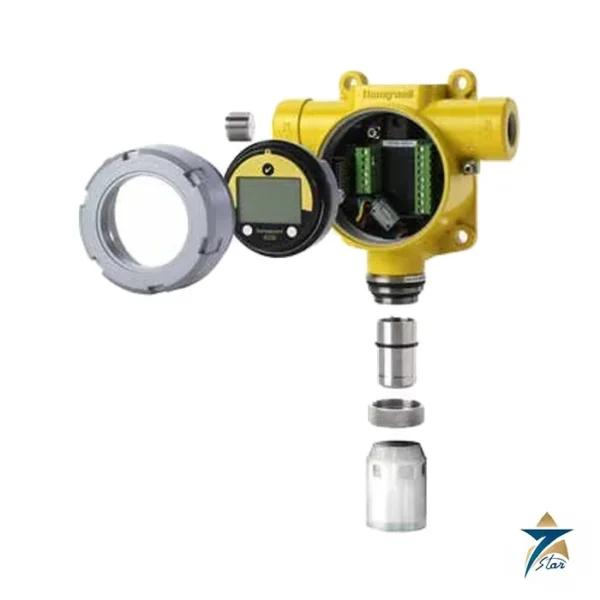
The Honeywell RAEGuard 2 PID fixed sensor head is a 316 stainless steel explosion-proof enclosure measuring 257 x 201 x 107 mm and weighing 3.5 kg, with a 3/4 in NPT male mechanical interface and mounting on a 50.8 mm (2 in) pipe or wall. The pumped version uses an internal diaphragm pump drawing up to 500 cc/min through a flow-through design for faster response. The sensor module can be removed in hazardous locations without tools, and calibration and adjustment are performed with a magnetic key through the closed enclosure using a three-key magnetic interface.

Electrically, the Honeywell RAEGuard 2 PID operates on 10 to 28 V DC, drawing 210 mA at 24 V with power below 5 W, and provides a three-wire 4-20 mA output, an RS-485 Modbus digital output and three-level programmable alarm relays rated 30 V DC, 2 A. A 128 x 64 backlit matrix LCD and an LED status indicator show readings, faults and alarms. The sensor head is certified ATEX Ex II 2(1)G Ex d [ia Ga] IIC T4 Gb, IECEx Ex d [ia Ga] IIC T4 Gb and UL/CSA Class I Division 1 Groups A, B, C and D T4, with IP65 rating.

Key Features

The Honeywell RAEGuard 2 PID data sheet highlights the following features.

  • Pumped and diffusion models are available, the pumped version for sticky gases and the diffusion version for humid ambients.
  • DigiPID sensor ranges extend from 0.01 to 100 ppm up to 1 to 1000 ppm, with resolution down to 10 ppb.
  • More than 200 pre-programmed correction factors allow readings for specific target VOCs.
  • Electronic Auto-Zero and humidity compensation support baseline stability and accurate readings.
  • The unique lamp design improves robustness and extends lamp life.
  • The sensor module can be removed in hazardous locations without tools for easier maintenance.
  • Outputs of the Honeywell RAEGuard 2 PID include 4-20 mA, RS-485 Modbus and three programmable alarm relays.
  • The explosion-proof 316 stainless steel enclosure carries ATEX, IECEx and UL/CSA approvals.

Industrial Applications

Honeywell lists key applications for the Honeywell RAEGuard 2 PID such as benzene in refinery analyser shelters, ammonia in industry, vinyl chloride in chemical manufacturing, toluene or ammonia in semiconductor plants, solvent and chemicals storage, phenol and DME in pharmaceuticals, toluene in printing, methyl ethyl ketone in paint spray booths, heat transfer fluids and solvents in medical and pathology laboratories. In Oman the detector is especially relevant to refinery and aromatics complexes, tank farms and loading terminals, and chemical warehouses where low-level VOC exposure has to be controlled.

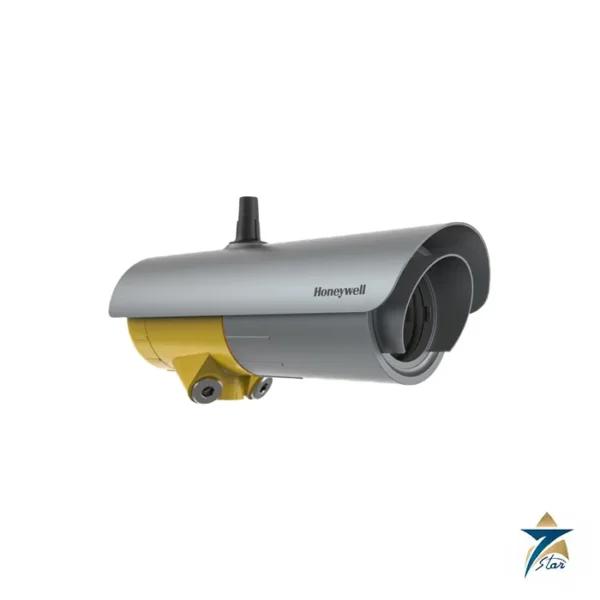
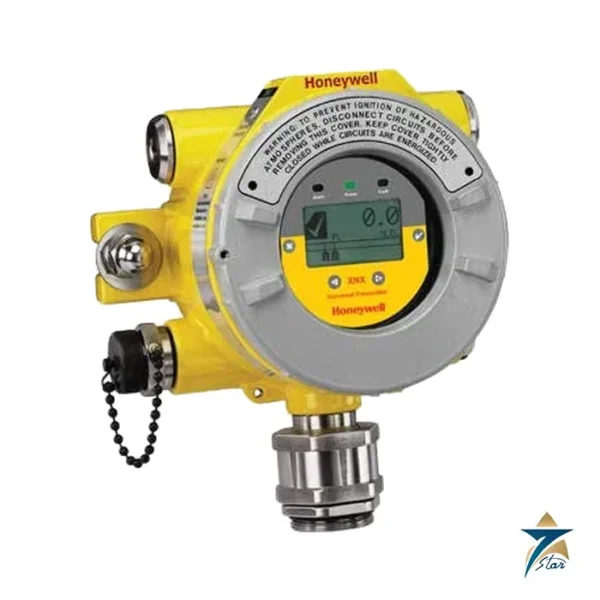
For flammable and toxic detection alongside VOC monitoring, Seven Star LLC also supplies the Honeywell XNX Excel gas detector, the Honeywell Sensepoint XRL fixed gas detector and the Honeywell Searchline Excel open path detector. Our engineers in Muscat help clients across Oman and the GCC combine PID, point and open path technologies in one detection philosophy.

Technical Specifications

The Honeywell RAEGuard 2 PID data below are taken from the Honeywell data sheet (EMEA 0419).

Parameter Specification
Model Honeywell RAEGuard 2 PID (fixed sensor head with DigiPID module)
Detection principle Photoionisation (PID) for VOCs
Measuring range 0.01 to 100 ppm; 0.1 to 1000 ppm; 1 to 1000 ppm
Resolution 10 ppb or 1 ppm (model dependent)
Response time (T90) below 30 s
Accuracy ±2% at calibration point
Sampling Diffusion, or pumped with internal diaphragm pump up to 500 cc/min
Power supply 10 to 28 V DC, 210 mA at 24 V, below 5 W
Outputs 4-20 mA (three-wire); RS-485 Modbus; three programmable alarm relays 30 V DC, 2 A
Display 128 x 64 backlit matrix LCD with LED status indicator
Enclosure 316 stainless steel, 257 x 201 x 107 mm, 3.5 kg, IP65
Mounting 3/4 in NPT male; 2 in pipe or wall
Operating temperature –20 to +55 °C
Humidity / pressure 0 to 95% RH non-condensing; 90 to 110 kPa
Certification ATEX Ex II 2(1)G Ex d [ia Ga] IIC T4 Gb; IECEx Ex d [ia Ga] IIC T4 Gb; UL/CSA Class I Div. 1 Groups A-D T4

How to Order

To order the Honeywell RAEGuard 2 PID, tell Seven Star LLC the target VOC, required range, pumped or diffusion sampling and the area classification, or send the existing part number for a replacement. Our team in Muscat will confirm the configuration, provide the technical datasheet for download and issue a formal quotation. Seven Star LLC supplies Honeywell gas detection products to customers in Oman and the GCC with engineering support.

Datasheets & Documents
  • PDF Datasheet Honeywell RAEGuard 2 PID Fixed Photoionisation Detector Data Sheet (EMEA 0419) Download
Reviews (0)

Reviews

There are no reviews yet.

How would you rate this product?

It takes about 10 seconds — just tap a star. Your email is never published.

About brand

Honeywell is the American industrial technology group whose products on this site cover gas and flame detection, pressure transmitters, flow measurement, gas metering, fire alarm systems and helicopter rotor balancing equipment. Its roots go back to a thermostat business in Minneapolis in 1885 and to Mark Honeywell's heating company, which merged with it in 1927. Several brands we list have joined Honeywell over the years: Gent fire systems of Leicester (part of Honeywell since 2005), Chadwick-Helmuth (a Honeywell business unit from 2002) and Elster gas metering (acquired around the end of 2015).

Seven Star LLC is an independent supplier in Muscat. We list Honeywell gas detectors and sensors, transmitters, Elster gas meters and flow computers, Gent fire alarm equipment and Chadwick-Helmuth balancers, and supply them and their spares in Oman and the GCC by part number.

Honeywell company profile

Origins 1885, Minneapolis (Butz thermostat business); merged with Mark Honeywell's company in 1927
Brands in our range Honeywell Analytics gas detection, SmartLine transmitters, Elster gas metering, Gent fire detection, Chadwick-Helmuth rotor track and balance
Gent Founded in Leicester, UK, around 1872 by John Thomas Gent; part of Honeywell since 2005
Elster Gas, water and electricity metering; bought by Honeywell from Melrose, deal completed around the end of 2015

Milestones

  • 1885: The Butz thermostat business starts in Minneapolis.
  • 1927: It merges with Mark Honeywell's company.
  • 2005: Gent fire detection (Leicester, UK) becomes part of Honeywell.
  • 2015: Honeywell completes the purchase of Elster from Melrose around the end of the year.

Honeywell products we list

Family Models Typical use
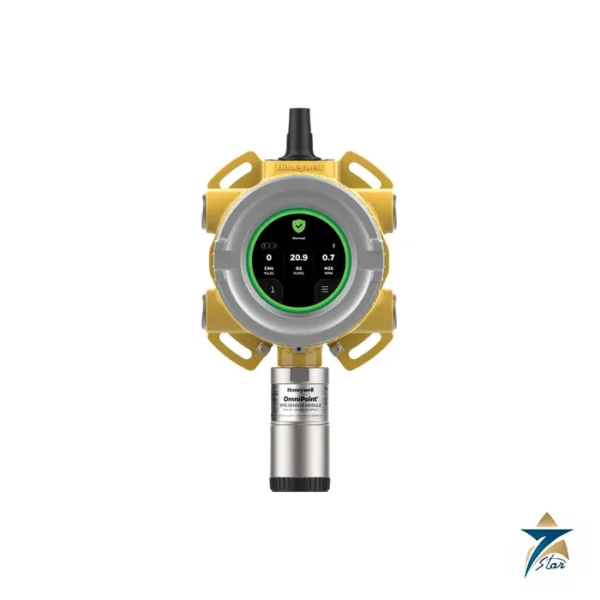
Fixed gas detectors Searchline Excel, Searchline Excel Plus, 02104-N-XSSA, Sensepoint XCD RTD, Sensepoint XCD IR, XCD H2, Sensepoint XCL, Sensepoint XRL, OmniPoint, RAEGuard 2 PID Flammable, toxic and VOC gas detection in process areas
Sensors, flame detection and control SR-W-MP75C LEL sensor, SR-X2V O2 sensor, FS24X Plus flame detector, R4343E flame switch, System 57 card, 5704FS panel Replacement sensors, fire detection and gas detection control panels
Transmitters and flow SmartLine STG700, STG800, STR82D remote seal, VersaFlow Coriolis Process pressure and mass flow measurement
Elster gas metering Q.Sonic plus, TRZ2, Quantometer, RABO, IRM-3 DUO, EK280, EC 350, enCore FC1, enCore ZM1, gas-net F1, gas-net D2, GasLab Q2, USM display Gas meters, volume correction and fiscal flow computing
Gent fire alarm systems Vigilon Plus, Vigilon Compact Plus, Nano, Xenex, S-Quad detector, S-Cubed, ALD302 base, S4-34420 interfaces, loop card, repeat panel, mimic panel, XENS-850 call point, 74430 bell Addressable and conventional fire alarm systems in buildings and plants
Chadwick-Helmuth rotor track and balance 8500C, 8500C Plus, Vibrex 2000, Model 11, photocell system, printer, bracket, protractor Helicopter rotor track and balance and propeller balancing

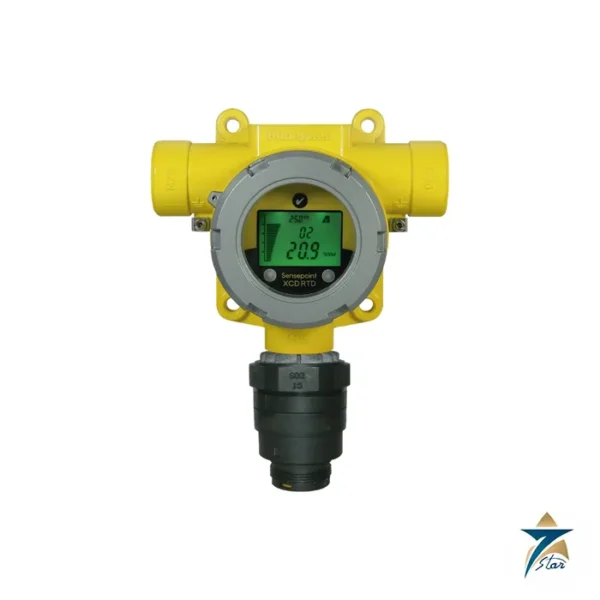
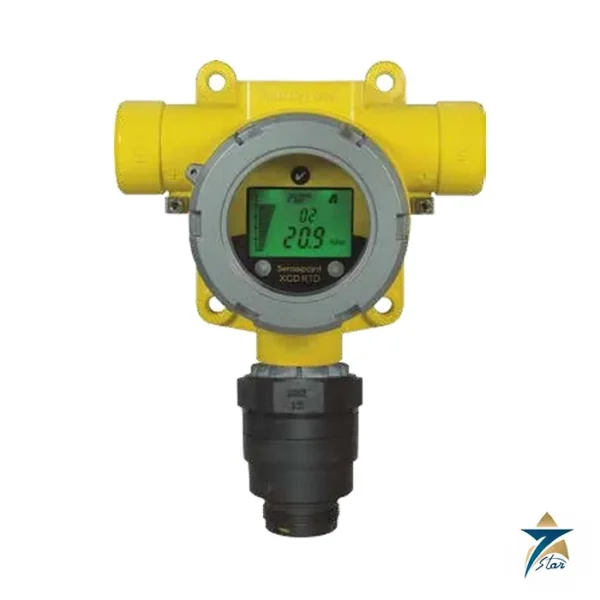
Gas detection uses two basic approaches. Point detectors such as the Sensepoint XCD measure the gas at one location, with a catalytic or infrared sensor for flammable gas and an electrochemical cell for toxic gas such as H2S. Open path detectors such as the Searchline Excel send an infrared beam across an area up to a few hundred metres long and detect a gas cloud anywhere along it. Infrared sensors cannot be poisoned the way catalytic beads can, which matters on sites with silicones or H2S.

Where Honeywell products are used

In Oman and the GCC, Honeywell gas detectors protect wellheads, gas plants, refineries and tank farms. Elster meters and flow computers measure gas at city gate stations and in industry. Gent systems are installed in commercial buildings, hospitals and hotels, and Chadwick-Helmuth balancers are used by helicopter operators.

Ordering Honeywell products: what we need

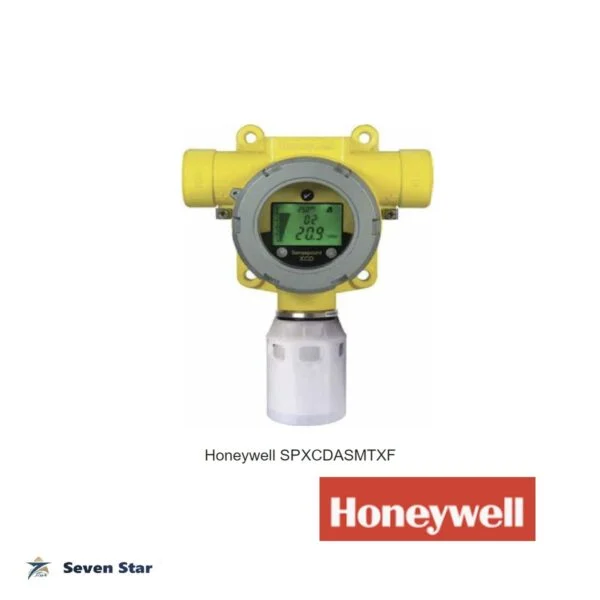
Send the part number from the label (for example 02104-N-XSSA or SPXCDASMTXF). For gas detectors, add the gas, range, output and certification. For gas meters, add size (DN), flow range and pressure rating. For Gent equipment, add the panel type and loop protocol.

Facts checked against Honeywell press releases and SEC filings, and published histories of Gent and Chadwick-Helmuth, October 2026.

FAQ

Questions about the Honeywell RAEGuard 2 PID Fixed VOC Gas Detector

Answers from our engineering team on installation, compatibility and integration.

01What does the Honeywell RAEGuard 2 PID measure?
It is a fixed photoionisation detector for volatile organic compounds such as benzene, toluene, vinyl chloride and solvents. With the most sensitive DigiPID module it measures from 0.01 ppm, giving resolution down to 10 ppb.
02Should I choose the pumped or diffusion model?
Honeywell recommends the pumped model for sticky gases, where the flow-through design improves response and recovery, and the diffusion model for high-humidity ambients.
03How is a PID calibrated for a specific compound?
The detector uses two-point calibration, typically with a reference gas, and applies one of more than 200 pre-programmed correction factors to display the concentration of the target compound. Correction factors and relays are disabled on the 1 to 1000 ppm DigiPID version.
04Can the RAEGuard 2 PID be installed in hazardous areas?
Yes. The stainless steel sensor head is certified ATEX and IECEx Ex d [ia Ga] IIC T4 Gb and UL/CSA Class I Division 1 Groups A to D, and the sensor module can be removed in hazardous locations without tools.
05Does Seven Star LLC supply Honeywell VOC detectors in Oman?
Yes. Seven Star LLC supplies Honeywell fixed PID, point and open path gas detectors and spare parts to customers in Oman and the GCC, with engineering support in Muscat.