Endress+Hauser CPA25 Flowfit flow assembly for pH, ORP and oxygen sensors
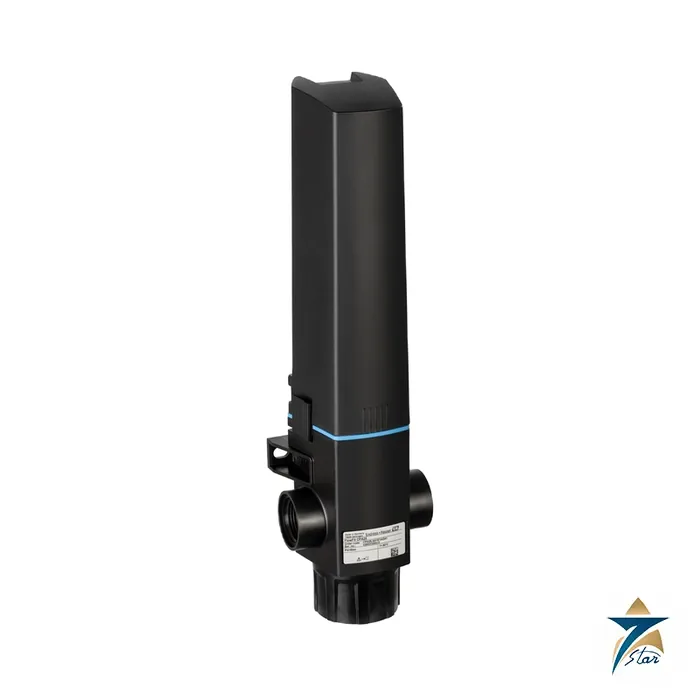
The Endress+Hauser CPA25 is a Flowfit flow assembly that holds up to three 12 mm sensors in a corrosion-resistant polypropylene body. It is built for standard measuring points in water and wastewater treatment and industrial auxiliary processes: a sample is led through the assembly, the sensors read it, and the assembly keeps the sensors wet even if flow stops, which extends their life. Seven Star LLC supplies the CPA25 in Oman and the GCC as an independent supplier in Muscat.
CPA25 technical specifications
| Parameter |
Specification |
| Manufacturer / part number |
Endress+Hauser / Flowfit CPA25 |
| Type |
Flow assembly for 12 mm sensors |
| Sensor ports |
3 x PG 13.5, shaft length 120 mm |
| Process temperature |
0 to 80 °C |
| Process pressure |
0 to 6 bar relative |
| Ambient temperature |
−15 to +60 °C |
| Connections |
2 x NPT 1 inch female |
| Material |
Polypropylene (PP) |
| Seals |
EPDM or FKM |
| Weight |
About 0.8 kg |
CPA25 design and sensor options
The CPA25 has three PG 13.5 sensor ports for sensors with a shaft length of 120 mm, a special flow geometry designed for stable readings, and a removable calibration cap so sensors can be calibrated directly in the holder. Typical combinations are a pH sensor such as the Memosens CPS11E, a conductivity sensor such as the CLS82E and an oxygen sensor such as the COS81E, depending on the application. Seals are EPDM or FKM, the flow housing is PP, and the assembly can include an anti-bend protector for KCl supply.
CPA25 data
The process temperature range is 0 to 80 °C and the process pressure is 0 to 6 bar relative, with a maximum of 6 bar gauge at up to 20 °C. The ambient temperature range is −15 to +60 °C. Process connections are two female NPT 1 inch ports, the weight is about 0.8 kg, and the zeta value depends on velocity and falls between 4.5 and 5.5.
Selecting the CPA25
Choose the seal material to suit the sample and the number of sensors, and check that the sensor shaft length is 120 mm. Decide if a calibration cap and a KCl supply are needed for sensors that use refillable electrolyte. Compare with other Flowfit assemblies: the CYA27 modular flow assembly used for disinfection sensors, and the CPA875 retractable assembly where sensors must be removed under pressure.
Installing the CPA25
Install it in a bypass or sample line so the medium flows horizontally through the assembly, fit supply and discharge lines with the seals specified, provide a sample valve ahead of the assembly and a free outlet downstream, and keep pressure within 6 bar. Mount it so the sensors cannot dry out, with the cable entries pointing downwards or protected from water running along the cable.
CPA25 in Oman and the GCC
The assembly is used for drinking-water and desalinated-water quality monitoring, boiler and cooling water, effluent control, and swimming-pool and utility water. In hot ambient conditions keep the sample line short and shaded so that sample temperature does not rise above the 80 °C limit or distort the readings.
Maintenance of the CPA25
Remove and clean the sensors on schedule, check the seals for swelling or cracking and replace when needed, and flush the flow path to remove sediment. Keep spare seals and a calibration cap in stock.
CPA25 relative to related assemblies
| Model |
Use |
| CPA25 |
Flow assembly for three 12 mm sensors |
| CYA27 |
Modular flow assembly for disinfection sensors |
| CPA842 |
Fixed assembly |
| CPA875 |
Retractable assembly |
Information to send with a CPA25 RFQ
- Sensors to be installed and shaft length
- Sample medium, temperature and pressure
- Seal material (EPDM or FKM)
- Connection type and tubing
- Calibration cap and KCl supply
- Quantity and delivery location
Sample handling and installation practice for the CPA25
Most problems with flow assemblies come from the sample, not the assembly. Take the sample from the side or top of a pipe, never from the bottom where sediment collects, keep the sample line short and shielded from sun, and avoid dead legs where stagnant water grows biofilm. A sample valve upstream lets you shut off flow for sensor service, and a free-flowing outlet protects the sensors from back-pressure. In water with air bubbles, fit a small de-aerating or bubble-trap section upstream so that gas does not collect in the sensor chamber and cause unstable pH or oxygen readings.
When the assembly feeds a Memosens transmitter, keep the sensor cables out of the water spray, and loop the cables so that condensation does not run into the plug heads. Where sensors with refillable electrolyte are used, fit the anti-bend protector and the KCl supply line carefully so the tube does not kink.
Typical measuring points built with the CPA25
Common combinations are pH with temperature and conductivity for treated water, pH with dissolved oxygen for process water, and conductivity with oxygen for boiler feed and condensate monitoring. Because three sensors share one sample stream, wiring and piping costs fall compared with three separate assemblies, and one calibration cap and one sample valve serve all positions.
Site conditions in Oman for the CPA25
Field instruments in Oman are exposed to strong sun, high ambient temperature, wind-blown dust and, on coastal plants, salt in the air. When you specify the CPA25, check the ambient and process temperature limits, the enclosure rating and the wetted and housing materials against the actual installation point, and consider sunshades for transmitters mounted in direct sunlight. Cable entries should be sealed with suitable glands so that dust and moisture cannot enter the housing.
Calibration and verification planning matters as much as selection. Record the range, configuration and tag data of each CPA25 at commissioning, define a check interval that suits the criticality of the loop, and keep the certificates with the plant documentation so that audits and shutdown work can proceed without delay.
Documents and quotation
A copy of the manufacturer technical information for the CPA25 is attached on this page so you can check ranges, connections and ordering codes against your specification.
Send the full order code or the process data (fluid, temperature, pressure, line size or tank data, output and approvals) and Seven Star LLC will prepare a quotation and confirm lead time. We are an independent supplier in Muscat and do not represent the manufacturer.























Reviews
There are no reviews yet.