
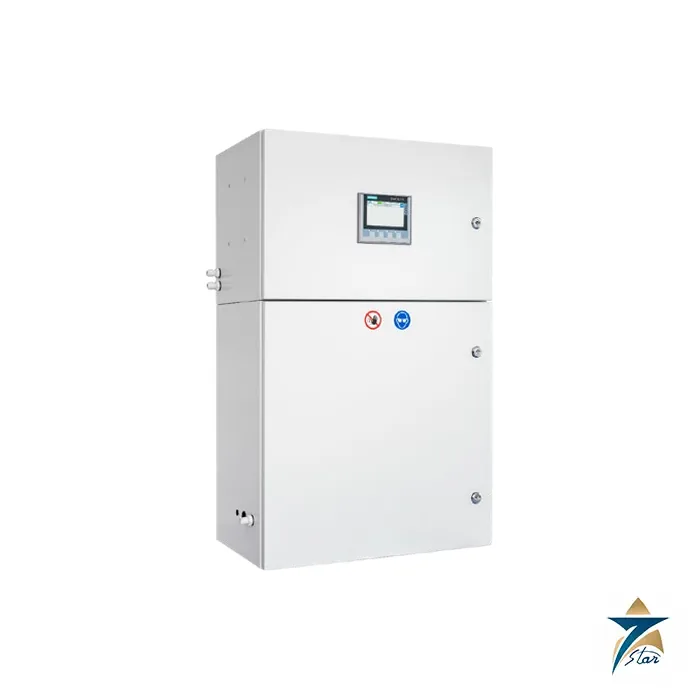
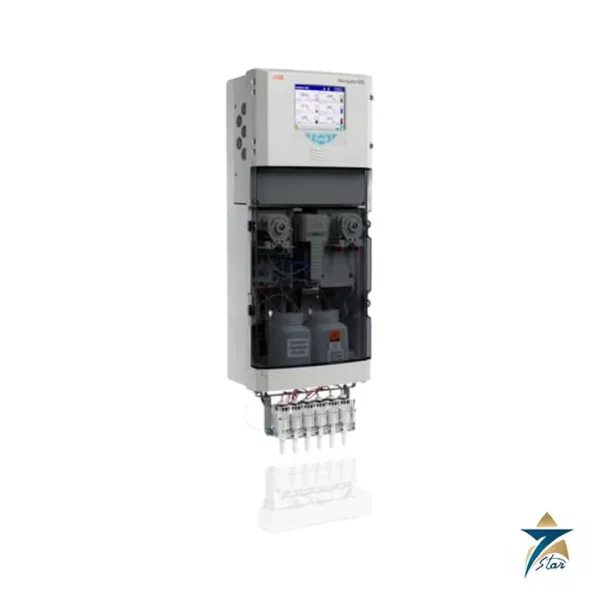
The LAR QuickTOCuv is a real-time online water analyzer that determines total organic carbon with the recognised UV persulphate oxidation method and an NDIR carbon dioxide detector. It continuously measures TC and TRUE TOC, including both non-purgeable (NPOC) and purgeable/volatile (POC/VOC) organic carbon, and can report BOD and COD values after correlation. The analyzer is aimed at cleaner water matrices where fast, affordable and continuous monitoring matters most: pure water, boiler feed water, condensate return, drinking water, surface water and wastewater. The latest generation of the LAR QuickTOCuv uses a 7" Siemens touchscreen HMI and offers OPC UA and Ethernet communication for plant networks.
Seven Star LLC supplies the LAR QuickTOCuv together with its reactors, UV emitters, pumps and other consumables to power plants, desalination operators, refineries and water utilities in Oman and across the GCC, with engineering support in Muscat.
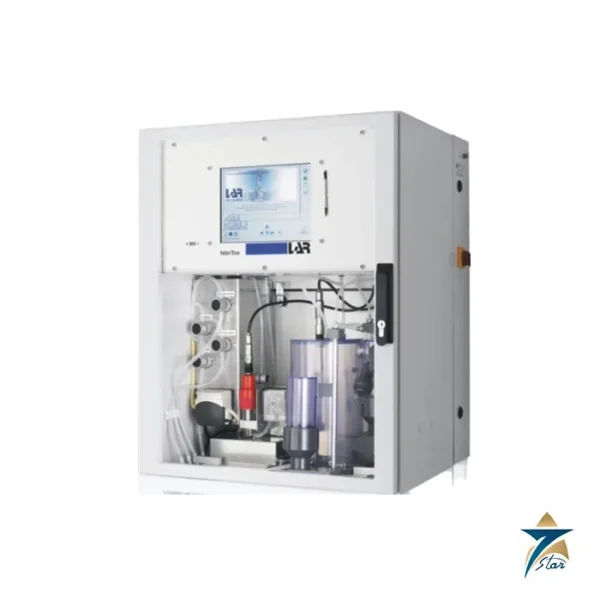
In the UV persulphate method, the sample is acidified and mixed with a sodium persulphate digestion reagent, then passed through a UV reactor. Short-wave ultraviolet light activates the persulphate and generates strongly oxidising radicals that convert dissolved organic carbon to CO2. A carrier gas transfers this CO2 through a gas drying stage to the non-dispersive infrared detector, which measures it continuously. The analyzer comprises the UV reactor, a vessel for the standard solution, sample transfer with a precision tubing pump, an acid filter, the carrier gas drying system and the infrared analysis system. TOC determination follows DIN EN 1484 and US-EPA 415.2, as well as ISO 8245 and US-EPA 415.1.
The reactor is the heart of the LAR QuickTOCuv. An outer tube shields the operator from hazardous UV radiation, while an inner quartz-glass tube keeps the UV lamp out of direct contact with the sample; LAR states that this design allows safe operation for more than two years. Because measurement is continuous rather than batch-wise, changes in organic load show up almost immediately. The analyzer also runs regular automatic checks of the NDIR detector, including zero-point correction and sensitivity tests, and auto-calibrates with a liquid standard, so drifts are detected early and results stay precise.
The LAR QuickTOCuv is housed in a wall- or rack-mounted cabinet of 1140 × 600 × 350 mm weighing 75 kg. The standard housing is 1.5 mm powder-coated steel in RAL 7035, tested to IP65, with optional AISI 304L or AISI 316L stainless steel for corrosive environments. Purged and pressurised housings are available for hazardous areas, with explosion protection for Class I, Division 2, Zone 2, Groups A, B, C and D, temperature class T4, plus IECEx and ATEX Zone 1 and Zone 2 housing options. Listed approvals include cETLus, NFPA 496, UL 61010-1 and UL 698A.
Wetted materials are chosen for clean-water duty: Peripren influent tubing, Duran glassware, PVC effluent lines and stainless steel metal parts. The sample enters at a maximum of 0.2 bar through 4.8, 8 or 12 mm ID tubing and leaves pressure-less; a flow sampler can provide a constant, pressure-free supply. Particles up to 100 µm are accepted. Electrically, the analyzer draws 70 W from 100–240 V AC, provides two 0/4–20 mA outputs, and is wired to a customer terminal box. Options include dual-stream measurement, an ambient air preparation unit, a CO2 remover, and humidity and pressure sensors.
The LAR QuickTOCuv focuses on fast, low-cost continuous TOC monitoring:
LAR gives typical ranges for the LAR QuickTOCuv of 100–1,000 µg/l TOC in water-steam cycles and condensate, 1–50 mg/l in cooling water, and 1–10 mg/l in drinking and surface water. In Oman these duties appear at combined-cycle power and water plants, where organic ingress into boiler feed water and condensate return must be caught before it damages boilers and turbines, at refineries and petrochemical units around Sohar and Duqm that monitor condensate return for hydrocarbon leaks, and at desalination and potable water plants that track organic load after treatment. Pharmaceutical, food and beverage producers also use it for process water.
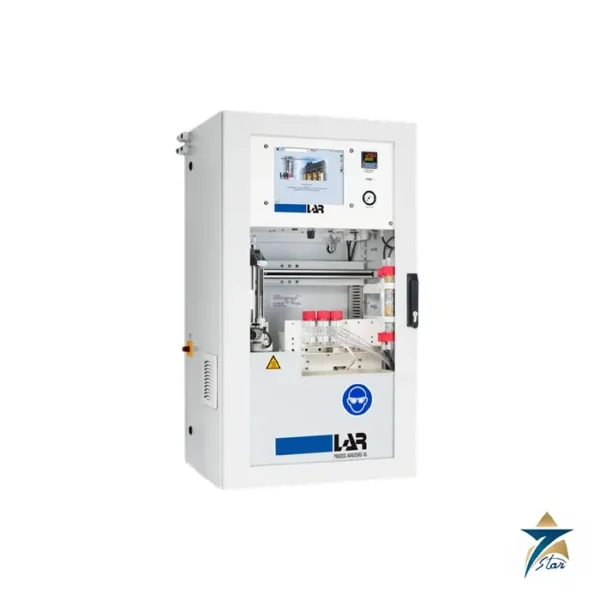
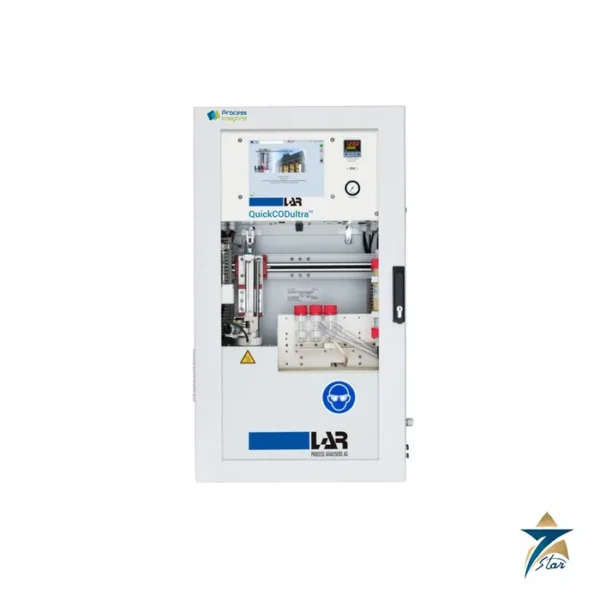
Seven Star LLC supports the LAR QuickTOCuv with engineering support for Muscat, Sohar and Salalah projects, including supply of the UV reactor glassware, UV emitter, gas drying tubes and peristaltic pump that are replaced during routine maintenance. For heavily loaded, salty or particle-rich streams, we recommend reviewing the high-temperature QuickTOCultra instead.
LAR QuickTOCuv data according to the NE61 sheet in the Process Insights datasheet:
| Parameter | Specification |
|---|---|
| Model | LAR QuickTOCuv online TOC water analyzer |
| Measuring principle | UV persulphate oxidation with NDIR CO2 detection |
| Compliance | DIN EN 1484:1997-08, ISO 8245:1999-03, US-EPA 415.1, US-EPA 415.2 |
| Parameters | TOC (NPOC + POC/VOC), NPOC, TC, DOC; COD and BOD by correlation |
| Measuring range | 0.1–1,000 ppm TC or TOC |
| Accuracy / repeatability | Max. 3 % of FSR each |
| Cycle | Continuous determination |
| Particle size | ≤ 100 µm |
| Medium limits | Max. 50 °C; inlet max. 0.2 bar; outlet pressure-less |
| Ambient temperature | 5–35 °C (10–30 °C recommended) |
| Outputs / interface | 2 × 0/4–20 mA; OPC UA, Ethernet |
| Power | 100–240 V AC, 50/60 Hz; 70 W |
| Housing | Powder-coated steel RAL 7035, IP65; options AISI 304L / 316L |
| Dimensions / weight | 1140 × 600 × 350 mm; 75 kg |
| Explosion protection | Class I, Division 2, Zone 2, Groups ABCD, T4; IECEx/ATEX housing options |
| Approvals | cETLus, NFPA 496, UL 61010-1, CSA C22.2, UL 698A |
| User interface | 7" Siemens HMI touchscreen |
Send Seven Star LLC an RFQ describing your water type, expected TOC level and area classification, and we will prepare a LAR QuickTOCuv offer with the right housing and options. The official LAR QuickTOCuv datasheet is attached to this page for download. For analyzers already in service we supply the LAR glass reactor for the UV method, the LAR 15 W ozone-free UV emitter and the LAR gas drying tube for the TOCUV carrier.
For difficult wastewater, see also the LAR QuickTOCultra high-temperature TOC analyzer.
Seven Star LLC is a trusted supplier with engineering support in Muscat for customers throughout Oman and the GCC.Browse LAR Process Analysers products by category: Liquid Analytical Accessories.
Choose the option that best fits your needs to get the fastest response from our team.
Automatically fill the RFQ form with this product's details for a faster process.
Manually enter multiple part numbers, specific brands, or custom requirements.









Reviews
There are no reviews yet.