CA80COD Liquiline System COD analyzer from Endress+Hauser
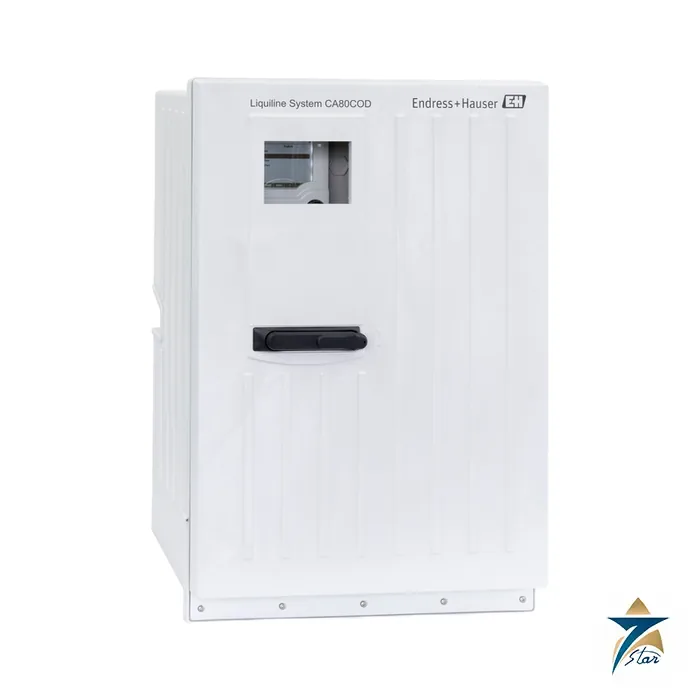
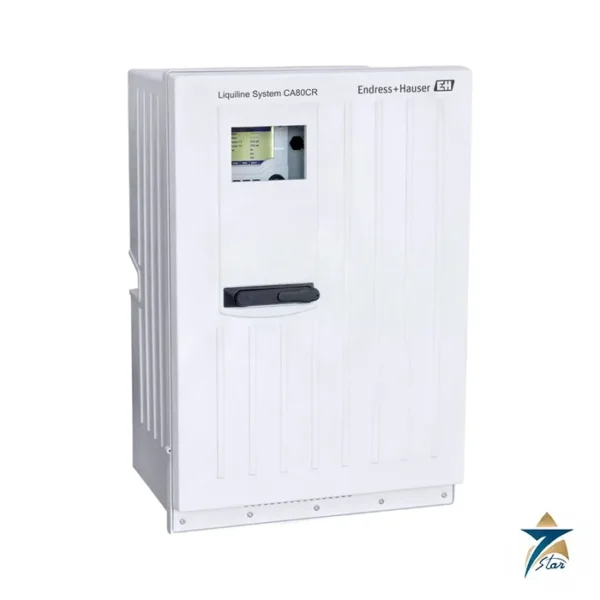
The Endress+Hauser CA80COD is a wet-chemical analyzer for the almost continuous determination of chemical oxygen demand (COD, reported as CSBcr in mg/l O2) in aqueous liquids. It is a member of the Liquiline System CA80 family: a cabinet analyzer with an integrated controller, a graphic display and optional digital Memosens sensor inputs. Seven Star LLC, an independent supplier in Muscat, supplies the CA80COD in Oman and the GCC, and this page explains what the analyzer measures, how it is configured and what to confirm before ordering.
Typical uses named in the manufacturer documentation: Monitoring of the wastewater treatment plant inlet, control of municipal wastewater treatment, monitoring of industrial wastewater and control of industrial wastewater treatment.
CA80COD technical specifications
| Parameter |
Specification |
| Manufacturer / part number |
Endress+Hauser / CA80COD |
| Measured variable |
CSBcr O2 [mg/l, ppm] |
| Measuring range |
CA80COD-**C4: 0 to 500 mg/l O2; -**C5: 0 to 5000 mg/l O2; -**C6: 0 to 5000 mg/l O2 with dilution module (1:4); automatic range switching |
| Maximum measured error |
1.5 mg/l (0 to 30 mg/l); 3 mg/l (>30 to 50); 6 mg/l (>50 to 100); 8 mg/l (>100 to 200); 4 % of reading (>200 to 400); 3 % of reading (>400 to 5000), per potassium hydrogen phthalate test |
| Limit of quantification |
15 mg/l O2 |
| Repeatability |
±5 % of measured value |
| Measuring interval |
Continuous (approx. 55 min), adjustable 30 min to 24 h |
| Digestion time |
3 to 120 min |
| Sample requirement |
8 ml per measurement; dilution water about 20 ml per measurement |
| Reagent life |
One reagent set lasts about 50 days at a one-hour measuring interval |
| Calibration interval |
1 h to 90 days; maintenance once weekly, about 1 hour monthly |
| Sample temperature |
4 to 40 °C; low-solids, aqueous, homogenized sample |
| Ambient temperature |
+5 to +40 °C (outdoor version −20 to +40 °C) |
| Degree of protection |
IP55 / TYPE 3R (cabinet, analyzer stand) |
| Power consumption |
250 VA (outdoor version 250 VA plus 650 VA per hose heater, max. 900 VA with cooling) |
| Weight |
Approx. 40 kg |
How the CA80COD measures
The COD value is a sum parameter: it expresses the oxygen that would be needed to oxidize everything oxidizable in the sample. In the CA80COD the chloride ions are first removed by adding mercuric sulfate, because chloride would disturb the result. The sample is then digested at 175 °C with sulfuric acid, silver sulfate (the catalyst) and potassium dichromate, a very strong oxidizing agent. The pressure reactor shortens the digestion time that the method needs.
During digestion the chromium is reduced from Cr6+ to Cr3+, and the solution changes from orange to green. The change is proportional to the amount of oxidizable substance, so the photometer cuvette, with its LED unit and detectors for measurement and reference, can turn the optical result into a COD value. The oxidized substances are mainly organic carbon compounds, although inorganic compounds such as iodide and nitrite are also oxidized. No cross-sensitivity was observed up to 20,000 mg/l (NH4)2SO4 and 5,000 mg/l NaCl.
Controller, inputs, outputs and communication of the CA80COD
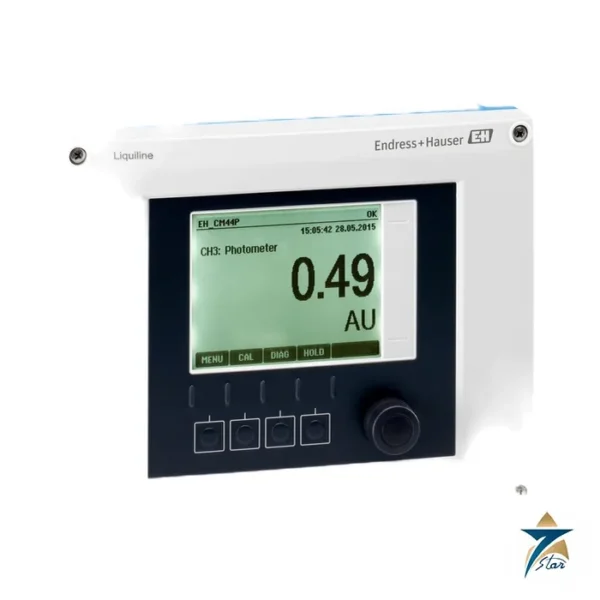
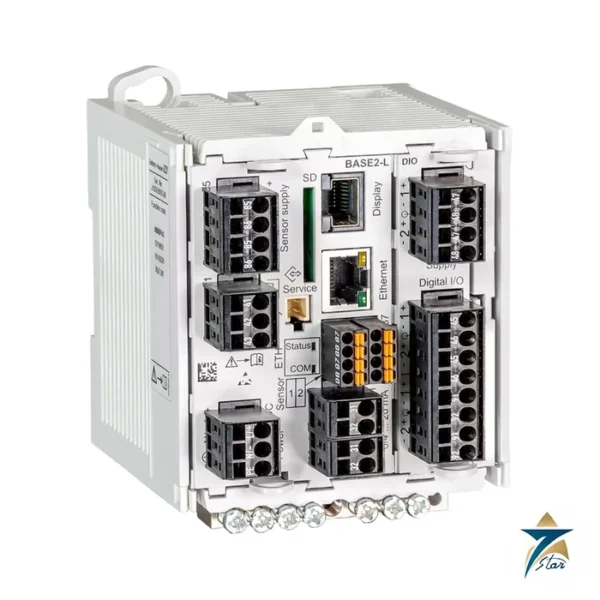
The analyzer is more than a single-parameter box. The controller supports one measuring channel for the analyzer itself plus, optionally, one to four digital Memosens sensor inputs (cable length up to 100 m), two passive 0/4 to 20 mA inputs and binary inputs. Outputs are two active 0/4 to 20 mA outputs as standard (four or six with additional modules), an alarm relay and optional extension relays. Fieldbus and network options are PROFIBUS DP, Modbus RS485, Modbus TCP, EtherNet/IP and PROFINET, and a web server gives browser access to configuration, measured values, diagnostics and logbooks. Alarm current follows NAMUR NE 43 with a factory failure current of 21.5 mA.
Data handling is thorough: ring or stack logbooks for analog values, events, calibration, hardware, versions, operations and diagnostics, with an SD card for software updates, configuration backup and logbook export. Up to six virtual process values can be calculated from the measured values and sent to an output or fieldbus. Configuration is possible from the front display, FieldCare, Field Data Manager software and the web server.
Where the CA80COD sits in the CA80 family
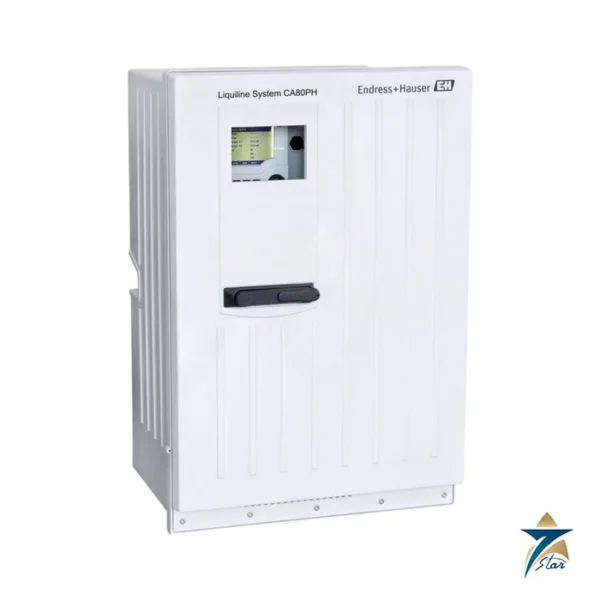
CA80COD belongs to the CA80 family; the CA80TN (total nitrogen), CA80TP (total phosphorus), CA80PH (orthophosphate), CA80CR (chromate), CA80AL (aluminum), CA80FE (iron), CA80NO (nitrite), CA80SI (silica), CA80HA (hardness) and CA80AM (ammonium) share the same housing concept, Memosens inputs and fieldbus choices but use different chemistry.
Unlike the colorimetric room-temperature members of the family, the COD method needs a hot digestion with a pressure reactor, so it runs a longer measuring cycle and uses reagents that need controlled disposal.
Selection and ordering checklist for the CA80COD
- Expected COD range, to choose C4, C5 or C6 and decide whether the 1:4 dilution module is needed.
- Whether the sample is homogeneous and free of coarse solids, or a Y strainer with the optional adhesive fitting (ID 40 mm) is required.
- Reagent logistics: the digestion reagents contain mercuric sulfate, silver sulfate and potassium dichromate and must be handled and disposed of under local rules.
- Cabinet, open or analyzer-stand version, and whether the outdoor version with hose heaters is needed.
- Number of Memosens inputs, current outputs, relays and the fieldbus (PROFIBUS DP, Modbus RS485 or TCP, EtherNet/IP, PROFINET).
Installation, commissioning and maintenance of the CA80COD
The housing can be mounted on a wall, on a base (indoors only) or on a post accessory. The documentation asks you to protect the analyzer from additional heating, mechanical vibration and corrosive gases such as hydrogen sulfide, to keep it where air can circulate at the front, and to make sure the waste line drains freely without siphoning. Pay attention to the maximum height difference and distance to the sampling point, and keep the sample line short. Open versions without a door belong only in a closed room or protective cabinet.
After commissioning, calibration interval, cleaning and reagent exchange are set on the display. The documentation calls for a weekly visual inspection and roughly one hour of maintenance a month; calibration can be scheduled from every hour to every 90 days. The CA80COD uses a zero standard and Standard 1 for calibration, which is roughly 500 ml and 90 ml a month at a 48-hour calibration interval, a 24-hour cleaning interval and a 3 m sample hose. Counters monitor reagent, hoses and dispensers, and a leak sensor inside the housing and photometer temperature monitoring raise diagnostic messages, so keep spare hoses and reagent sets on site before they run out.
Typical CA80COD applications in Oman and the GCC
Oman and GCC users of this analyzer are mostly municipal sewage treatment plants, industrial estates with effluent discharge limits, refineries and petrochemical complexes that monitor wastewater before discharge, and desalination and power sites with chemical-laden process drains. Because the sample must be low in solids and between 4 and 40 °C, summer cooling of the sample line and a shaded or air-conditioned analyzer shelter are practical considerations; the cabinet version is rated for +5 to +40 °C ambient, so do not leave it in an unshaded kiosk.
Information to send with your CA80COD RFQ
- The full order code or the exact range and options needed (measuring range, dilution, cabinet or outdoor, hose heater, fieldbus).
- Sample description: temperature, solids, expected concentration and distance from the sampling point.
- Power supply (100 to 120 V AC, 200 to 240 V AC or 24 V DC where offered) and area ambient range.
- Required outputs, relays and fieldbus, plus any Memosens sensors to be connected.
- Reagent, standard and spare-part needs for the first year of operation.
Documents and quotation
The Endress+Hauser Technical Information for the CA80COD is attached on this page as a datasheet. Send the part number and your sample and site details, and we will confirm configuration, reagent supply, lead time and availability for Oman and the GCC.
Other Models in the Eh Liquiline Ca80 Range
Seven Star LLC supplies models from the Eh Liquiline Ca80 range in Oman and the GCC. Compare the related models below and request a quote for the one that matches your application.


























Reviews
There are no reviews yet.