Honeywell STR700: SmartLine transmitter with remote diaphragm seals
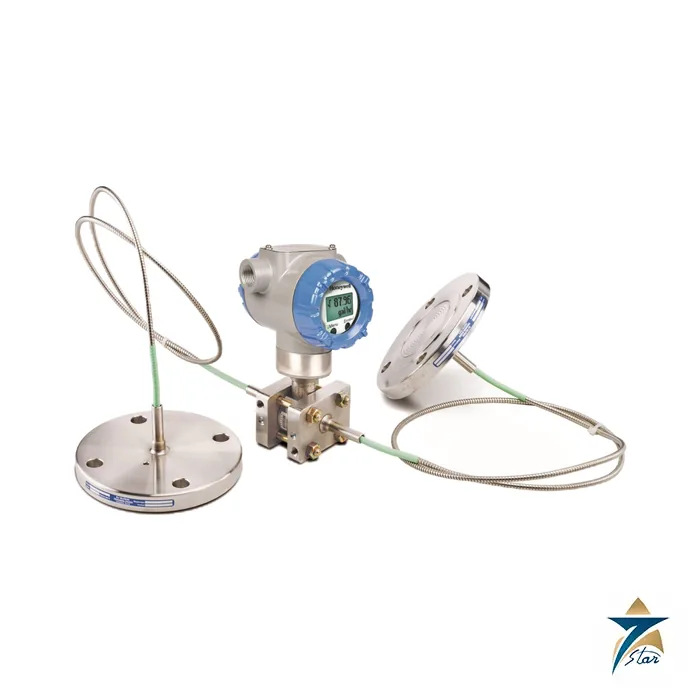
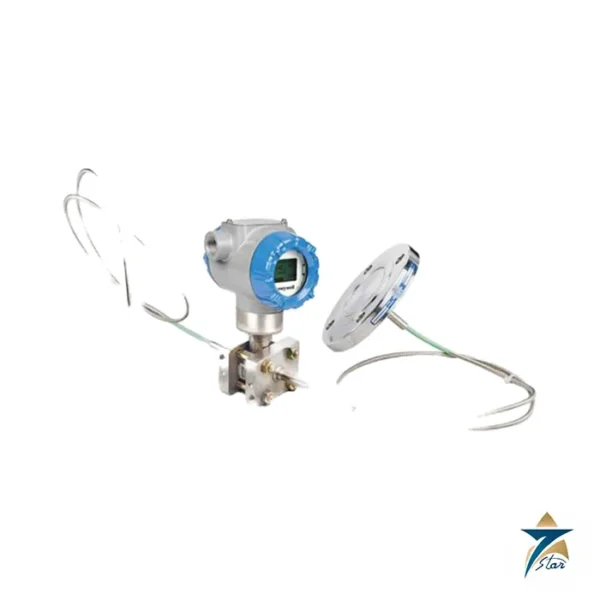
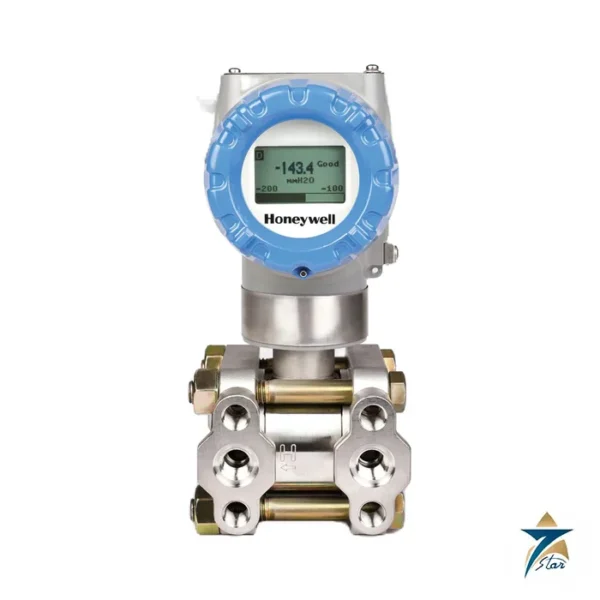
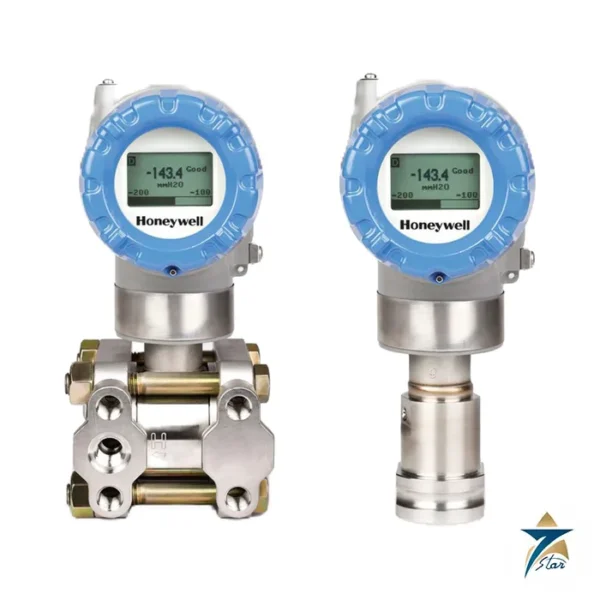
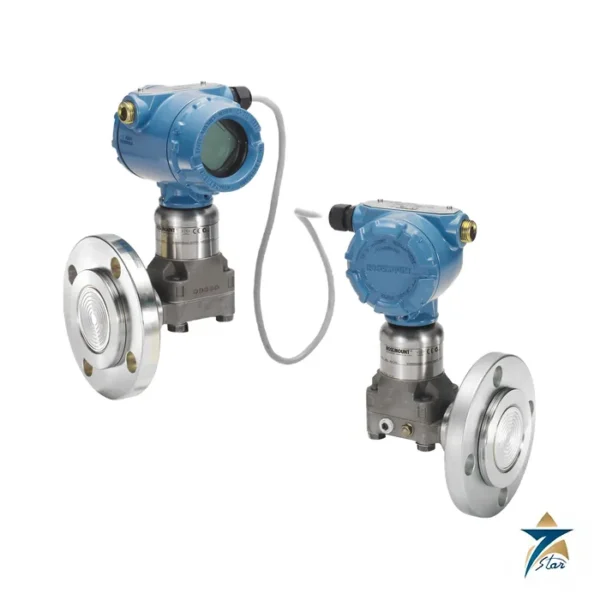
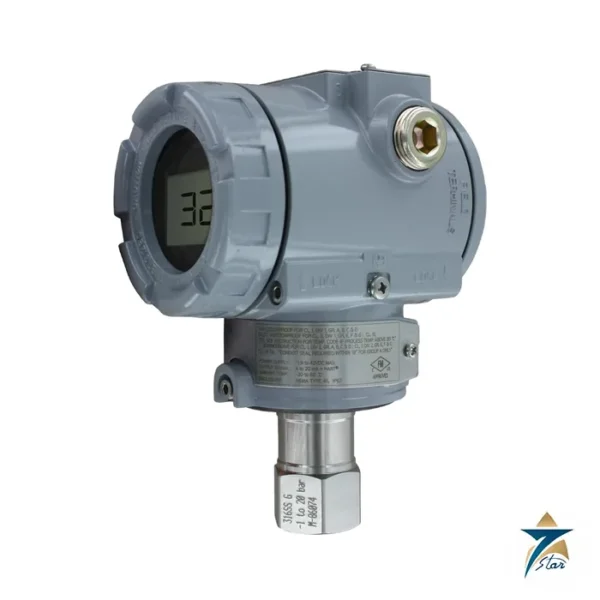
The Honeywell STR700 is the SmartLine ST 700 transmitter delivered as a complete remote seal system: transmitter, filled capillary and one or two diaphragm seals, built and filled as one matched assembly. The measuring diaphragm sits at the nozzle while the electronics stay on a pipe stand or bracket within reach, so media that would clog, freeze, crystallize or attack an ordinary impulse line never enter the meter body. Seven Star LLC supplies the STR700 in Oman and the GCC as an independent supplier in Muscat.
Two base models are covered by the datasheet. The STR73D is differential, with ±100 psi range and a very low 0.9 psi minimum span when a large seal is used, and the STR74G is gauge, with a 500 psi range limit and vacuum down to −14.7 psi. Accuracy is up to 0.075% of span, with an optional 0.040% on the STR74G, and rangeability reaches 111:1 on the STR73D and 100:1 on the STR74G.
Reading the STR700 model code
The key number starts with STR7 followed by the range code, 3D or 4G, then letter tables that define the number of seals, fill fluid, meter body construction, bolts, capillary, seal type with size and rating, wetted materials, approvals, electronics, configuration, calibration and accessories. The seal selection alone is a nine-character block, so a full STR700 order string is considerably longer than that of a direct-mount SmartLine transmitter.
STR700 technical specifications
| Parameter |
Specification |
| Manufacturer / part number |
Honeywell / STR700 (SmartLine ST 700 remote diaphragm seal transmitter family) |
| Base models |
STR73D: ±100 psid (±7 bar), min span 0.9 psi (0.062 bar), turndown 111:1; STR74G: 500 psi (35 bar), LRL −14.7 psi, min span 5 psi (0.35 bar), turndown 100:1 |
| Reference accuracy |
STR73D 0.075% of span; STR74G 0.075% standard, 0.040% optional (terminal-based, analog output adds 0.005% of span) |
| Stability (base transmitter only) |
Up to 0.02% of URL per year; remote seal system stability depends on flange, size, diaphragm, capillary and fill |
| Output and protocols |
Two-wire 4-20 mA with HART 7 or Honeywell DE; polarity-insensitive terminals |
| Supply and loop resistance |
HART: 10.8 to 42.4 VDC (IS 30 VDC), 0 to 1,440 ohm; DE: 15 to 49.3 VDC (IS 30 VDC), 0 to 1,200 ohm |
| Body MAWP |
STR73D: 750 psig (51.7 bar) bolted process heads; STR74G: 500 psig (35 bar); system MAWP is the lower of body and seal rating |
| Overpressure and no-burst |
1.5 x MAWP; no-burst 3 x MAWP up to 2,000 psi |
| Transport and storage temperature |
−55 to 90 °C; operating ambient is limited by seal process temperature |
| Seal diaphragm materials |
316L SS, Monel, Hastelloy C, tantalum; Viton, graphite or PTFE gaskets |
| Fill fluids |
Meter body: Silicone 200, CTFE, Silicone 704, NEOBEE M-20; capillary and seal also Syltherm 800 |
| Capillary |
Armored or PVC-coated armored stainless, 5 to 35 ft (1.5 to 10.7 m); 2 inch close-coupled nipple available |
| Turn-on time and damping |
2.5 s turn-on; HART damping 0 to 32 s (default 0.5 s); DE discrete values 0 to 32 s (default 0.48 s) |
| Housing |
Polyester powder coated low-copper aluminum, Type 4X / IP66 / IP67; dual-certified 316/316L optional |
| Weight |
Transmitter 8.3 lb (3.8 kg) with aluminum housing; total depends on the seals |
How the STR700 hydraulic system behaves
The seal diaphragm transmits process pressure through the fill fluid to the sensor, so the quality of the measurement depends on the thermal behaviour of that fluid. Honeywell lists the temperature effect of the STR73D for two balanced seals and gives a worked total performance example of 1.477% of span at 20 psi with a 28 °C temperature shift. The datasheet also asks for a 1.5 multiplier on temperature effect for capillary longer than 10 ft.
With a single seal on the STR74G the capillary is only on the high side, and the fill fluid expands and contracts without any compensation on the other side. For that reason the datasheet does not publish a temperature-effect number for the STR74G and points to the corresponding base transmitter data. In practice, keep the capillary short, shaded and in a stable temperature zone, and choose the stiffest fill fluid the process temperature allows.
| Seal diaphragm (STR73D, two seals) |
5 ft |
10 ft |
15 ft |
20 ft |
25 ft |
35 ft |
| 1.9 inch |
15 psi |
20 psi |
25 psi |
n/a |
n/a |
n/a |
| 2.4 inch |
5.4 psi |
7.2 psi |
9.0 psi |
10.8 psi |
12.6 psi |
14.4 psi |
| 2.9 inch |
1.8 psi |
2.7 psi |
3.6 psi |
4.5 psi |
5.4 psi |
7.2 psi |
| 3.5 inch |
0.9 psi |
0.9 psi |
0.9 psi |
1.0 psi |
1.2 psi |
1.4 psi |
| 4.1 inch |
0.9 psi |
0.9 psi |
0.9 psi |
0.9 psi |
0.9 psi |
1.1 psi |
The table above shows the minimum recommended span published for an STR73D with two seals. The 1.9 inch seal is limited to 15 ft of capillary.
STR700 seal choices and related SmartLine models
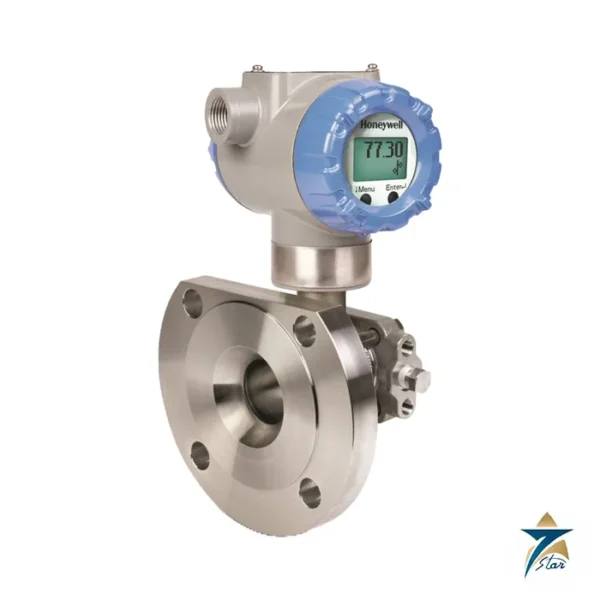
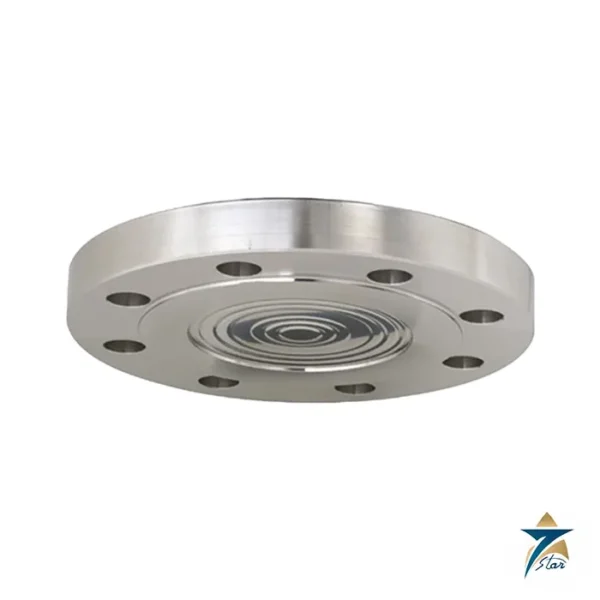
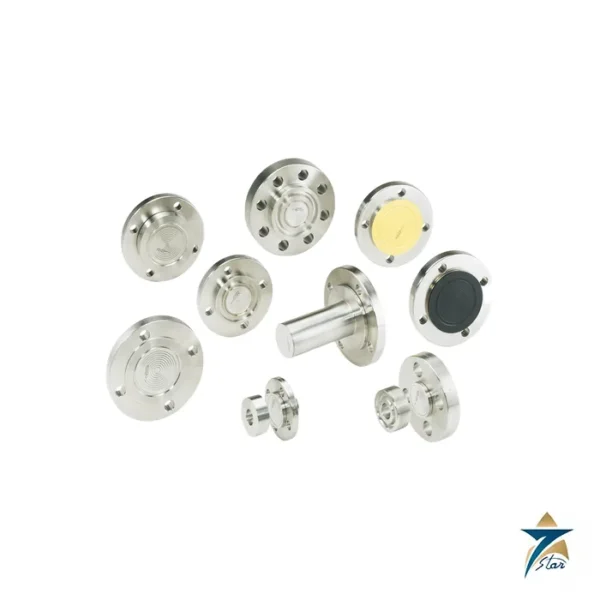
The STR700 selection guide offers more flush flanged sizes than most remote seal ranges: ANSI Class 150 and 300 flanges from 1 inch to 3 inch with diaphragm diameters of 2.4, 2.9 and 4.1 inch. Other styles are the flange seal with extended diaphragm (3 or 4 inch, with 2, 4 or 6 inch extension lengths), the pancake seal for 3 inch pipe flanges, threaded seals, the chemical tee, sanitary Tri-Clamp seals in 2, 2-1/2, 3 and 4 inch, and saddle seals in 6-bolt and 8-bolt designs for 3 inch or 4 inch and larger pipe.
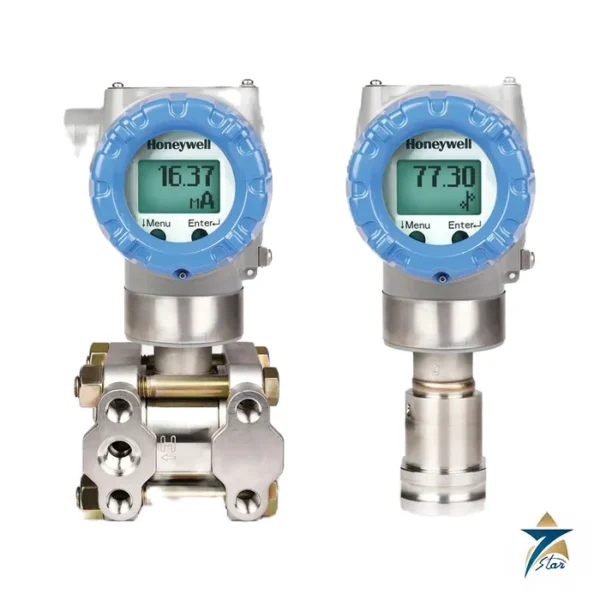
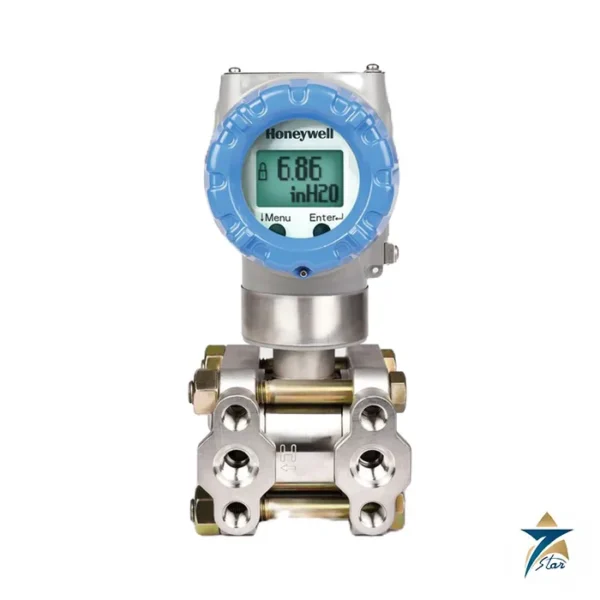
If the process allows direct mounting, the same sensor technology is available in the STD700 differential, STG700 gauge and STA700 absolute transmitters, which are far simpler to specify. The step up to the STR800 gives higher accuracy, a FOUNDATION Fieldbus option and 15-year stability data, but also a different model structure and range set. Spares for the STR700 are normally handled as electronics modules, displays and terminal blocks, because seal and capillary are factory-filled matched parts.
How to select an STR700
- Decide differential or gauge: STR73D for level and DP across a vessel, STR74G for a single tapping.
- Check the minimum span against the seal size and capillary length using the table in the datasheet before fixing the calibrated range.
- Choose the seal style and flange class to match the nozzle, and the wetted material (316L, Hastelloy C-276, Monel or tantalum) to suit the media; gold-plated and PTFE-coated diaphragms are also offered.
- Pick primary and secondary fill fluids for the real temperature band, including cold start and maximum process temperature.
- Select capillary armor and length, or the 2 inch close-coupled nipple where the transmitter mounts directly at the seal.
- Specify approval code, housing and conduit entry, HART or DE, display and external buttons.
- Add NACE bolting or material certificates if the service requires them.
Commissioning and maintenance of STR700 assemblies
Remove the temporary plastic plugs from flushing ports and threads before installation, because they are supplied for transport only. Mount the seal faces without scratching them, tighten the flange bolts evenly to the gasket manufacturer’s figure and lay the capillary with a gentle radius, supported along its length. Do not cut, kink or open the capillary.
After power-up, set zero and span with a configurator or the front buttons and compensate for the height difference between the transmitter and each seal if the instrument is not at the same elevation as the lower tapping. The on-board diagnostics report sensor over-temperature, meter body faults and loop current conditions; check these after commissioning and at each shutdown. Calibration verification is recommended every four years.
Typical STR700 applications in Oman and the GCC
The STR700 is used where an impulse line would be unreliable: viscous crude and bitumen, waxy condensate, slurry and brine lines, caustic or acid tanks, hot oil, and food or hygienic duty with sanitary seals. In the Gulf region, summer ambient temperatures and direct sun load add to the temperature effect on the capillary, so the choice of fill fluid and routing deserves care.
Water and desalination plants use remote seals on chemical dosing tanks and brine services, power plants on lube and fuel oil systems, and petrochemical units on polymer and heavy product lines. For offshore or coastal duty the stainless housing and NACE material options are worth specifying together with the marine certification mentioned in the datasheet.
STR700 against other SmartLine remote seal choices
| Item |
STR700 |
STR800 |
| Platform |
ST 700 |
ST 800 |
| Base models |
STR73D, STR74G |
STR82D, STR83D, STR84G, STR87G, STR84A |
| Best accuracy |
0.075% (0.040% optional on STR74G) |
0.0375% of span |
| Protocols |
HART 7, DE |
HART 7, DE, FOUNDATION Fieldbus |
| Highest body MAWP |
750 psig (STR73D) |
3,000 psig (STR87G) |
What to include in your STR700 RFQ
- Model code or, at least, STR73D or STR74G, calibrated range and number of seals.
- Seal style, size, flange class, wetted material and capillary length and armor.
- Process fluid, operating and design pressure and temperature, and ambient range.
- Protocol, hazardous area approval, housing material and any NACE or certificate needs.
- Quantity, tag numbers and delivery point in Oman or the GCC.
Documents and quotation
The manufacturer technical information sheet for the STR700 is attached on this page, including the selection guide, minimum span tables and seal dimensions. Please read it together with your instrument data sheet.
Send the code or the process duty and Seven Star LLC will prepare a quotation. Lead time and certificates are confirmed with the offer.




















Reviews
There are no reviews yet.