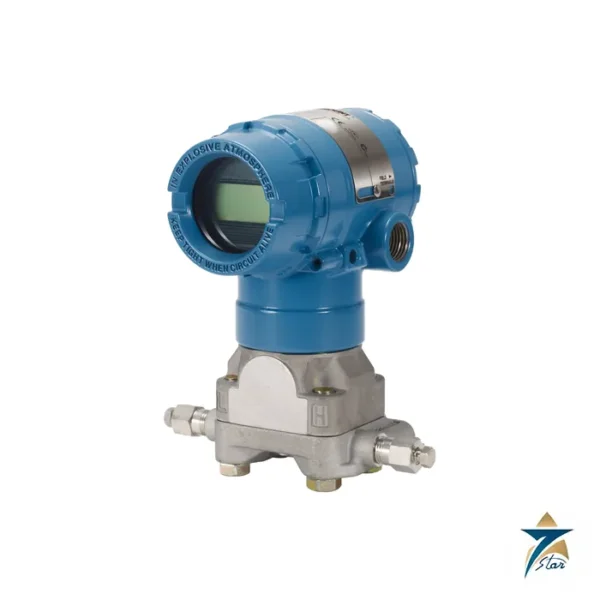
Rosemount 3051SAM: one half of an electronic remote sensor DP system
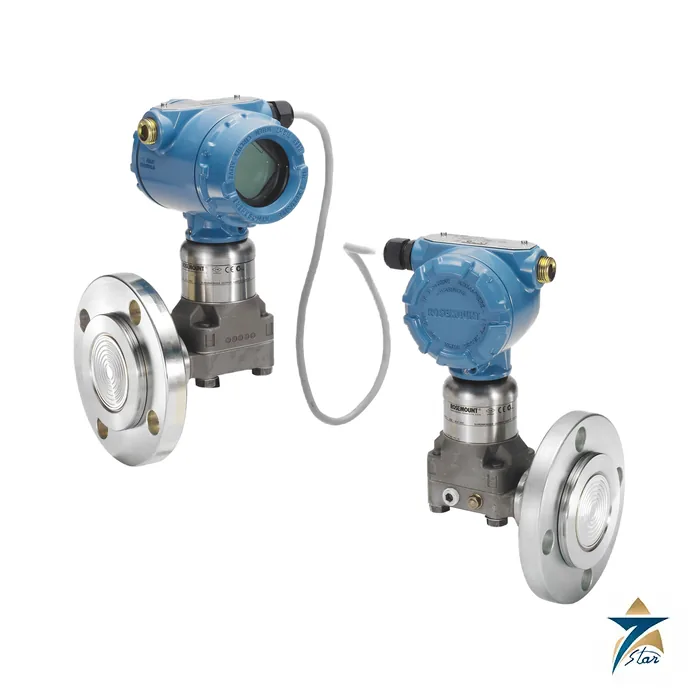
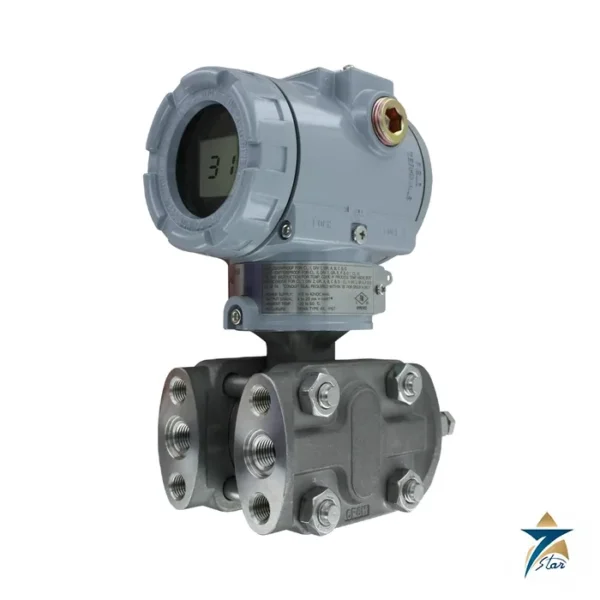
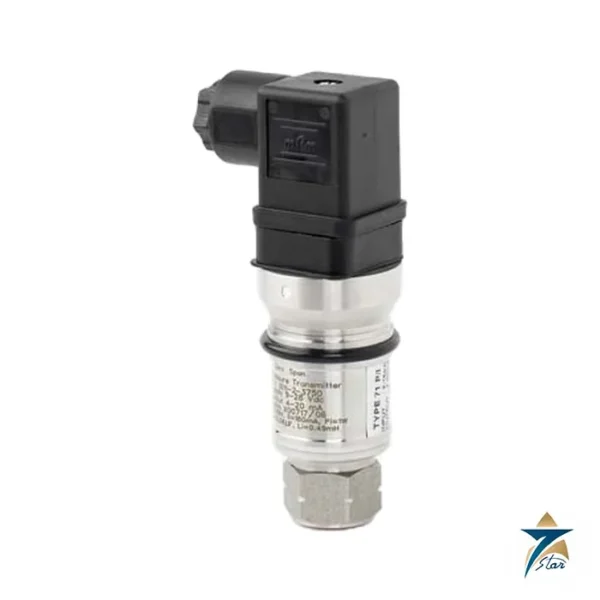
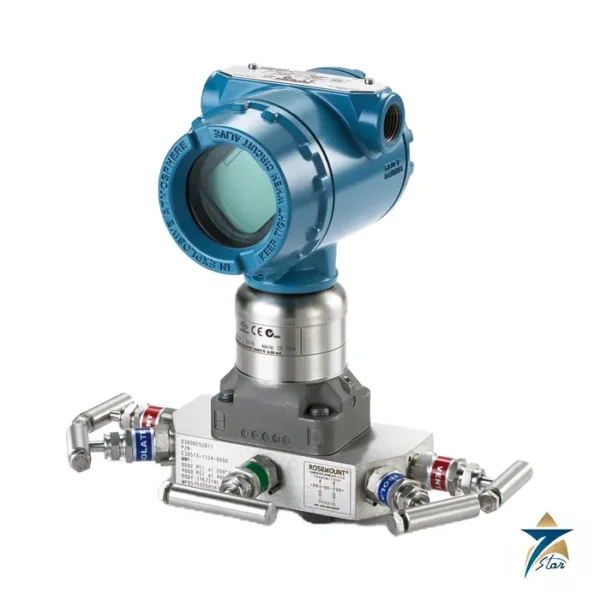
The Rosemount 3051SAM is a scalable pressure transmitter made for the 3051S Electronic Remote Sensor (ERS) System. Two linked sensors measure pressure at two points, and the system calculates differential pressure electronically instead of carrying it through capillaries or long impulse lines. A 3051SAM can be a coplanar or an in-line module, and it is ordered as either the ERS primary, which terminates the 4–20 mA HART loop, or the ERS secondary, which sends its reading to the primary over a non-proprietary electrical cable.
Seven Star LLC supplies Rosemount instruments in Oman and the GCC as an independent supplier in Muscat. Because a 3051SAM is always specified as a pair with another ERS transmitter, the sections below explain how the model code works and what to confirm before a quotation request.
How a 3051SAM model number is built
The manufacturer gives a worked example, 3051SAM1ST2A2E11A2A, which decodes as follows. Every code comes from the 3051S ordering tables, and starred options are those the manufacturer lists for fastest delivery.
| Code in example |
Meaning |
| 3051SAM |
Scalable ERS measurement transmitter (model) |
| 1 |
Performance class Ultra: 0.025 % span accuracy, 200:1 rangedown |
| S |
Configuration type: ERS secondary (P would be primary) |
| T |
Pressure type: in-line module, gauge sensor |
| 2A |
Pressure range 2A: –14.7 to 150 psig on an in-line gauge sensor |
| 2 |
Isolating diaphragm: 316L stainless steel |
| E11 |
Process connection: 1/2–14 NPT female on an in-line module |
| A |
Output: 4–20 mA with HART |
| 2A |
Housing: aluminum junction box, 1/2–14 NPT (secondary housing) |
3051SAM technical specifications
| Parameter |
Specification |
| Manufacturer / part number |
Rosemount 3051SAM Scalable ERS Measurement Transmitter |
| Parent system |
Rosemount 3051S Electronic Remote Sensor (ERS) System, 2-wire 4–20 mA HART |
| Module types |
Coplanar (gauge G or absolute A) and in-line (gauge T or absolute E) |
| Performance classes |
Ultra (code 1), Classic (code 2), Enhanced ERS system performance (code 4) |
| Ultra / Classic span accuracy |
0.025 % / 0.035 % of span; rangedown 200:1 / 150:1 |
| Stability and warranty |
15-year stability; 15-year limited warranty on Ultra and Enhanced |
| Coplanar gauge ranges |
2A –250 to 250 inH2O; 3A –393 to 1000 inH2O; 4A –14.2 to 300 psig; 5A –14.2 to 2000 psig |
| In-line gauge ranges |
1A to 5A, from –14.7 to 30 psig up to –14.7 to 10000 psig |
| Isolating diaphragm |
316L SST, Alloy C-276, Alloy 400, tantalum, gold-plated Alloy 400 or gold-plated 316L (availability varies by module) |
| ERS system DP accuracy, Ultra |
±0.035 % of DP span on coplanar gauge ranges 2–4, in-line gauge ranges 1–4 |
| ERS system DP accuracy, Classic |
±0.049 % of DP span on the same ranges |
| Enhanced ERS temperature range |
Performance stated from –40 to 85 °C (–40 to 185 °F) |
| Output |
A: 4–20 mA with digital HART signal |
The ERS accuracy figures assume two transmitters with identical sensor ranges, each calibrated 0 to URL, and a DP span of 10 percent of the transmitter upper range limit. Different ranges or smaller spans change the result, so use the manufacturer sizing tool for a real installation.
Principle of operation of the 3051SAM ERS system
Each sensor reads its own static pressure, one at the upper tapping point and one at the lower, for example at the top and bottom of a tall column. The secondary sends its pressure to the primary over the ERS cable, and the primary calculates differential pressure digitally. With no long oil-filled capillaries or heat-traced impulse lines, the digital architecture gives stable readings under large temperature swings and a faster response than traditional systems. The pressure range code is chosen from the maximum static pressure, not from the differential pressure.
The system also exposes static pressure and sensor module temperature as additional diagnostics, and each sensor can be serviced independently. The cable between sensors can be ordered in grey, blue or armored form, in lengths from 25 ft (7.62 m) to 500 ft (152.4 m); the manufacturer notes 200 ft as the maximum for SIS installations and 225 ft for intrinsically safe ones.
3051SAM primary and secondary: choosing the pair
The manufacturer states that the two transmitters may be any combination of 3051SAM and 3051SAL models. The 3051SAL is the liquid-level variant with remote seal options, so a pair can mix a 3051SAM at one tapping point with a 3051SAL where a diaphragm seal is needed. The primary is the one with the optional LCD display and the 4–20 mA connection, and its housing choices are the Plantweb housing or a junction box with remote display output. The secondary uses a junction box housing.
| Configuration type |
Housing codes |
| P (primary) |
Plantweb housing 1A, 1B, 1J, 1K, 1C, 1L; junction box with remote display 2E, 2F, 2M, 2G |
| S (secondary) |
Junction box 2A, 2B, 2J, 2C |
Selecting a 3051SAM: checklist before ordering
- Decide the tapping layout and which sensor is primary and which is secondary.
- Pick coplanar or in-line modules and gauge or absolute sensors; both ends should have identical ranges for stated accuracy.
- Choose the pressure range from maximum static pressure, then check minimum span for the expected DP.
- Select diaphragm material against process media and note NACE MR 0175 and MR 0103 codes where sour service applies.
- Select the process connection: flange, manifold assembly, or remote seal on a mating 3051SAL.
- Select cable length and type, taking SIS or intrinsic safety distance limits into account.
- Add approvals, display, bracket and configuration options such as alarm levels (NAMUR or custom).
Installing and commissioning the 3051SAM pair
Mount each sensor at its tapping point without heat tracing or insulated impulse lines, then run the ERS cable between them with a service loop and protect it from mechanical damage. Configure the primary as ERS primary and the secondary as ERS secondary, check that both report the same units, and perform a zero trim on each at a known condition. The device dashboard in HART tools gives a graphical view for commissioning.
Verify that both sensors report plausible static pressure before reading DP, because a wrong module range code on one side shows up there first. For the user, a sensible spares policy is to hold one replacement ERS cable and a transmitter module of each range type that is used on the plant.
Typical 3051SAM applications in Oman and the GCC
The main uses are DP level on tall vessels, columns and towers where long capillary runs would suffer from the heat of the Gulf climate. Distillation columns in refineries, separators and scrubbers in oil and gas production, and deaerators in power and desalination plants are common candidates. Wide daily and seasonal temperature swings are exactly the case where electronic remote sensing replaces capillary systems.
Dust, humidity and salt-laden coastal air are handled by choosing a stainless steel Plantweb housing and suitable cable entries. In hazardous areas, check the approval code and the intrinsic safety cable length limit before finalising the layout.
Information to send with a 3051SAM RFQ
- Two full model codes if known, or the tapping points, process fluid and operating ranges for both.
- Static pressure range and expected differential pressure or level span.
- Pressure range code for each sensor, diaphragm material and process connection.
- ERS cable length, type and any SIS or intrinsically safe requirement.
- Output, display, housing material, conduit thread and approvals.
- Quantity and delivery site.
Documents and quotation
The manufacturer data sheet for the 3051S series is a very large document, so we have not attached it to this page. Send the 3051SAM model code or your process data and we will confirm which documents are available for your configuration.
For a quotation, include both transmitter codes of the ERS pair. Seven Star LLC will review the pairing and respond with availability for Oman and the GCC.























Reviews
There are no reviews yet.