Rosemount 4088 MultiVariable transmitter: Modbus measurement for flow computers and wellsites
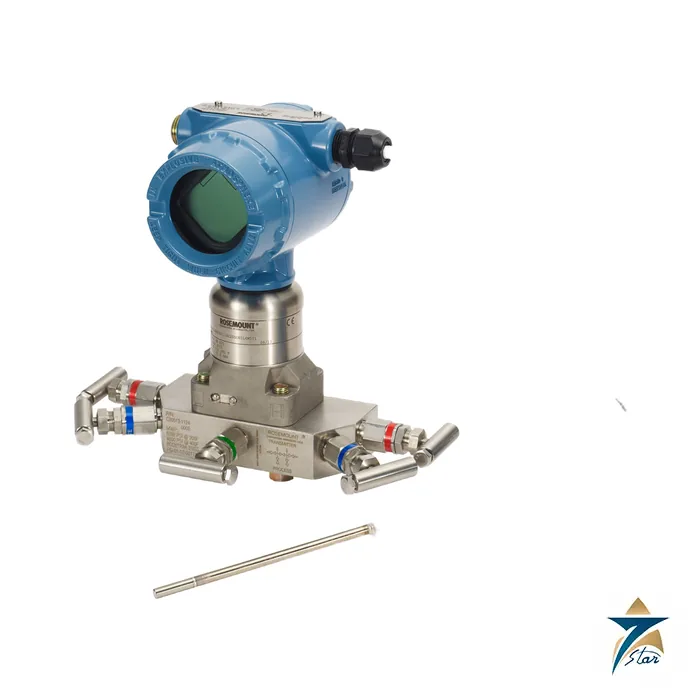
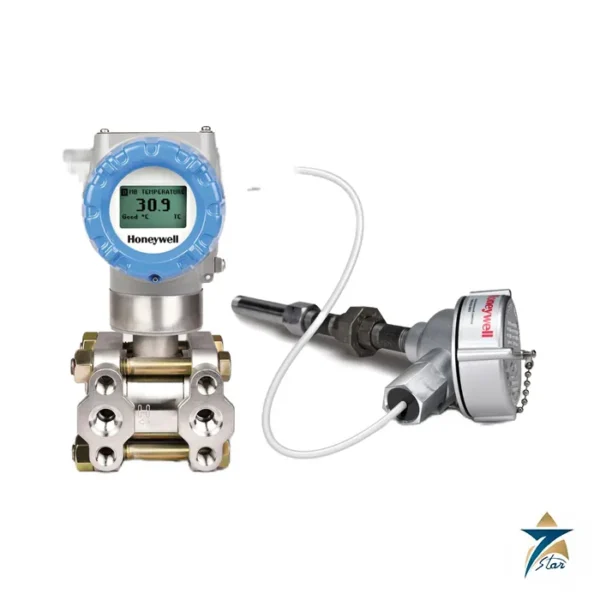
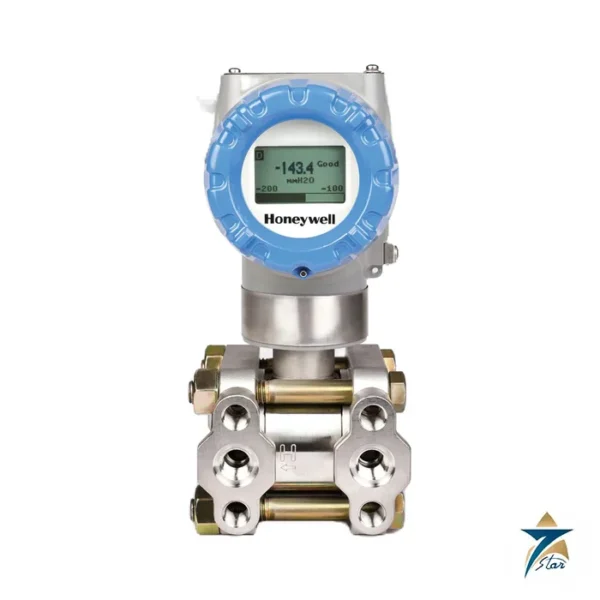
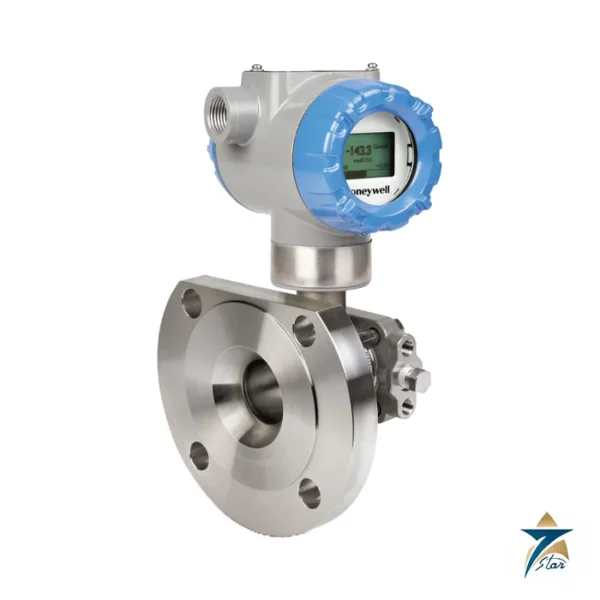
The Rosemount 4088 is a MultiVariable pressure transmitter built for oil and gas production, gas custody transfer and plunger-lift wells. One sensor module can report differential pressure, static pressure and process temperature, so a flow computer or remote terminal unit receives everything it needs to calculate mass or volume flow from a single device on a single process connection. Unlike a 4–20 mA transmitter, the 4088 talks digitally: the standard register map is Modbus (code A), and a second map (code B) is provided for systems that use the Bristol BSAP/MVS 205 style of communication. Seven Star LLC supplies the Rosemount 4088 in Oman and the GCC for upstream, midstream and gas-processing projects.
Because the part number is built from a model string, it helps to know how to read it. The base model is 4088. The first option is the transmitter register mapping (A for Modbus, B for Remote Automation Solutions ready). Next comes the performance class, then the multivariable type (P, direct process variable output), the measurement type, the differential pressure range, the static pressure type and range, the temperature input, the isolating diaphragm, the process connection and the housing. Optional codes for warranty, certificates, transient protection and cold start follow after those required fields.
Rosemount 4088 technical specifications
| Parameter |
Specification |
| Manufacturer / part number |
Rosemount 4088 MultiVariable Transmitter |
| Measured variables |
Differential pressure, static pressure and process temperature (measurement types 1 to 4); coplanar static pressure only versions (types 5 and 7) |
| Output protocol |
Modbus over RS-485 (4088A), 8 data bits, 1 stop bit, no parity; MVS 205 / BSAP (4088B) |
| Baud rates (Modbus) |
1200, 2400, 4800, 9600 and 19200 |
| HART port |
Configuration only, HART Revision 7 |
| Power supply |
5.4 to 30 Vdc, external supply; maximum average current 4.6 mA at 5.4 Vdc with RS-485 once per second |
| Performance classes |
Standard 0.1 percent of span; Enhanced 0.075 percent of span; Enhanced for Flow 0.05 percent of reading (DP ranges 2, 3 and 4) |
| DP ranges |
±25 inH2O, ±250 inH2O, extended range 0 to 250 inH2O, ±1000 inH2O, ±150 psi, ±2000 psi |
| Static pressure ranges |
Absolute or gauge, from 0.5 to 300 psia up to 0.5 to 3626 psia; sealed gauge range to 6092 psi (420 bar) on selected builds |
| Temperature input |
Pt 100 RTD, –328 to 1562 °F (–200 to 850 °C); RTD ordered separately |
| Isolating diaphragm |
316L stainless steel or Alloy C-276 |
| Ambient temperature |
–40 to 185 °F (–40 to 85 °C); with LCD –40 to 176 °F (–40 to 80 °C) |
| Humidity |
0 to 100 percent relative humidity |
| Housing |
Polyurethane-covered aluminum or stainless steel; NEMA 4X, IP66 and IP68 |
| Turn-on time |
Within specification five seconds after power is applied |
| Damping |
0 to 60 seconds, set separately for each measured variable |
How the 4088 measures and what it sends to the flow computer
The sensor module is the all-welded SuperModule design that Rosemount uses across its pressure range. A differential sensor and, where ordered, a static pressure sensor sit behind isolating diaphragms with a fill fluid, which is silicone or an inert halocarbon according to the datasheet. Electronics inside the housing digitise each reading and apply characterisation data stored at the factory. For temperature the transmitter accepts a Pt 100 RTD and can use the Callendar-Van Dusen constants of the individual probe, which removes part of the temperature error that would otherwise enter the density term of a flow calculation.
The transmitter does not integrate flow. Its job is to deliver accurate, fast and well-damped primary variables over Modbus; the flow computer then applies the AGA, ISO or API equations. Each variable has its own damping from 0 to 60 seconds, so a noisy differential pressure can be smoothed without slowing the static pressure or temperature readings. A local LCD can show the measured values and also values pushed back by the host, such as instantaneous flow rate or accumulated flow for the last 24 hours, so a technician at the wellhead sees the same figure as the control room.
Rosemount 4088 performance classes and ranges
Three performance classes are offered. Class 2 is the standard 0.1 percent of span. Class 1 improves that to 0.075 percent of span. Class 3, Enhanced for Flow, states 0.05 percent of reading for differential pressure ranges 2, 3 and 4, which matters on orifice and Annubar runs where the flow swings widely and an error stated against span becomes large at the low end. Long-term stability is given as 0.1 percent of the upper sensor limit for one year on the standard class and 0.125 percent of the upper sensor limit for five years on the enhanced classes. Enhanced for Flow units carry a 12-year limited warranty; standard and enhanced units carry the one-year warranty. Treat the warranty text in the current datasheet as the reference for any contract.
An extended range option (DP range code A) covers 0 to 250 inH2O and keeps the enhanced class accuracy within that span while still capturing pressure spikes above it. This is aimed at plunger-lift wells, where the differential pressure rises sharply when the plunger arrives at surface and then falls back to a low flowing value. A single transmitter can then be sized for the low flow and still record the peak without saturating.
Selecting differential and static ranges for a 4088
- DP range 1 (±25 inH2O): very low differential, available only in the standard and enhanced classes.
- DP range 2 (±250 inH2O): the common choice for wellsite orifice meters and gas gathering lines.
- DP range 3 (±1000 inH2O): higher differentials on larger orifice plates or Annubar primaries.
- DP range 4 (±150 psi, or ±300 psi on types 3 and 4): high differential, for example across a control element or heavy flow; only available with specific static ranges.
- DP range 5 (±2000 psi): for very high differential service, and with the sensor in Alloy C-276 for measurement types 1 and 2.
Static pressure ranges 6, 3, 7 and 4 cover absolute 300, 800, 1500 and 3626 psia, with gauge equivalents. Range 5 is a sealed gauge sensor to 6092 psi (420 bar) and has extra conditions: it needs the 316L or C-276 diaphragm, a bolting code and process connection options listed in the datasheet. If your line pressure approaches 4500 psi, confirm the maximum static pressure option (P9 for 4500 psi, P0 for 6092 psi) against the DP range you intend to buy. Several combinations are restricted by footnotes, which is why the full model code, not a general description, should go into the RFQ.
Materials, process connections and assemble-to options
Wetted parts follow the isolating diaphragm choice: 316L stainless steel (code 2) or Alloy C-276 (code 3). The datasheet states that the materials meet the metallurgical requirements of NACE MR0175/ISO 15156 for sour oilfield production and, for selected materials, NACE MR0103 for sour refining, subject to environmental limits. A certificate is obtained with option Q15 or Q25. For gas wells with H2S, specify the certificate on the order rather than assuming it.
The process connection code decides how the transmitter meets the rest of the meter run. Coplanar flanges (E11 to E16) and traditional flanges (F12 to F15, plus the DIN style F52) have 1/4-18 NPT connections. The assemble-to codes are especially practical for custody measurement: A11 mounts the transmitter on a Rosemount 305 integral manifold, A12 on a 304 or AMF manifold, C11 on a 405C or 405P primary element, D11 on a 1195 integral orifice with a 305 manifold, D21 on a 9175 meter run with a 304 five-valve natural gas manifold and stabilised connectors, and EA2 on a 485 or 405A Annubar. Factory assembly means the hardware is tested together and arrives ready to bolt in, which shortens commissioning on remote pads.
Installing and commissioning the Rosemount 4088
Mount the transmitter so that the sensor module and manifold are accessible and the impulse or direct-mount geometry follows the gas or liquid rules of your meter design: above the line for gas with liquid drains, below it for liquid service. Keep the RTD cable away from power wiring and use the shielded cable lengths offered in the datasheet (12, 24 or 75 ft) or an equivalent shielded run. The housing is rated IP66/IP68 and NEMA 4X only when covers, O-rings and conduit entries are installed correctly, so seal unused entries with plugs suited to the area classification.
The device needs an external supply between 5.4 and 30 Vdc and includes reverse-wiring protection, which protects it from a wrong connection but does not replace correct polarity checks at termination. Low current draw lets a single solar panel and battery bank support several transmitters on a pad. After power-up the unit is inside specification within five seconds. Configure the Modbus address, baud rate and parity at the host or through the HART configuration port, zero the DP sensor against equalised pressure, and check the static pressure and temperature values against a reference before putting the meter into custody service.
Routine maintenance is light: periodic zero checks on the DP sensor, verification of the RTD with a dry-block, inspection of the O-rings and terminal block, and a review of calibration certificates if the meter is under a measurement agreement. Option Q4 provides a calibration certificate, QP adds a tamper-evident seal, Q8 material traceability and Q76 positive material identification, which can be useful on audited sites.
Where the Rosemount 4088 fits in Oman and the GCC
In the Sultanate and across the Gulf the 4088 suits gas and condensate wells with solar-powered remote terminals, gathering manifolds feeding a central processing facility, fiscal and allocation metering at battery limits, and pipeline stations with flow computers. Desert sites combine surface temperatures well above 50 °C with dust and low-power supplies, which is where a low-current Modbus transmitter in a sealed stainless steel or coated aluminium housing is helpful. Where the gas contains H2S, check the NACE certificate options early. Plunger-lift and intermittent wells use the extended range option to capture the pressure peak. The same transmitter can also serve compressor stations and power-plant gas supplies where a flow computer is already specified.
Family and related Rosemount parts
The datasheet presents the 4088 as a drop-in successor for the Rosemount 3808, MVS 205 and 3095FB MultiVariable products, using the same Modbus and BSAP communication, which eases replacement. Related instruments include the 3051SMV MultiVariable transmitter for HART and fieldbus systems, the 3051CF DP flow meter family, the 304 and 305 manifolds, the 1195 integral orifice, the 405 and 485 Annubar primary elements and the 68 and 78 series RTD sensors for the temperature input. Static pressure only coplanar versions (measurement types 5 and 7) suit wellhead and sales-line monitoring where no differential element exists.
Checklist for ordering a 4088
- Register map: Modbus (A) or Remote Automation Solutions ready (B); confirm what the flow computer or RTU supports.
- Performance class: standard, enhanced or enhanced for flow.
- Measurement type: DP only, DP and static, DP and temperature, or all three.
- DP and static pressure ranges, including the extended range for plunger lift.
- Isolating diaphragm and NACE certificate requirement.
- Process connection or assemble-to hardware, with manifold and primary element model numbers.
- Housing style and conduit thread (NPT or M20).
- Options: transient terminal block T1, cold start BRR to –50 °C, RTD cable length, warranty, certificates.
Information to send with an RFQ for the Rosemount 4088
Send the complete model string if you have it. If not, give the fluid, line pressure and temperature, expected minimum and maximum differential pressure, primary element type and size, the host protocol and addressing, the supply voltage at the site, the area classification and the required certificates. Add the manifold or primary element you want assembled to the transmitter, the RTD type and cable length, quantity and delivery location in Oman or elsewhere in the GCC.
Documents and quotation
The Rosemount 4088 product data sheet is attached on this page and holds the full ordering tables, specifications and dimensional drawings. Approvals and hazardous-area marking are covered by the quick start guide referenced in the data sheet, so confirm the applicable certificate against your project before ordering.
Send the model string or your application data and we will prepare a quotation and confirm lead time. Seven Star LLC is an independent supplier based in Muscat and does not act as the manufacturer.



















Reviews
There are no reviews yet.