- Automation & ControlView all 2,897 products
- Automation Accessories
- AC Drives
- PLC & I/O Cards
- Industrial Communications
- Vibration Monitoring
- Controllers & Data Acquisition
- Isolator & Barrier
- Safety Switches & Guard Locking
- Motor Soft Starters
- CCTV & Security
- Encoders
- Pneumatic Cylinders
- HMI Displays
- Servo Drives
- Industrial Computers
- Machine Vision
- Automation Software
- Robotics
Brand: Hyundai Welding
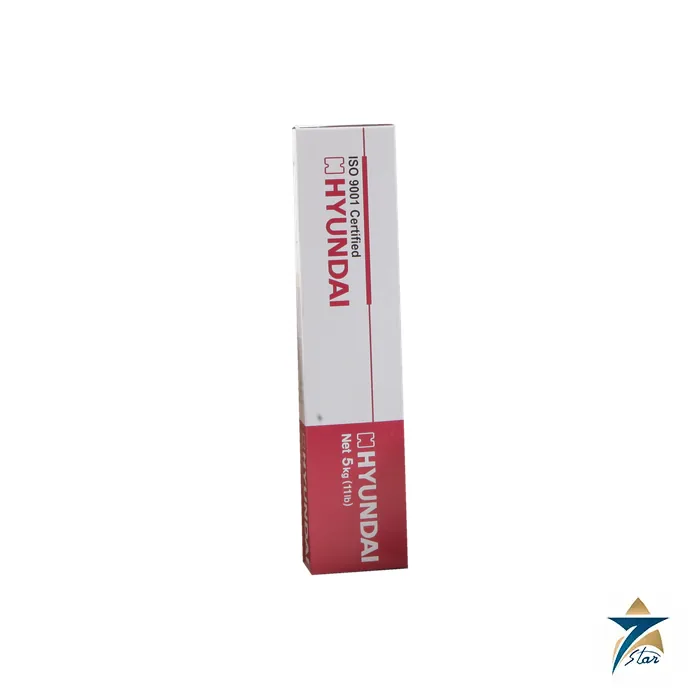
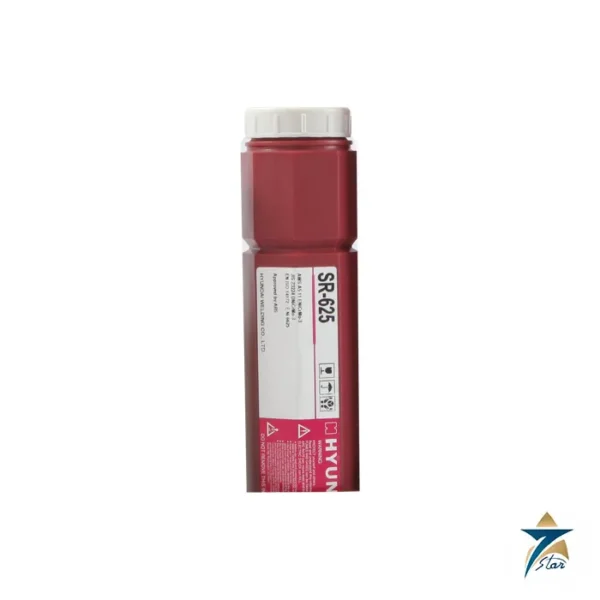
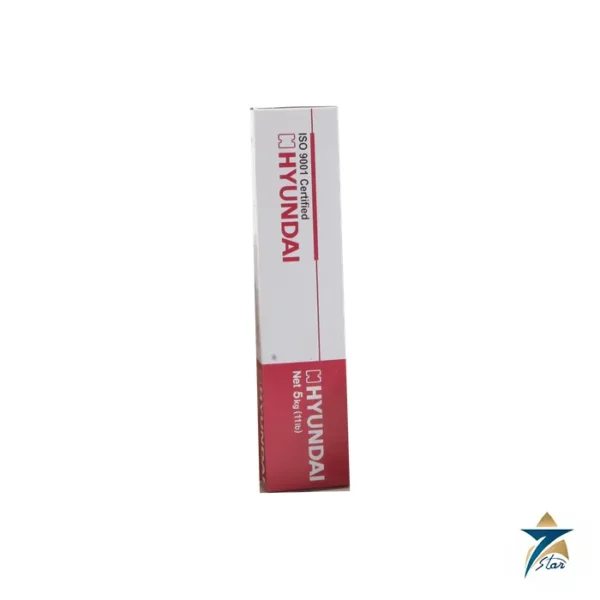
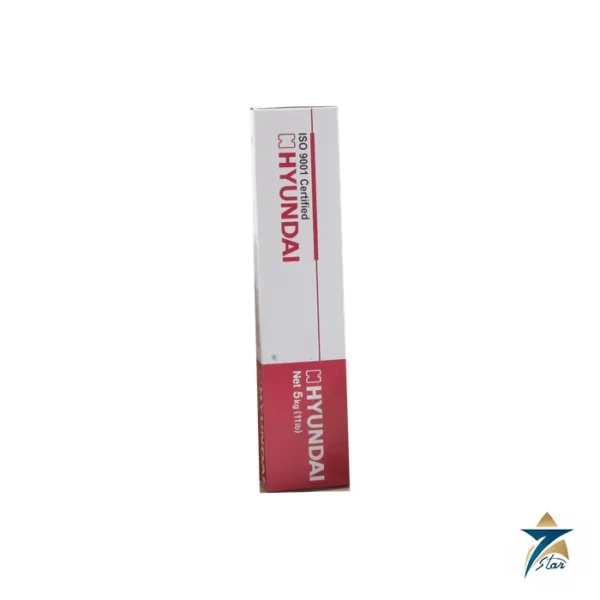
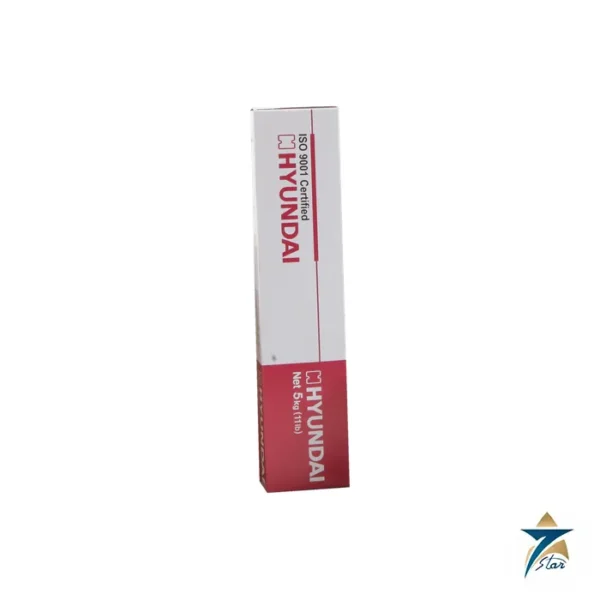
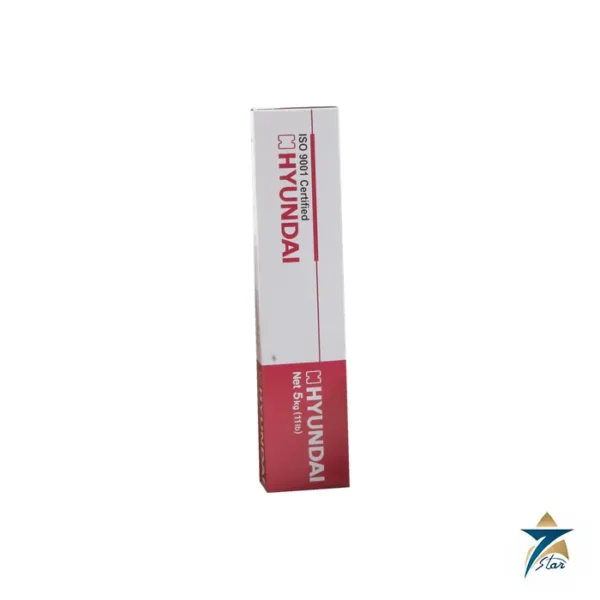
Hyundai Welding S-9015.B9 E9015-B91 P91 Electrode
Description
Overview
The Hyundai Welding S-9015.B9 is a low hydrogen stick electrode for modified 9 % chromium – 1 % molybdenum steel, the material usually called grade 91. It is classified to AWS A5.5 / ASME SFA-5.5 E9015-B91, JIS Z 3223 E6215-9C1MV and EN ISO 3580-A E CrMo91 B 4 2 H5. Hyundai Welding states good creep resistance at high temperature and a maximum service temperature of 650 °C (1202 °F).
Seven Star LLC supplies the Hyundai Welding S-9015.B9 from Muscat to power stations, HRSG builders, refineries and maintenance contractors in Oman and the GCC. This page is based on the manufacturer datasheet, which you can download below, with general P91 welding background clearly labelled.
Grade 91 Background
As general knowledge, grade 91 is a creep-strength-enhanced ferritic steel. Small additions of vanadium, niobium and nitrogen to a 9Cr-1Mo base give fine, stable precipitates that provide much higher creep strength than older chrome-moly grades, allowing thinner walls in high-temperature steam systems. That performance depends on the right microstructure, so welding procedures for this class are among the most tightly controlled in industry.
Typical P91 practice includes significant preheat, controlled interpass temperature, cooling to complete the transformation before PWHT, and a tempering PWHT in a narrow temperature window. Filler chemistry matters too: the Hyundai Welding S-9015.B9 deposit contains 8.9 % Cr, 0.99 % Mo, 0.20 % V, 0.04 % Nb and 0.03 % N, matching the base alloy design. All thermal parameters must come from the code and the qualified procedure.
Hyundai Welding S-9015.B9 Datasheet Summary
Full typical chemistry is 0.10 % C, 0.27 % Si, 0.85 % Mn, 0.009 % P, 0.006 % S, 0.03 % Cu, 0.29 % Ni, 8.9 % Cr, 0.99 % Mo, 0.04 % Nb, 0.01 % Al, 0.20 % V and 0.03 % N. After PWHT at 760 °C for 2 hours, typical results are 603 MPa (87 ksi) yield, 747 MPa (108 ksi) tensile, 24 % elongation and 55 J (41 ft·lbs) at room temperature. After 760 °C for 4 hours they are 611 MPa (89 ksi), 732 MPa (106 ksi), 24 % and 60 J (44 ft·lbs).
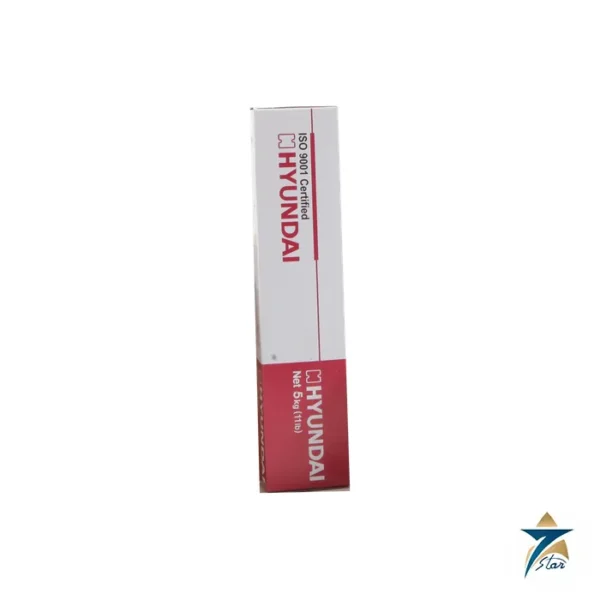
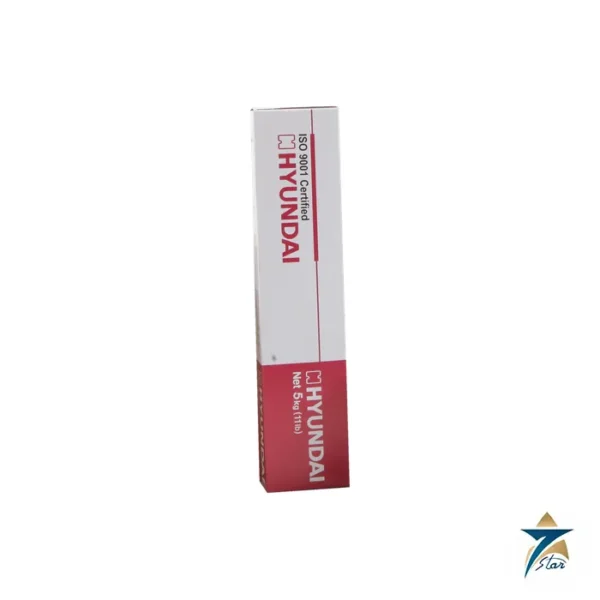
The Hyundai Welding S-9015.B9 is a low hydrogen electrode with HDM of 5 ml/100 g or less, uses DC± polarity and performs well on DCEP according to the manufacturer. It is rated for 1G, 2F, 3G and 4G. Four diameters are listed, 2.6, 3.2, 4.0 and 5.0 mm, packed in 5 kg (11 lbs) packets, standard or vacuum, and 20 kg (44 lbs) cartons. Redrying is 300 to 350 °C for 0.5 to 1 hour. No approval marks are printed on this datasheet.
Key Features
The Hyundai Welding S-9015.B9 datasheet highlights:
- Good creep resistance at high temperature.
- Maximum service temperature of 650 °C (1202 °F).
- Low hydrogen deposit with HDM of 5 ml/100 g or less, reflected in the H5 symbol.
- Good performance with DCEP.
- Vanadium, niobium and nitrogen bearing 9Cr-1Mo deposit chemistry.
- Published properties after two PWHT durations at 760 °C.
- Diameters from 2.6 mm to 5.0 mm.
- Application areas of 9 % Cr – 1 % Mo steel, pressure vessels and power plants.
Applications
The Hyundai Welding S-9015.B9 is used on main steam and hot reheat piping, headers and HRSG high-pressure sections built in grade 91, and on related pressure vessels and fittings. Combined-cycle power and water plants in Oman, including the large facilities that supply the main grid and desalination, typically include grade 91 piping that needs qualified repair and modification work during outages.
Seven Star LLC can also supply welding power sources such as the Lincoln Electric Power Wave S500 and the ESAB Rebel EMP 285ic, along with carbon steel consumables such as the LongTeng EL8 SAW wire. See all stick products in our welding electrodes category.
Why an EXX15 Coating
In AWS terminology, the last two digits of the classification describe the coating and usable current. As general knowledge, an EXX15 electrode has a low hydrogen sodium-based coating designed for DC electrode positive, whereas an EXX18 has an iron powder potassium-based coating that also works on AC. The Hyundai Welding S-9015.B9 follows that pattern: the datasheet polarity field shows DC± and notes good performance with DCEP, and it has no AC rating. Welders setting up inverter power sources should select DC+ unless the qualified procedure states otherwise.
Grade 91 joints are usually checked after PWHT by hardness testing and, on critical pressure parts, by positive material identification of the weld metal to confirm chromium and molybdenum content. Because the published Hyundai Welding S-9015.B9 data includes results after both 2 and 4 hours at 760 °C, engineers can see how longer tempering lowers tensile strength slightly while raising room-temperature impact energy, which is useful when planning repair sequences that may involve more than one PWHT cycle.
Technical Specifications
All figures are typical values from the Hyundai Welding S-9015.B9 datasheet.
| Parameter | Specification |
|---|---|
| Model | S-9015.B9 |
| Type | Heat-resistant low-alloy, low hydrogen (SMAW) |
| AWS / ASME | A5.5 / SFA-5.5 E9015-B91 |
| JIS | Z 3223 E6215-9C1MV |
| EN ISO | 3580-A E CrMo91 B 4 2 H5 |
| Polarity | DC± (good performance with DCEP) |
| Positions | 1G, 2F, 3G, 4G |
| Maximum service temperature | 650 °C (1202 °F) |
| Diffusible hydrogen | HDM 5 ml/100 g or less |
| Redrying | 300 to 350 °C (572 to 662 °F), 0.5 to 1 hour |
| Chemistry (wt %) | C 0.10, Si 0.27, Mn 0.85, P 0.009, S 0.006, Cu 0.03, Ni 0.29, Cr 8.9, Mo 0.99, Nb 0.04, Al 0.01, V 0.20, N 0.03 |
| After PWHT 760 °C x 2 h | 603 MPa yield, 747 MPa tensile, 24 %, 55 J at RT |
| After PWHT 760 °C x 4 h | 611 MPa yield, 732 MPa tensile, 24 %, 60 J at RT |
| Packaging | 5 kg (11 lbs) packet, standard or vacuum; 20 kg (44 lbs) carton |
Welding Current
| Diameter mm (in) | F and HF (A) | V-up, OH (A) |
|---|---|---|
| 2.6 (3/32) | 55-90 | 50-80 |
| 3.2 (1/8) | 90-130 | 80-120 |
| 4.0 (5/32) | 130-190 | 120-180 |
| 5.0 (3/16) | 190-240 | not listed |
Handling
General practice for H5 grade 91 electrodes is to keep them sealed until use, redry at the manufacturer temperature, which for the Hyundai Welding S-9015.B9 is 300 to 350 °C for 0.5 to 1 hour, and hold them in heated ovens with strict exposure limits. Batch traceability and certificate review are normally required on pressure parts.
Planning the consumable quantity in advance also matters, because thick grade 91 joints take many passes and interruptions while waiting for redried electrodes can force the joint below the minimum preheat.
Datasheet
The official Hyundai Welding S-9015.B9 datasheet, covering classification, chemistry, PWHT properties, parameters and packaging, is available for download on this page.
How to Order
For a quotation on the Hyundai Welding S-9015.B9, send Seven Star LLC your diameters, quantities and certificate requirements. Our team in Muscat supports power and process plant customers across Oman and the GCC with engineering support.
Datasheets & Documents
- Datasheet Hyundai Welding S-9015.B9 product datasheet Download
Reviews (0)
How would you rate this product? Cancel reply
About brand
Hyundai Welding is a South Korean manufacturer of welding consumables and welding equipment, incorporated on 3 September 1975 as Seohan Development Co., Ltd. It was set up to supply the Korean shipbuilding industry and now serves fabrication, offshore, power and petrochemical work. The company is headquartered in Seoul, describes itself as a privately owned family business, and works closely with other companies of the Hyundai business group.
Seven Star LLC lists Hyundai Welding electrodes and wires for carbon steel, chrome-moly, stainless, duplex and nickel alloy work and supplies them to fabricators and maintenance teams in Oman, matched to the classification written in the welding procedure.
Hyundai Welding company profile
| Founded | 3 September 1975, as Seohan Development Co., Ltd. |
|---|---|
| Headquarters | Seoul, South Korea |
| Original market | Welding consumables for Korean shipbuilding |
| Ownership | Privately owned family business, linked to the Hyundai business group |
| Classification system | Electrodes and wires sold under AWS classifications (for example E7024, E71T-1C, E2209-16, ENiCrMo-3) |
| Product families | Carbon steel, low-hydrogen and cellulosic pipe electrodes, chrome-moly and stainless electrodes, duplex and super duplex electrodes, nickel alloy electrodes and MIG wires, flux-cored and solid wires, submerged arc wires and fluxes |
Milestones
- 1975: The company is incorporated as Seohan Development Co., Ltd.
- 1970s: Its first market is welding consumables for Korean shipyards.
Hyundai Welding grades listed on this page
The product names follow a simple pattern: the letters show the consumable type and the number echoes the AWS class.
- S- covered electrodes: S-7018.1 (E7018-1), S-7018.W for weathering steel, S-7010.P1 and S-8010.P1 cellulosic pipeline grades
- Chrome-moly: S-8018.B2, S-9018.B3 and S-9015.B9 for P91, plus SC-91B3 flux-cored wire
- Stainless and duplex: S-308L.17, S-309L.17, S-2209.16 and S-2594.16
- Alloy 625: SR-625 electrode and SMT-625 MIG wire
Where these consumables are used
The mix above maps closely to process plant and pipeline work. Cellulosic E7010-P1 and E8010-P1 electrodes are for root and fill passes on line pipe. The B2, B3 and B91 grades serve steam piping, headers and heaters that run hot. E309L joins stainless to carbon steel, E2209 and E2594 cover duplex and super duplex piping, and the 625 fillers are used for overlay and for joining nickel alloys.
Hyundai Welding products we list
Ordering Hyundai Welding consumables: what we need
State the Hyundai product name and the AWS classification together, since the procedure qualification record is written against the class. Add the diameter, the quantity in kilograms, the packing you prefer, and the shielding gas for wires. Tell us which test certificate your quality plan asks for, and note any impact temperature, hardness or post-weld heat treatment condition. GCC project specifications often add client approval lists, so mention those as well.
Facts checked against Hyundai Welding's company brochure and Korean company registry profiles, October 2026.
FAQ
Questions about the Hyundai Welding S-9015.B9 E9015-B91 P91 Electrode
Answers from our engineering team on installation, compatibility and integration.
01What is the Hyundai Welding S-9015.B9 used for?
It is used to weld 9 % Cr - 1 % Mo low alloy steel, commonly known as grade 91, in pressure vessels and power plants. The datasheet lists a maximum service temperature of 650 °C.
02How low is the hydrogen level?
The datasheet states a low-hydrogen electrode with HDM of 5 ml/100 g or less, and the EN ISO designation carries the H5 symbol.
03What PWHT data does Hyundai publish?
Typical properties are 603 MPa yield, 747 MPa tensile, 24 % elongation and 55 J at room temperature after 760 °C x 2 hours, and 611 MPa, 732 MPa, 24 % and 60 J after 760 °C x 4 hours.
04Which polarity is recommended?
The polarity field shows DC±, and the feature list notes good performance with DCEP.
05Can Seven Star LLC supply the Hyundai Welding S-9015.B9 in Oman?
Yes. Seven Star LLC supplies the Hyundai Welding S-9015.B9 to power and process plant customers in Oman and the GCC from Muscat, with the official datasheet.


Reviews
There are no reviews yet.