
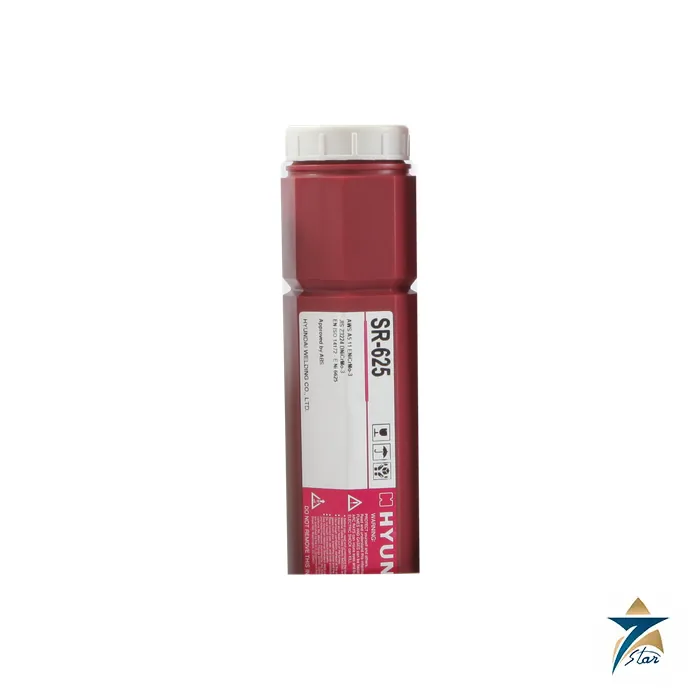
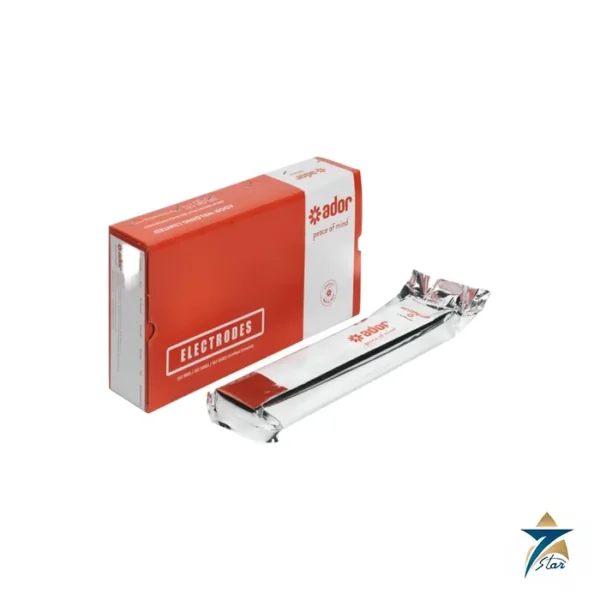
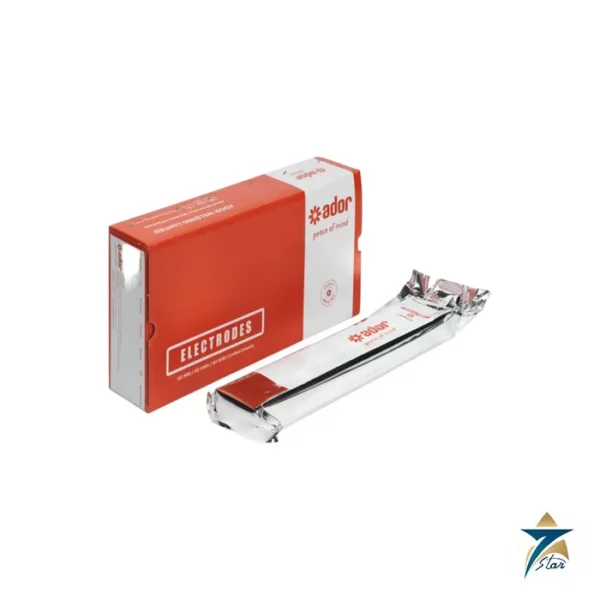
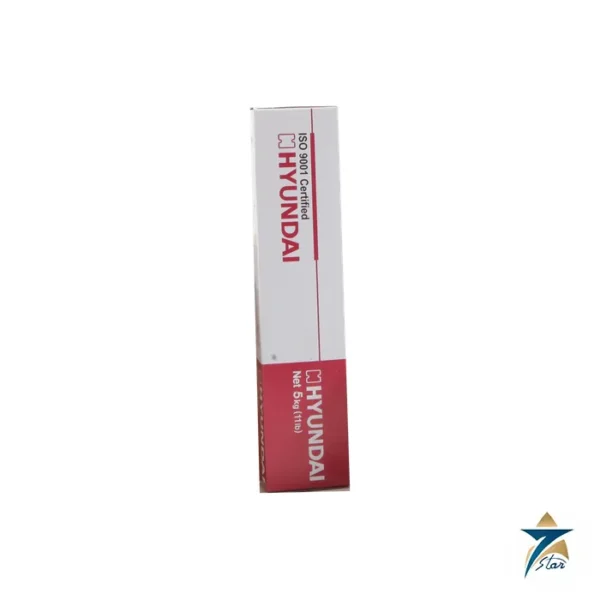
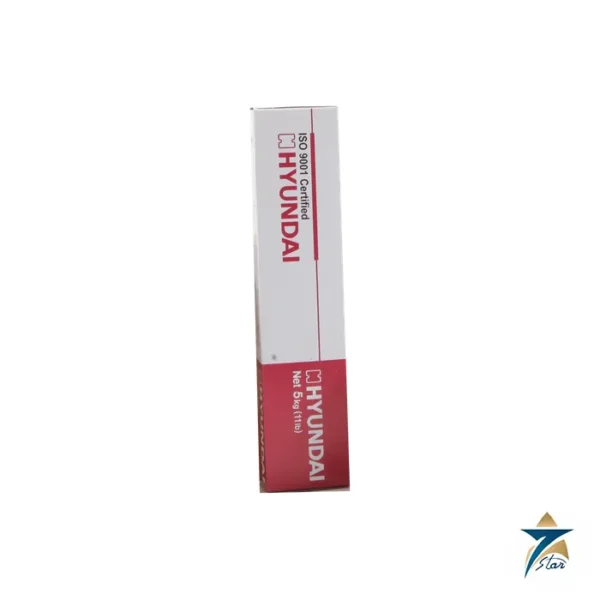
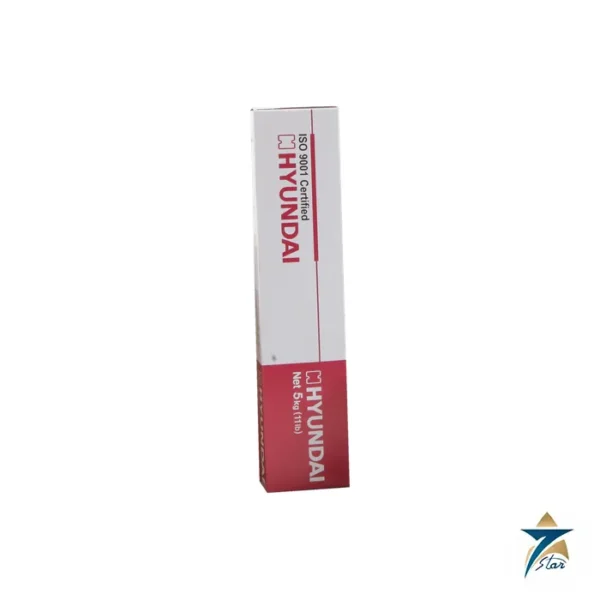
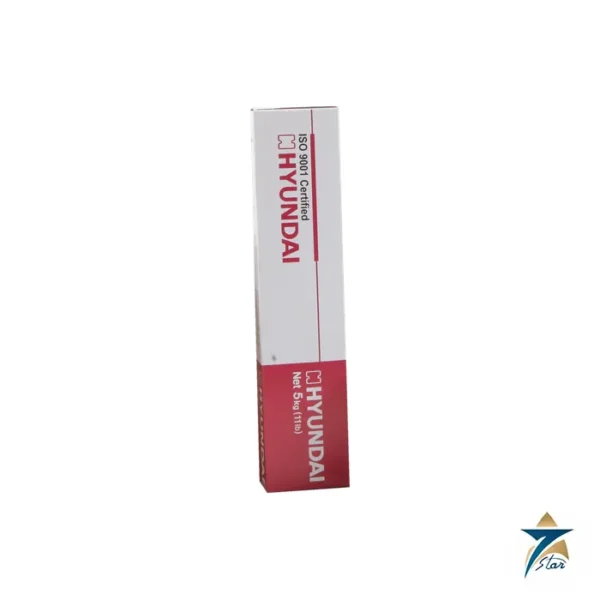
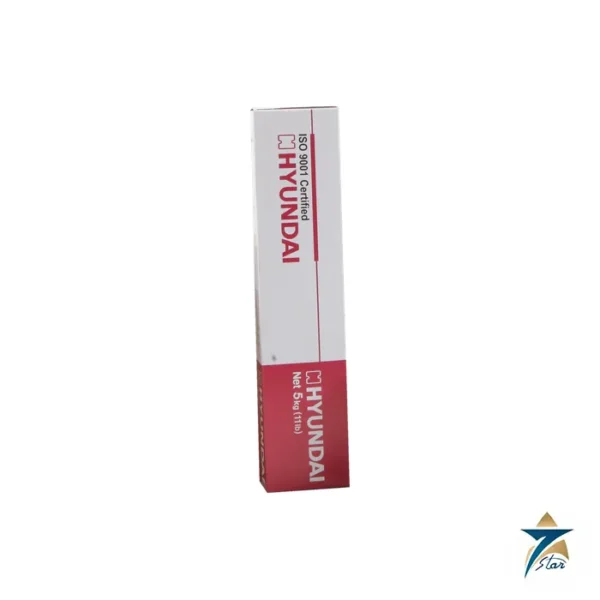
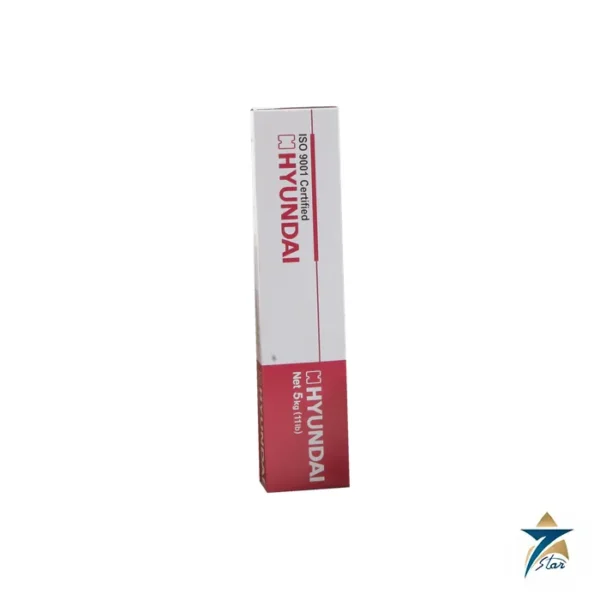
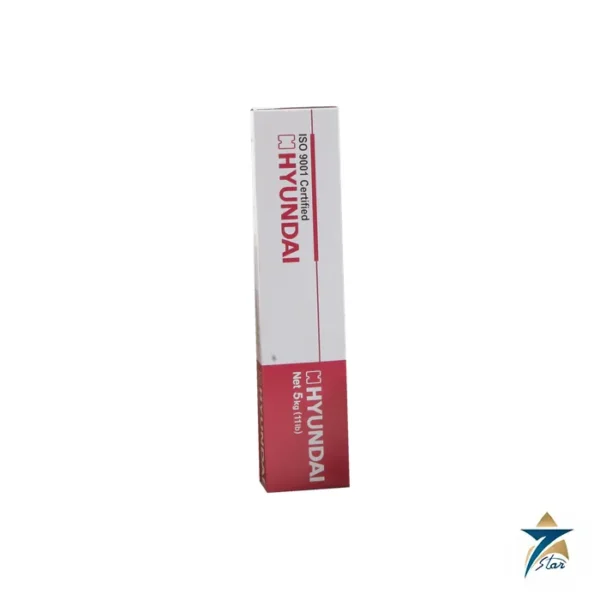
The Hyundai SR-625 is a nickel-chromium-molybdenum covered electrode for SMAW, classified to AWS A5.11 / ASME SFA-5.11 ENiCrMo-3, JIS Z 3224 DNiCrMo-3 and EN ISO 14172 Ni 6625. It deposits an alloy 625 type weld metal with typically 63.4% nickel, 21.7% chromium, 9.0% molybdenum and 3.3% niobium. Hyundai Welding highlights good corrosion resistance to crevice corrosion, pitting and stress corrosion cracking, good tensile strength at high temperature and good impact values at cryogenic temperature, with 48 J measured at -196 °C. The electrode is approved by ABS according to the datasheet. Seven Star LLC supplies the Hyundai SR-625 to Oman and the GCC with the official datasheet attached.
Alloy 625 filler metals are among the most versatile consumables in industrial welding. Their high nickel content and molybdenum-niobium strengthening give a weld deposit that resists chlorides, acids and high temperatures, and stays tough down to liquid nitrogen temperature. This is why ENiCrMo-3 electrodes appear in very different industries, from LNG storage to flue gas desulfurisation to chemical tankers.
The Hyundai SR-625 brings these properties to manual metal arc welding. It welds on DC+ or AC in the 1G, 2F, 3G and 4G positions, so it can be used on site for repairs, overlays and tie-ins where wire processes are impractical.
The manufacturer lists the following application areas for the Hyundai SR-625:
| C | Si | Mn | P | S | Ni | Cr | Mo | Nb | Fe |
|---|---|---|---|---|---|---|---|---|---|
| 0.06 | 0.40 | 0.1 | 0.001 | 0.004 | 63.4 | 21.7 | 9.0 | 3.3 | 1.5 |
| Property | Typical value |
|---|---|
| Tensile strength | 770 MPa (112 ksi) |
| Elongation | 36% |
| Impact toughness at -196 °C (-320 °F) | 48 J (35 ft-lbs) |
| Diameter | Length | F and HF (A) | V-up and OH (A) |
|---|---|---|---|
| 2.6 mm (3/32 in) | 300 mm | 60 to 90 | 60 to 90 |
| 3.2 mm (1/8 in) | 350 mm | 70 to 110 | 70 to 110 |
| 4.0 mm (5/32 in) | 350 mm | 110 to 140 | 100 to 130 |
| 5.0 mm (3/16 in) | 350 mm | 120 to 150 | 110 to 140 |
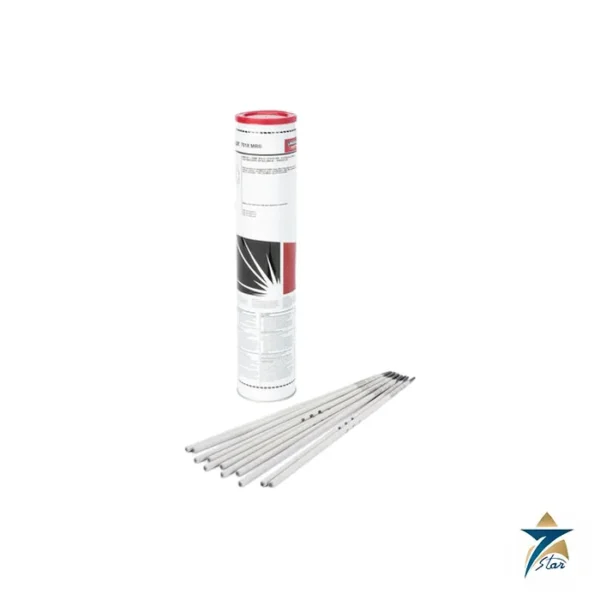
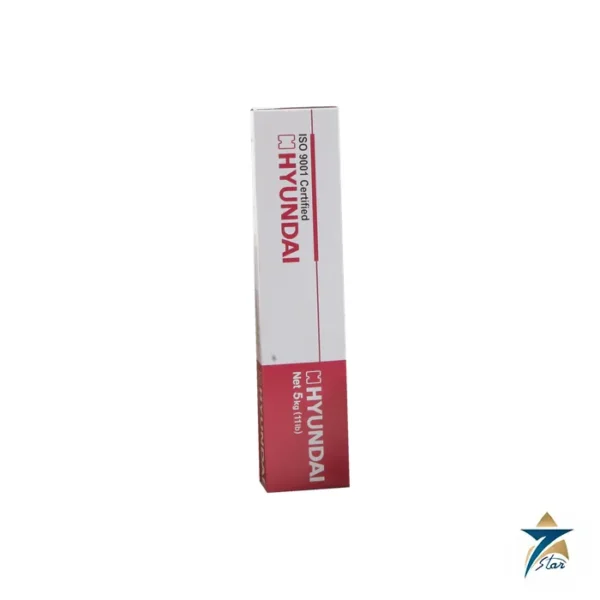
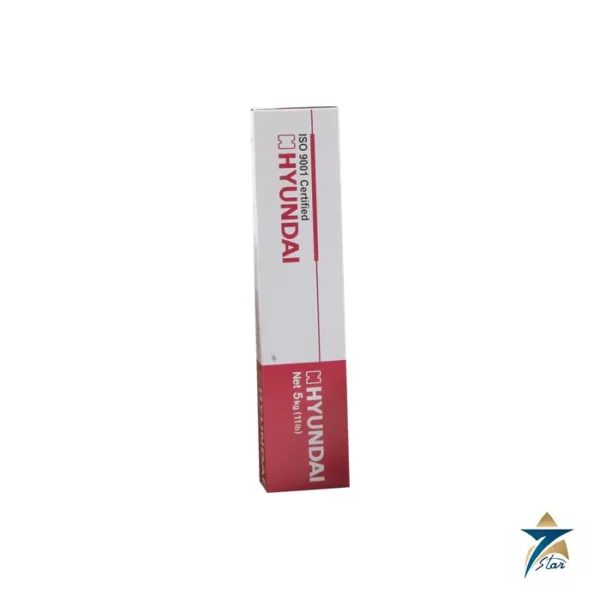
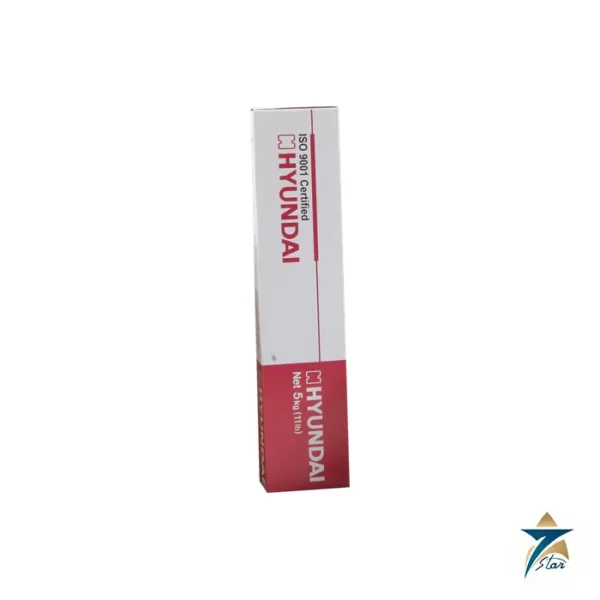
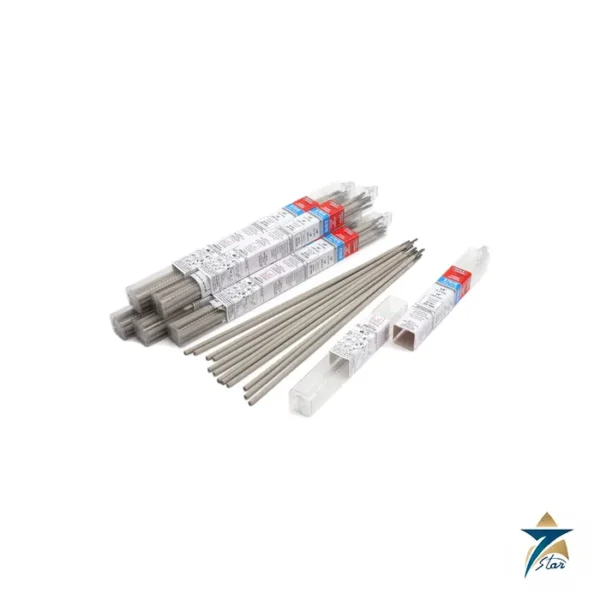
The Hyundai SR-625 is supplied in 2.5 kg (5.5 lbs) PVC packets and 10 kg (22 lbs) cartons. Note that nickel alloy electrodes generally run at lower currents than stainless electrodes of the same diameter, as the table reflects.
Oman’s LNG trains in Sur, refinery and petrochemical complexes in Sohar and Duqm, and power and desalination plants along the coast all contain equipment where an ENiCrMo-3 electrode is a natural choice. Typical jobs for the Hyundai SR-625 include:
This section summarises general welding knowledge and is not taken from the Hyundai datasheet. Nickel alloy weld pools are sluggish and do not wet out as readily as steel, so joint designs often use wider bevel angles and smaller root faces. Cleanliness is essential: sulphur, lead and other low-melting contaminants from markers, oils or shop dirt can cause cracking, so surfaces should be degreased and ground bright before welding. Stringer beads with modest weave and short arc length are usually preferred, and interpass temperatures are kept low. For overlays, dilution from the base metal is controlled through current and bead overlap so that the required iron content limit at the surface can be met. Electrodes should be redried according to the manufacturer’s stated conditions and protected from moisture pick-up between redrying and use.
The following is general background, not manufacturer data. Ferritic 9% nickel steel is widely used for the inner tanks of large LNG storage tanks because it keeps high strength and toughness at about -196 °C. Matching ferritic fillers are difficult to use, so the industry normally welds it with high-nickel austenitic consumables such as ENiCrMo-3 electrodes. These deposits remain tough at cryogenic temperature and have a thermal expansion closer to that of 9% nickel steel than ordinary stainless fillers. The datasheet value of 48 J at -196 °C for the Hyundai SR-625 is the key property here. Another general consideration is magnetic arc blow, since 9% nickel plate can become magnetised; AC welding is often preferred to reduce it, and the Hyundai SR-625 can run on AC as well as DC+. Tank builders typically qualify the electrode in all positions used on the shell, including vertical and overhead joints.
A single ENiCrMo-3 electrode can replace several specialised consumables in a maintenance store, because the Hyundai SR-625 handles 9% nickel steel, alloy 625, many dissimilar joints and corrosion-resistant overlays. Its four diameters, all-position use and AC or DC+ operation make it practical for both shop work and on-site repair, and its ABS approval is relevant for marine and chemical carrier work.
See also the Lincoln Electric SuperArc L-59 ER70S-6 Solid MIG Welding Wire, the LongTeng EL8 Carbon Steel Submerged Arc Welding Wire and the Lincoln Electric Power Wave S500. Additional electrodes are listed in our Welding Electrodes category, which brings together stainless, duplex and nickel alloy stick electrodes for maintenance stores and fabrication shops.
To get a quotation for the Hyundai SR-625, send Seven Star LLC your required diameters, quantities and any certificate or inspection requirements. Our team in Muscat will share the manufacturer datasheet, confirm the order details with you, and arrange delivery anywhere in Oman and the GCC.
Choose the option that best fits your needs to get the fastest response from our team.
Automatically fill the RFQ form with this product's details for a faster process.
Manually enter multiple part numbers, specific brands, or custom requirements.
Reviews
There are no reviews yet.