- Automation & ControlView all 2,897 products
- Automation Accessories
- AC Drives
- PLC & I/O Cards
- Industrial Communications
- Vibration Monitoring
- Controllers & Data Acquisition
- Isolator & Barrier
- Safety Switches & Guard Locking
- Motor Soft Starters
- CCTV & Security
- Encoders
- Pneumatic Cylinders
- HMI Displays
- Servo Drives
- Industrial Computers
- Machine Vision
- Automation Software
- Robotics
Brand: Hyundai Welding
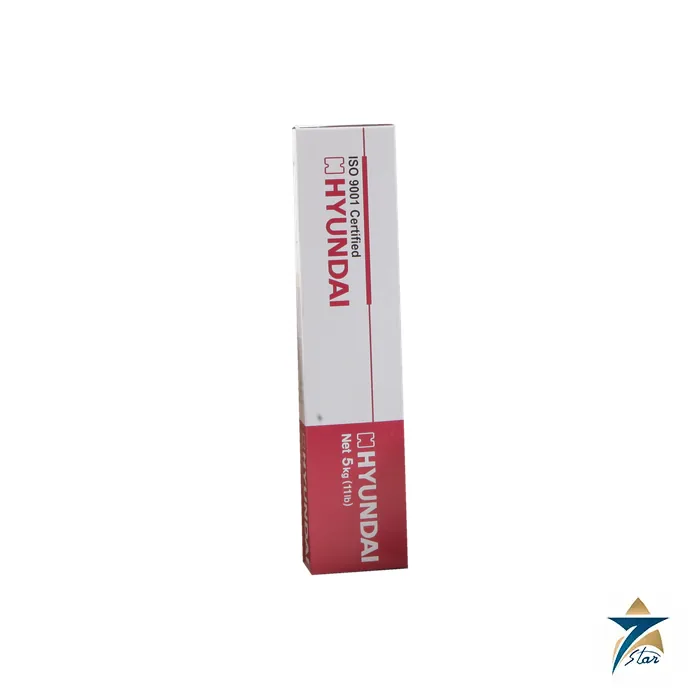
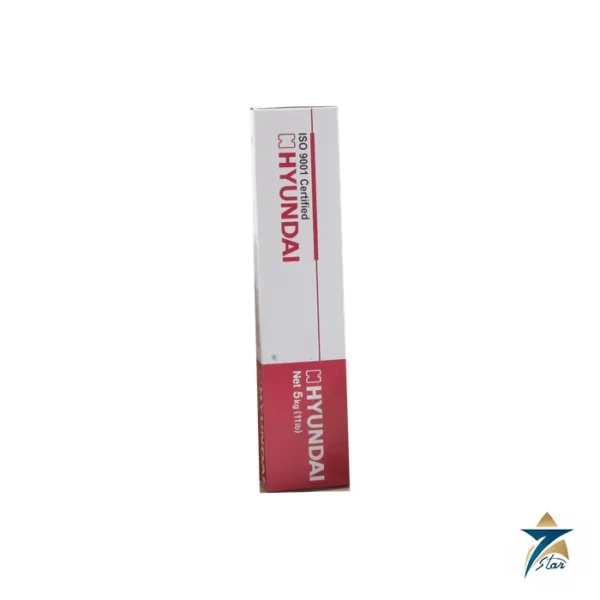
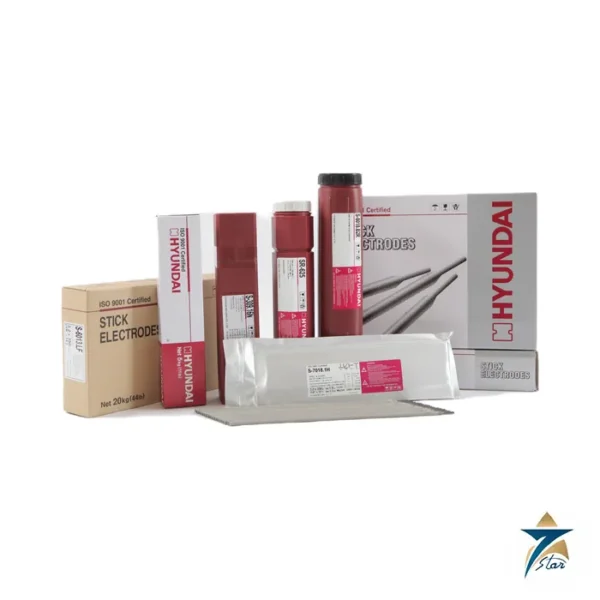
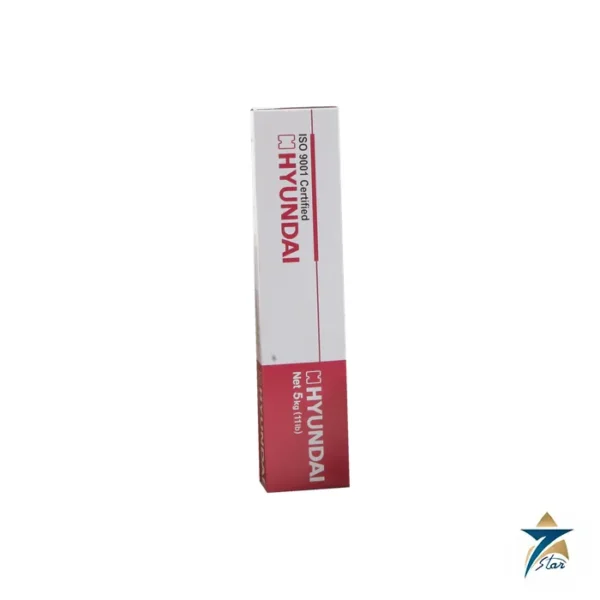
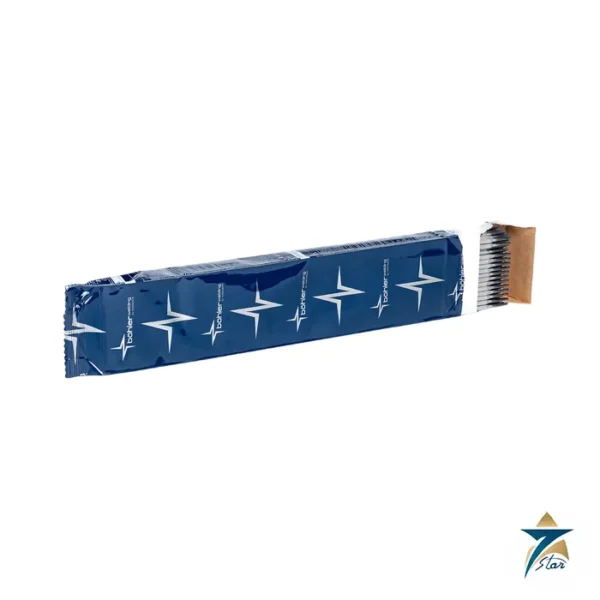
Hyundai Welding S-7018.1 E7018-1 Low Hydrogen Electrode
Description
Overview
The Hyundai Welding S-7018.1 is a basic, low hydrogen, iron powder stick electrode classified to AWS A5.1 / ASME SFA-5.1 E7018-1. It also carries JIS Z 3211 E4918, EN ISO 2560-A E42 4 B 3 2 and KS D7006 E5016 designations. Hyundai Welding positions it for butt and fillet welding of thin and medium-thick plate up to 20 mm, with high deposition efficiency from the iron powder coating and good impact values at -45 °C.
Seven Star LLC supplies the Hyundai Welding S-7018.1 from Muscat to structural fabricators, offshore yards and maintenance contractors in Oman and the GCC. The information here is taken from the manufacturer datasheet attached below, with general welding guidance flagged where it is used.
Why a Low Hydrogen E7018-1 Electrode
As general welding knowledge, basic low hydrogen electrodes have a coating based on calcium carbonate and fluoride instead of cellulose or rutile. The shield is mostly carbon dioxide from the carbonate, which keeps diffusible hydrogen in the weld low and so reduces the risk of hydrogen-induced cold cracking in restrained joints and thicker sections. Iron powder in the coating raises deposition and gives a smooth, stable arc.
The -1 suffix in AWS A5.1 identifies an E7018 product that meets an enhanced low-temperature impact requirement. For the Hyundai Welding S-7018.1, the datasheet reports a typical 74 J (55 ft·lbs) at -45 °C (-50 °F), which is why it is chosen for offshore structures and low-temperature strength steels where toughness is specified below zero.
Hyundai Welding S-7018.1 Design Data
Typical all-weld-metal chemistry is 0.12 % C, 0.33 % Si, 1.33 % Mn, 0.017 % P and 0.006 % S. Typical mechanical properties are 455 MPa (66 ksi) yield, 561 MPa (81 ksi) tensile and 31 % elongation. The electrode runs on AC or DC+ in positions 1G, 2F, 3G and 4G, and the approvals line on the datasheet shows ABS, BV, DNV, LR and RINA.
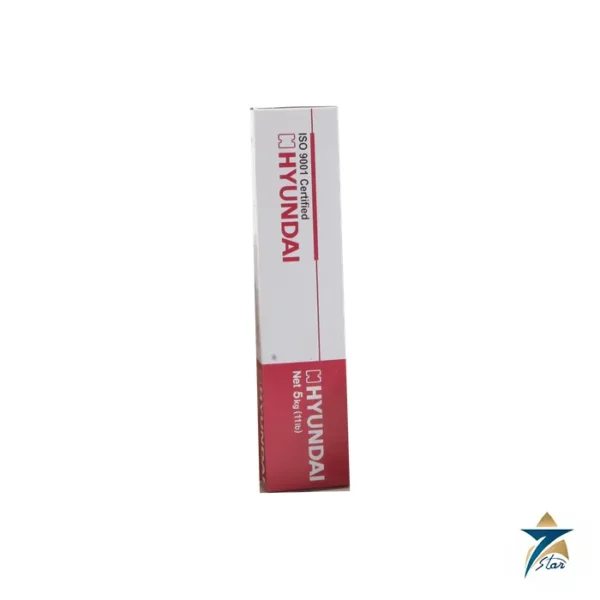
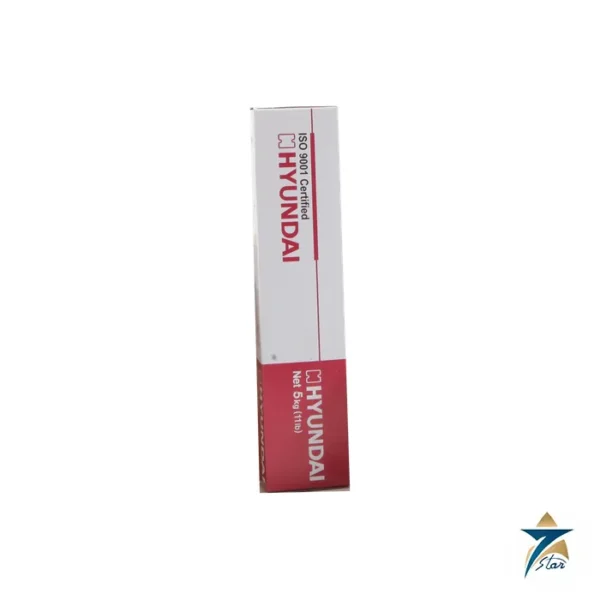
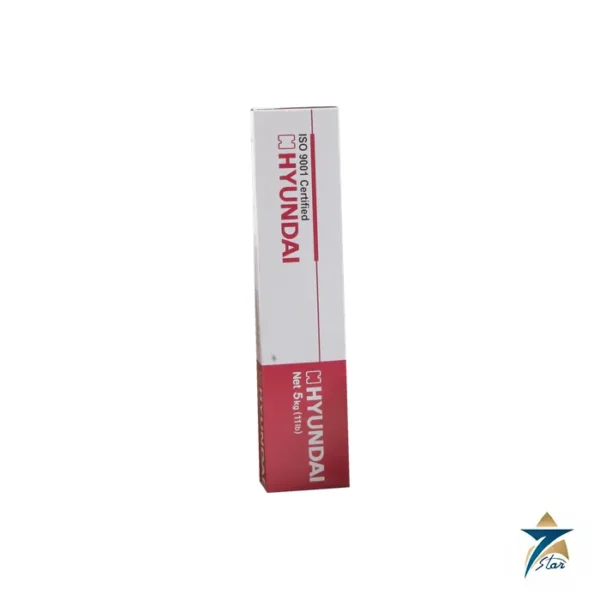
Five diameters are listed for the Hyundai Welding S-7018.1: 2.6 and 3.2 mm at 350 mm length, 4.0 and 5.0 mm at 400 mm, and 6.0 mm at 450 mm. The 6.0 mm size is for flat and horizontal-fillet work only, at 250 to 300 A. Packaging is the 5 kg (11 lbs) packet, standard or vacuum, inside a 20 kg (44 lbs) carton, and redrying is 300 to 350 °C for 0.5 to 1 hour.
Key Features
The datasheet identifies these features of the Hyundai Welding S-7018.1:
- Butt and fillet welding of thin and medium-thick plates up to 20 mm.
- Iron powder, low hydrogen coating for high efficiency.
- Good impact value at -45 °C, with a typical 74 J.
- AC or DC+ operation, useful where only transformer sets are available.
- Multi-standard classification across AWS, JIS, EN ISO and KS.
- Approval marks for ABS, BV, DNV, LR and RINA on the datasheet.
- Wide diameter choice from 2.6 mm up to 6.0 mm.
- Application areas of heavy steel fabrication, low temperature strength steel and offshore structures.
Typical Projects
The datasheet names heavy steel fabrication, low temperature strength steel and offshore structure as application areas. In the region that includes process plant steelwork, pipe racks, storage tank shells and nozzles in carbon steel, jackets and topside modules built in yards for offshore service, and repair welding on cranes and heavy equipment. The Hyundai Welding S-7018.1 is also a frequent choice for fill and cap passes on carbon steel piping once a root has been made by another process.
Seven Star LLC can supply matching equipment and consumables, including the ESAB Rebel EMP 285ic portable multi-process welder, the Lincoln Electric Power Wave S500 and the Lincoln Electric SuperArc L-59 ER70S-6 wire for shops that combine stick and MIG work. More electrodes are listed in our welding electrodes category.
E7018 Versus E7018-1
Buyers often ask whether a standard E7018 can replace the Hyundai Welding S-7018.1. As general guidance, both are basic low hydrogen iron powder electrodes with similar strength, but the -1 version has to meet a tougher impact requirement and also has tighter limits on manganese, silicon and some other elements in the classification. When a drawing or WPS calls up E7018-1, or a Charpy test below about -30 °C is specified, substituting a plain E7018 is not acceptable without engineering approval.
Plate Thickness and Joint Preparation
The datasheet positions the Hyundai Welding S-7018.1 for butt and fillet welds on thin and medium-thick plate up to 20 mm. General practice for this range is a single-V or double-V bevel with a controlled root gap, a root run with a small diameter such as 2.6 or 3.2 mm, and fill and cap passes with 4.0 or 5.0 mm in flat or horizontal positions. Back-gouging and a sealing run are common on double-sided joints. Stringer beads and limited weave width help retain the low-temperature toughness that the -1 grade is selected for, because very high heat input can coarsen the weld microstructure.
Technical Specifications
All values below for the Hyundai Welding S-7018.1 are typical figures from the manufacturer datasheet.
| Parameter | Specification |
|---|---|
| Model | S-7018.1 |
| Type | Basic, low hydrogen, iron powder (SMAW) |
| AWS / ASME | A5.1 / SFA-5.1 E7018-1 |
| JIS | Z 3211 E4918 |
| EN ISO | 2560-A E42 4 B 3 2 |
| KS | D7006 E5016 |
| Polarity | AC or DC+ |
| Positions | 1G, 2F, 3G, 4G |
| Approvals shown | ABS, BV, DNV, LR, RINA |
| Redrying | 300 to 350 °C (572 to 662 °F), 0.5 to 1 hour |
| Chemistry (wt %) | C 0.12, Si 0.33, Mn 1.33, P 0.017, S 0.006 |
| Yield / tensile | 455 MPa (66 ksi) / 561 MPa (81 ksi) |
| Elongation | 31 % |
| Impact | 74 J (55 ft·lbs) at -45 °C (-50 °F) |
| Packaging | 5 kg (11 lbs) packet, standard or vacuum; 20 kg (44 lbs) carton |
Current Ranges
| Diameter mm (in) | Length mm (in) | F and HF (A) | V-up, OH (A) |
|---|---|---|---|
| 2.6 (3/32) | 350 (14) | 60-90 | 50-80 |
| 3.2 (1/8) | 350 (14) | 90-140 | 80-120 |
| 4.0 (5/32) | 400 (16) | 130-190 | 120-170 |
| 5.0 (3/16) | 400 (16) | 180-240 | 150-200 |
| 6.0 (15/64) | 450 (18) | 250-300 | not listed |
Storage and Redrying
General practice for low hydrogen rods is to keep them in sealed or vacuum packs, redry any electrodes that have absorbed moisture, and hold redried electrodes in a heated quiver or holding oven until use. Humidity on the Batinah coast and in Duqm makes this discipline important. For the Hyundai Welding S-7018.1 the manufacturer redrying condition is 300 to 350 °C for 0.5 to 1 hour; holding temperatures and exposure limits should follow your procedure or code.
Datasheet
The official Hyundai Welding S-7018.1 datasheet can be downloaded from this page.
How to Order
Send Seven Star LLC your diameter split, quantities and any approval certificate needs to receive a quotation for the Hyundai Welding S-7018.1. Our Muscat team serves fabrication, offshore and maintenance customers across Oman and the GCC with technical support.
Datasheets & Documents
- Datasheet Hyundai Welding S-7018.1 product datasheet Download
Reviews (0)
How would you rate this product? Cancel reply
About brand
Hyundai Welding is a South Korean manufacturer of welding consumables and welding equipment, incorporated on 3 September 1975 as Seohan Development Co., Ltd. It was set up to supply the Korean shipbuilding industry and now serves fabrication, offshore, power and petrochemical work. The company is headquartered in Seoul, describes itself as a privately owned family business, and works closely with other companies of the Hyundai business group.
Seven Star LLC lists Hyundai Welding electrodes and wires for carbon steel, chrome-moly, stainless, duplex and nickel alloy work and supplies them to fabricators and maintenance teams in Oman, matched to the classification written in the welding procedure.
Hyundai Welding company profile
| Founded | 3 September 1975, as Seohan Development Co., Ltd. |
|---|---|
| Headquarters | Seoul, South Korea |
| Original market | Welding consumables for Korean shipbuilding |
| Ownership | Privately owned family business, linked to the Hyundai business group |
| Classification system | Electrodes and wires sold under AWS classifications (for example E7024, E71T-1C, E2209-16, ENiCrMo-3) |
| Product families | Carbon steel, low-hydrogen and cellulosic pipe electrodes, chrome-moly and stainless electrodes, duplex and super duplex electrodes, nickel alloy electrodes and MIG wires, flux-cored and solid wires, submerged arc wires and fluxes |
Milestones
- 1975: The company is incorporated as Seohan Development Co., Ltd.
- 1970s: Its first market is welding consumables for Korean shipyards.
Hyundai Welding grades listed on this page
The product names follow a simple pattern: the letters show the consumable type and the number echoes the AWS class.
- S- covered electrodes: S-7018.1 (E7018-1), S-7018.W for weathering steel, S-7010.P1 and S-8010.P1 cellulosic pipeline grades
- Chrome-moly: S-8018.B2, S-9018.B3 and S-9015.B9 for P91, plus SC-91B3 flux-cored wire
- Stainless and duplex: S-308L.17, S-309L.17, S-2209.16 and S-2594.16
- Alloy 625: SR-625 electrode and SMT-625 MIG wire
Where these consumables are used
The mix above maps closely to process plant and pipeline work. Cellulosic E7010-P1 and E8010-P1 electrodes are for root and fill passes on line pipe. The B2, B3 and B91 grades serve steam piping, headers and heaters that run hot. E309L joins stainless to carbon steel, E2209 and E2594 cover duplex and super duplex piping, and the 625 fillers are used for overlay and for joining nickel alloys.
Hyundai Welding products we list
Ordering Hyundai Welding consumables: what we need
State the Hyundai product name and the AWS classification together, since the procedure qualification record is written against the class. Add the diameter, the quantity in kilograms, the packing you prefer, and the shielding gas for wires. Tell us which test certificate your quality plan asks for, and note any impact temperature, hardness or post-weld heat treatment condition. GCC project specifications often add client approval lists, so mention those as well.
Facts checked against Hyundai Welding's company brochure and Korean company registry profiles, October 2026.
FAQ
Questions about the Hyundai Welding S-7018.1 E7018-1 Low Hydrogen
Answers from our engineering team on installation, compatibility and integration.
01What is the Hyundai Welding S-7018.1?
It is a basic, low hydrogen, iron powder stick electrode classified to AWS A5.1 E7018-1, JIS Z 3211 E4918, EN ISO 2560-A E42 4 B 3 2 and KS D7006 E5016, used for carbon steel structures that need good low-temperature toughness.
02What does the -1 suffix indicate?
In AWS A5.1 the -1 designator marks an E7018 electrode that meets an enhanced Charpy requirement at a lower temperature. The Hyundai datasheet reports a typical 74 J at -45 °C for the S-7018.1.
03How should the S-7018.1 be redried?
The datasheet specifies 300 to 350 °C (572 to 662 °F) for 0.5 to 1 hour, which is typical for basic low hydrogen electrodes.
04Which approvals appear on the datasheet?
The datasheet shows ABS, BV, DNV, LR and RINA. Check that the certificate scope fits your project before ordering.
05Does Seven Star LLC supply the Hyundai Welding S-7018.1 in Oman?
Yes. Seven Star LLC supplies the Hyundai Welding S-7018.1 to fabricators and contractors in Oman and the GCC from Muscat, with the official product datasheet.


Reviews
There are no reviews yet.