

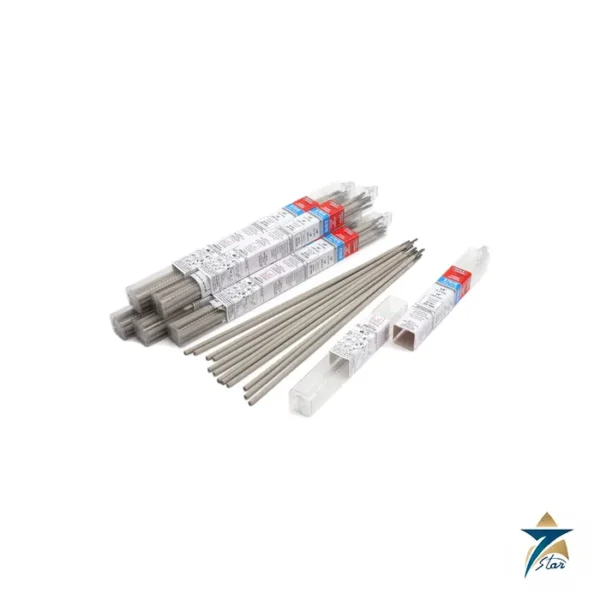
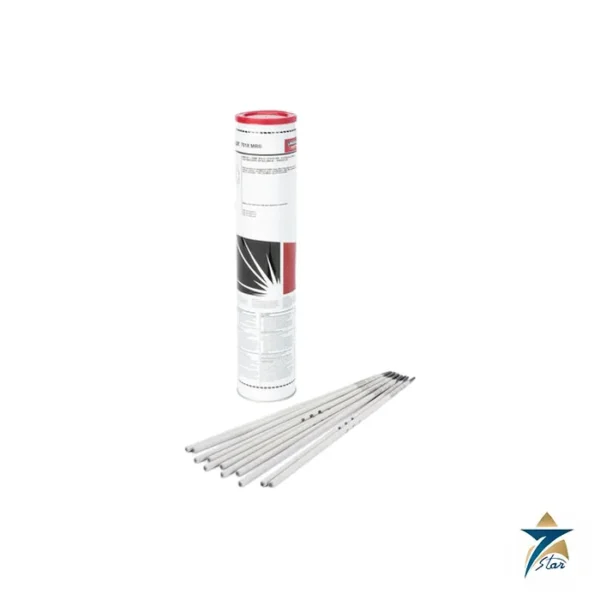
LongTeng E6013 is a general-purpose carbon steel stick electrode that the manufacturer lists under the AWS A5.1 E6013 designation in its welding materials catalogue. It belongs to the family of rutile-covered electrodes that are chosen when a welder wants easy arc striking, a stable arc, a smooth bead and slag that lifts away without a fight. The manufacturer’s own catalogue describes the intended use as welding structures made of low carbon steel, such as small size steel plates, which is exactly the kind of light fabrication work found in workshops, maintenance bays and site repair jobs.
Seven Star LLC supplies LongTeng welding consumables to industrial buyers in Oman and the wider GCC, with availability enquiries and engineering support handled from Muscat. This page summarises what the manufacturer prints for LongTeng E6013, adds clearly labelled general information about the E6013 class, and explains how to request the full datasheet and a test certificate for your project.
The table below reproduces the figures printed for LongTeng E6013 in the LongTeng catalogue page for carbon steel welding electrodes. They are typical values listed by the manufacturer, not a guarantee for any particular batch. For a specific lot, ask for the test certificate that accompanies the shipment.
| Item | Value listed by the manufacturer |
|---|---|
| Conformance | AWS A5.1 E6013 |
| Tensile strength | 485 MPa |
| Yield strength | 380 MPa |
| Elongation | 28.5 % |
| Impact energy | 86 J at 0 °C |
| Type of current | AC or DC+ (electrode positive) |
| Diameters | 2.0, 2.5, 3.2, 4.0 and 5.0 mm |
The catalogue lists the following reference chemistry for LongTeng E6013, in percent: carbon 0.079, manganese 0.38, silicon 0.21, sulphur 0.018, phosphorus 0.024, nickel 0.020, molybdenum 0.005, chromium 0.032 and vanadium 0.010. The low carbon and low manganese levels are consistent with a mild steel deposit intended for ordinary structural and sheet work rather than for high strength or low temperature duty.
| C | Mn | Si | S | P | Ni | Mo | Cr | V |
|---|---|---|---|---|---|---|---|---|
| 0.079 | 0.38 | 0.21 | 0.018 | 0.024 | 0.020 | 0.005 | 0.032 | 0.010 |
The reference current ranges printed for LongTeng E6013 are 40 to 70 A for 2.0 mm, 60 to 100 A for 2.5 mm, 80 to 140 A for 3.2 mm, 140 to 220 A for 4.0 mm and 180 to 230 A for 5.0 mm. As with every stick electrode, these are starting points. Joint position, plate thickness, fit-up and the welder’s technique decide where inside the range the arc runs best.
| Diameter (mm) | 2.0 | 2.5 | 3.2 | 4.0 | 5.0 |
|---|---|---|---|---|---|
| Current (A) | 40 to 70 | 60 to 100 | 80 to 140 | 140 to 220 | 180 to 230 |
The following points describe the E6013 class in general and are not specific LongTeng guarantees. In the AWS A5.1 system the first two digits, 60, indicate a minimum tensile strength class of 60 ksi, the third digit says the electrode can be used in all positions, and the final digits describe a rutile-based covering that works on AC as well as DC. Rutile electrodes are valued for gentle arc starting and restarting, which helps on tack welds and short runs, and for a fine ripple finish that needs little cleaning. Penetration is moderate and light, so they forgive imperfect fit-up on thin sections but are not the first choice for heavy, critical or low temperature load-bearing joints. For those, a low hydrogen class such as the E7018 or E7016 grades from the same catalogue is the usual alternative.
The manufacturer points to low carbon steel structures and small size plates. In practice that includes gates, railings, brackets, light frames, covers, guards, ducting supports, tanks that are not pressure retaining, agricultural and workshop equipment, and general maintenance welding where the base metal is plain mild steel. Because the electrode runs on AC, it also suits older transformer welding sets that are still common in small workshops. Buyers in oil and gas, power and water facilities in the GCC usually use this class for non-critical fabrication, temporary attachments, jigs and repair of mild steel items, while code work on pressure parts calls for the electrode class named in the applicable procedure.
Select LongTeng E6013 when ease of use, appearance and AC capability matter more than impact toughness or hydrogen control. The catalogue shows an impact energy of 86 J at 0 °C for this grade, whereas the low hydrogen grades on the next lines of the same page list results at minus 30 °C. If your drawing or procedure calls for an E7018, E7016 or E7015 type, ask us before substituting, because the covering chemistry, polarity and storage rules differ. For stainless steel work, the catalogue offers separate E308-16 and E309-16 electrodes.
If your site also needs welding machines, you can review the Lincoln Electric Power Wave S500 and the ESAB Rebel EMP 285ic pages, and for plant maintenance parts see the Kobelco Low Level Alarm Pump Assembly. Machine suitability for your stick electrode diameter should be confirmed against the machine documentation.
The manufacturer’s catalogue extract for LongTeng E6013 is attached to this page as a downloadable datasheet. It also covers LongTeng E7018, because both grades share the same catalogue page. Packaging, carton size and lead time are confirmed per enquiry, so please send us the diameter, quantity, delivery location and any certificate requirement. We will respond with a quotation and the documentation available for the batch. No approval or classification society listing is claimed on this page for this grade; if you need one, please ask for the supporting test certificate and we will check it with the manufacturer for you.
In short, LongTeng E6013 gives fabricators a forgiving mild steel electrode with a documented data table. Request the LongTeng E6013 datasheet, compare it with your welding procedure, and ask Seven Star LLC for a batch certificate before you order LongTeng E6013 for a larger job.
Choose the option that best fits your needs to get the fastest response from our team.
Automatically fill the RFQ form with this product's details for a faster process.
Manually enter multiple part numbers, specific brands, or custom requirements.
Reviews
There are no reviews yet.