
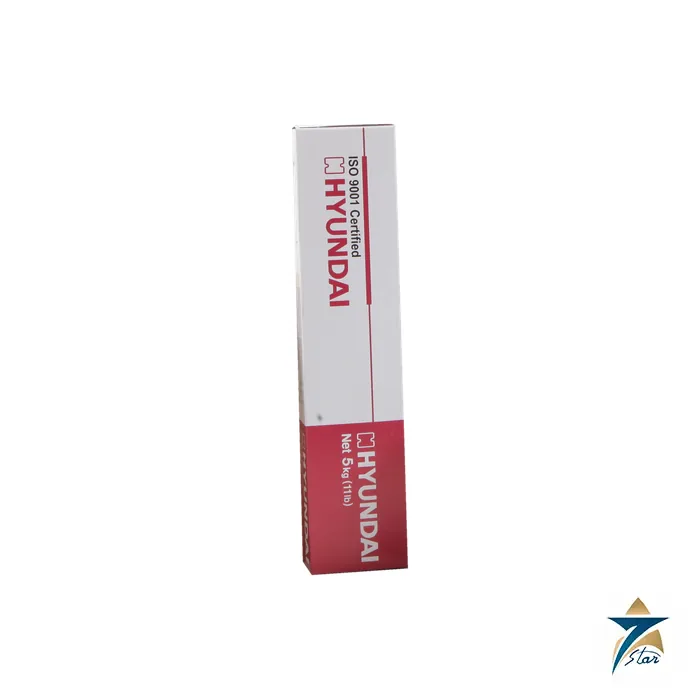
The Hyundai Welding S-8010.P1 is a high-cellulose electrode classified to AWS A5.5 / ASME SFA-5.5 E8010-P1 and EN ISO 2560-A E46 2 ZNi C 2 1. It belongs to the strongest group of Hyundai cellulosic pipe rods, giving an 80 ksi class deposit with a small nickel addition. Hyundai Welding highlights easy vertical-down welding, suitability for all-position pipe work, deep penetration and fast freezing.
Seven Star LLC supplies the Hyundai Welding S-8010.P1 to pipeline builders and piping fabricators across Oman and the GCC, backed by engineering support in Muscat. The data below follows the manufacturer datasheet; explanations of general welding practice are labelled as general.
As general practice, the strength of a pipeline weld should match or exceed the specified minimum strength of the pipe. As line pipe grades rise, E6010 and E7010 deposits may no longer provide enough overmatch for fill and cap passes, and an 80 ksi class cellulosic electrode becomes the natural choice for welders who want to keep the speed of vertical-down stick welding.
The Hyundai Welding S-8010.P1 provides that step up. Its typical chemistry includes 0.80 % Mn and 0.66 % Ni, which together lift strength while keeping toughness. Because it is still a cellulosic, hydrogen-rich process, it must be used with the preheat, interpass and pass-sequence controls set by the applicable pipeline code and your qualified welding procedure.
Typical all-weld-metal composition is 0.17 % C, 0.25 % Si, 0.80 % Mn, 0.017 % P, 0.005 % S, 0.66 % Ni, 0.04 % Cr, 0.01 % Mo and 0.01 % V. Typical mechanical properties are 499 MPa (72 ksi) yield strength, 613 MPa (89 ksi) tensile strength and 26 % elongation, with 47 J (35 ft·lbs) impact toughness at -30 °C (-20 °F). Welding positions are 1G, 2F, 3G and 4G.
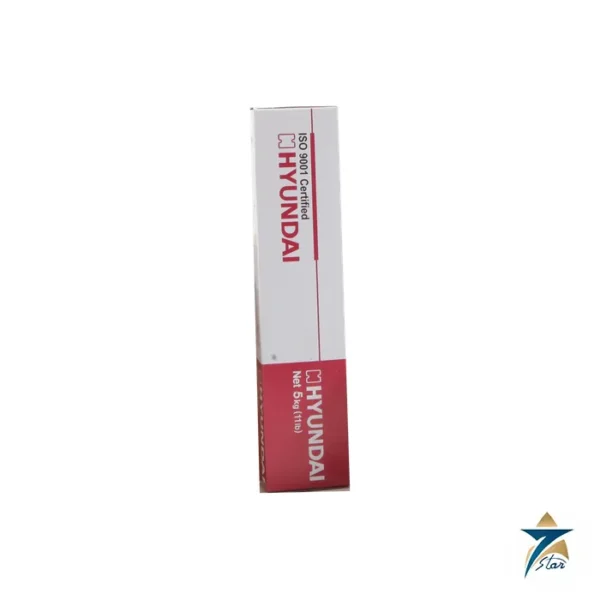
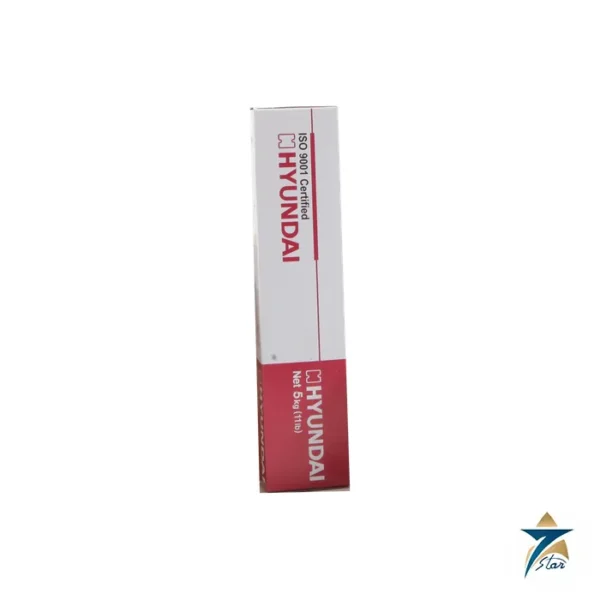
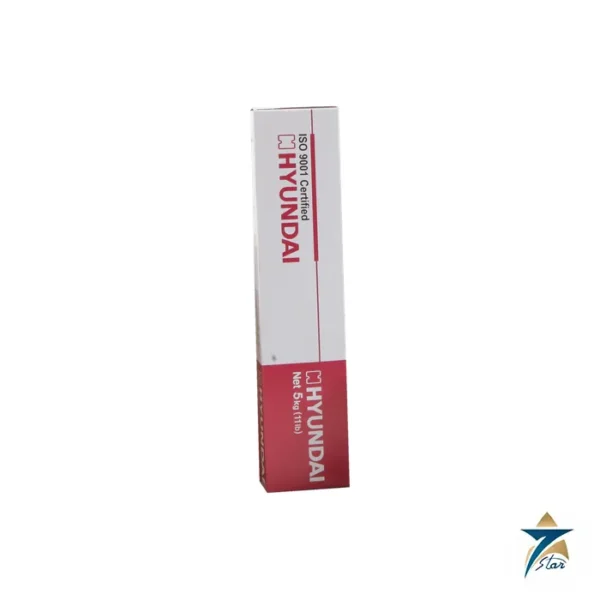
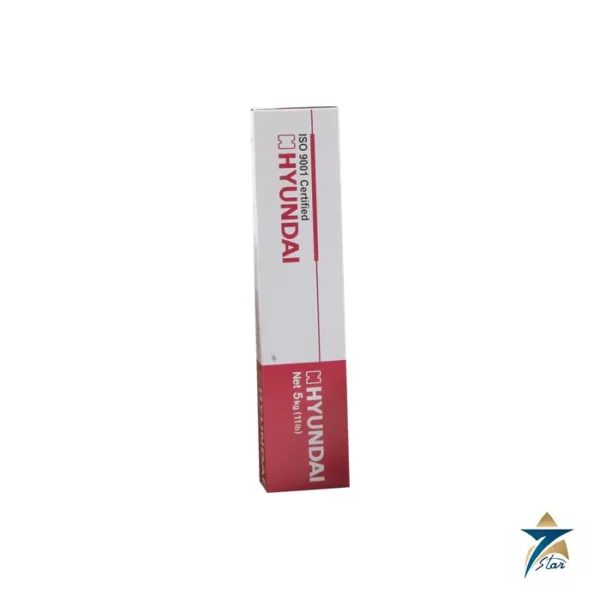
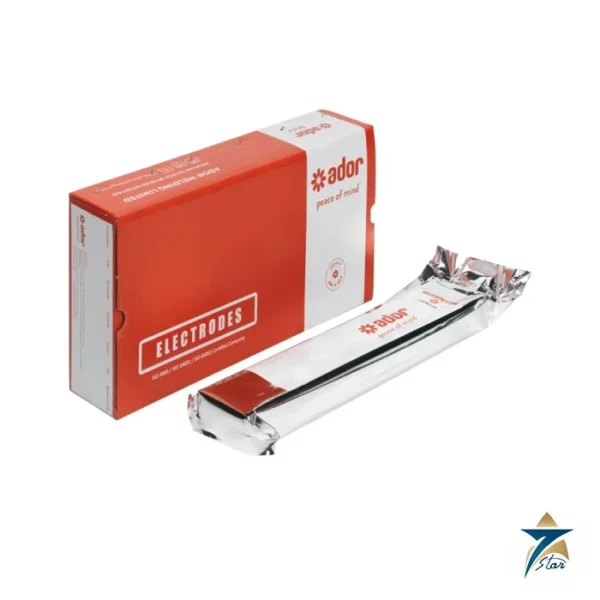
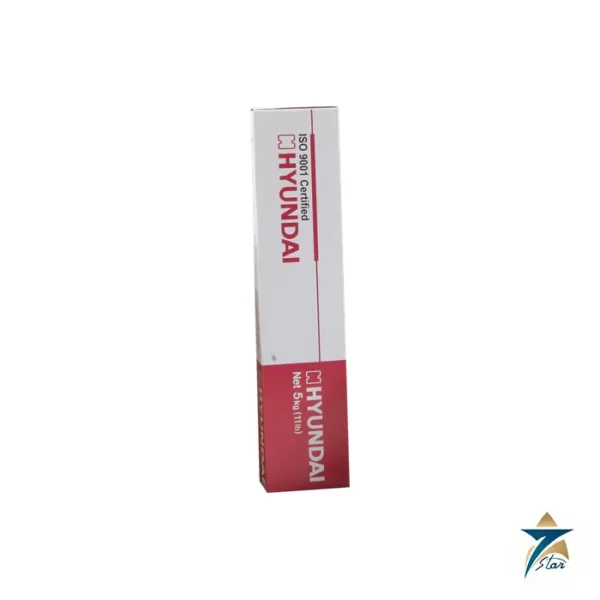
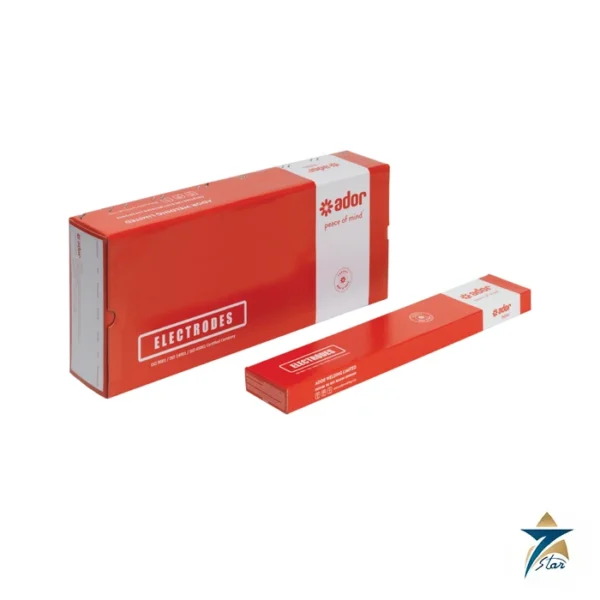
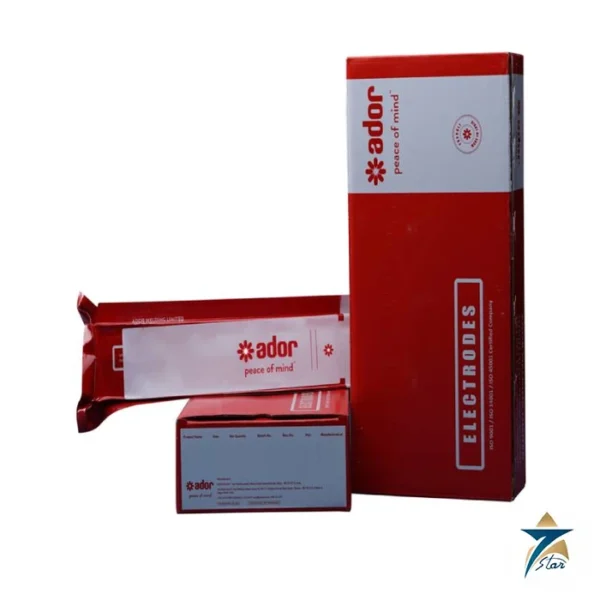
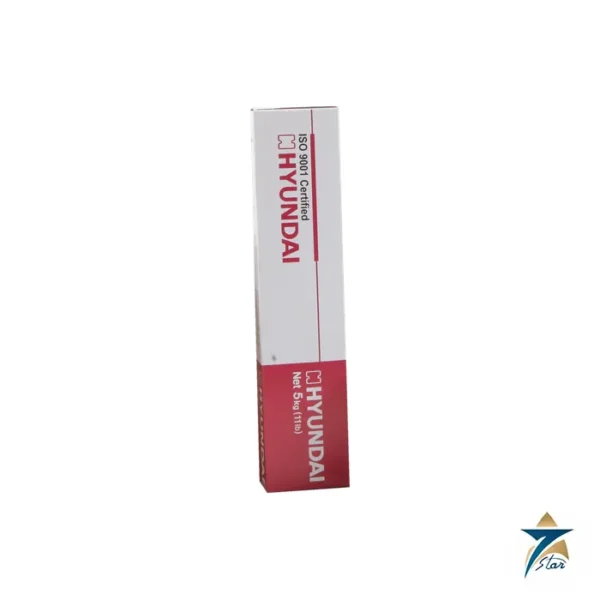
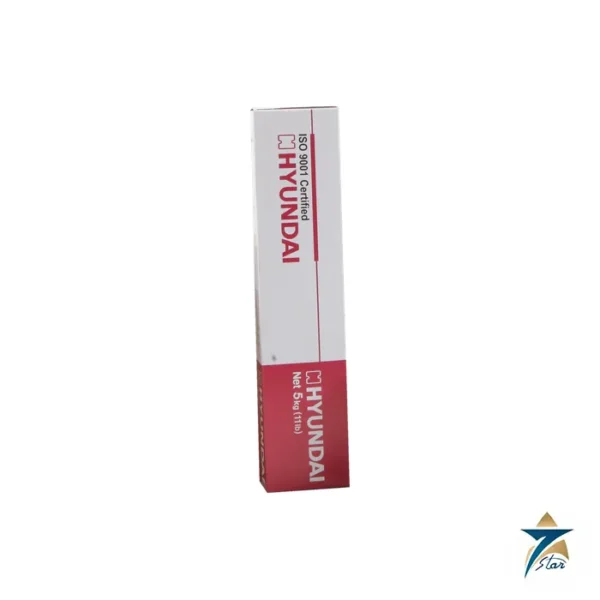
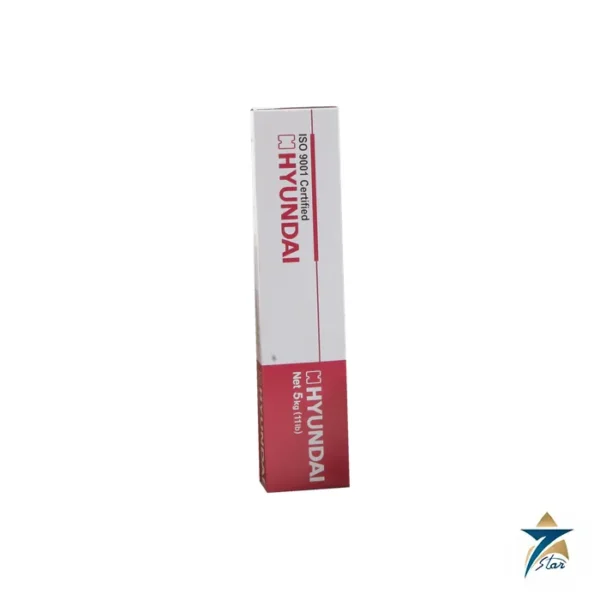
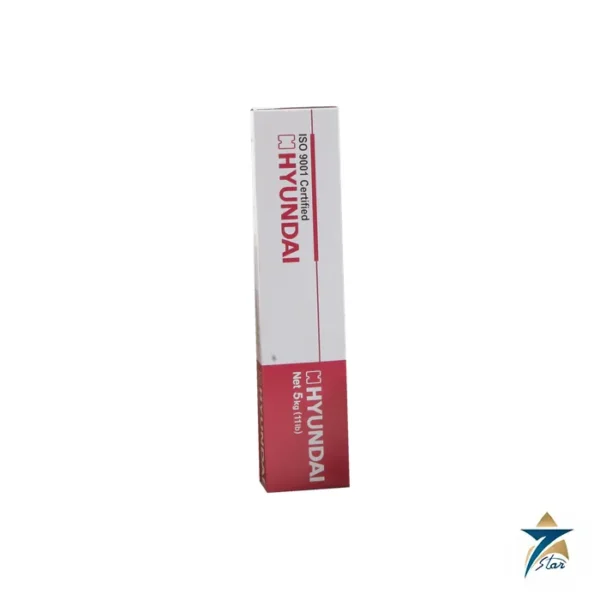
The Hyundai Welding S-8010.P1 is listed in three diameters, 3.2, 4.0 and 5.0 mm, each 350 mm long, so it is aimed at production passes rather than very thin root work. Packaging is a 5 kg packet in standard or vacuum form and a 20 kg carton, and the redrying condition is 70 to 100 °C for 0.5 to 1 hour. No approval marks are printed on this datasheet, so none are claimed here.
The datasheet lists the following characteristics for the Hyundai Welding S-8010.P1:
The Hyundai Welding S-8010.P1 fits high-strength transmission pipelines, compressor and pumping station tie-ins, and fabrication of pipe spools where the material grade calls for an 80 ksi class weld. In Oman, typical users include contractors on gas transmission lines, oil export pipelines and large-diameter water conveyors linking desalination plants with inland reservoirs.
Seven Star LLC can combine the electrode with suitable power sources such as the ESAB Rebel EMP 285ic or the Lincoln Electric Power Wave S500 advanced process welder, and with shop consumables like the LongTeng EL8 submerged arc wire. See the welding electrodes category for other stick electrodes.
General pipeline practice with an 80 ksi cellulosic electrode such as the Hyundai Welding S-8010.P1 starts with joint preparation. Bevel angle, root face and root gap must be consistent so that the forceful arc can produce an even internal bead without burn-through. Line-up clamps are normally kept in place until the specified portion of the root is complete, and the hot pass follows quickly to refine the root and reduce the risk of cracking.
Preheat is another key control. Higher-strength pipe and thicker walls generally need more preheat when a hydrogen-rich process is used, and the required temperature should be measured, not estimated. Interpass temperature, the maximum delay between passes and any requirement for slow cooling are all procedure variables. Seven Star LLC can supply the electrode and help you gather the manufacturer data your welding engineer needs, but the procedure itself must be qualified to the governing code.
Against the S-6010.D (typical 470 MPa yield, 590 MPa tensile) and the S-7010.P1 (typical 421 MPa yield, 523 MPa tensile), the Hyundai Welding S-8010.P1 offers the highest strength, with typical 499 MPa yield and 613 MPa tensile. All three show 47 J at -30 °C in their datasheets and share the same 70 to 100 °C redrying instruction. The S-8010.P1 is the only one of the three whose datasheet polarity field also lists AC.
Typical values from the Hyundai Welding S-8010.P1 datasheet are summarised below.
| Parameter | Specification |
|---|---|
| Model | S-8010.P1 |
| Electrode type | High cellulose (SMAW) |
| AWS / ASME | A5.5 / SFA-5.5 E8010-P1 |
| EN ISO | 2560-A E46 2 ZNi C 2 1 |
| Polarity (datasheet) | AC or DC+ |
| Positions | 1G, 2F, 3G, 4G |
| Application areas | Root pass welding for pipeline, general fabrication |
| Redrying | 70 to 100 °C (158 to 212 °F), 0.5 to 1 hour |
| Chemistry (wt %) | C 0.17, Si 0.25, Mn 0.80, P 0.017, S 0.005, Ni 0.66, Cr 0.04, Mo 0.01, V 0.01 |
| Yield strength | 499 MPa (72 ksi) |
| Tensile strength | 613 MPa (89 ksi) |
| Elongation | 26 % |
| Impact | 47 J (35 ft·lbs) at -30 °C (-20 °F) |
| Packaging | 5 kg (11 lbs) packet, standard or vacuum; 20 kg (44 lbs) carton |
| Diameter mm (in) | Length mm (in) | F and HF (A) | V-up, OH (A) |
|---|---|---|---|
| 3.2 (1/8) | 350 (14) | 75-120 | 65-115 |
| 4.0 (5/32) | 350 (14) | 90-165 | 90-145 |
| 5.0 (3/16) | 350 (14) | 140-220 | 125-185 |
General welding knowledge for cellulosic grades applies: store packets sealed and dry, avoid high-temperature baking, and condition only at the low temperatures the manufacturer gives, which for the Hyundai Welding S-8010.P1 is 70 to 100 °C for up to an hour. Match the polarity, current range and travel technique to the qualified procedure for the pipe grade being welded.
The Hyundai Welding S-8010.P1 manufacturer datasheet is available for download on this page.
For a quotation on the Hyundai Welding S-8010.P1, tell Seven Star LLC the diameters, quantities and inspection documents you need. We support pipeline, utility and fabrication customers in Oman and the GCC from Muscat with engineering guidance.
Choose the option that best fits your needs to get the fastest response from our team.
Automatically fill the RFQ form with this product's details for a faster process.
Manually enter multiple part numbers, specific brands, or custom requirements.
Reviews
There are no reviews yet.