
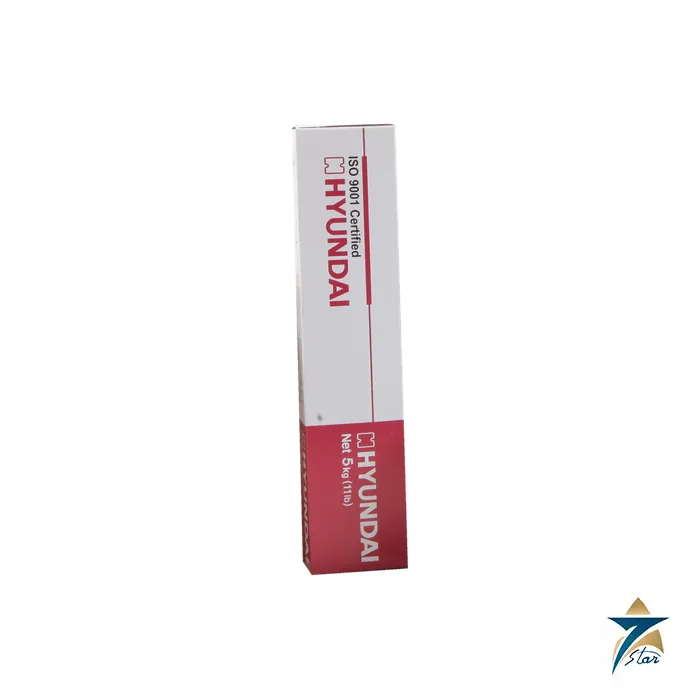
The Hyundai Welding S-6010.D is a high-cellulose stick electrode classified to AWS A5.1 / ASME SFA-5.1 E6010, JIS Z 3211 E4310 and EN ISO 2560-A E38 0 C 2 1. Hyundai Welding describes it as a standard electrode in the pipe welding industry: it gives deep penetration and a highly ductile deposit, which is exactly what a pipeline root pass needs when the joint has a tight land and a narrow gap that must be fused all the way through.
Seven Star LLC supplies the Hyundai Welding S-6010.D to pipeline contractors, fabrication shops and maintenance teams in Oman and the wider GCC, with engineering support from Muscat. This page summarises the manufacturer datasheet for the S-6010.D, which you can download below, and adds general welding guidance that is clearly marked as such.
As general welding knowledge, the flux coating of an E6010 electrode is rich in cellulose. In the arc, the cellulose breaks down into a gas shield, largely hydrogen and carbon monoxide, which produces a forceful, digging arc and only a thin, fast-freezing slag. That combination is why cellulosic rods are the traditional choice for open-root pipe joints: the arc force pushes the weld pool through the root, and the light slag lets the welder see and control a keyhole in every position.
The same hydrogen-rich shield means the deposit is not a low-hydrogen weld. Procedures for the Hyundai Welding S-6010.D therefore normally follow the pipeline code in force on the project, for example controlling preheat, interpass time and the time between root and hot pass, rather than treating the root like a basic low-hydrogen joint. Those limits come from your qualified WPS, not from this product page.
According to the datasheet, the Hyundai Welding S-6010.D runs on DC+ and is rated for 1G, 2F, 3G and 4G, with pipe positions 5G-up and 5G-down applicable. Typical all-weld-metal chemistry is 0.16 % C, 0.25 % Si, 0.65 % Mn, 0.017 % P and 0.009 % S, and the typical mechanical properties are 470 MPa (68 ksi) yield strength, 590 MPa (86 ksi) tensile strength and 28 % elongation, with 47 J (35 ft·lbs) Charpy impact toughness at -30 °C (-20 °F).
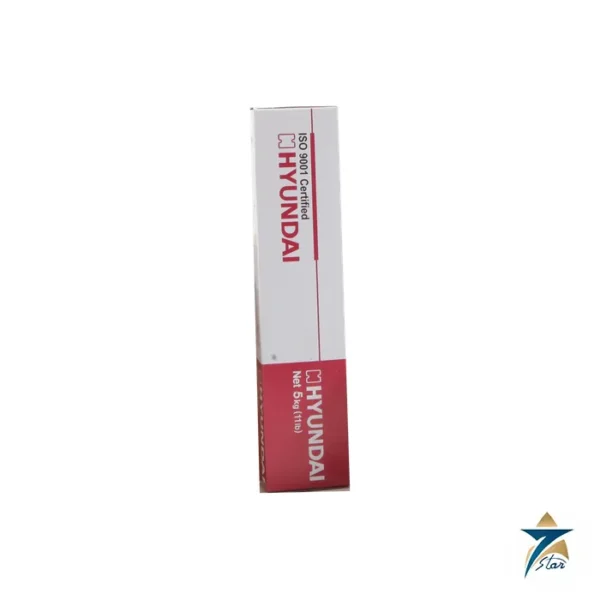
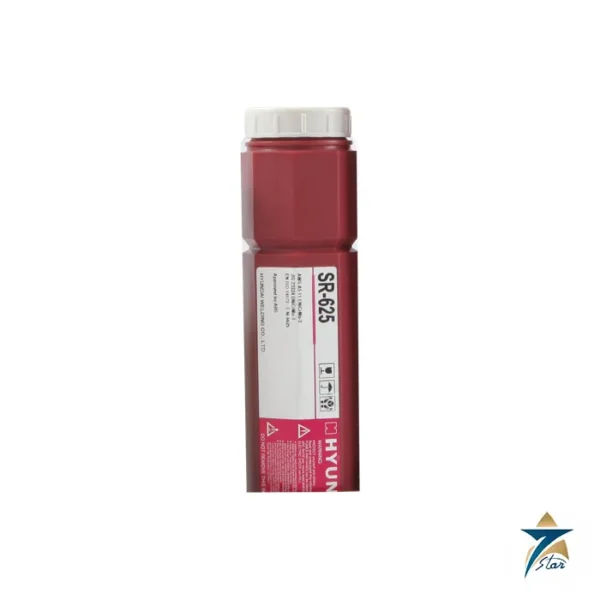
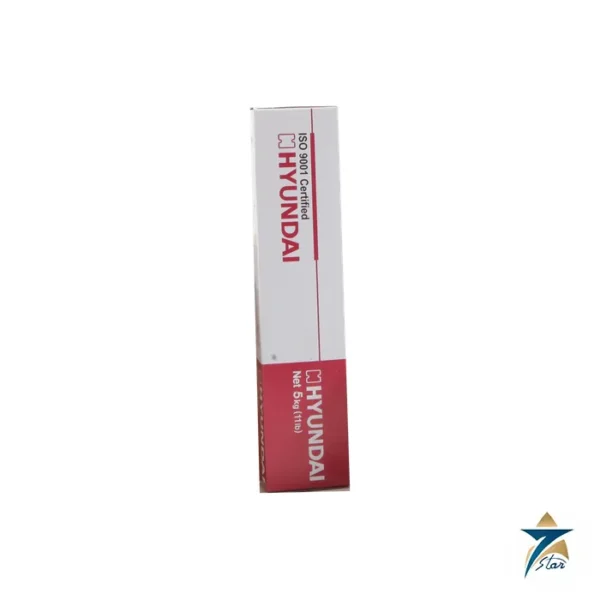
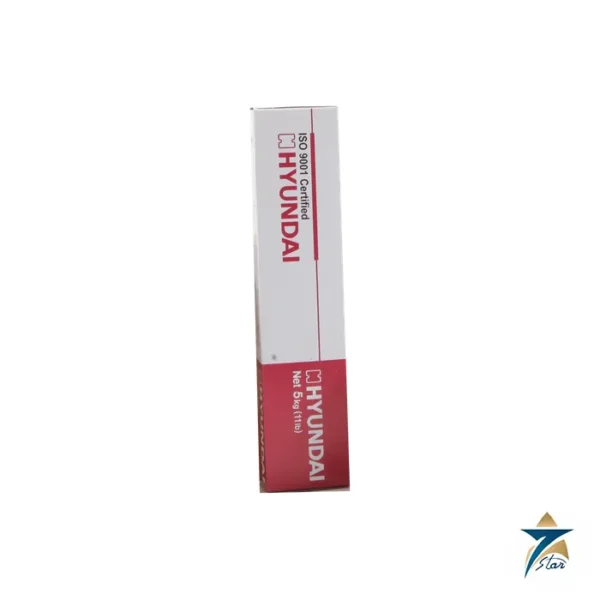
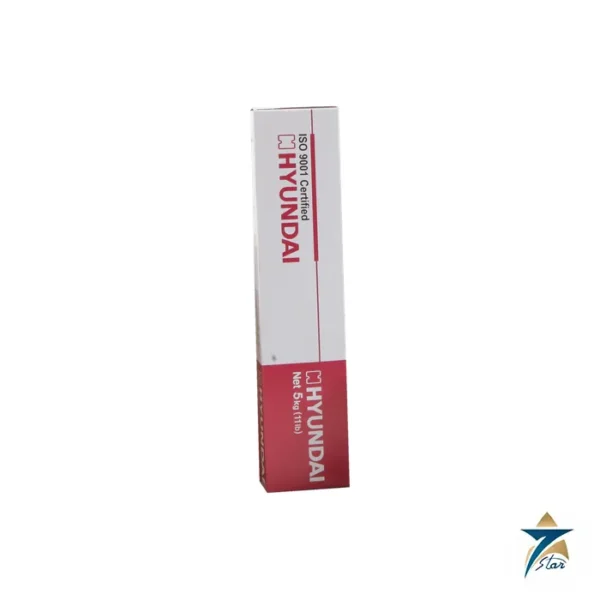
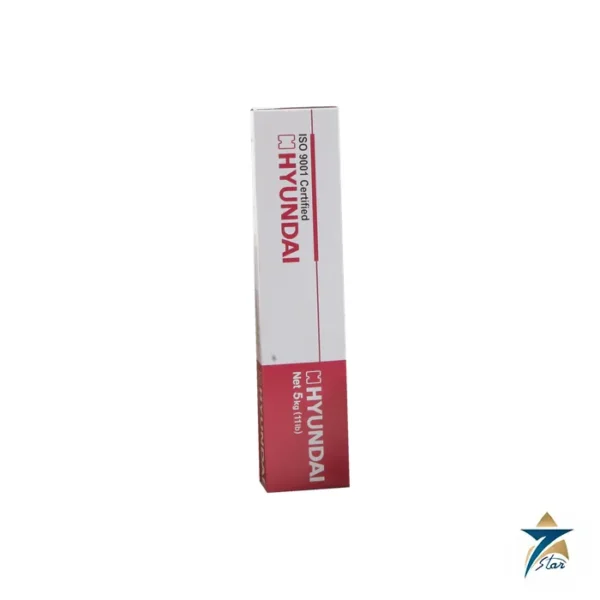
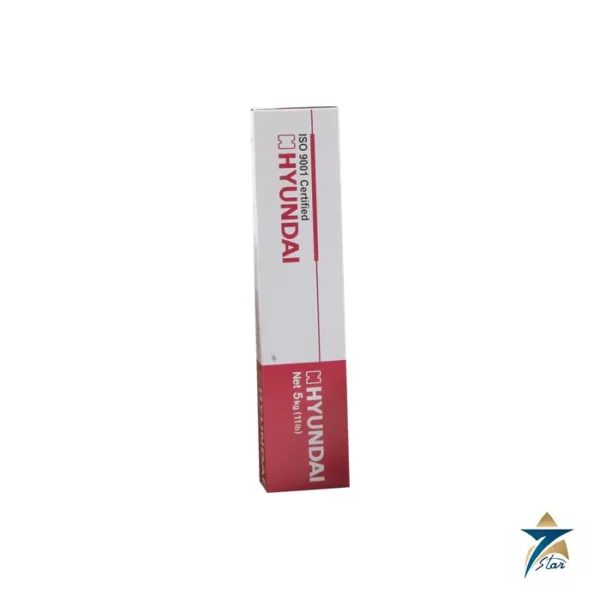
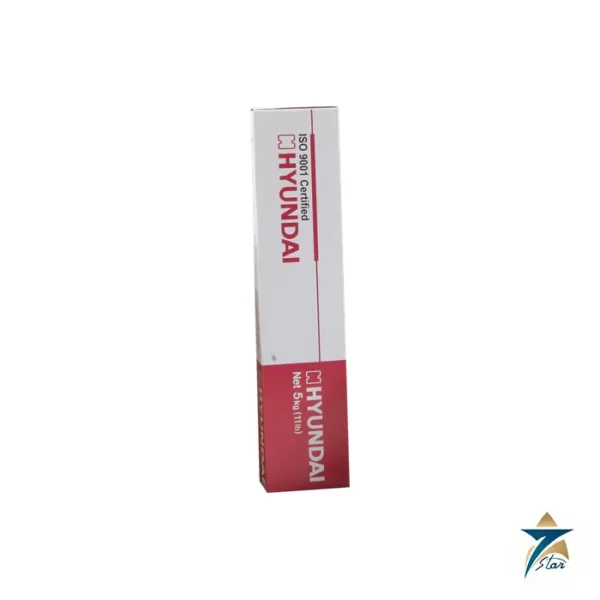
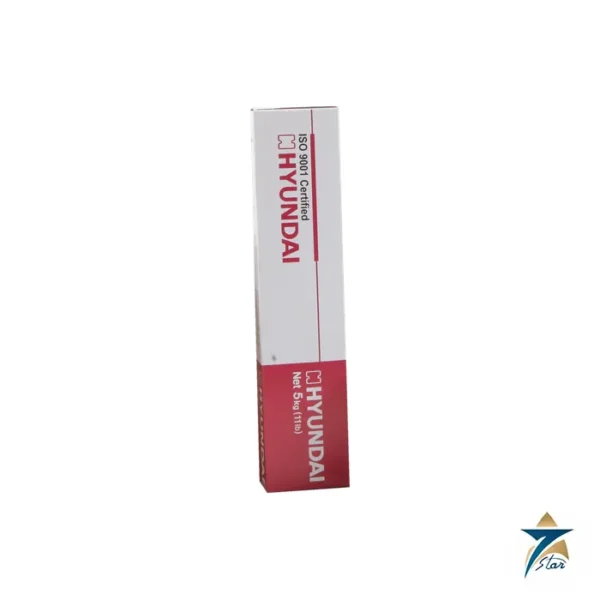
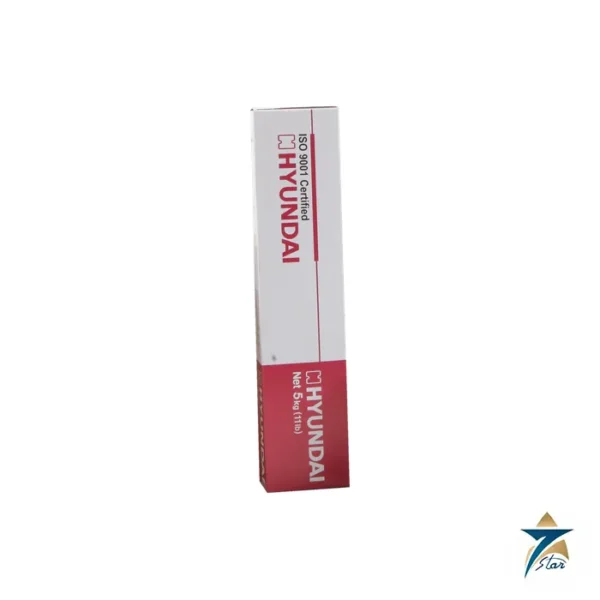
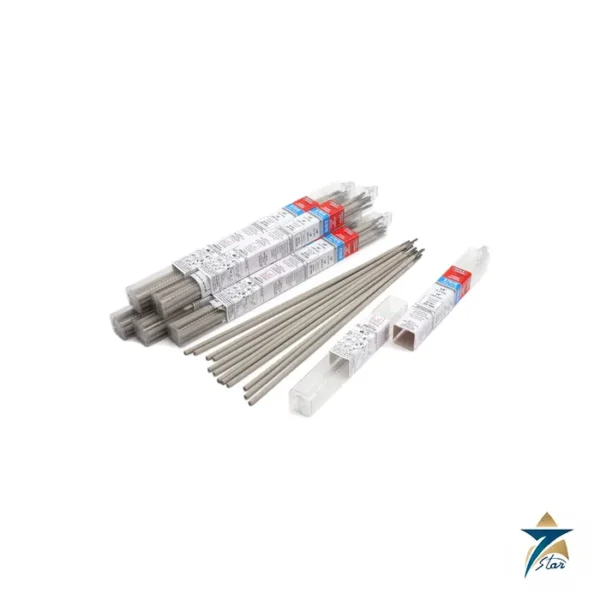
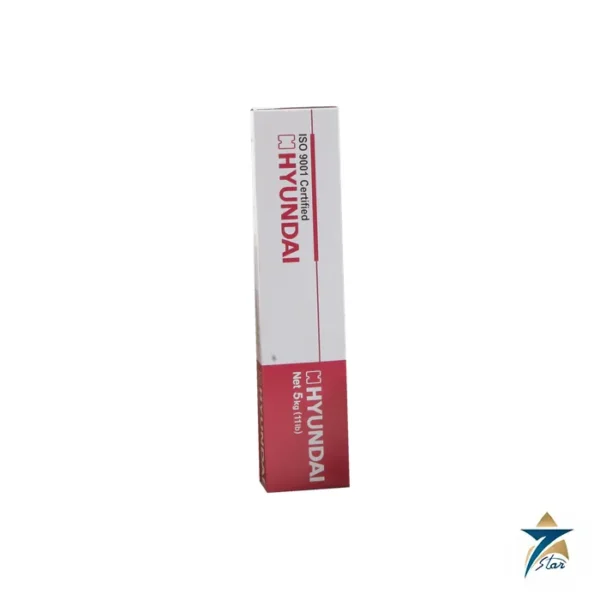
Four diameters are listed, from 2.6 mm to 5.0 mm, with 300 mm length for 2.6 mm and 350 mm for the larger sizes. The rods are packed in standard or vacuum packets of 5 kg (11 lbs) and cartons of 20 kg (44 lbs). Unlike low-hydrogen rods, cellulosic electrodes depend on some retained moisture in the coating, so the datasheet redrying condition is only 70 to 100 °C for 0.5 to 1 hour, a gentle warm-up rather than a high-temperature bake.
The main characteristics of the Hyundai Welding S-6010.D, as stated in the manufacturer datasheet, are:
The datasheet lists pipeline and general fabrication as the application areas for the Hyundai Welding S-6010.D. In practice that covers root passes on carbon steel transmission and flowline pipe, water transmission lines, piping spools that are fitted with an open root, and structural joints where the welder needs a strong, penetrating arc on plate that has not been perfectly prepared. Cross-country gas and oil lines, gathering systems and water projects across Oman are typical users of this kind of electrode.
Many contractors pair a Hyundai Welding S-6010.D root with a different process for fill and cap, for example a low-hydrogen electrode or a wire process. Seven Star LLC supplies the full welding package, from the Hyundai Welding S-6010.D for the root to power sources such as the ESAB Rebel EMP 285ic multi-process welder and the Lincoln Electric Power Wave S500, and wires such as the Lincoln Electric SuperArc L-59 ER70S-6. You can browse more products in our welding electrodes category.
The table below reproduces the typical values published in the Hyundai Welding S-6010.D datasheet. Typical values are not guaranteed minimums; check the classification limits for acceptance.
| Parameter | Specification |
|---|---|
| Model | S-6010.D |
| Type | Cellulosic stick electrode (SMAW) |
| AWS / ASME | A5.1 / SFA-5.1 E6010 |
| JIS | Z 3211 E4310 |
| EN ISO | 2560-A E38 0 C 2 1 |
| Polarity | DC+ |
| Positions | 1G, 2F, 3G, 4G; 5G-up and 5G-down applicable |
| Redrying | 70 to 100 °C (158 to 212 °F), 0.5 to 1 hour |
| Typical chemistry (wt %) | C 0.16, Si 0.25, Mn 0.65, P 0.017, S 0.009 |
| Yield strength | 470 MPa (68 ksi) |
| Tensile strength | 590 MPa (86 ksi) |
| Elongation | 28 % |
| Impact toughness | 47 J (35 ft·lbs) at -30 °C (-20 °F) |
| Packaging | Standard/vacuum packet 5 kg (11 lbs), carton 20 kg (44 lbs) |
| Diameter mm (in) | Length mm (in) | F and HF (A) | V-up, OH (A) |
|---|---|---|---|
| 2.6 (3/32) | 300 (12) | 50-75 | 50-75 |
| 3.2 (1/8) | 350 (14) | 75-125 | 75-125 |
| 4.0 (5/32) | 350 (14) | 90-165 | 90-165 |
| 5.0 (3/16) | 350 (14) | 140-220 | 140-220 |
As general guidance, Hyundai Welding S-6010.D rods, like other cellulosic electrodes, should be kept in their sealed packets until use and protected from rain and condensation, which is a real concern in coastal sites around Muscat, Sohar and Duqm. They must not be baked at the high temperatures used for basic electrodes, because over-drying the coating changes the arc and can reduce penetration. If redrying is needed, use the manufacturer setting of 70 to 100 °C for 0.5 to 1 hour.
The official Hyundai Welding S-6010.D datasheet is attached to this page. It covers classification, features, approvals, typical chemistry, mechanical properties, welding parameters and packaging for this exact electrode.
To order the Hyundai Welding S-6010.D, send Seven Star LLC your required diameters, quantities and any certificate requirements for a formal quotation. Our team in Muscat supports pipeline and fabrication customers across Oman and the GCC with the manufacturer datasheet and practical engineering advice on matching electrodes, wires and welding equipment.
Choose the option that best fits your needs to get the fastest response from our team.
Automatically fill the RFQ form with this product's details for a faster process.
Manually enter multiple part numbers, specific brands, or custom requirements.
Reviews
There are no reviews yet.