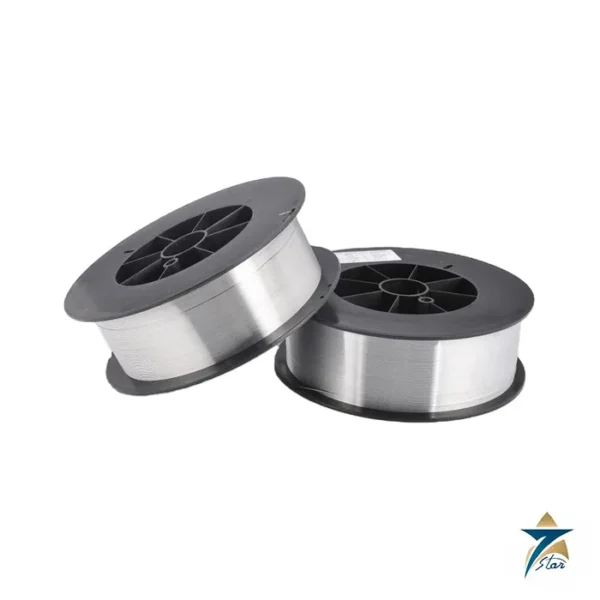
Hyundai Welding SF-71 E71T-1C Flux-Cored Wire

Description

All-position rutile cored wire for CO2 welding of 490 MPa steel

The Hyundai Welding SF-71 is a flux-cored wire classified AWS A5.20 / ASME SFA-5.20 E71T-1C, EN ISO 17632-A T 42 0 P C1 1, JIS Z 3313 T49J 0 T1-1 C A-U and KS D7104 YFW-C50DR. It is designed for welding with 100% CO2 shielding gas, on DC positive polarity, and the manufacturer lists the 1G, 2F, 3G and 4G positions, which covers flat, horizontal fillet, vertical and overhead work.

Hyundai Welding describes good performance and low spatter, with a smooth and stable arc and a fast-freezing slag. The application areas given are shipbuilding, general fabrication and structural fabrication.

Technical specifications

Parameter Specification
Manufacturer / product Hyundai Welding / SF-71
Process FCAW, gas-shielded, rutile
AWS classification A5.20 / SFA-5.20 E71T-1C
EN ISO classification 17632-A T 42 0 P C1 1
JIS classification Z 3313 T49J 0 T1-1 C A-U
Shielding gas / polarity 100% CO2 / DC +
Welding positions 1G, 2F, 3G, 4G
Weld metal, typical % (100% CO2) C 0.04, Si 0.49, Mn 1.29, P 0.013, S 0.011
Yield strength 548 MPa (79 ksi)
Tensile strength 582 MPa (84 ksi)
Elongation 28%
Impact toughness 75 J at 0 °C; 40 J at -20 °C
Current, 1.2 mm 110-280 A
Current, 1.4 mm 110-280 A
Current, 1.6 mm 120-300 A
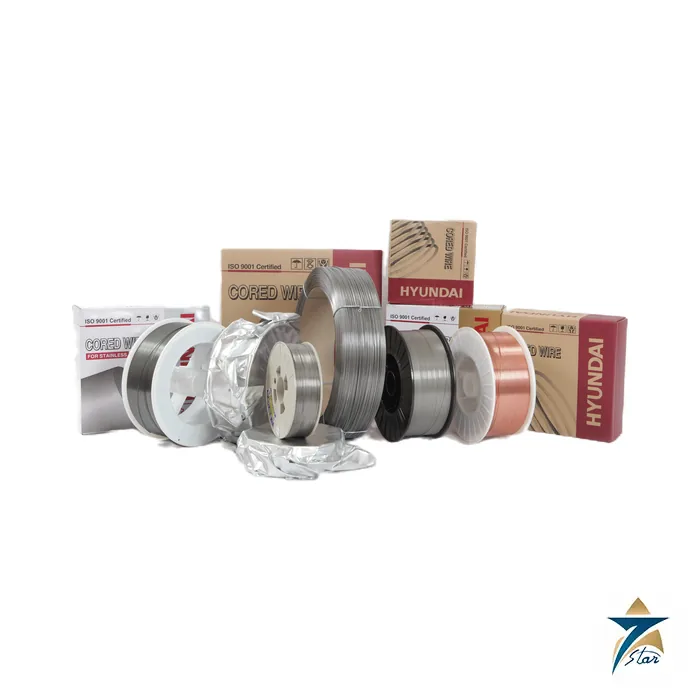
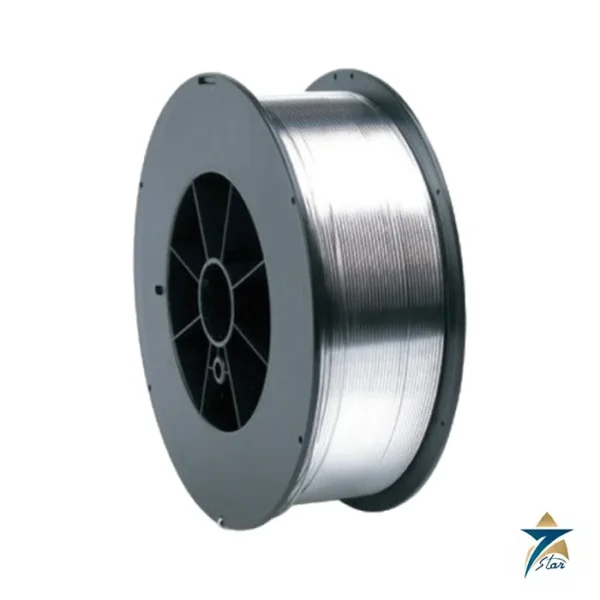
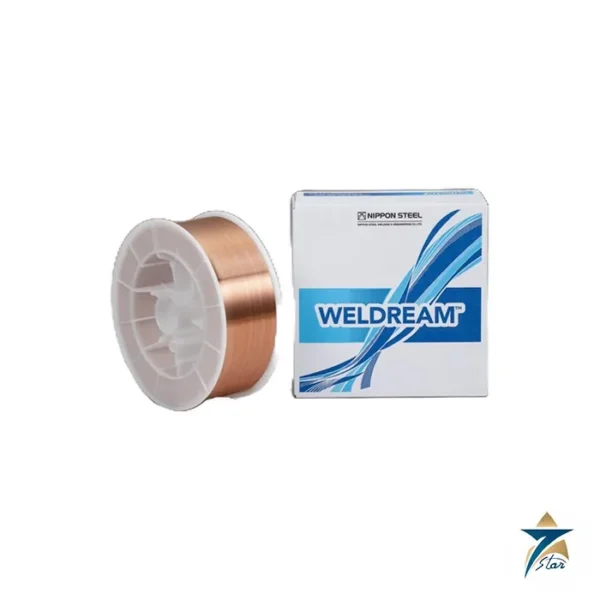
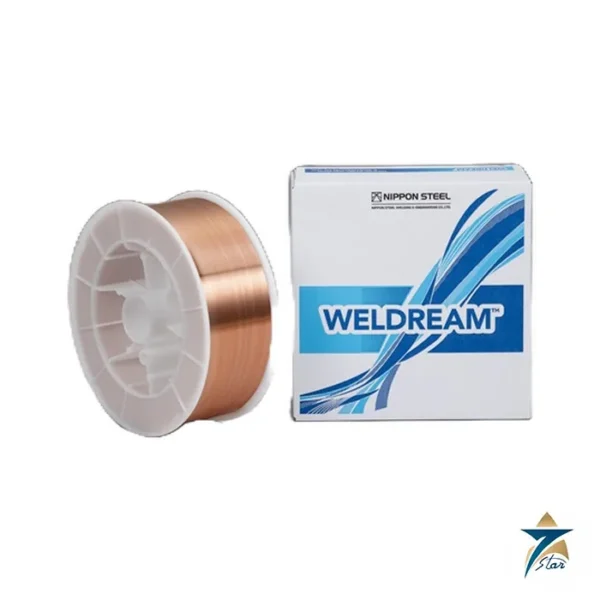
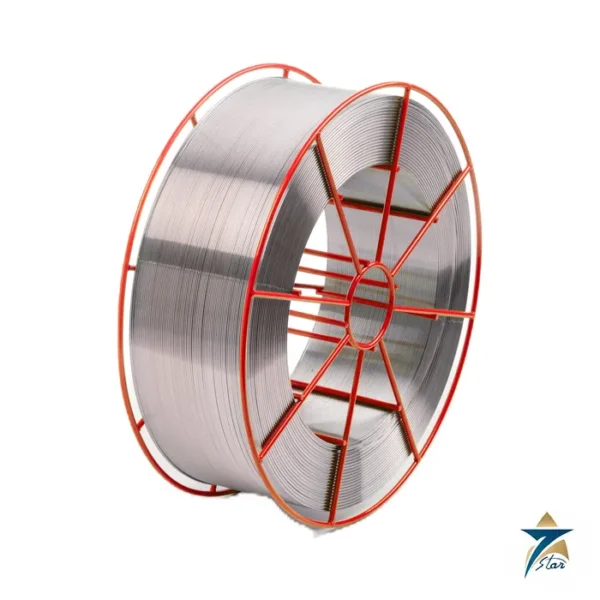
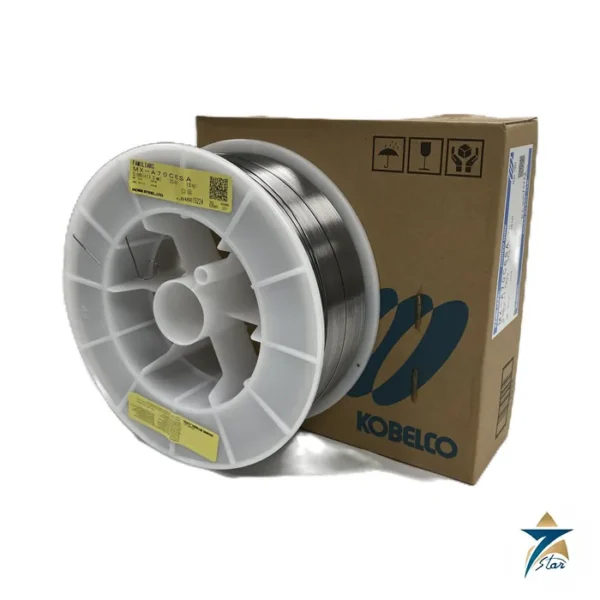
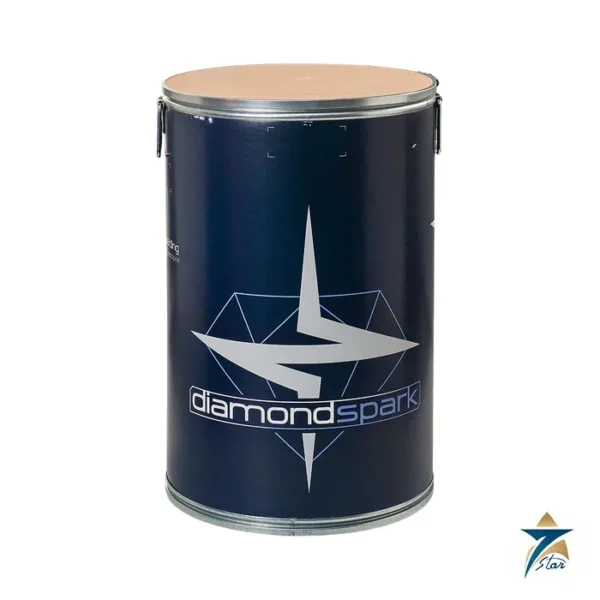
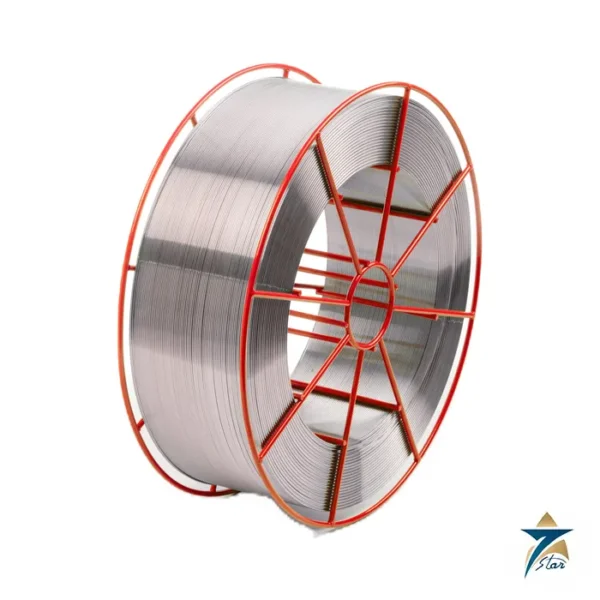
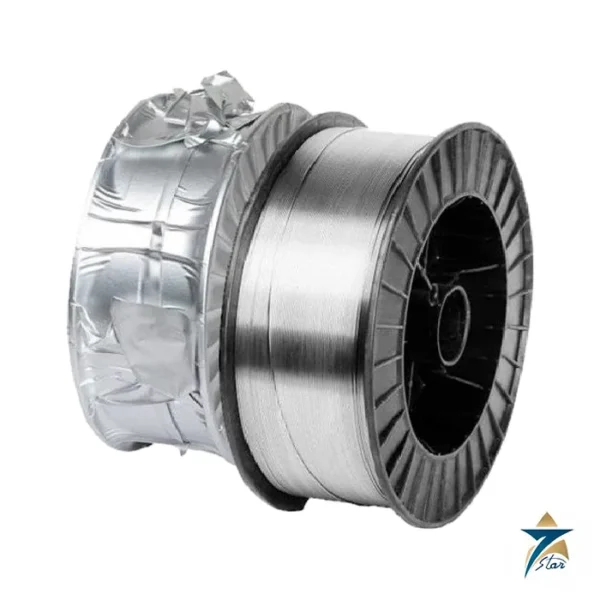
Packaging Spool 5, 12.5, 15 and 20 kg; drum 100, 200 and 250 kg
Approvals listed ABS, BV, CCS, CR, DNV, KR, LR, NK, RINA, RS, CWB, CE, TUV

Where E71T-1C is the right classification

In AWS A5.20, E71T-1C is the general-purpose rutile flux-cored wire used with 100% CO2: the 7 denotes a 70 ksi minimum tensile strength, the 1 means all-position capability, the T that it is a tubular wire, and the 1C the usage group with CO2 gas. Its slag system is fast-freezing, so the pool is supported in the vertical and overhead positions, while the wire is also efficient on flat and horizontal work.

The impact figures on the Hyundai Welding sheet, 75 J at 0 °C and 40 J at -20 °C, are typical for this class and suit ordinary structural service. Where a project specifies a lower test temperature, a nickel-bearing or low-temperature cored wire from the same manufacturer is the better choice, so check the project specification before choosing.

Setting up the wire

Use a gas flow suited to the nozzle and keep shielding free of draughts, since porosity is the first sign of lost gas cover with CO2. Select the 1.2 mm size for thin plate and position welding, and 1.4 or 1.6 mm for thicker flat and horizontal joints. If heat input is raised too far the weld metal toughness falls, so keep to the preheat and interpass limits of the procedure you are qualifying.

How the SF-71 E71T-1C flux-cored wire works

A flux-cored wire is a tubular steel sheath filled with a powdered core. In the SF-71 the core is rutile-based, so when the arc melts the wire it forms a slag that covers the weld pool and solidifies quickly. The 100% CO2 shielding gas protects the arc and the molten metal from the surrounding air, while the slag shapes the bead and supports it when welding vertical or overhead. Because the wire is fed continuously from a spool or drum, the welder does not stop to change electrodes, and arc-on time is far higher than with stick welding.

The DC positive (DCEP) connection places the wire at the positive terminal. With CO2 gas, this gives a stable globular-to-spray-like transfer from a rutile wire, which is why Hyundai Welding describes the arc as smooth and stable with low spatter.

Typical E71T-1C wire jobs

  • Hull blocks, decks and bulkheads in shipbuilding and ship repair yards.
  • Beams, columns, bracing and base plates in structural steel fabrication.
  • Fillet and butt joints on general carbon steel fabrication, skids and frames.
  • Positional work in the 3G and 4G positions where a stick electrode would be slower.

Selecting and ordering the SF-71

The table above lists three diameters. The current ranges overlap, so the choice usually depends on plate thickness, welding position and the capacity of the wire feeder:

Diameter Current range (manufacturer) Typical use
1.2 mm 110–280 A Positional work, thinner plate, root and fill passes
1.4 mm 110–280 A General fabrication with higher deposition
1.6 mm 120–300 A Flat and horizontal work on thicker plate

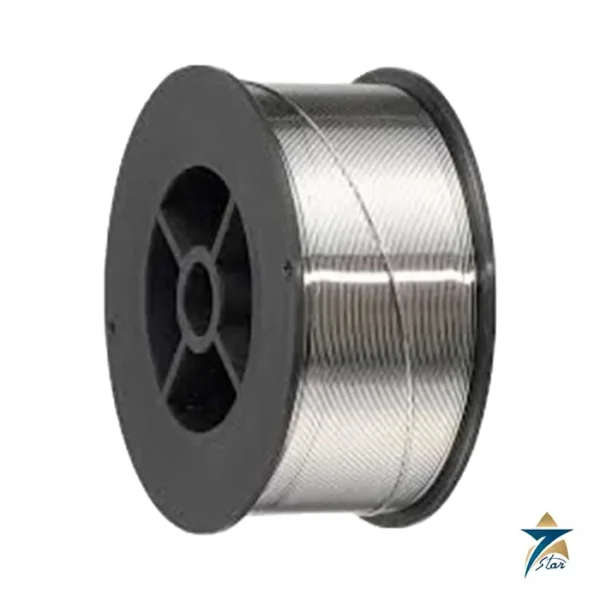
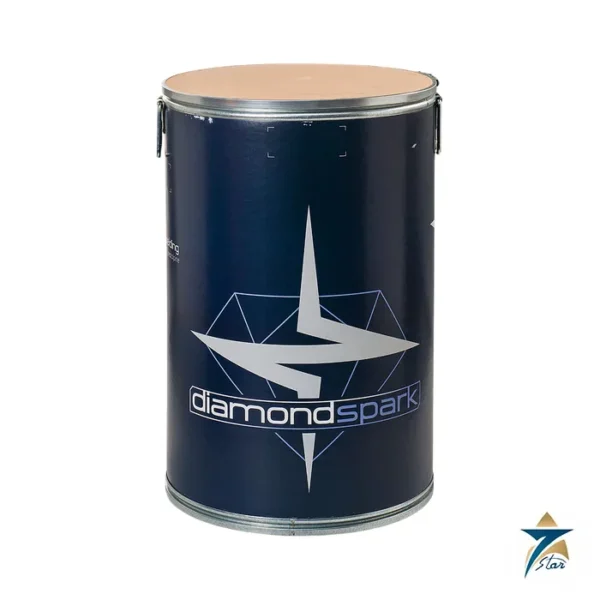
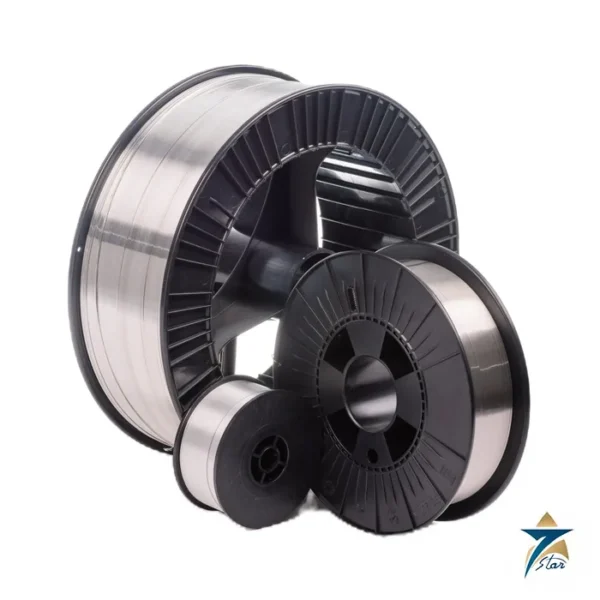
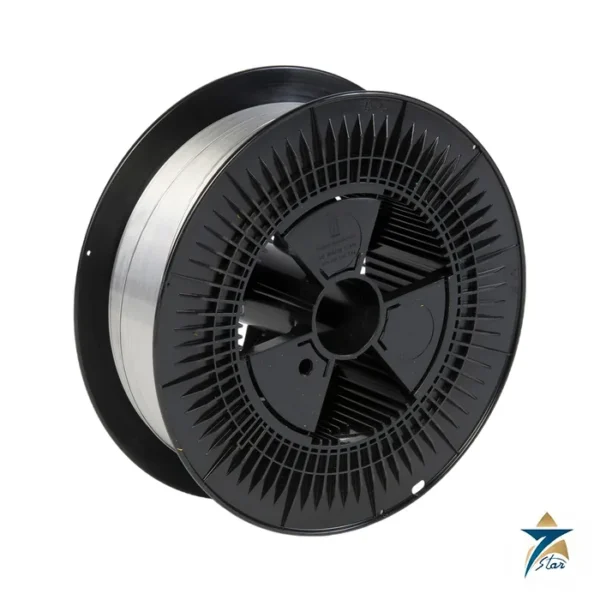
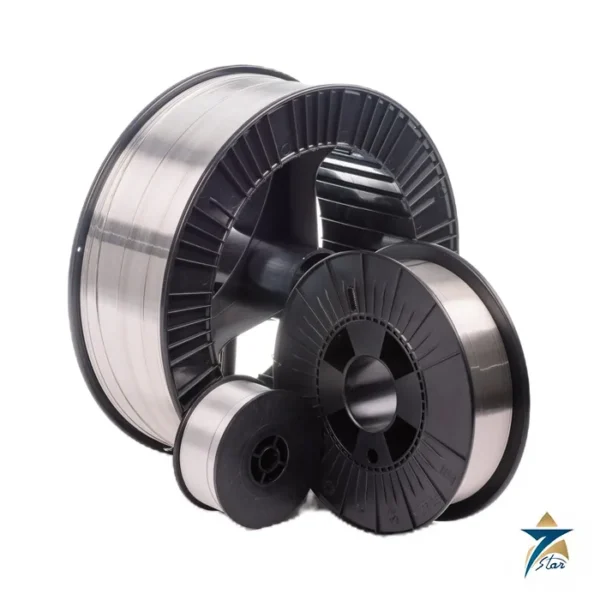
Spools of 5, 12.5, 15 and 20 kg suit portable and shop feeders. The 100, 200 and 250 kg drums suit high-volume lines and mechanised carriages, because fewer changes mean less downtime. When you order, state whether a classification society approval or a specific certificate type is required for the project, since the approval list above covers several societies and the paperwork has to match the job.

Storage, handling and good practice

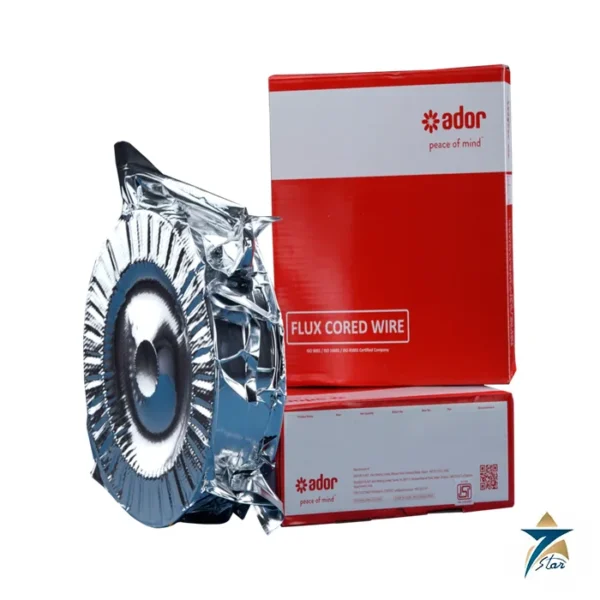
Keep the wire in its original packaging until use and store it in a dry place. Flux-cored wires can pick up moisture, which shows up as porosity or as worm tracks on the bead surface. If a spool will stand on the feeder overnight, cover it or return it to its bag. Check that the feed rolls are the knurled type intended for cored wire and are not over-tensioned, since a crushed wire feeds poorly and the core can spill.

  • Clean mill scale, rust, paint and oil from the joint before welding.
  • Hold a consistent stick-out and keep the gas nozzle free of spatter.
  • Remove the slag fully between passes in multi-pass welds.
  • Follow the preheat and interpass temperatures in your welding procedure specification.

SF-71 flux-cored wire for projects in Oman and the GCC

Shipyards, steel structure fabricators and maintenance contractors in Oman and the wider GCC use E71T-1C rutile wires because they handle all-position work on site and in the shop. Seven Star LLC supplies the Hyundai Welding SF-71 across Oman and the GCC. Our team can help confirm the correct ordering code for the diameter and pack size you need.

Documents and quotation

The official Hyundai Welding SF-71 catalog sheet is available from the link below. Related consumables are listed in our Flux-Cored Welding Wire category. A published stick-electrode page from the same manufacturer is Hyundai Welding S-7018.1.

To request a quote, send the diameter, pack type, quantity and any certificate or approval requirement.

Hyundai SF-71: Selection Notes

The Hyundai Welding SF-71 is an E71T-1C flux-cored wire for CO2 welding.

  • Diameter – wire diameter.
  • Shielding gas – CO2 gas.
  • Spool – spool size and weight.

Send the diameter and quantity, and we quote the matching wire.

Datasheets & Documents
  • PDF Datasheet Hyundai Welding SF-71 product catalog sheet Download
Reviews (0)

Reviews

There are no reviews yet.

How would you rate this product?

It takes about 10 seconds — just tap a star. Your email is never published.

About brand

Hyundai Welding is a South Korean manufacturer of welding consumables and welding equipment, incorporated on 3 September 1975 as Seohan Development Co., Ltd. It was set up to supply the Korean shipbuilding industry and now serves fabrication, offshore, power and petrochemical work. The company is headquartered in Seoul, describes itself as a privately owned family business, and works closely with other companies of the Hyundai business group.

Seven Star LLC lists Hyundai Welding electrodes and wires for carbon steel, chrome-moly, stainless, duplex and nickel alloy work and supplies them to fabricators and maintenance teams in Oman, matched to the classification written in the welding procedure.

Hyundai Welding company profile

Founded 3 September 1975, as Seohan Development Co., Ltd.
Headquarters Seoul, South Korea
Original market Welding consumables for Korean shipbuilding
Ownership Privately owned family business, linked to the Hyundai business group
Classification system Electrodes and wires sold under AWS classifications (for example E7024, E71T-1C, E2209-16, ENiCrMo-3)
Product families Carbon steel, low-hydrogen and cellulosic pipe electrodes, chrome-moly and stainless electrodes, duplex and super duplex electrodes, nickel alloy electrodes and MIG wires, flux-cored and solid wires, submerged arc wires and fluxes

Milestones

  • 1975: The company is incorporated as Seohan Development Co., Ltd.
  • 1970s: Its first market is welding consumables for Korean shipyards.

Hyundai Welding grades listed on this page

The product names follow a simple pattern: the letters show the consumable type and the number echoes the AWS class.

  • S- covered electrodes: S-7018.1 (E7018-1), S-7018.W for weathering steel, S-7010.P1 and S-8010.P1 cellulosic pipeline grades
  • Chrome-moly: S-8018.B2, S-9018.B3 and S-9015.B9 for P91, plus SC-91B3 flux-cored wire
  • Stainless and duplex: S-308L.17, S-309L.17, S-2209.16 and S-2594.16
  • Alloy 625: SR-625 electrode and SMT-625 MIG wire

Where these consumables are used

The mix above maps closely to process plant and pipeline work. Cellulosic E7010-P1 and E8010-P1 electrodes are for root and fill passes on line pipe. The B2, B3 and B91 grades serve steam piping, headers and heaters that run hot. E309L joins stainless to carbon steel, E2209 and E2594 cover duplex and super duplex piping, and the 625 fillers are used for overlay and for joining nickel alloys.

Hyundai Welding products we list

Family Examples
Welding Electrodes Hyundai S-2209.16 E2209-16 Duplex Stainl…, Hyundai S-2594.16 E2594-16 Super Duplex…, Hyundai S-308L.17 E308L-17 Stainless Ste…, Hyundai S-309L.17 E309L-17 Dissimilar St…, Hyundai SR-625 ENiCrMo-3 Nickel Alloy 62…, S-7018.1 E7018-1 Low Hydrogen Electrode, S-7018.W E7018-W1 Weathering Steel Elect…, S-7024.F E7024 High-Recovery Electrode and 3 more
Cellulosic Pipeline Electrodes S-6010.D E6010 Cellulosic Pipeline Elect…, S-7010.P1 E7010-P1 Cellulosic Pipe Elect…, S-8010.P1 E8010-P1 Cellulosic Pipeline E…
Flux-Cored Welding Wire Hyundai SC-91B3 E91T1-B3C Chrome-Moly Fl…, SF-71 E71T-1C Flux-Cored Wire
Solid Welding Wire Hyundai SMT-625 ERNiCrMo-3 Nickel Alloy…

Ordering Hyundai Welding consumables: what we need

State the Hyundai product name and the AWS classification together, since the procedure qualification record is written against the class. Add the diameter, the quantity in kilograms, the packing you prefer, and the shielding gas for wires. Tell us which test certificate your quality plan asks for, and note any impact temperature, hardness or post-weld heat treatment condition. GCC project specifications often add client approval lists, so mention those as well.

Facts checked against Hyundai Welding's company brochure and Korean company registry profiles, October 2026.

FAQ

Questions about the Hyundai Welding SF-71 E71T-1C Flux-Cored Wire

Answers from our engineering team on installation, compatibility and integration.

01What is the AWS classification of Hyundai Welding SF-71?
AWS A5.20 / ASME SFA-5.20 E71T-1C, with EN ISO 17632-A T 42 0 P C1 1.
02Which shielding gas does SF-71 use?
100% CO2 on DC positive polarity.
03Which positions are listed?
1G, 2F, 3G and 4G.
04What typical impact toughness is stated?
75 J at 0 C and 40 J at -20 C.
05Which diameters are listed?
1.2, 1.4 and 1.6 mm.