Overview
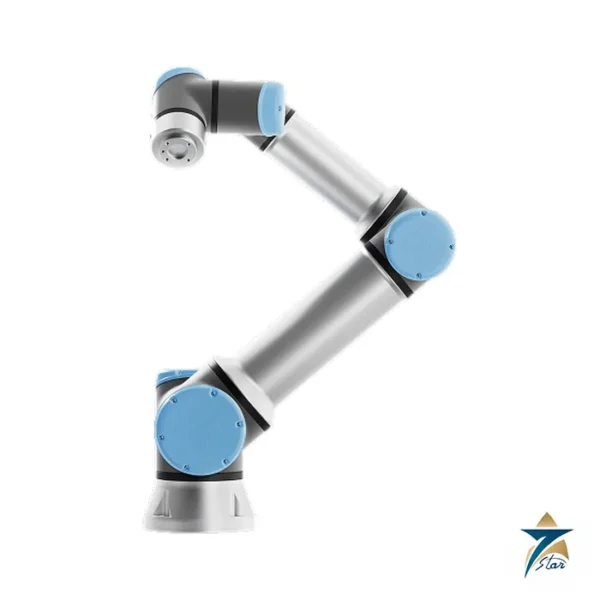
A 6-axis articulated robot is a highly versatile automation solution widely used across manufacturing and industrial processes. With its ability to move along six degrees of freedom, this type of robot can position and orient a tool or part almost anywhere within its working envelope, performing complex and precise tasks that traditional fixed automation cannot easily handle. Its flexibility allows it to be employed in horizontal and vertical injection molding processes, in-mold decorating (IMD) and in-mold labeling (IML), insert loading, overmolding, assembly, packaging, palletizing and inspection — often with nothing more than a change of gripper and program.
This page describes the uses and applications of the 6-axis articulated robot as a class of equipment rather than a single model. Seven Star LLC works with manufacturers across Oman and the GCC to identify the right robot, controller and end-of-arm tooling for each task, and can source 6-axis articulated robots from leading manufacturers, including ABB, for factories and industrial facilities in Muscat, Sohar and Salalah.
Working Principle
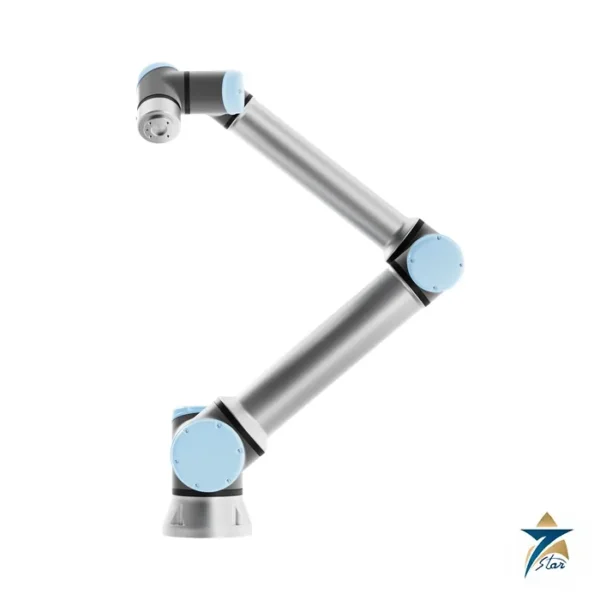
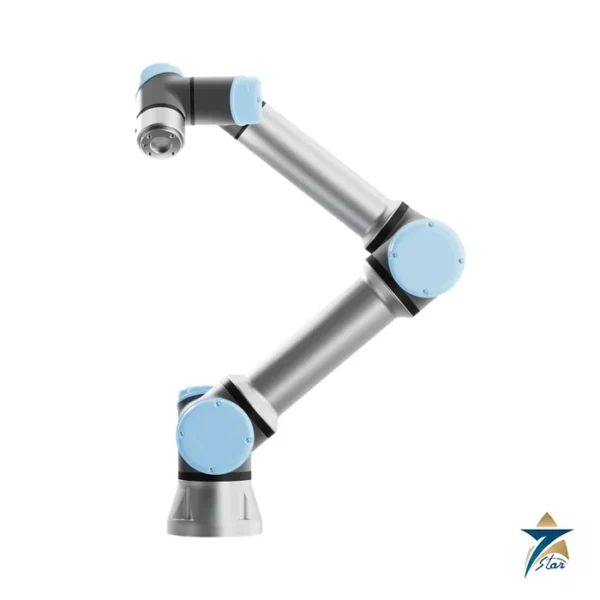
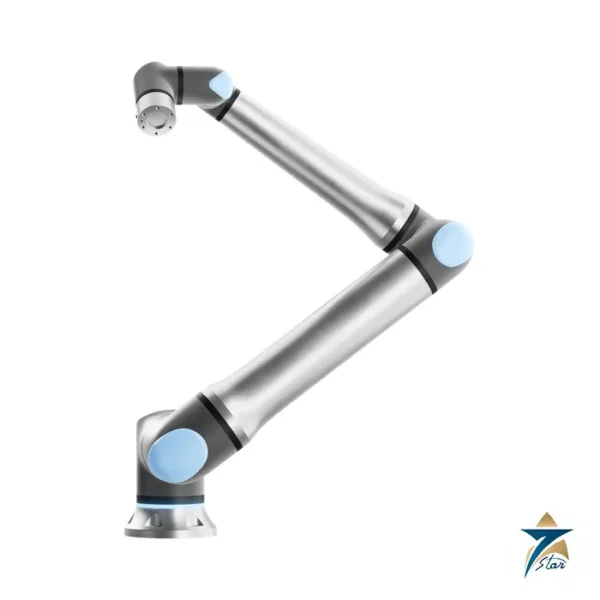
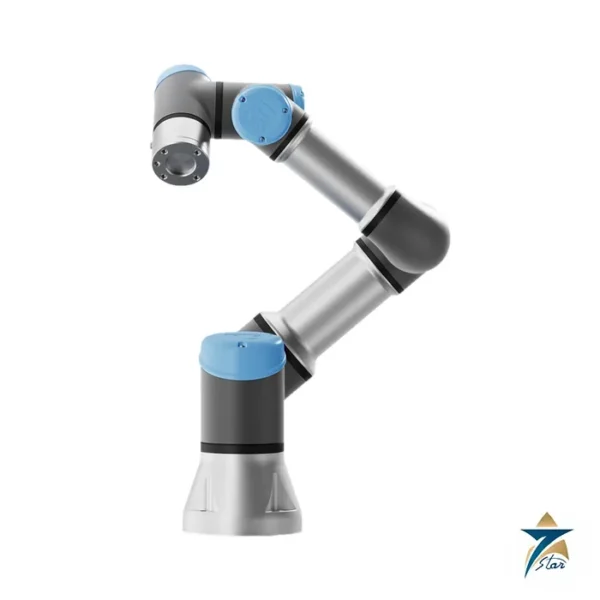
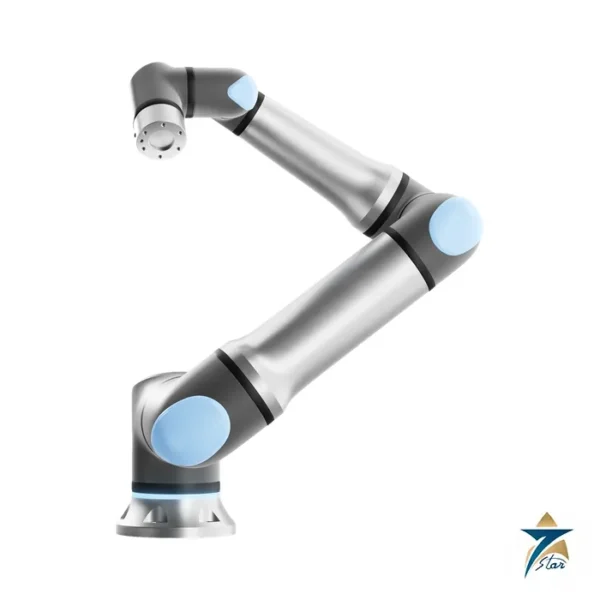
A 6-axis articulated robot is built as a chain of six rotary joints, similar in concept to a human arm. The first three axes — the base rotation, the shoulder and the elbow — place the robot’s wrist at the required point in space. The last three axes, grouped in the wrist, rotate and tilt the tool so that it approaches the workpiece at the correct angle. Each joint is driven by a servo motor with a precision gearbox and position feedback, and the robot controller coordinates all six joints simultaneously so that the tool follows a smooth, programmed path.
Because the controller calculates the joint movements needed for any tool position and orientation, the same robot can reach around obstacles, into molding machines, over conveyors or into fixtures from different directions. This is what gives the 6-axis articulated robot its advantage over simpler Cartesian or pick-and-place units: one machine can handle tasks that would otherwise need several dedicated mechanisms, and it can be reprogrammed when products change rather than being rebuilt.
Engineering Design of the 6-Axis Articulated Robot
A complete robot cell consists of the manipulator arm, a controller cabinet with the drive electronics and safety circuits, a teach pendant for programming and jogging, and the end-of-arm tooling such as vacuum cups, mechanical grippers, welding torches or dispensing heads. The arm can be floor, wall, shelf or ceiling mounted depending on the model, which allows compact layouts around injection molding machines and assembly lines. Cabling for tools and sensors is routed along or through the arm to the wrist.
When selecting a 6-axis articulated robot, engineers specify the payload (including the gripper and part), the reach needed to cover all pick and place points, the required repeatability, the cycle time, and the environmental protection needed for the plant. Safety is designed in from the start: fencing, light curtains, safety-rated speed and zone monitoring, and interlocks with the production machinery ensure that operators are protected while the robot runs at full speed.
Key Features
The main reasons manufacturers choose a 6-axis articulated robot include:
- Six degrees of freedom allow the tool to be positioned and oriented freely within the working envelope.
- High repeatability delivers consistent part placement and assembly quality over long production runs.
- The same robot can be reprogrammed and re-tooled when products or processes change.
- Flexible mounting options enable compact cell layouts around machines and conveyors.
- Integration with vision systems and sensors enables inspection, sorting and adaptive picking.
- Automation of repetitive, heavy or hazardous tasks improves operator safety and ergonomics.
- Continuous multi-shift operation increases throughput and reduces labor costs per part.
- A wide choice of end-of-arm tooling lets one robot platform serve many different applications.
Industrial Applications
In plastics processing, the 6-axis articulated robot is used for part picking from horizontal and vertical injection molding machines, in-mold decorating and labeling, insert loading and overmolding, where it transfers components seamlessly from one press to another. Assembly cell automation enables manufacturers to assemble intricate components with high accuracy, while stacking, sorting, packaging and palletizing applications improve throughput and reduce product damage in logistics and warehousing. Equipped with sensors and vision systems, these robots also carry out real-time inspection, identifying defects so that only good products move forward.
Across Oman and the GCC, these applications are relevant to plastics and packaging converters, food and beverage plants, building-materials manufacturers, metal fabrication shops and logistics hubs in the Sohar and Salalah free zones and the industrial estates around Muscat. Seven Star LLC supports these manufacturers in defining the automation task, sourcing a suitable 6-axis articulated robot and tooling, and coordinating with integrators for installation, as part of its wider industrial automation supply across the region.
Technical Specifications
Because a 6-axis articulated robot is selected to suit each application, the following parameters are defined during specification:
| Parameter |
Specification |
| Model |
Selected per application (6-axis articulated robot) |
| Number of Axes |
6 rotary axes |
| Payload |
Defined by part and gripper weight |
| Reach |
Defined by cell layout and pick/place points |
| Mounting |
Floor, wall, shelf or ceiling (model-dependent) |
| Programming |
Robot controller with teach pendant |
| Typical Applications |
Molding, IMD/IML, insert loading, overmolding, assembly, packaging, palletizing, inspection |
Safety and Performance Standards
Industrial robot cells are normally designed with reference to international standards. ISO 10218-1 specifies safety requirements for the robot itself, while ISO 10218-2 covers robot systems and their integration into a cell, including guarding and safety functions. Performance characteristics such as pose accuracy and repeatability are defined and measured under ISO 9283, which allows specifications from different suppliers to be compared on the same basis.
When defining a 6-axis articulated robot application, the specification should state the payload including gripper and part, the reach to every pick and place point, the required repeatability and cycle time, the environmental protection needed and the safety concept for the cell. These parameters, together with the standards that apply on site, form the basis for selecting the robot model and for the risk assessment carried out by the integrator.
Why choose it over a Cartesian or pick-and-place unit?
One robot can handle tasks that would otherwise need several dedicated mechanisms, and it can be reprogrammed when products change.
What does a complete robot cell include?
The manipulator arm, a controller cabinet with drive electronics and safety circuits, and a teach pendant for programming.
Can Seven Star supply 6-axis robots in Oman?
Yes. Seven Star LLC sources 6-axis articulated robots from leading manufacturers, including ABB, for Muscat, Sohar and Salalah. Contact us for price and lead time.
Request a Quote for 6-Axis Articulated Robot
To discuss a 6-axis articulated robot for your production line, send Seven Star LLC a formal RFQ describing the task, part size and weight, cycle time and the machines involved. Our automation team will help define the robot specification and tooling, check availability from our manufacturer partners and provide datasheets for your evaluation. Contact us for industrial automation supply anywhere in Oman and the GCC.
Browse the full ABB range or see more Robotics products supplied by Seven Star LLC in Oman and the GCC.
































Reviews
There are no reviews yet.