OPTIFLEX 8200 high-pressure guided radar level transmitter and its version letters
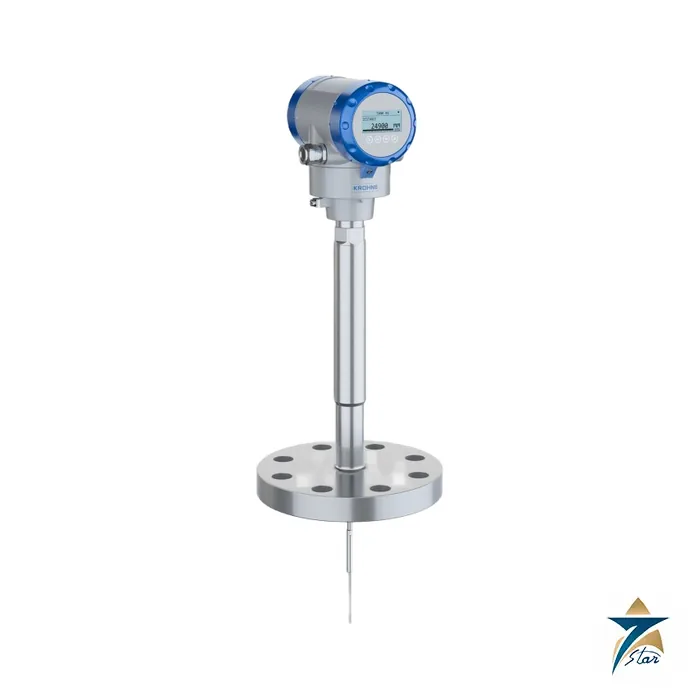
The KROHNE OPTIFLEX 8200 is a two-wire guided radar (TDR) level transmitter built for liquids at extreme temperature and pressure. Where a standard guided-wave unit gives up, the OPTIFLEX 8200 keeps measuring at process connection temperatures up to +315 °C and pressures up to 320 barg, thanks to a ceramic process seal that can be ordered as a single or double system. KROHNE positions it for steam boilers and high-pressure drums in power, oil and gas, and for chemical products such as ethylene, urea, chlorine, resins and LPG under pressure.
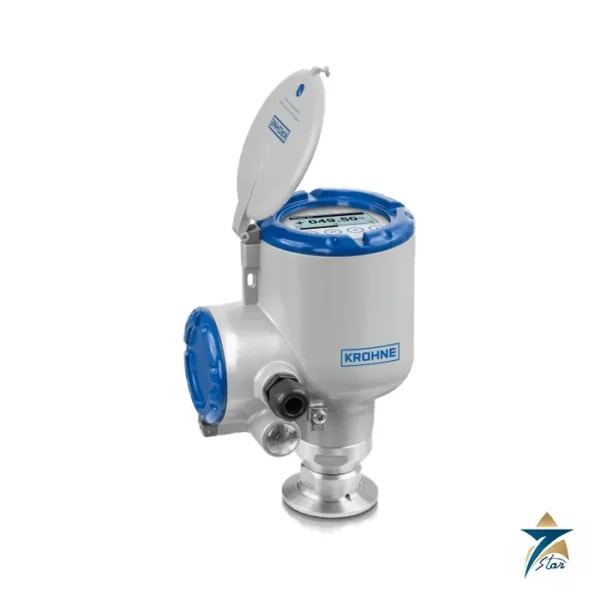
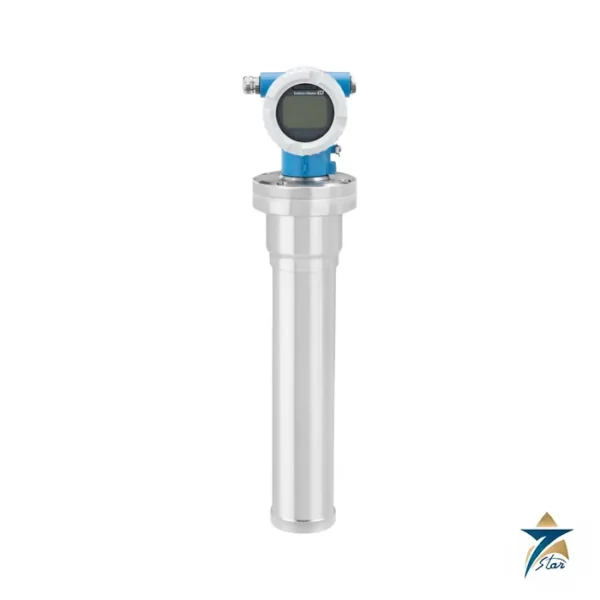
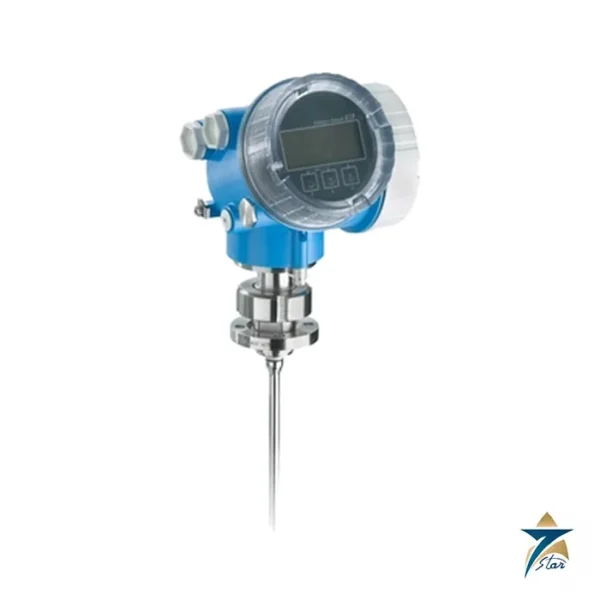
The letters after the number describe the build. C is the compact version with the converter mounted directly on the probe. F is the remote version, where the converter sits up to 100 m from the probe on a signal cable. S is the sensor-extension version, with the converter connected through a coaxial cable of up to 15 m. The converter can be rotated and removed under process conditions, and it is compatible with earlier KROHNE guided radar transmitters, which simplifies spares and upgrades.
Technical specifications of the OPTIFLEX 8200
| Parameter |
Specification |
| Manufacturer / part number |
KROHNE / OPTIFLEX 8200 C/F/S |
| Measuring principle |
TDR, guided radar; level, interface, volume and mass of liquids |
| Measuring distance |
Up to 60 m depending on probe |
| Accuracy, level |
±2 mm up to 10 m; ±0.02% of distance above 10 m; interface ±5 mm; repeatability ±1 mm |
| Process temperature |
-50 to +315 °C at the process connection, limited by the seal material |
| Process pressure |
-1 to 320 barg |
| Process seal |
Single or double ceramic system with FKM/FPM, Kalrez 7075 or EPDM gasket |
| Dielectric constant |
1.6 or higher (1.3 for coaxial probe); TBF mode from 1.1 |
| Probes |
Single rod 8 mm (single-piece or segmented), single cable 4 mm, coaxial 42 mm; 316L, 316 or Hastelloy C-22 |
| Output and supply |
4-20 mA HART 7, optional second 4-20 mA or relay; 11.5 to 30 V DC (Ex d 13.5 to 34 V DC) |
| Housing and protection |
Aluminium or 316L stainless steel; IP66/IP68, NEMA 4X/6 |
| Functional safety |
SIL 2/3 for C and S versions per the datasheet, with 1oo2 architecture needed for SIL 3 |
Seal-material temperature limits are tied to pressure: for example the datasheet lists FKM/FPM from -40 to +200 °C, Kalrez 7075 from -20 to +315 °C and EPDM from -50 to +150 °C. Always check the pressure-temperature curve for the flange rating selected.
How the OPTIFLEX 8200 measures level and interface
The transmitter sends nanosecond-wide electromagnetic pulses down the probe at the speed of light. At the liquid surface, part of the pulse is reflected in proportion to the dielectric constant of the product, and the converter measures the time of flight to calculate distance. Dust, vapour, foam, boiling surfaces and changes in pressure, temperature or density do not alter the principle, which is why TDR is favoured on steam boilers.
Three modes extend the range. In direct mode it reports level with 2 mm accuracy. When two liquids are present it can also report the interface, provided the lower liquid has a clearly higher dielectric constant and the top layer is at least 50 mm. For very low-reflecting products below a dielectric constant of 1.6, tank bottom following (TBF) mode compares the probe-end reflection with the empty tank, at reduced accuracy of 20 mm. A patented dynamic gas-phase compensation routine corrects for changes in the gas composition above the liquid, a major source of error in steam and pressurised vessels.
Probe choice and related KROHNE level transmitters
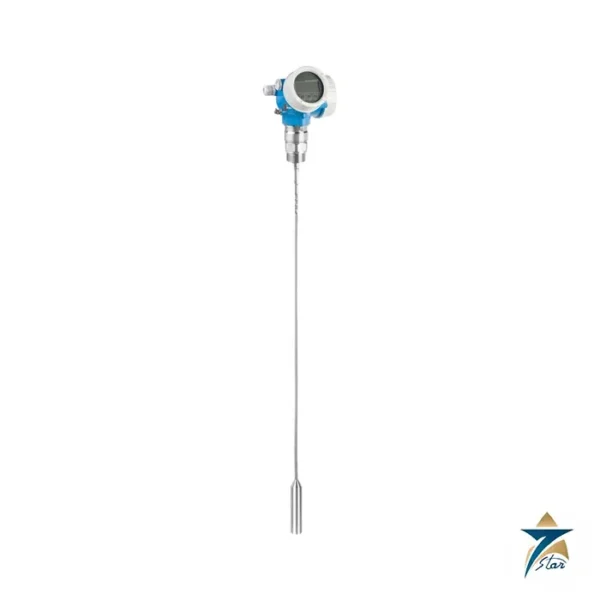
The probe is selected to suit the medium. A single rod suits most liquids and is available in single-piece or segmented form for headroom-limited installations. The single cable probe handles long measuring lengths and tall tanks, and the coaxial probe works in turbulent products, stilling wells and low-dielectric liquids where a coaxial design gives a stronger signal. For corrosive liquids a Hastelloy C-22 probe is the option. Anchor fittings are advised in agitated tanks and long nozzles.
The OPTIFLEX family covers other duties: the OPTIFLEX 1100 for simple liquids and solids to 16 barg, the 3200 for hygienic vessels, the 6200 for powders and granulates, and the OPTIFLEX 7200 for storage and process liquids to 100 barg and 250 °C, which our site already lists. Choose the 8200 when pressure or temperature exceeds the 7200 limits, or when a double ceramic seal is a safety requirement.
Selection and ordering checklist for the OPTIFLEX 8200
- Medium, dielectric constant, viscosity and any foam, crystallisation or build-up.
- Maximum operating temperature and pressure, and the flange rating and facing required.
- Probe type, material and length, and need for an anchor or a stilling well.
- Compact, remote (up to 100 m) or sensor-extension version, and housing orientation.
- Single or double ceramic seal, and gasket material.
- Output: single HART loop, second current output or relay, and whether SIL use is intended.
- Hazardous-area approval, display and weather protection.
Installation, commissioning and maintenance
Mount the probe so it does not touch tank walls, ladders or nozzle edges, and keep it clear of heavy inflow. In vessels with side nozzles, follow the manual for nozzle diameter and height, or choose a probe with an anchor. Use a stilling well or bypass chamber where the datasheet probe table recommends it, such as for LPG, LNG or spray. Confirm that the converter is not exposed to excessive heat; the extension and remote versions help on hot vessels, and the datasheet gives an ambient range of -40 to +80 °C with the display limited to -20 to +60 °C.
No calibration is needed beyond entering the probe length and a short setup. A quick-setup assistant, a four-button display that works with the cover closed, a real-time clock for event logging and free PACTware and DTM tools support commissioning. Diagnostics follow NAMUR NE 107. For SIL use, follow the safety manual and proof-test intervals.
Typical applications in Oman and the GCC
Power and utility plants in the Gulf run steam drums, feedwater heaters and deaerators where level must be measured at high pressure and temperature, and this is the main fit for the OPTIFLEX 8200. Refineries and gas plants use it on separators, knock-out drums and pressurised liquid vessels, and petrochemical units on LPG, ethylene and similar products. Outdoor installations face strong sun and heat, so a stainless steel housing, weather protection and a shaded remote converter are practical choices, along with sealed cable entries against dust and humidity.
Information to send with an RFQ for the OPTIFLEX 8200
- Medium, dielectric constant and viscosity, with maximum pressure and temperature.
- Vessel type and height, nozzle size and flange rating.
- Probe type, length and material, and any interface measurement need.
- Version (C, F or S), housing, display and cable length for remote versions.
- Hazardous-area class, SIL requirement and quantity.
Documents and quotation
A KROHNE technical datasheet for the OPTIFLEX 8200 C/F/S is attached on this page. Send the details above and we will confirm availability and prepare a quotation for the OPTIFLEX 8200 in Oman and the GCC as an independent supplier in Muscat.





















Reviews
There are no reviews yet.