FTL31 Liquiphant compact vibronic level switch
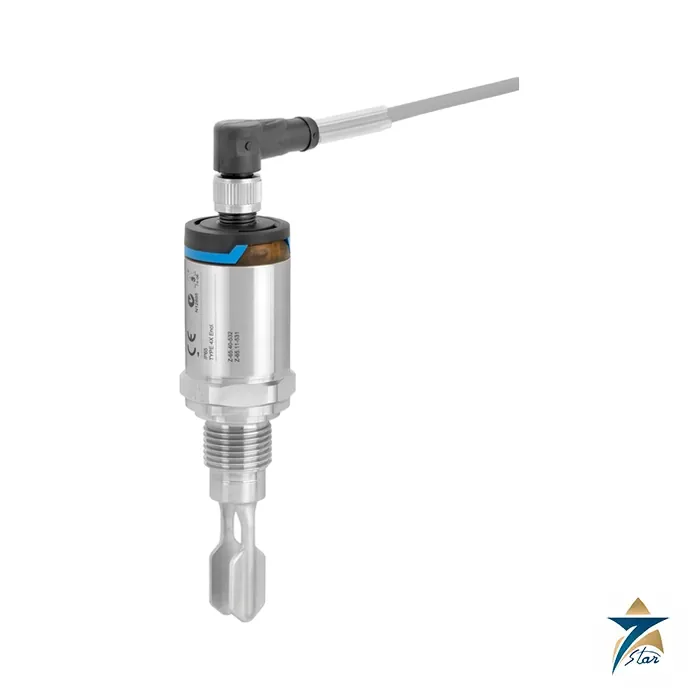
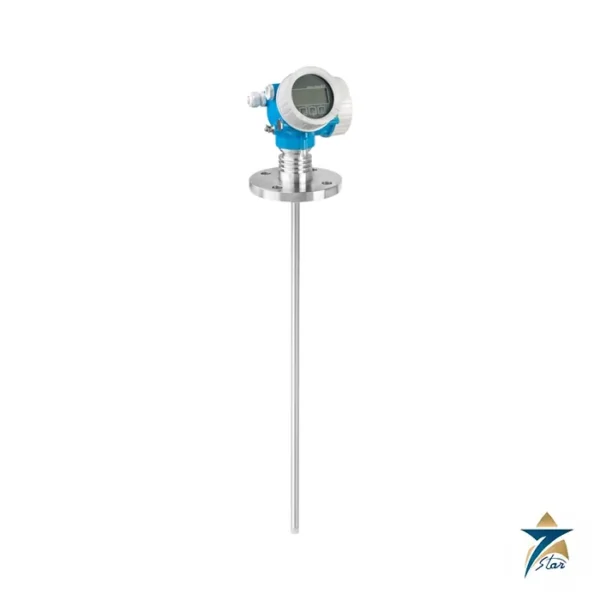
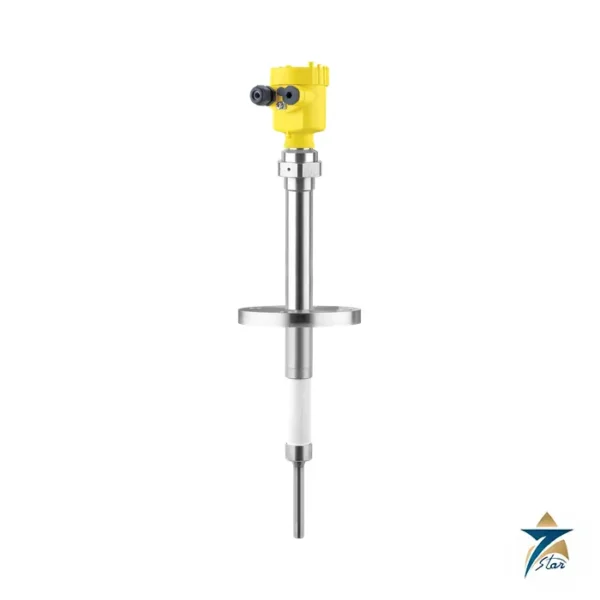
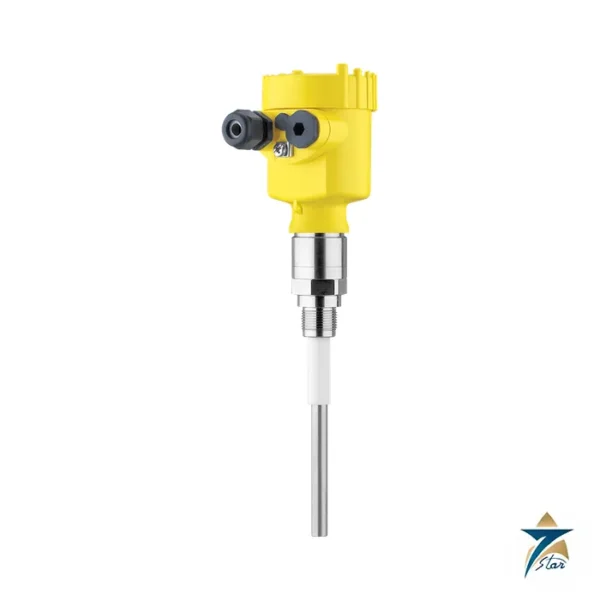
The Endress+Hauser FTL31 is a Liquiphant point level switch that detects whether a tuning fork is in air or covered by liquid. It is designed for tanks, vessels and pipes where a reliable high or low level signal is needed, for example overfill protection, pump dry-run protection, and level detection in cleaning, filtration, cooling and lubrication systems. The FTL31 replaces float, conductive, capacitive and optical switches in applications where conductivity, build-up, turbulence, flow or air bubbles cause problems.
The sensor is 316L stainless steel, the housing is stainless steel with an optional M12 plug, and the process temperature range covers –40 to +150 °C at up to 40 bar. It is a general-purpose device: the datasheet states it is not for hazardous areas, and recommends the FTL33 where hygiene requirements apply.
FTL31 technical specifications
| Parameter |
Specification |
| Manufacturer / part number |
Endress+Hauser / FTL31 (Liquiphant, vibronic point level switch for liquids) |
| Measuring principle |
Piezo-driven tuning fork; frequency shift on immersion; fork frequency approx. 1,100 Hz in air |
| Process temperature |
–40 to +100 °C or –40 to +150 °C, depending on the sensor design |
| Process pressure |
–1 to +40 bar (–14.5 to +580 psi) |
| Density / viscosity |
Above 0.7 g/cm³ (above 0.5 g/cm³ optional); 1 to 10,000 mPa·s |
| Switch point (vertical from above) |
Approx. 13 mm ± 1 mm in water; hysteresis maximum 3 mm; non-repeatability ±1 mm |
| Switching delay |
0.5 s covered, 1.0 s uncovered; options 0.2, 1.5 or 5 s; switch-on delay up to 3 s |
| Electronics |
3-wire DC-PNP: 10 to 30 V DC, 200 mA; 2-wire AC/DC: 20 to 253 V AC/DC, 250 mA |
| Electrical connection |
M12 plug, valve plug or fixed cable (cable not removable) |
| Ambient temperature |
–40 to +70 °C, with derating at higher process temperatures |
| Degree of protection |
IP65/67 (M12 plug); IP66/68/69 (M12 on metal cover); IP65 (valve plug); IP66/68 (cable) |
| Wetted material |
316L |
| Approvals |
CSA C/US general purpose; WHG overfill (Z-65.11-531) and leak detection (Z-65.40-532); marine approvals GL/DNV, ABS, LR and BV; CRN |
How the FTL31 switches
A piezoelectric element drives the fork at its resonance frequency. When liquid covers the fork, the frequency drops because of the density of the liquid, and the electronics detect this change and switch the output. Because the measurement is a resonance, the FTL31 is insensitive to flow, turbulence, bubbles, foam and solids content up to 5 mm particle diameter, and the fork needs no moving parts. The sensor can be mounted in any orientation in a vessel, pipe or tank, and foam formation does not affect the function.
The switch operates in two modes. In MAX mode the output stays closed as long as the fork is in air, and opens when the level rises, on a fault or if the supply fails (quiescent current principle). In MIN mode the output stays closed while the fork is immersed and opens when the liquid level falls. With the M12 plug and both outputs wired to a two-channel evaluation, the MIN and MAX outputs behave as opposites in healthy operation, and both go de-energised on a fault or broken wire, giving a built-in function-monitoring check.
FTL31 process connections and versions
The FTL31 is offered in a compact version and a short tube version. The short tube keeps the switch point at the same position as the earlier Liquiphant FTL260 when an identical thread is chosen (G 1 weld-in adapter for flush mounting, MNPT 1 and R 1), so a replacement can be done without changing the installation height. The threaded connections listed in the datasheet are G 1/2, G 3/4, G 3/4 and G 1 versions for flush mounting in a weld-in adapter, MNPT 1/2, 3/4 and 1, and R 1/2, 3/4 and 1, all in 316L.
| Feature |
Options for FTL31 |
| Electronics |
3-wire DC-PNP or 2-wire AC/DC |
| Connection |
M12 plug, valve plug, fixed cable |
| Sensor design |
Compact or short tube; 100 °C or 150 °C housing |
| Thread |
G, MNPT or R thread in 1/2, 3/4 or 1 in sizes |
| Services |
Cleaned of oil and grease, PWIS-free, density setting above 0.5 g/cm³, switching delay setting |
FTL31 selection and ordering checklist
- Medium density (above 0.7 or 0.5 g/cm³), viscosity and solid content.
- Maximum process temperature (100 or 150 °C) and pressure up to 40 bar.
- Function: overfill (MAX) or pump protection and lower level (MIN).
- Supply: 24 V DC PLC input (PNP) or mains-level 2-wire AC/DC switching of a relay or contactor.
- Connection type, plug standard and cable length; a fine-wire fuse of 500 mA slow-blow is required.
- Thread type and size, short tube or compact, and whether a weld-in adapter is needed.
- Need for marine approval, WHG overfill approval or CRN registration.
Installing and testing the FTL31
The switch point depends on orientation: it is about 13 mm from the fork tip in water when mounted vertically from above, and the datasheet gives different values for mounting from below and horizontally. In horizontal mounting, turn the fork so liquid can drip off, and point the electrical connection downward to keep moisture out. Keep at least 10 mm between the fork and the vessel wall to allow for expected build-up. For pipe installation the datasheet shows the fork aligned to minimise turbulence, with a flow velocity below 5 m/s for the G 3/4 version.
LEDs show the status: green for operational, yellow for the switch state and red for warnings or faults. The built-in test magnet function lets maintenance staff force a state change while the switch is in service. Cable lengths can reach 1,000 m with a wire resistance up to 25 ohm per wire.
FTL31 applications in Oman and the GCC
In the Gulf, the FTL31 is widely suited to lube-oil reservoirs on rotating machines, cooling-water and chilled-water expansion tanks, diesel day tanks, chemical dosing vessels, sumps, filter backwash tanks and pump protection in desalination and utility plants. Temperatures of up to 150 °C in the 316L sensor and IP66/68/69 protection in the metal-cover plug version suit hot, washed-down or dusty locations. For hygienic duty such as food and beverage, consider the FTL33. Seven Star LLC supplies Endress+Hauser products as an independent supplier in Muscat to industrial customers across Oman and the GCC.
Information to send with an FTL31 RFQ
- Liquid, density, viscosity and operating temperature and pressure.
- Tank or pipe size, mounting orientation, available thread or weld-in adapter.
- Required safety function (MIN or MAX), supply voltage and switching load.
- Connection type: M12 plug, valve plug or cable, and cable length.
- Approvals needed (WHG, marine, CRN) and quantity.
Documents and quotation
The Endress+Hauser Technical Information for the FTL31 is attached on this page as a datasheet, with wiring diagrams for every plug and cable variant and dimensional drawings for each thread.
Send the FTL31 order code or your application data, and we will prepare a quotation for delivery in Oman and the GCC.























Reviews
There are no reviews yet.