Compact PVDF radar for chemical tanks and open channels
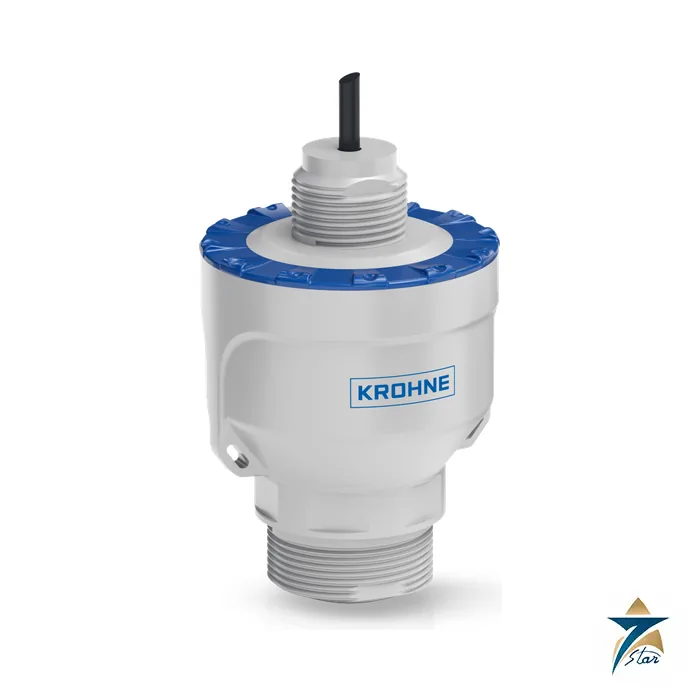
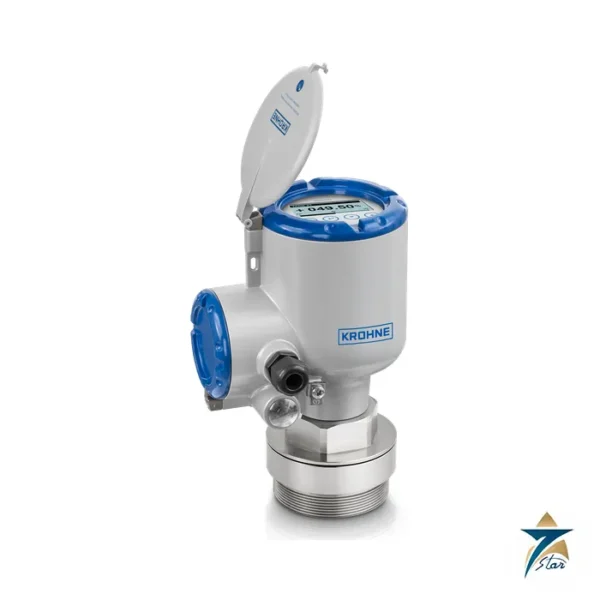
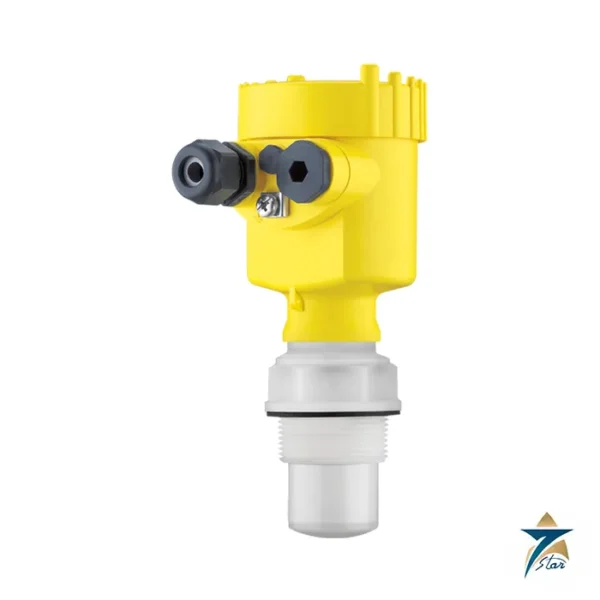
The KROHNE OPTIWAVE 1540 is a two-wire 80 GHz radar level transmitter in a compact PVDF housing with a flush-mounted PVDF lens antenna (DN40 / 1.5 in). It is positioned for liquid chemicals and open-channel applications, with a measuring range of 0 to 15 m (49.2 ft), a maximum error of +/-2 mm and repeatability of +/-1 mm.
The 8 degree beam angle suits narrow tanks and channels, and the manufacturer notes a virtually zero dead zone. Bluetooth allows set-up from a smartphone, tablet or PC, and a totalizer function supports flow and volume monitoring in open channels. A standard version with cover and an IP68 waterproof version are listed; the IP68 unit is designed for heavy rain and flooding events lasting several days.
Technical specifications
| Parameter |
Specification |
| Model |
OPTIWAVE 1540 (OPTIWAVE 15XX series: 1520, 1530, 1540, 1560) |
| Principle |
Radar (FMCW), 80 GHz, two-wire |
| Measured media |
Liquids and slurries; granular solids in silos |
| Measuring range |
0 to 15 m / 49.2 ft |
| Accuracy |
Max. error +/-2 mm / +/-0.08 in; repeatability +/-1 mm / +/-0.04 in |
| Process temperature |
-25 to +80 C / -13 to +176 F |
| Process pressure |
-1 to 5 bar / -14.5 to 72.5 psi |
| Antenna |
PVDF lens antenna DN40 / 1.5 in, 8 degree beam angle |
| Wetted parts |
PVDF and FKM seal |
| Outputs |
4 to 20 mA with HART; Bluetooth for configuration |
| Versions |
Standard with cover, or IP68 |
| Approvals as printed |
ATEX and IECEx are listed on the product page |
Where it fits in a plant
Use it for storage and buffer tanks with aggressive chemicals, IBC totes, open basins, rivers and sewage channels. The product page also names combined sewer overflow monitoring and flood alarms. The housing is plastic, so it is aimed at low-cost, corrosion-resistant duty rather than high-pressure vessels, and the pressure limit is 5 bar.
Tank Bottom Management and a dedicated open-channel mode are described. Because the series shares one data sheet, check that the table you read applies to the 1540, the high-precision type with 8 degree beam, not to the simpler 1520 or 1530.
Before you order
Confirm the version (standard or IP68), cable entry, display and Ex marking. As a derived example, a 6 m chemical tank open to atmosphere is well inside the 15 m range, but mind foam and condensation near the antenna.
Mounting brackets, a cable clamp and a purging system are listed in the data sheet as accessories for installation on tanks and channels.
Mounting guidance is simple: fix the transmitter perpendicular to the liquid surface, keep the 8 degree beam clear of the tank wall and pipes, and use the bracket accessories on open channels so the unit looks along the flow. Bluetooth set-up reduces commissioning time, because the application can be configured from a phone before the tank is filled.
Key features of the OPTIWAVE 1540
- 80 GHz FMCW radar: the high frequency allows a narrow 8° beam from a small DN40 antenna, which helps avoid reflections from tank walls and internal fittings.
- PVDF housing and lens: wetted parts are PVDF with an FKM seal, giving good resistance to many acids, alkalis and salt solutions.
- High accuracy: max. error ±2 mm and repeatability ±1 mm over a range of up to 15 m.
- Two-wire 4–20 mA with HART: loop-powered, so it connects to standard analogue input cards and HART-capable systems.
- Bluetooth configuration: set-up and diagnostics from a smartphone, tablet or PC without opening the housing.
- Open-channel functions: a dedicated mode and a totalizer for flow and volume monitoring.
Why non-contact radar for chemicals
Contact level instruments such as floats or guided wave probes are exposed to the medium and may suffer from corrosion, build-up or mechanical damage. A non-contact radar only has its lens in the vapour space, and with a PVDF lens there is no metal in contact with the process atmosphere. Radar is also largely unaffected by changes in temperature, pressure and vapour composition, which can disturb ultrasonic sensors. These are general characteristics of the technology and are the main reasons radar is chosen for chemical storage tanks.
Points to check in chemical service
- Confirm compatibility of PVDF and FKM with the stored chemical and its concentration and temperature.
- Heavy foam can absorb the radar signal; consult the manufacturer if foam is expected.
- Condensation or crystallising deposits on the lens can weaken the signal; the purging accessory can help keep it clean.
- Stay within the process limits of -25 to +80°C and -1 to 5 bar.
Applications in Oman and the GCC
Typical uses in the region include sodium hypochlorite, acid and caustic dosing tanks at water and wastewater treatment plants, chemical storage at desalination plants, and open-channel flow monitoring in sewage networks and stormwater channels. The IP68 version is well suited to wadi and stormwater locations where sudden flooding can submerge the instrument after heavy rain. For outdoor installations in direct summer sun, a sunshade is good practice to keep the housing temperature down, and the cable should be protected against UV. Coastal plants benefit from the plastic housing, which does not corrode in salt-laden air.
Installation and maintenance
- Mount the device vertically above the liquid, away from the inlet stream and agitators.
- Keep the beam clear of ladders, heating coils and the tank wall; the 8° beam makes this easier in narrow tanks.
- Use Bluetooth to check the echo curve during commissioning and after any change in the tank.
- Inspect the lens periodically and clean it if deposits appear.
What to include in your RFQ
Give the model OPTIWAVE 1540, version (standard or IP68), required Ex approval, measuring range, medium and its temperature, mounting arrangement and any accessories such as brackets or the purging system.
Documents and quotation
Seven Star LLC is an independent supplier in Muscat and can quote this item on request. The reference document is KROHNE OPTIWAVE 15XX technical datasheet (EN), attached as a PDF; verify the version, housing options and Ex marking against it, then send us the type code for a quotation. Browse Level Instrumentation for alternatives.










Reviews
There are no reviews yet.