Vibrating fork level switch for high pressure and temperature
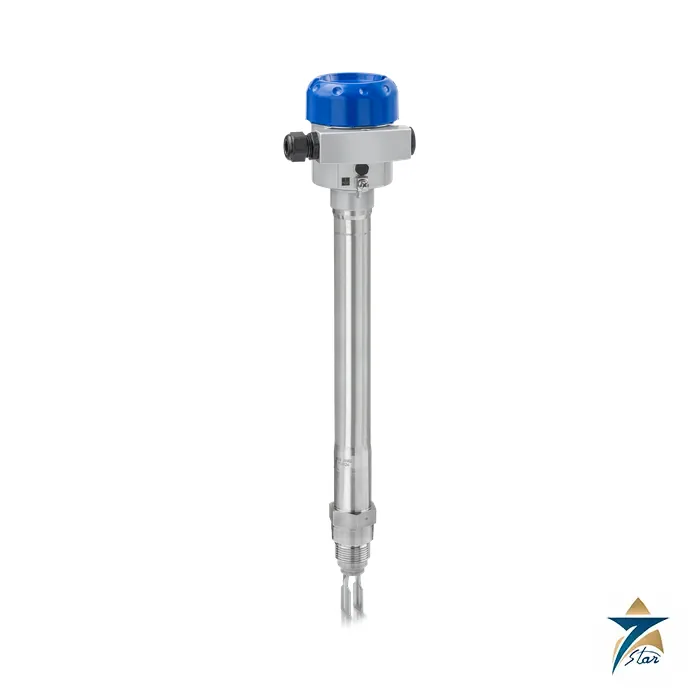
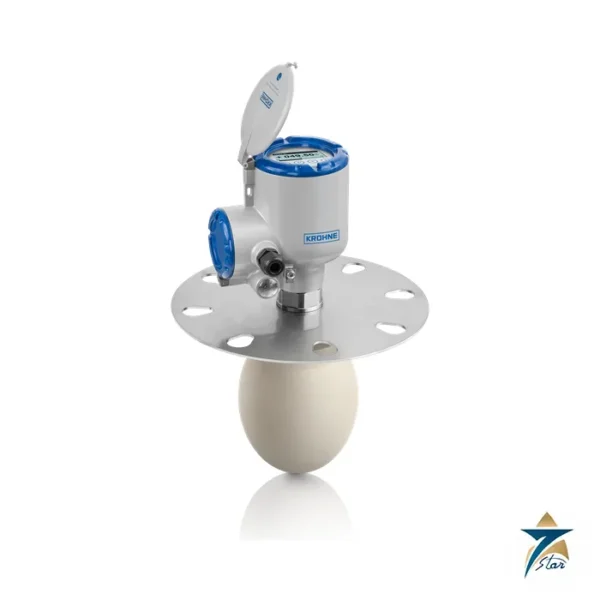
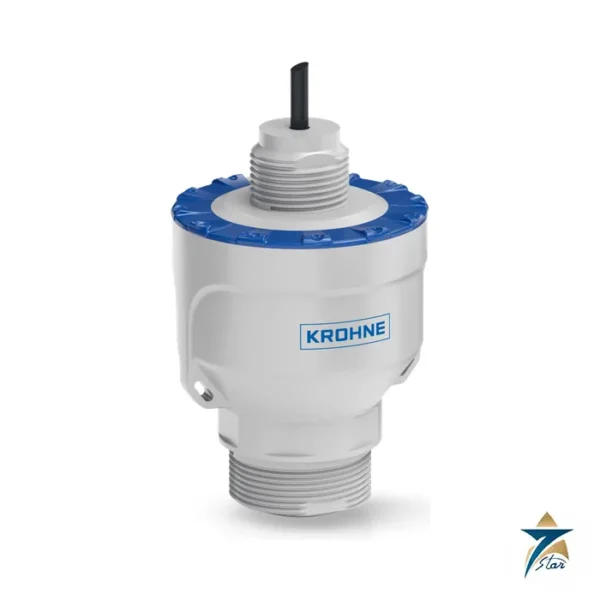
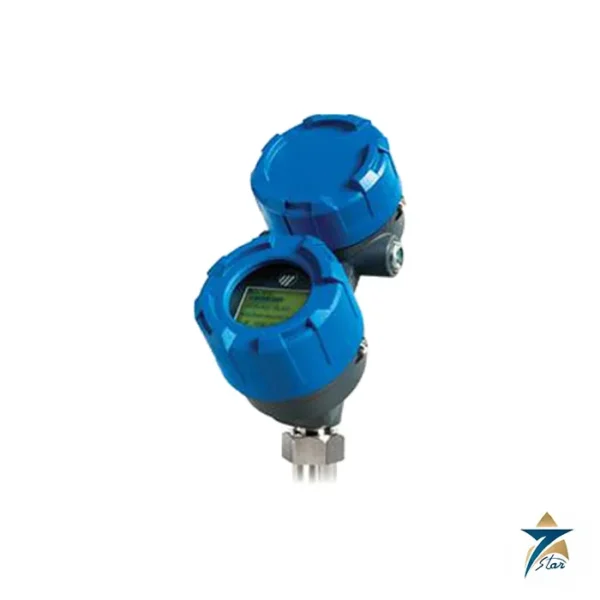
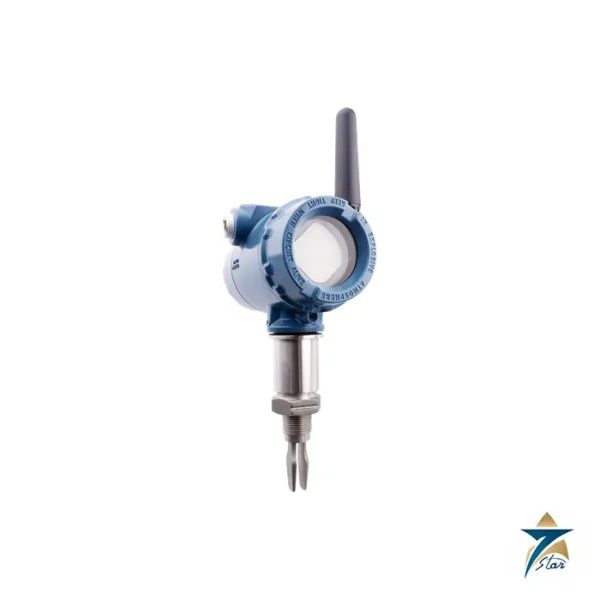
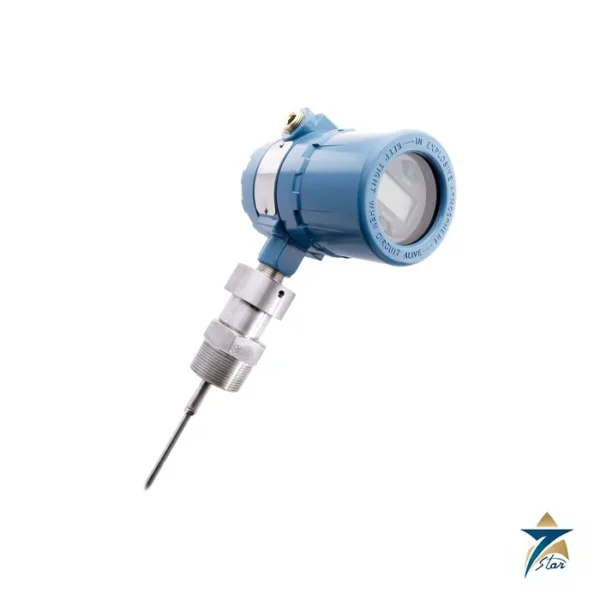
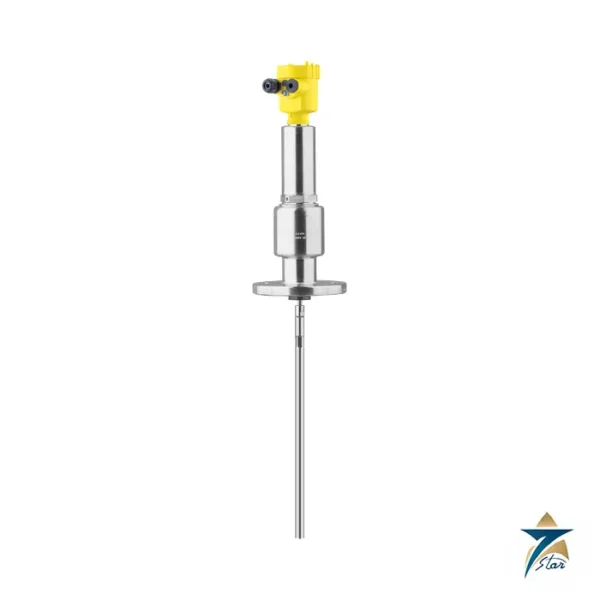
The KROHNE OPTISWITCH 5300 (compact version OPTISWITCH 5300 C) is a vibrating-fork level switch for heavy-duty point level detection: high and low level alarm, overfill protection and pump dry-run detection. KROHNE states a process range from cryogenic conditions to +450 C (+842 F) and pressure from -1 to 160 barg (-14.5 to 2320 psig), covering boiler standards for saturated steam.
Wetted parts are 316L, alloy C4 or alloy 718, and probe lengths run from 80 to 3000 mm. The sensor is unaffected by dielectric constant, density or turbulence, requires no adjustment, and can detect liquids with very low density, optionally down to 0.42 kg/l. A second ceramic process seal adds safety, and the sensor and electronics are self-monitored.
Technical specifications
| Parameter |
Specification |
| Model |
OPTISWITCH 5300 C (compact housing) |
| Principle |
Vibrating fork point level switch |
| Process temperature |
-196 to +450 C / -320 to +842 F |
| Process pressure |
-1 to 160 barg / -14.5 to 2320 psig |
| Probe length |
80 to 3000 mm / 3 to 118 in |
| Wetted parts |
316L (1.4404), alloy C4 (2.4610), alloy 718 (2.4668) |
| Process seal |
Klingersil C-4400 |
| Flanges |
EN 1092-1 DN50 to DN250; ASME 1.5 to 4 in |
| Outputs |
2-wire 8/16 mA, relay, transistor |
| Protection |
IP66/67; NEMA 4/4X/6 |
| Approvals as printed |
ATEX, IECEx, EAC Ex; WHG; SIL 2; GL and LR marine |
Applications
Named uses include steam boilers, LNG tankers, liquid nitrogen and ethylene tanks, distillation columns and SIL 2/3 loops in safety instrumented systems. A functional test is possible during operation.
Foaming, corrosive, condensing or cryogenic liquids are all listed as suitable media, which makes the switch a robust alternative to float switches in refineries and power plants.
A vibrating fork has no moving mechanical parts that can jam, and it reacts to the damping of the fork when the liquid covers it. For this reason it replaces float and displacer switches on dirty or viscous liquids, and the adjustment-free setup avoids the need to wet-calibrate the unit during commissioning.
Choosing the output and approvals
The 2-wire 8/16 mA type suits PLC inputs, the transistor type NPN/PNP loops, and the relay version direct switching. The attached manual covers the 2-wire version, so ask for the transistor or relay manual if you select those outputs.
For Ex and SIL service review the safety manual and the exact certificate. A derived check is to ensure the probe length and extension fit the nozzle and vessel wall thickness.
During installation make sure the fork is placed so that the gap of the tines is vertical when the medium can stick to the fork, and the switching point can be shifted with extension length. Use the functional test during operation to confirm the alarm path, and check the second seal when the process is at the upper pressure and temperature limits.
Selecting the right OPTISWITCH 5300 configuration
Choosing a vibrating fork switch for heavy-duty service starts with the process conditions at the mounting point, not only the vessel design values. Confirm the actual temperature and pressure range, including start-up, cleaning and upset conditions, and check that they sit within the stated limits. Then select the wetted material: 316L for general service, and alloy C4 or alloy 718 where the medium or the temperature calls for a more resistant alloy. Your process engineer or corrosion data should drive that decision.
Next, decide the process connection. Flanges are listed to EN 1092-1 and ASME, so match the size and pressure class to the existing nozzle. Finally, choose the probe length so the fork reaches the intended switching point, keeping in mind that the extension length moves that point.
Typical duties: high alarm, low alarm and dry-run protection
As a high-level alarm or overfill protection the switch is usually installed from the top or side near the maximum level, and the output is wired so that loss of signal is treated as an alarm. For low-level alarm or pump dry-run protection it is placed at the lowest acceptable level so the pump stops before the suction is uncovered. In safety instrumented loops, the switching logic, proof-test interval and failure handling should follow the safety manual for the selected version.
Installation and commissioning considerations
Plan the mounting so the fork is not in the direct path of a filling stream, where splashing could cause false switching. On vessels with agitators or strong flow, position the switch where the fork is not exposed to excessive mechanical load. For hot or cryogenic service, observe the temperature limits for the housing and electronics and allow for insulation around the nozzle. After installation, use the functional test to confirm the signal reaches the control system, and record the output mode setting for future reference.
Information to include in your RFQ
To quote accurately we need the full type code, or at least the output type, wetted material, process connection, probe length and the required approvals such as Ex, SIL or marine. Add the medium, the operating temperature and pressure, and the quantity. If you are replacing an existing switch, a photo of the nameplate is the quickest way to confirm the configuration.
Why choose a vibrating fork over other point level methods
Float and displacer switches depend on buoyancy and moving parts, so changing density, deposits and turbulence can affect them. The OPTISWITCH 5300 instead reacts to the change in fork vibration when liquid covers the tines, and the page states it is unaffected by dielectric constant, density or turbulence. This makes it attractive where the medium changes between batches, where foam forms on the surface, or where condensing vapours are present. Because no adjustment is required, the same unit can often be moved between similar applications with fewer setup steps. On the other hand, for continuous level indication rather than a single switching point, a level transmitter is the appropriate instrument, and the two are often combined, with the fork switch acting as an independent high-high or low-low alarm alongside the continuous measurement.
Documents and quotation
Seven Star LLC is an independent supplier in Muscat and can quote this item on request. The reference document is KROHNE OPTISWITCH 5300 C 2-wire handbook (EN), attached as a PDF; verify the output type, probe length and Ex or SIL requirement against it, then send us the type code for a quotation. Browse Level Instrumentation for alternatives.








Reviews
There are no reviews yet.