Rosemount 8750W magnetic flow meter for water, wastewater and utility lines
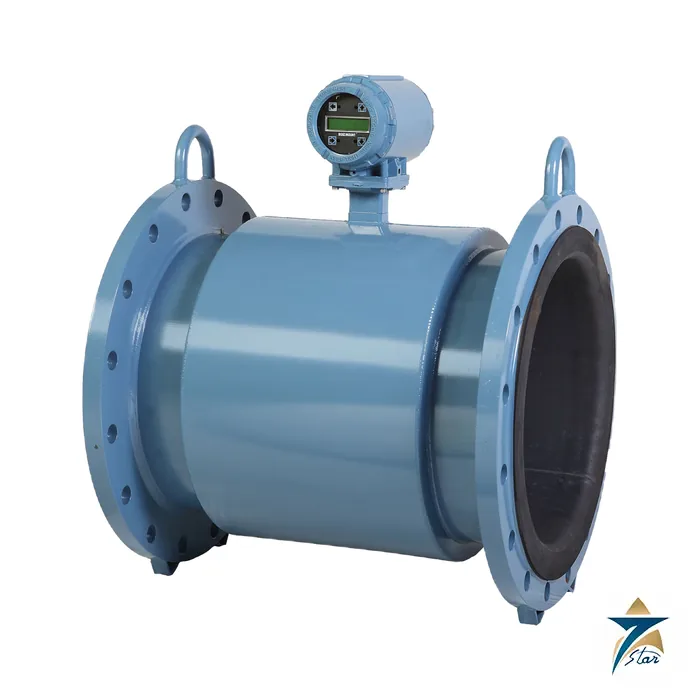
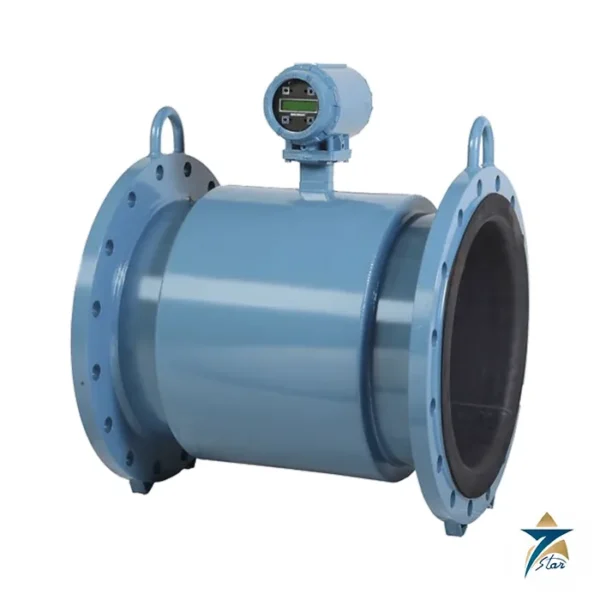
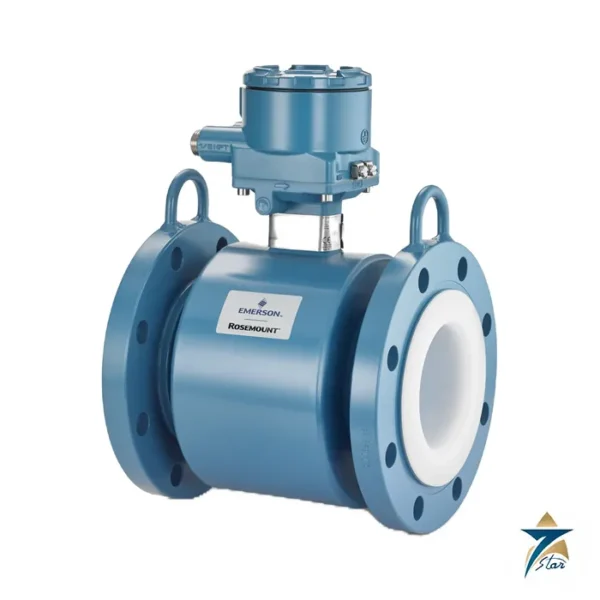
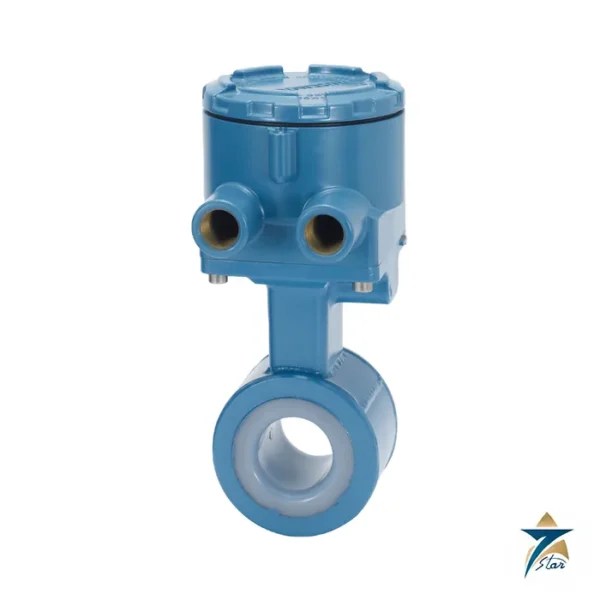
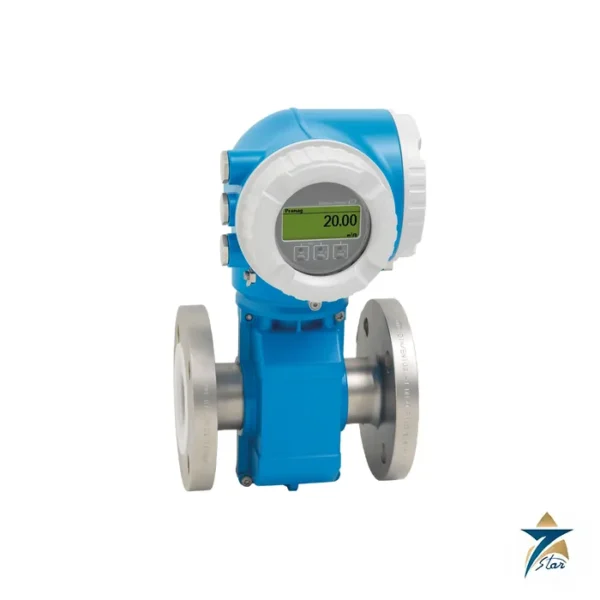
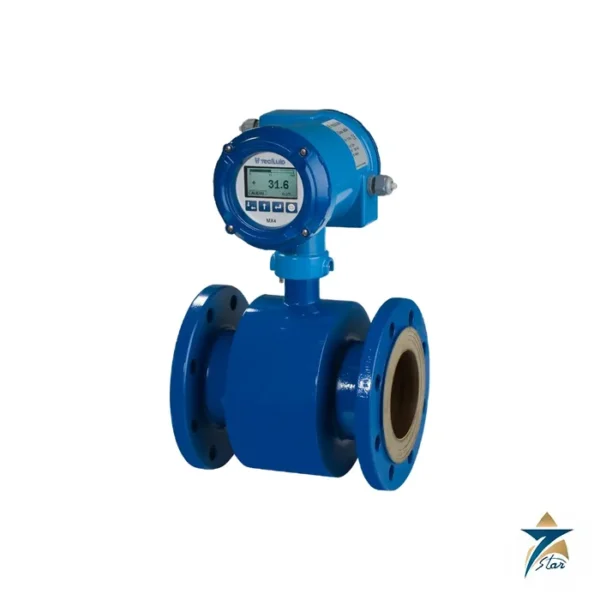
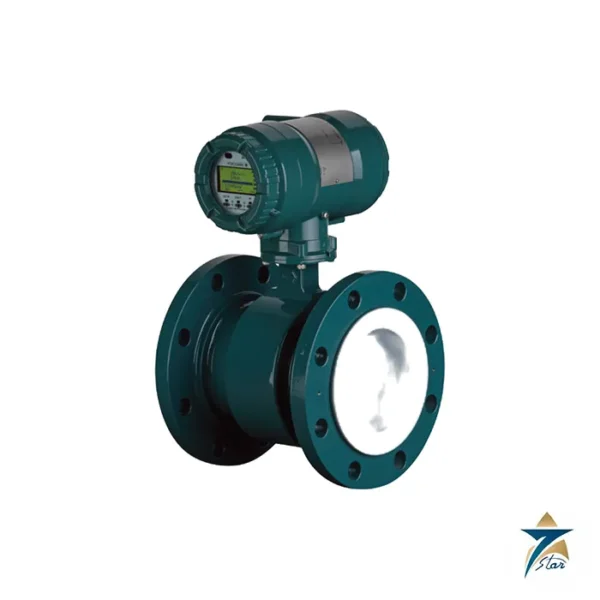
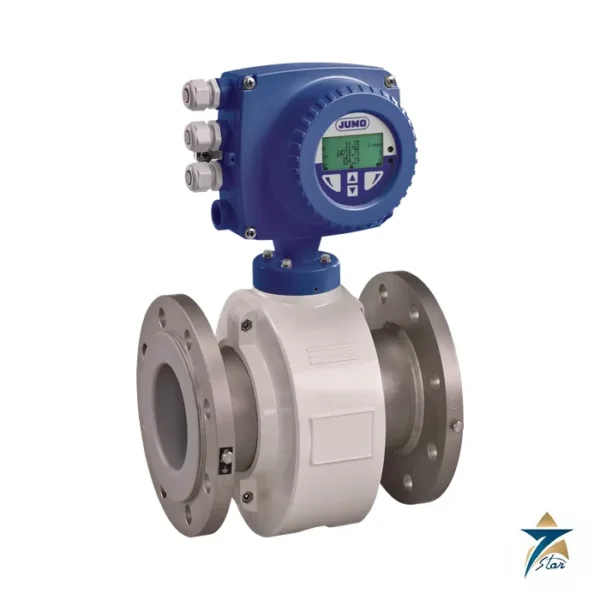
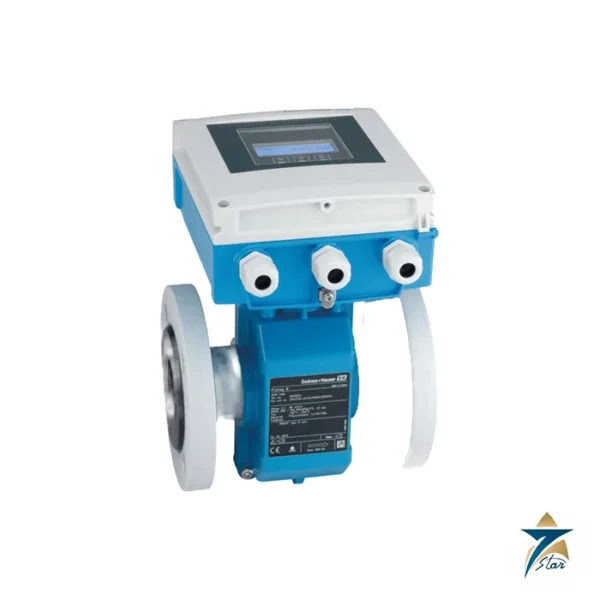
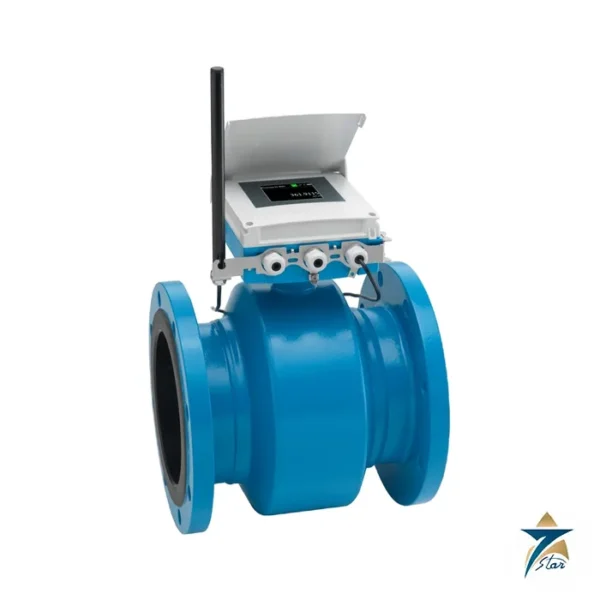
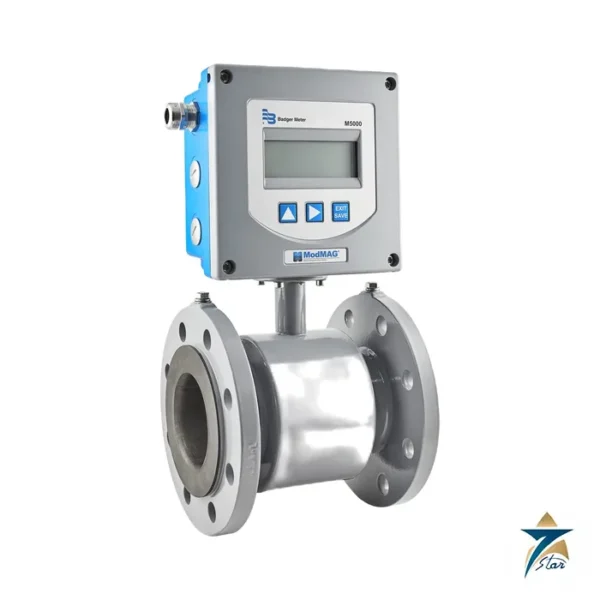
The Rosemount 8750W is an electromagnetic flow meter system sized and priced for the work that fills most water networks: raw water intakes, desalination feed and product lines, potable water transmission, wastewater and effluent, cooling water and general plant services. It is a flanged sensor with a fully welded coil housing, paired with either an integral field-mounted transmitter, a remote field-mounted transmitter or a remote wall-mounted transmitter. Line sizes run from 1/2 in. (15 mm) up to 48 in. (1,200 mm). Seven Star LLC supplies the Rosemount 8750W in Oman and the GCC as an independent supplier based in Muscat.
A complete 8750W is specified by a model code that begins with 8750W and then selects, in order, the sensor design revision, transmitter class, mount, power, output, conduit entries, sensor style, lining, electrode material, electrode type, line size, flange type, flange rating and options. A typical example in the datasheet reads 8750W D M T 1 A 1 F P S A 010 CA1 and so on. Reading it correctly is the best way to avoid ordering a meter with the wrong liner or flange standard.
Rosemount 8750W specifications
| Parameter |
Specification |
| Manufacturer / part number |
Rosemount 8750W Magnetic Flow Meter System |
| Application |
General purpose, utility, water and wastewater |
| Sensor style |
Flanged, welded coil housing; 1/2 to 48 in. (15 to 1,200 mm) |
| Transmitter mount |
Integral field mount, remote field mount, remote wall mount |
| Outputs |
4–20 mA with HART and scalable pulse; FOUNDATION Fieldbus and pulse; Modbus RS-485 and pulse; EtherNet/IP and pulse |
| Power |
90 to 250 Vac, 50/60 Hz; 12 to 42 Vdc; 20 to 32 Vdc (EtherNet/IP only) |
| Linings |
PTFE, polyurethane, neoprene, PEX |
| Electrodes |
316L stainless steel or nickel alloy C-276; standard, bullet-nose, with or without reference electrode |
| System accuracy |
±0.5 percent of rate from 1 to 39 ft/s (0.3 to 12 m/s); optional ±0.2 percent of rate from 2.5 to 39 ft/s |
| Velocity range |
0.04 to 39 ft/s (0.01 to 12 m/s), forward and reverse |
| Minimum conductivity |
50 microSiemens/cm |
| Ambient temperature (transmitter) |
–58 to 140 °F (–50 to 60 °C) without display; –4 to 140 °F (–20 to 60 °C) with display |
| Sensor protection |
IP68 for continuous submergence when remote mounted, tested to 33 ft (10 m) for 48 hours |
| Diagnostics |
Basic diagnostics standard; DA1 process diagnostics and DA2 SMART Meter Verification optional |
How the 8750W measures flow
The sensor applies Faraday’s law. Two coils in the sensor body create a magnetic field across the pipe; a conductive liquid moving through that field generates a small voltage proportional to its average velocity, and electrodes in the liner wall pick it up. The transmitter drives the coils with a 500 mA coil current, amplifies the electrode signal and converts it to flow. Because there is no obstruction, no moving part and no pressure drop beyond that of the pipe itself, the meter suits dirty water, wastewater and fluids carrying solids. The one requirement on the fluid is electrical conductivity of at least 50 microSiemens/cm; demineralised or condensate water may fall below it and needs a different technology.
Each sensor is calibrated at the factory and given a 16-digit calibration number on its nameplate. Sensors and transmitters are interchangeable, and the system keeps its stated accuracy when you enter that number in the transmitter, which makes spares planning simpler for utilities with many sites.
Choosing the lining and electrodes for the 8750W
The lining is the single most important choice because it decides temperature limit, abrasion resistance and drinking-water suitability. The datasheet gives these limits:
| Lining |
Process temperature |
Availability and note |
| PTFE (T) |
0 to 248 °F (–18 to 120 °C) |
1/2 to 36 in.; full vacuum to 120 °C through 4 in. lines |
| Polyurethane (P) |
0 to 140 °F (–18 to 60 °C) |
1 to 36 in., 42 in. and 48 in.; good for abrasive water |
| Neoprene (N) |
0 to 176 °F (–18 to 80 °C) |
1 to 48 in.; water with chemicals and seawater applications |
| PEX (H) |
0 to 203 °F (–18 to 95 °C) |
1, 2, 3, 4, 6 and 8 in. with ASME Class 150 or 300; general water, wastewater and seawater |
Electrodes are 316L stainless steel for general water or nickel alloy C-276 where better corrosion resistance is needed. The standard electrode pair is the lowest-cost choice and works for most services. Bullet-nose electrodes protrude into the stream, clean themselves and are the best option when the liquid tends to coat. A reference electrode can be added as a low-cost grounding method on larger sizes, but the fluid must then have at least 100 microSiemens/cm and the datasheet does not recommend it for electrolytic or galvanic corrosion service. In those cases, or for lined and non-conductive pipe, use grounding rings (codes G1, G2, G5 and G6).
Sizing the Rosemount 8750W
The sizing guideline in the datasheet gives a full range of 0 to 39 ft/s (0 to 12 m/s), a preferred service band of 2 to 20 ft/s (0.6 to 6.1 m/s), and narrower bands for slurries (3 to 10 ft/s abrasive, 5 to 15 ft/s non-abrasive). A meter does not have to match the pipe size: it is often better to select a smaller sensor with reducers so that a low-flow line is read at a velocity where accuracy is best. As an illustration from the conversion table, a 4 in. (100 mm) sensor passes about 39.7 gpm (492.8 L/min) per foot per second (per metre per second), so 300 gpm corresponds to a little over 7 ft/s. Low-flow cut-off is adjustable from 0.01 to 38.37 ft/s, and the output stays linear up to 110 percent of the upper range value.
The datasheet recommends at least five straight pipe diameters upstream and two downstream of the electrode plane for specified accuracy. Shorter runs are possible, but accuracy may not meet specification even though the readings stay repeatable, which should be agreed with the design engineer on compact pump stations.
Transmitter options, outputs and diagnostics
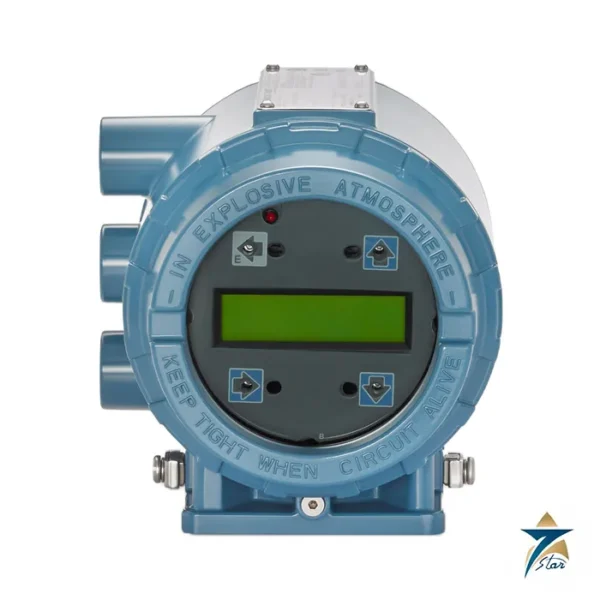
The field mount transmitter has three independent totalizers (A, B and C), an optional LCD with four optical switches for operation without opening the cover, and optional discrete channels (code AX). The wall mount transmitter has an optional 15-button keypad display. Outputs are selected by code: A for 4–20 mA with HART and pulse, F for FOUNDATION Fieldbus, M for Modbus RS-485 and E for EtherNet/IP. Power options are AC (code 1), 12 to 42 Vdc (code 2) or 20 to 32 Vdc for EtherNet/IP (code 4). Built-in transient protection follows IEC 61000-4-4 and 61000-4-5.
Standard diagnostics cover grounding and wiring fault, tunable empty pipe, electronics temperature, coil fault, transmitter fault, reverse flow, coil current and electrode saturation. Option DA1 adds high process noise and coated-electrode detection. Option DA2 adds SMART Meter Verification, either on command or continuously, plus 4–20 mA loop verification on HART builds. Verification without removing the meter from the line is useful for utilities that must demonstrate calibration to a regulator, and it avoids shutdowns on lines that cannot be isolated.
Flanges, pressure and ordering the 8750W
Flange standards supported include ASME B16.5 Class 150 and 300, AWWA C207 Class D and E for large lines, EN 1092-1 PN10, PN16, PN25 and PN40, JIS 10K and 20K, AS4087 and AS2129. Flange types are slip-on raised-face or flat-face, in carbon steel or 304/304L stainless steel. For ASME Class 150 carbon steel flanges the datasheet gives 285 psi at –20 to 100 °F, falling to 215 psi at 350 °F; Class 300 carbon steel gives 740 psi at the same low temperature. Always check the liner temperature limit and flange rating together, because the lower one governs.
- Transmitter mount and power supply voltage at site.
- Output and protocol: HART, FOUNDATION Fieldbus, Modbus or EtherNet/IP.
- Line size and flange standard, rating and material.
- Lining, electrode material and electrode type; grounding ring or reference electrode.
- Diagnostic suite (DA1, DA2), display (M4 or M5) and discrete channels.
- Certificates: calibration (Q4), material traceability (Q8), PED (PD), CRN, NSF drinking water (DW).
- High accuracy calibration (D1) if 0.2 percent of rate is needed.
Installing, commissioning and maintaining the 8750W
Install with the pipe full at the sensor. Fit grounding rings or reference electrodes as the pipe type requires: conductive unlined pipe may use the supplied grounding straps, but lined or non-conductive pipe needs rings or a reference electrode and often lining protectors. Remote mounting is the way to use the IP68 rating on sensors in chambers that flood; the installer must use IP68 approved glands and conduit plugs. For buried or submerged sites the datasheet lists potted junction boxes with 50 to 300 ft of combo cable and coal tar paint (V1). The remote-mount cable options (coil and electrode or combination cable) have their own kit numbers.
At start-up enter the calibration number, set range, low flow cut-off and damping (0 to 256 seconds), check empty-pipe detection and run the 8750W through a verification if the DA2 suite is fitted. In operation, periodic inspection of the junction box and grounding connections is usually enough because the meter has no moving parts. If electrodes coat, a bullet-nose type and a review of velocity are the first fixes. Keep the calibration certificate and nameplate data with your asset records.
Typical applications in Oman and the GCC
In the Gulf, water is the largest metered liquid by volume. The 8750W is used on seawater intake and outfall lines in neoprene or PEX, on desalination product and brine lines, on potable water transmission and distribution mains, on wastewater treatment plant inlets and sludge lines, and on cooling water circuits for power and industrial plants. Underground meter chambers that can flood suit the IP68 remote configuration, and the wide flange choice (ASME, EN, AWWA) matches the mixed standards on regional projects. Outdoor installations in direct sun and high ambient should use the ambient limits stated above.
Related Rosemount magnetic flow products
The 8750W sits at the value end of the Rosemount magnetic range. Higher-performance options include the 8732EM transmitter with the 8705-M flanged and 8711-M/L wafer sensors. For slurry or high-solids service the MS slurry sensor is a separate product. For hygienic duties use the sanitary sensors rather than the 8750W.
Information to send with an RFQ for the Rosemount 8750W
Please send the line size, fluid and temperature, flow range, pipe material and lining, flange standard and rating, preferred lining and electrode materials, the distance between sensor and transmitter if remote, output type, supply voltage, any submergence requirement, drinking-water or other certificates, and quantity. The full model code from your design documents is ideal.
Documents and quotation
The official Emerson product data sheet 00813-0300-4750 for the Rosemount 8750W magnetic flow meter for water and wastewater (English) is attached on this page as a PDF. It contains the line sizes, the liner and electrode materials, the flange ratings, the accuracy and flow range, the transmitter outputs and power options, the approvals, the dimension drawings and the ordering table for the 8750W sensor and transmitter. Check the line size, the liner, the electrode material and the transmitter mounting for your pipe, then send us the quantity and the delivery location for a quotation.
We prepare quotations from your model code or application data and confirm lead time. Seven Star LLC is an independent supplier in Muscat and does not act as the manufacturer.



























Reviews
There are no reviews yet.