Promag W 800 battery-powered electromagnetic flowmeter for water networks
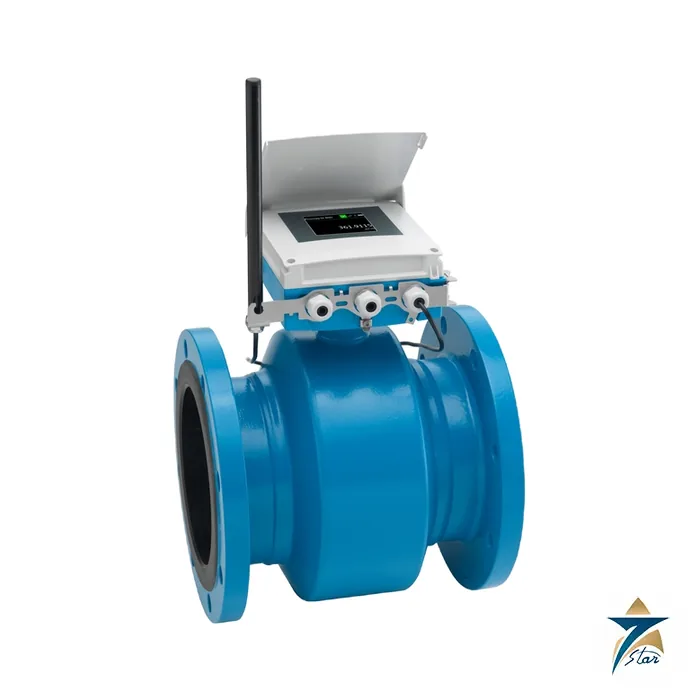
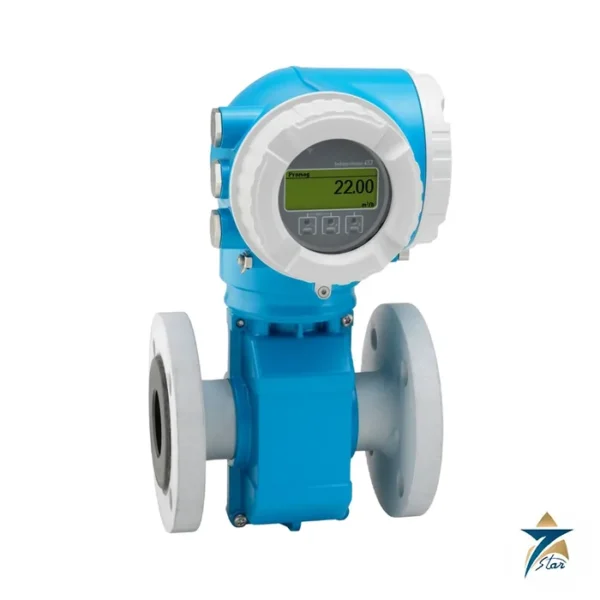
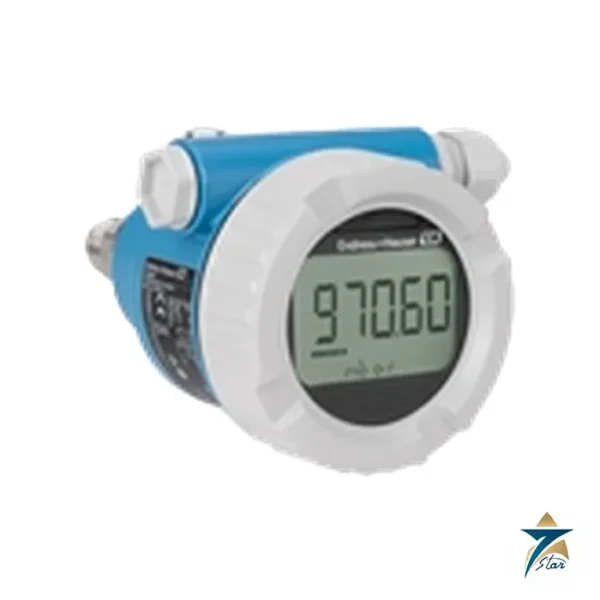
The Endress+Hauser Promag W 800 is a battery-powered electromagnetic flowmeter built for drinking water distribution networks where no mains supply is available at the measuring point. It belongs to the Proline Promag W family and the Proline 800 platform, which exists in two functional levels: a Standard version with basic functionality and an Advanced version that adds a remote-mounting option, an external battery housing, a cellular radio module and a larger feature set. Seven Star LLC supplies Endress+Hauser flow instruments in Oman and the GCC as an independent supplier in Muscat, and this page explains the Promag W 800 so an enquiry can be prepared quickly.
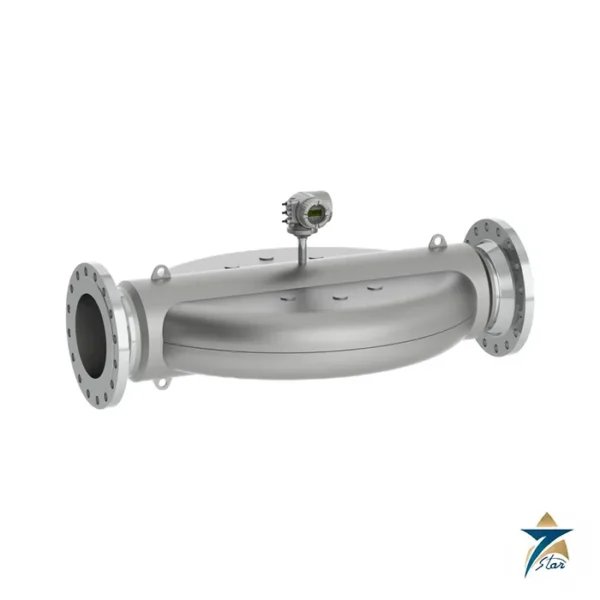
Promag W 800 is a product name, not a single ordering code. The exact device is defined by an order code that selects nominal diameter, liner, housing, power supply option, sensor option, approvals and accessories. The sensor is offered from DN 25 to DN 900 (1 to 36 in), with a measuring range from 9 dm³/min up to 22,500 m³/h.
Promag W 800 technical specifications
| Parameter |
Specification |
| Manufacturer / part number |
Endress+Hauser / Proline Promag W 800 (electromagnetic flowmeter, product root 5W8C) |
| Measuring principle |
Electromagnetic, Faraday induction, bidirectional |
| Measured variable |
Volume flow; pressure with the optional external pressure sensor |
| Nominal diameter |
DN 25 to 900 (1 to 36 in) |
| Measuring range |
9 dm³/min to 22,500 m³/h (2.5 to 100,000 gal/min) |
| Max. measurement error |
Volume flow ±0.5 % of reading ± 2 mm/s (0.08 in/s) |
| Liner and medium temperature |
Hard rubber (DN 50 to 900): 0 to +70 °C; polyurethane (DN 25 to 900): –20 to +50 °C; PTFE (DN 25 to 300): –20 to +70 °C |
| Electrodes |
1.4435 (316L) or Alloy C22, 2.4602 (UNS N06022) |
| Minimum conductivity |
20 µS/cm for liquids in general |
| Max. process pressure |
Up to PN 40, Class 300 or 20K depending on flange standard and size |
| Power supply |
Internal lithium battery packs (3.6 V DC, 38 Ah per pack); optional 100–240 V AC / 19–30 V DC supply with or without battery |
| Battery life |
Up to 15 years, depending on measuring interval and settings |
| Communication |
Bluetooth with SmartBlue app, Modbus RS485, pulse/status output; cellular radio on the Advanced version |
| Degree of protection |
Transmitter IP66/67 (Type 4X); IP68 (Type 6P) sensor versions available |
| Ambient temperature |
Transmitter –25 to +60 °C; sensor –10 to +60 °C (carbon steel connections) or –40 to +60 °C (stainless steel connections) |
| Drinking water approvals |
ACS, KTW/W270, NSF 61, WRAS BS 6920 |
How the Promag W 800 measures flow and manages its battery
The measuring principle follows Faraday’s law. A switched direct-current magnetic field of alternating polarity is applied across the pipe, and the conductive water moving through it induces a voltage that two electrodes pick up. That voltage is proportional to flow velocity, and the device converts it to volume flow using the pipe cross-section. Because no part protrudes into the stream, the sensor creates no pressure loss from a cross-section constriction and has no moving parts to wear. Repeatability is quoted at max. ±0.2 % of reading ± 2 mm/s over an operable flow range above 1000 : 1, and the manufacturer states accurate values are possible even with a 0 x DN inlet run.
Battery operation is the design driver. The transmitter does not measure continuously: it wakes at a configurable measuring interval, takes a reading, updates the totalizers and goes back to sleep. A longer interval, an infrequently used display, a low backlight setting and a larger pulse value all extend battery life, while operation below 0 °C or above 40 °C shortens it. The data sheet points to the manufacturer’s Applicator sizing tool for a battery-life estimate once the interval is known. The Advanced version can also take an external battery housing for longer service life.
Standard and Advanced versions of the Proline 800 transmitter
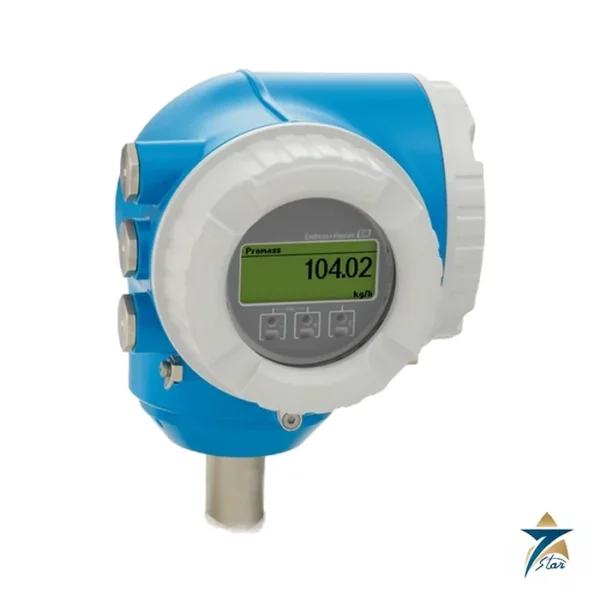
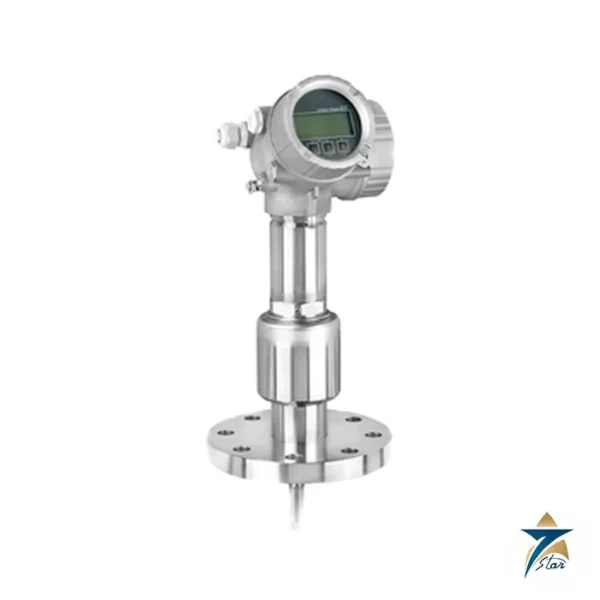
The Standard transmitter is a round compact polycarbonate housing operated through the SmartBlue app over Bluetooth. The Advanced version offers a compact housing or a remote wall-mount housing, so the transmitter can be placed where it is easy to read while the sensor sits in a chamber or underground. Only the Advanced version carries the cellular radio module, which uses LTE Cat M1, NB1 and NB2 with GPRS/EGPRS fallback, an integrated eSIM or a local nano SIM, MQTT with TLS encryption and an OPC-UA server connection. Alarm thresholds, totalizer readings and logger data can be received remotely. The data logger stores up to 10,000 records, or 50,000 with the extended data logger package.
Where Promag W 800 fits in the system and related Promag models
Promag W 800 sits beside the mains-powered Promag W 400 and Promag W 10 for water applications and the Promag P and Promag H lines for process and hygienic duty. Within the same Proline 800 platform, the choice is mainly between Standard and Advanced. For installations that do have power and a control system, a transmitter with 4–20 mA HART or a fieldbus is usually a better fit; the 800 platform communicates through Modbus RS485 and pulse or status outputs, plus the cellular link on the Advanced version. Sister pages for Promag H 100, Promag H 500 and Promag E 100 cover the PFA- and PTFE-lined process meters in the same family.
Selecting and ordering the Promag W 800
- Nominal diameter and expected flow range, including minimum night flow. Recommended velocity for the full-scale value is roughly 0.3 to 10 m/s.
- Liner: hard rubber, polyurethane or PTFE, matched to water temperature and the diameter limits in the table above.
- Electrodes: 316L is standard; Alloy C22 for more aggressive water.
- Flange standard: EN 1092-1, ASME B16.5, JIS B2220, AS 2129 Table E or AS 4087 PN 16, in fixed or lap-joint form for smaller sizes.
- Housing and power: compact or remote (Advanced), IP68 option, battery only, or mains/DC with lithium battery back-up.
- Environment: buried, chamber or permanent-immersion service decides the sensor protection class and the coating system.
- Approvals: drinking water listing, and whether a cold-water custody-transfer version (MID MI-001, OIML R49) is required.
- Application packages: extended data logger and Heartbeat Verification plus Monitoring.
Installation, commissioning and maintenance of the Promag W 800
Mount the Promag W 800 sensor with the arrow in the direction of flow and keep it filled; empty-pipe detection is built in, but a full pipe gives the best result. Ground rings or equipotential bonding are needed according to the pipe material. Where the sensor is buried or immersed, choose the fully welded, painted variant and the IP68 housing. In desert locations the manufacturer advises shading the instrument, fitting the optional display guard and protecting the display from sand abrasion.
Commissioning of the Promag W 800 is carried out wirelessly from a phone or tablet using the SmartBlue app. Write protection can be enabled with a hardware switch behind the display. Heartbeat Verification gives a traceable pass/fail test in the installed state, which supports longer calibration intervals under the operator’s risk assessment. Record the battery status shown on the display at every site visit and plan a replacement pack well before the end of life.
Typical applications in Oman and the GCC
A Promag W 800 suits Oman’s water network, which covers long distances between desalination plants, storage reservoirs and small settlements, and many measuring points sit far from a power line. A battery-powered meter with cellular reporting suits district metering areas, bulk transfer points, boreholes and reservoir outlets, where leak detection and non-revenue water control depend on frequent, reliable readings. High summer temperatures make shading, the display guard and the correct liner choice worth planning from the start; hard rubber and polyurethane liners have upper limits of 70 °C and 50 °C, and the sun can heat an exposed housing well beyond ambient air.
Promag W 800 liner and version overview
| Item |
Options and limits |
| Hard rubber liner |
DN 50 to 900, 0 to +70 °C |
| Polyurethane liner |
DN 25 to 900, –20 to +50 °C |
| PTFE liner |
DN 25 to 300, –20 to +70 °C |
| Standard transmitter |
Compact polycarbonate, SmartBlue operation, Modbus RS485 |
| Advanced transmitter |
Compact or remote, cellular radio, external battery housing option |
| Sensor protection |
IP66/67 standard; IP68 (Type 6P) options for burial or immersion |
Information to send with an RFQ for the Promag W 800
- Nominal diameter, pipe material and flange standard with pressure class.
- Liquid, temperature range, minimum and maximum flow.
- Standard or Advanced version, compact or remote, and the protection class required.
- Power concept: battery only, external battery or mains with back-up.
- Cellular network provider or eSIM requirement, and any logger or Heartbeat package.
- Drinking water approval or custody-transfer requirement, and the full order code of a unit being replaced.
Documents and quotation
The manufacturer technical information for the Promag W 800 is attached to this page as a datasheet. It should be read together with the operating instructions and your project specification before an order is placed.
Seven Star LLC quotes against the full order code or against your duty data. Send the diameter, liquid, power concept and approval needs, and we will confirm the configuration, lead time and the certificates available with the shipment.


























Reviews
There are no reviews yet.