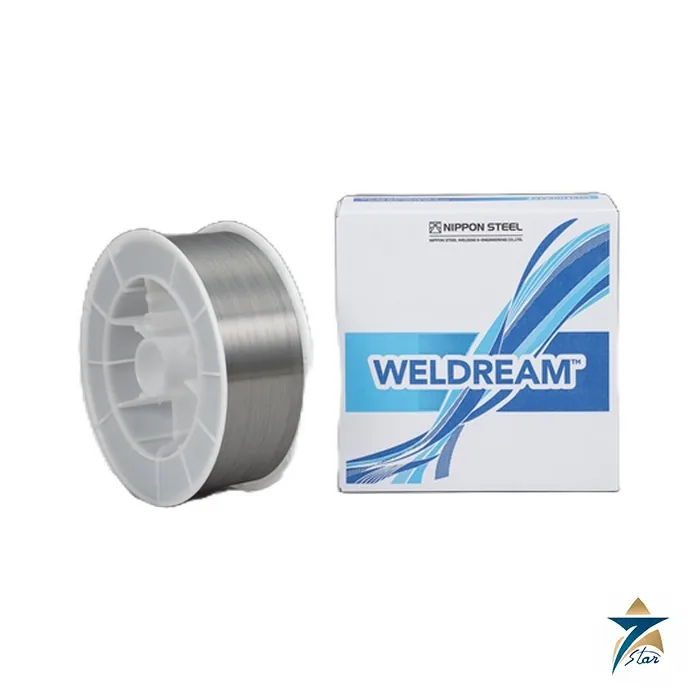
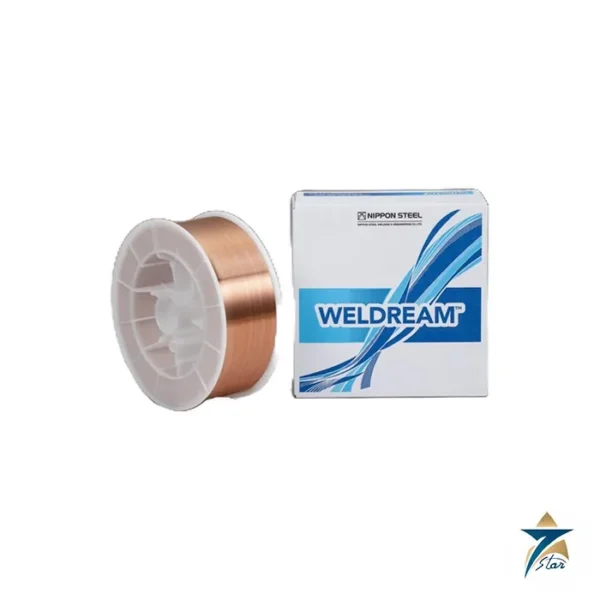
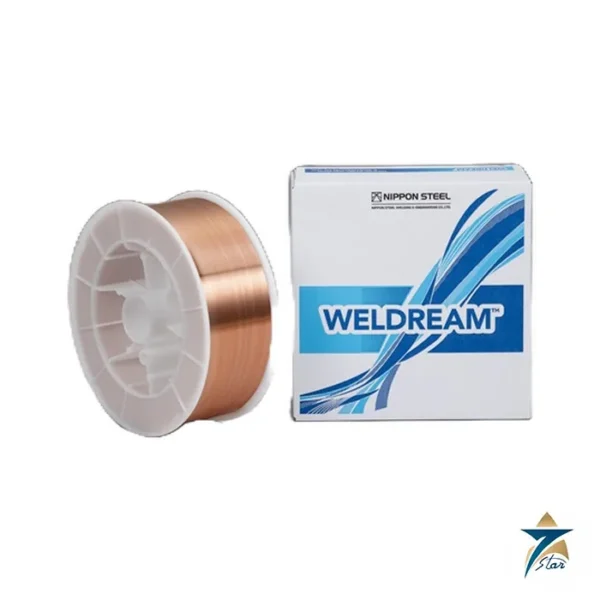
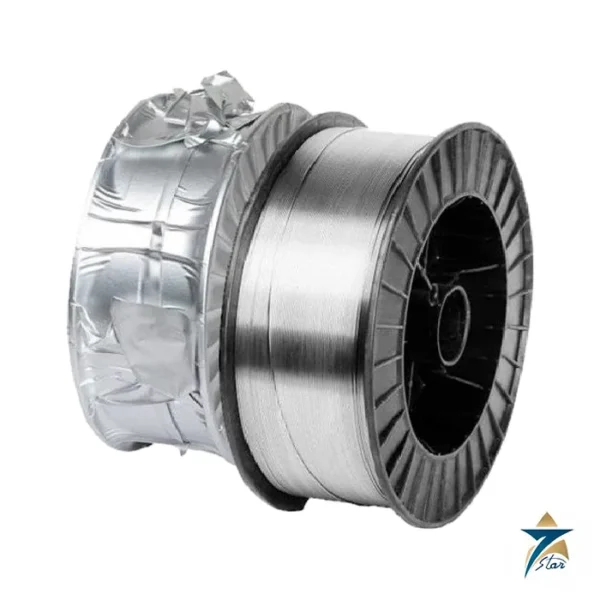
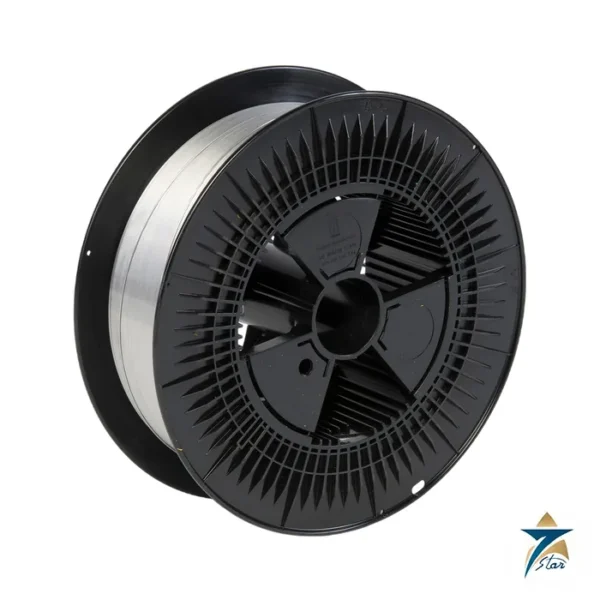
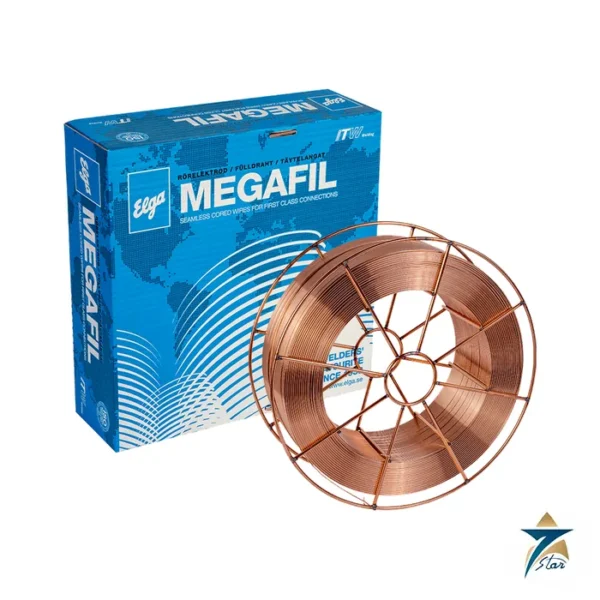
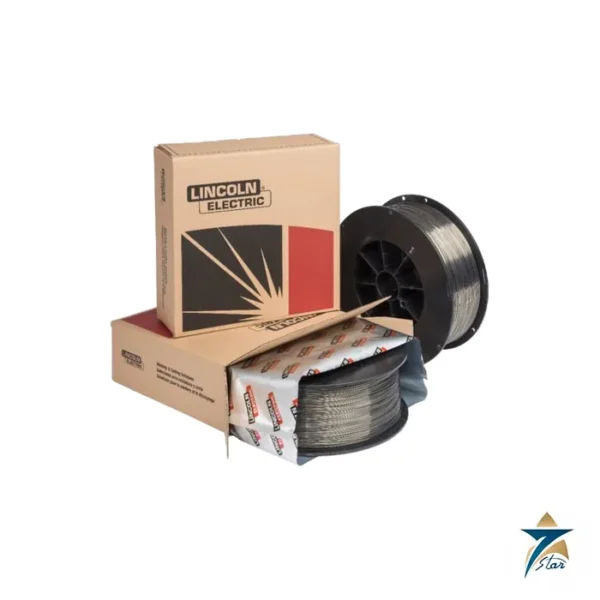
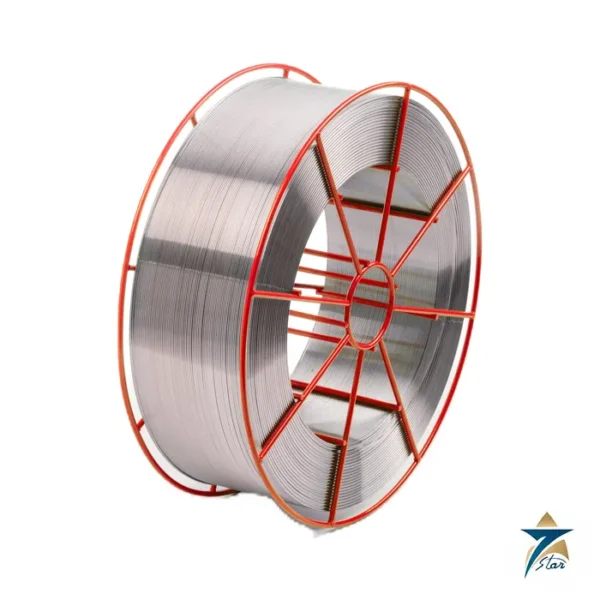
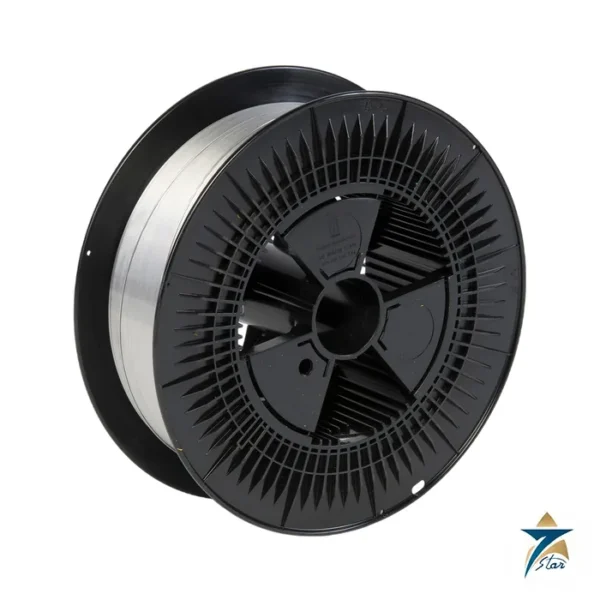
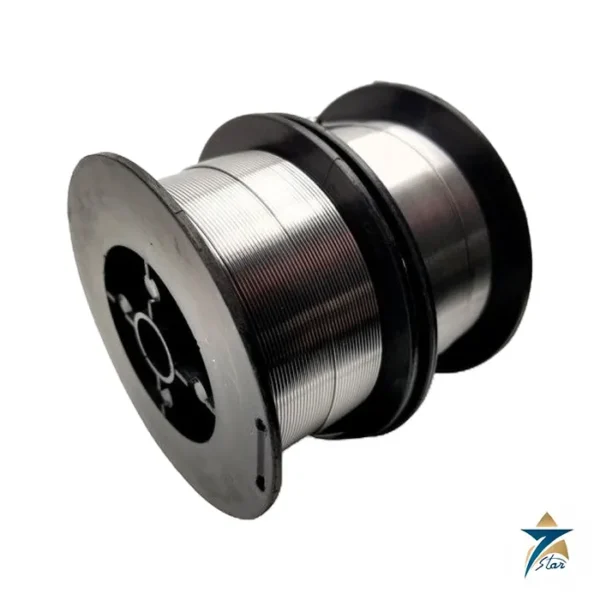
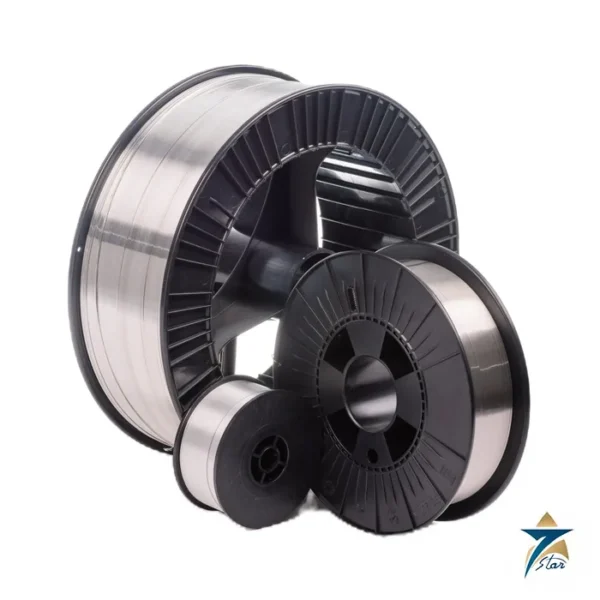
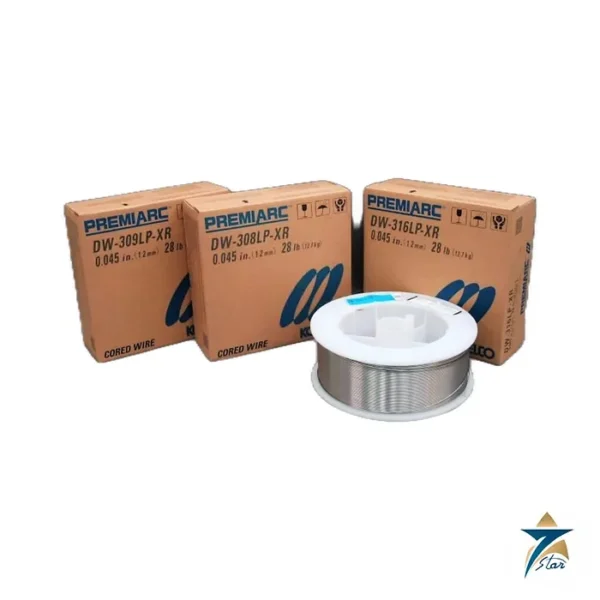
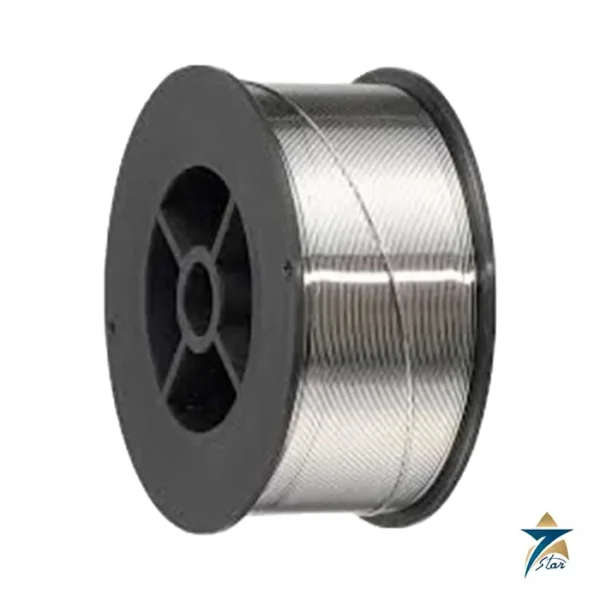
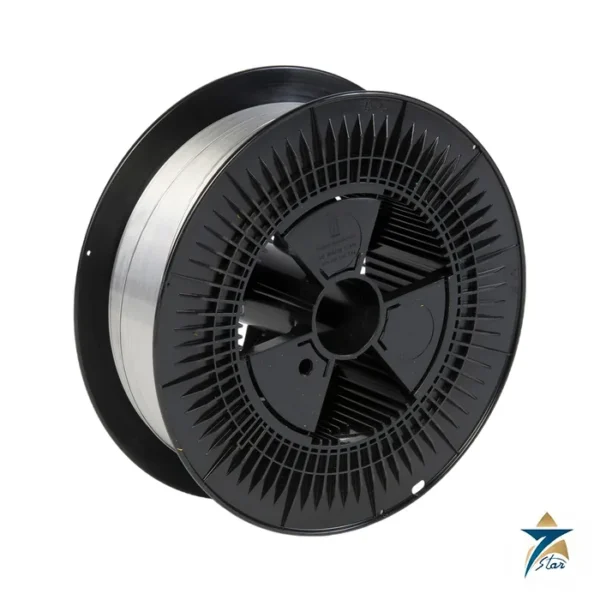
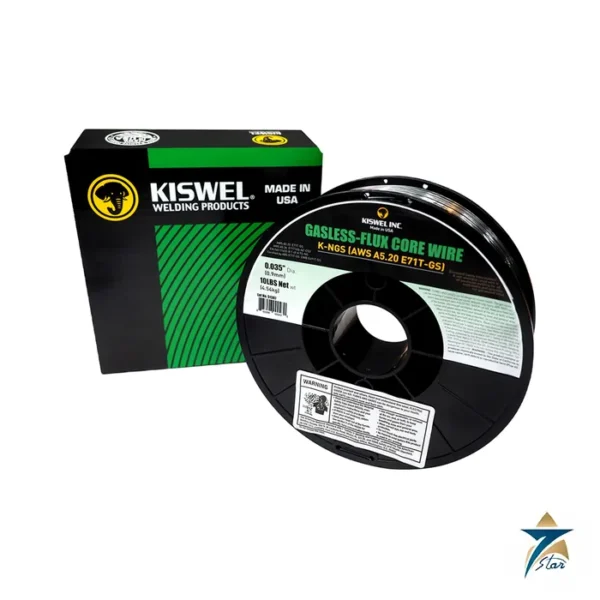
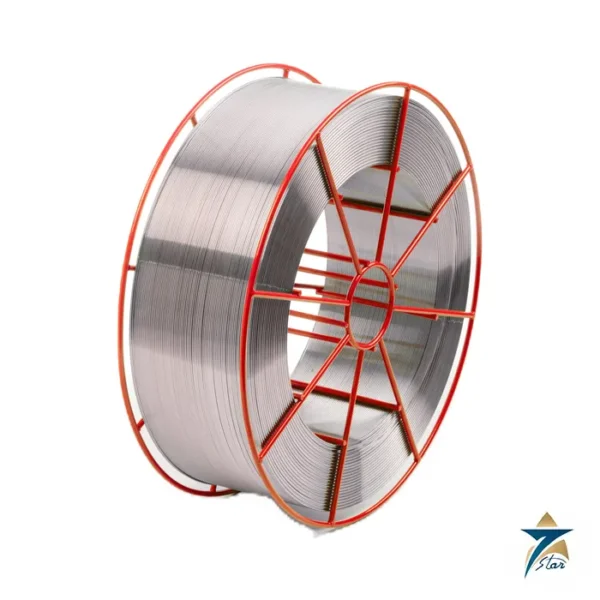
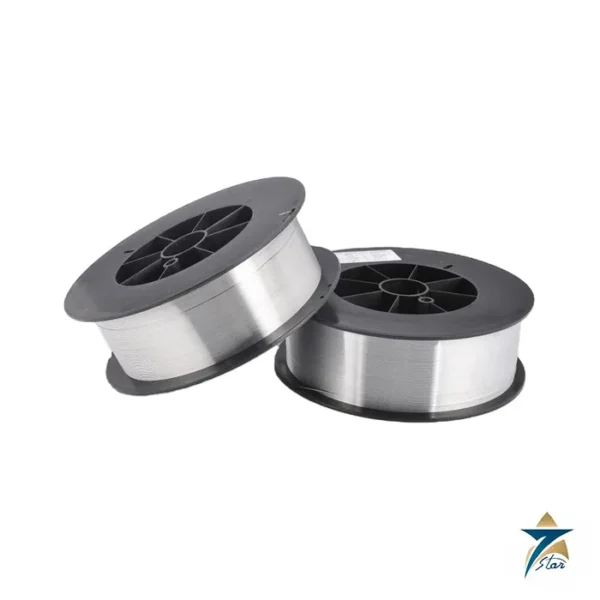
Nippon Steel SF-308L E308LT0-1 Stainless Flux-Cored Wire

Description

Seamless 308L cored wire for flat and fillet stainless welding

The Nippon Steel SF-308L is a seamless flux-cored wire for low-carbon 18% Cr – 8% Ni stainless steel, classified AWS A5.22 E308LT0-1 and JIS Z 3323 TS308L-FB0. It runs with CO2 or with argon containing more than 20% CO2.

The manufacturer describes low spatter, easy slag removal and an excellent bead shape. Because the tube has no seam, the wire is highly resistant to moisture absorption and feeds smoothly. High efficiency is given in flat and horizontal fillet positions. Listed applications are chemical apparatus, containers and plants in low-carbon 18-8 stainless steel.

Technical specifications

Parameter Specification
Manufacturer / product Nippon Steel Welding & Engineering / SF-308L
Process FCAW, gas-shielded, seamless stainless wire
AWS classification A5.22 E308LT0-1
JIS classification Z 3323 TS308L-FB0
Shielding gas CO2, or Ar with more than 20% CO2; 20–25 L/min
Polarity DC (+)
Typical weld metal, % (CO2) C 0.033, Si 0.59, Mn 1.51, P 0.024, S 0.008, Ni 10.7, Cr 19.9
Typical mechanical properties TS 550 MPa, El. 41%
Sizes and current 0.8 mm 50–150 A; 0.9 mm 70–170 A; 1.2 mm 100–250 A; 1.6 mm 200–350 A
Tip to base metal distance 15–25 mm

Choosing a T0 stainless cored wire

The T0 position code in AWS A5.22 means the wire is intended for flat and horizontal welding, and the -1 suffix denotes CO2 shielding. A T0 wire usually gives higher deposition and a flatter bead than a T1 all-position type, which suits tank shells, vessel seams and fillet-welded fabrications positioned for downhand work. For vertical and overhead joints, choose an all-position stainless cored wire instead.

The 0.8 and 0.9 mm sizes are useful on thin sheet down to low current, while 1.2 and 1.6 mm cover medium and heavy plate. Base materials are 304L and similar low-carbon grades; 304 and 321 are commonly welded with 308L filler too, subject to the corrosion specification.

Set-up

Keep the tip-to-work distance within 15–25 mm and the gas flow at 20–25 L/min. Use stainless-only wire brushes and remove slag fully between passes. With argon-CO2 mixtures, the arc is softer and spatter lower, while CO2 gives deeper penetration; confirm properties in procedure qualification for the gas you use.

As with other stainless cored wires, the slag system protects the bead and shapes it, so remove it fully before the next pass and before any pickling. The seamless construction also means the wire does not need rebaking after normal storage, though spools should still be kept in their packaging in a dry store and used within a reasonable time after opening.

Documents and quotation

The official product page link is given below. Browse our Flux-Cored Welding Wire category for related consumables.

For a quotation, send the diameter, spool size, quantity and certificate requirements.

Nippon Steel SF-308L classification and typical properties

Item Manufacturer data
JIS Z 3323 TS308L-FB0
AWS A5.22 E308LT0-1
Shielding gas CO2, or Ar + CO2 with more than 20% CO2
Positions Flat and horizontal fillet
Weld metal chemistry (%) C 0.033, Si 0.59, Mn 1.51, Ni 10.7, Cr 19.9
Tensile strength / elongation 550 MPa / 41%

Wire diameters and current ranges

Diameter (mm) Current (A)
0.8 50–150
0.9 70–170
1.2 100–250
1.6 200–350

How SF-308L works

SF-308L is a seamless flux-cored wire that deposits a low-carbon 19Cr-10Ni austenitic stainless steel. The low carbon content (L grade) reduces chromium carbide precipitation at grain boundaries during welding, which protects the joint against intergranular corrosion. The flux core forms a slag that shapes a smooth, well-wetted bead and gives an easy slag release, which is why flux-cored stainless wire is popular for high productivity fillet and flat welding on tanks and vessels. A small amount of ferrite in the deposit helps resist hot cracking.

Selection and usage guide for SF-308L

  • Use SF-308L for 304 and 304L type stainless steels in chemical apparatus, containers and plant equipment, as listed by Nippon Steel.
  • For flat and horizontal fillet welding. Choose an all-position stainless wire if vertical or overhead welding is required.
  • Keep the tip-to-work distance at 15–25 mm and the gas flow at 20–25 L/min.
  • For 316L or dissimilar joints, choose the matching filler rather than 308L.

Storage and good welding practice

  • Store spools sealed in a dry area. Return partly used spools to their packaging after each shift.
  • Use stainless-only brushes and grinding discs to avoid iron contamination of the joint.
  • Control heat input and interpass temperature to protect corrosion resistance.
  • Remove slag fully and, where required, pickle and passivate the weld after welding.

Typical SF-308L applications in Oman and the GCC

Food processing plants, water and desalination projects, chemical plants and tank fabricators in Oman and the GCC weld 304 and 304L stainless steel for tanks, piping supports, hoppers and process equipment. SF-308L helps such workshops increase deposition rates on long fillet welds while keeping a clean bead appearance.

Why source from Seven Star LLC

Seven Star LLC supplies stainless steel welding consumables to fabricators and plant maintenance teams across Oman and the GCC. Send us the diameter and quantity to request a quote; our team can help confirm the correct ordering code.

Common questions when ordering SF-308L

Buyers often ask whether a solid 308L MIG wire or a flux-cored wire is the better choice. Solid wire usually needs an argon-rich gas and more welder skill to get a smooth bead, while a flux-cored wire such as SF-308L runs with CO2 or Ar+CO2 and the slag helps shape the bead, which makes long fillet welds faster and more consistent. The trade-off is that slag must be removed after each pass. Another frequent question is gas choice: Nippon Steel lists CO2 or argon mixtures containing more than 20% CO2, so low-CO2 mixes intended for solid stainless wire should not be used. When the joint will see aggressive chemicals or chlorides, confirm with the process engineer that 308L is the correct grade before ordering.

Datasheets & Documents
  • PDF Datasheet Nippon Steel SF-308L handbook page (EN) Download
Reviews (0)

Reviews

There are no reviews yet.

How would you rate this product?

It takes about 10 seconds — just tap a star. Your email is never published.

About brand

Nippon Steel Welding & Engineering is a Japanese maker of welding consumables and equipment, part of the Nippon Steel group. Its roots go back to Toyo Welding Rod, established in 1934, and it took its current form in 2002, when Nippon Steel Welding and Sumikin Welding merged as Nippon Steel & Sumikin Welding. The company adopted its present name on 1 April 2019.

Seven Star LLC is an independent supplier in Muscat. We list Nippon Steel wires and electrodes for fabricators and contractors in Oman and the GCC.

Nippon Steel Welding & Engineering company profile

Origins Toyo Welding Rod, 1934
Merger Nippon Steel Welding and Sumikin Welding, 2002
Current name Since 1 April 2019
Group Nippon Steel Corporation
Product families L-55 low-hydrogen and NS-03Hi covered electrodes, YM-26 and YM-28 solid MIG wires, SF-1, SF-3 and SF-308L flux-cored wires, submerged arc wires and fluxes, welding equipment

Milestones

  • 1934: Toyo Welding Rod is established.
  • 1970: Nippon Steel Welding Products & Engineering is formed.
  • 2002: Merger with Sumikin Welding.
  • 2019: The company becomes Nippon Steel Welding & Engineering.

Nippon Steel Welding product series

Flux-cored wires include the SF-1 E71T-1C seamless wire, the SF-3 E71T-12C wire for low-temperature toughness and the SF-308L E308LT0-1 stainless wire. Solid wires include the YM-26 ER70S-G for CO2 shielding and the YM-28 ER70S-6 all-position wire.

Electrodes include the NS-03Hi E6013 lime-titania electrode and the L-55 E7016 low-hydrogen electrode.

Rutile flux-cored wires such as the SF-1 give smooth arc and easy slag removal in all positions, while low-temperature grades suit structures that need impact toughness. Low-hydrogen electrodes like the L-55 are used where hydrogen cracking is a risk, such as thicker sections and higher-strength steels.

Where Nippon Steel consumables are used

Structural steel, shipbuilding, tanks, pressure vessels and pipe work, and stainless steel fabrication.

Nippon Steel Welding & Engineering products we list

Family Examples
Flux-Cored Welding Wire Nippon Steel SF-1 E71T-1C Seamless Flux-…, Nippon Steel SF-3 E71T-12C Low-Temperatu…, Nippon Steel SF-308L E308LT0-1 Stainless…
Welding Electrodes Nippon Steel L-55 E7016 Low-Hydrogen Ele…, Nippon Steel NS-03Hi E6013 Lime-Titania…
Solid Welding Wire Nippon Steel YM-26 ER70S-G CO2 Solid MIG…, Nippon Steel YM-28 ER70S-6 All-Position…

Ordering Nippon Steel consumables: what we need

Send the product name and AWS classification, diameter, spool or package size, quantity and any certificate required.

Facts checked against the company's own corporate profile (weld.nipponsteel.com), October 2026.

FAQ

Questions about the Nippon Steel SF-308L E308LT0-1 Stainless Flux-Cored

Answers from our engineering team on installation, compatibility and integration.

01What is the classification of Nippon Steel SF-308L?
AWS A5.22 E308LT0-1 and JIS Z 3323 TS308L-FB0.
02Which shielding gases can be used?
CO2, or argon with more than 20% CO2.
03Is SF-308L an all-position wire?
It is designed for high efficiency in flat and horizontal fillet positions.
04Which diameters are listed?
0.8, 0.9, 1.2 and 1.6 mm.
05What tip-to-work distance is recommended?
15 to 25 mm.