- Automation & ControlView all 3,060 products
- Automation Accessories
- AC Drives
- PLC & I/O Cards
- Industrial Communications
- Vibration Monitoring
- Isolator & Barrier
- Controllers & Data Acquisition
- Safety Switches & Guard Locking
- Motor Soft Starters
- Encoders
- CCTV & Security
- Pneumatic Cylinders
- HMI Displays
- Servo Drives
- Industrial Computers
- Machine Vision
- Automation Software
- Robotics
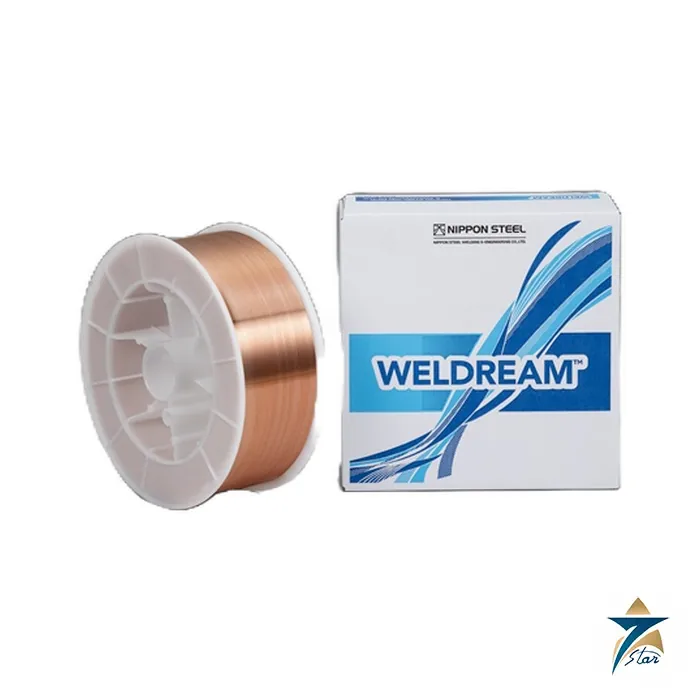
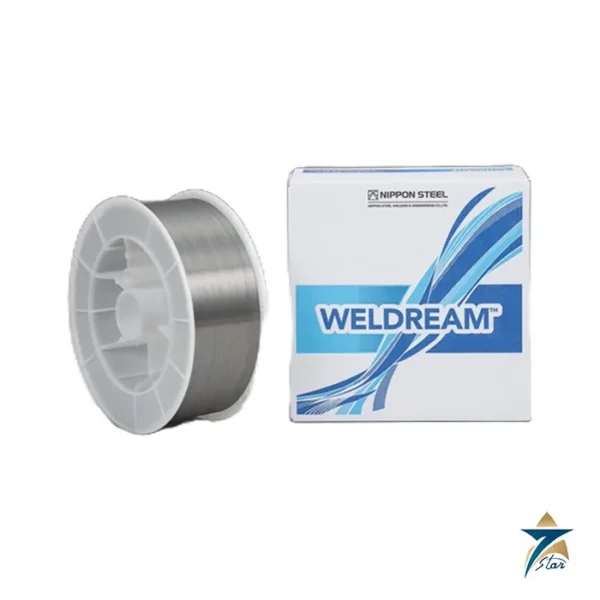
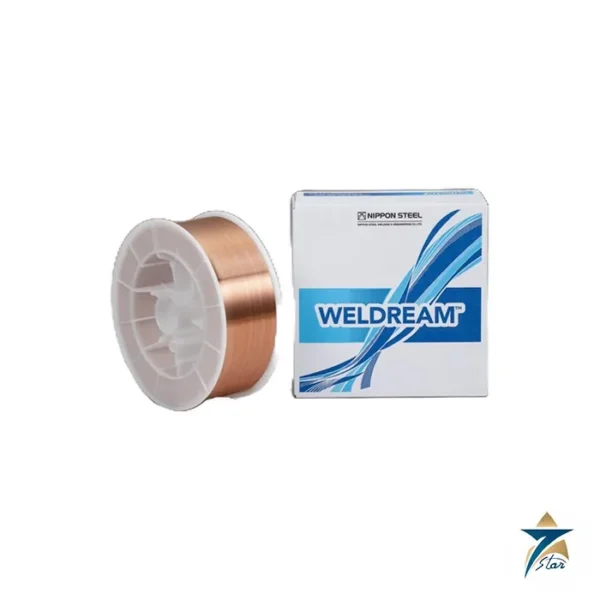
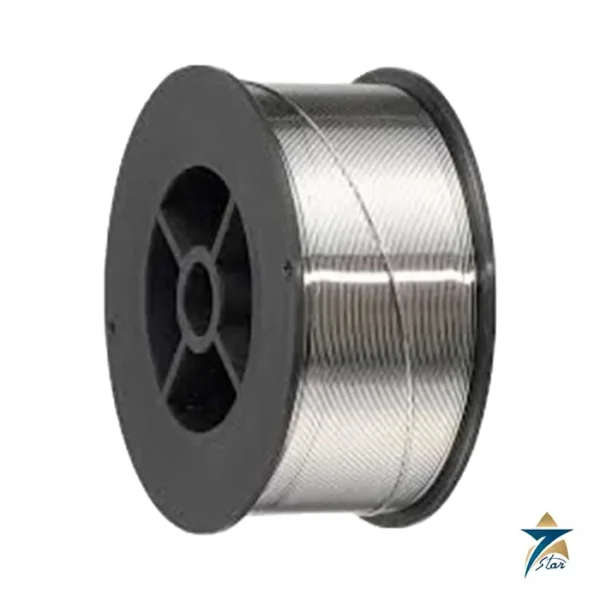
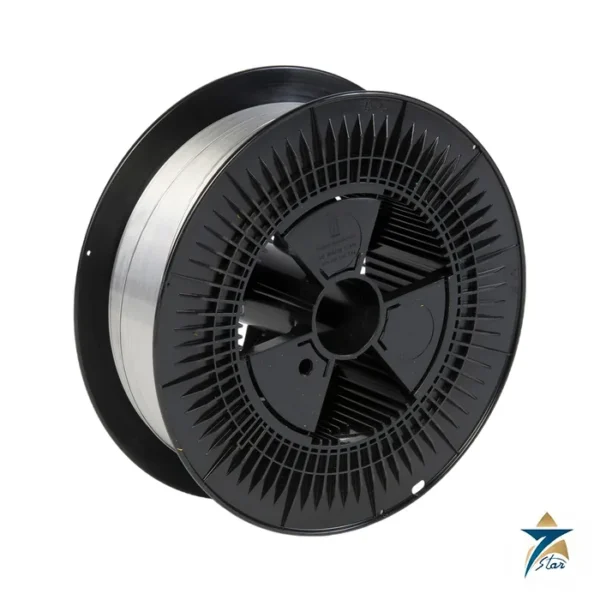
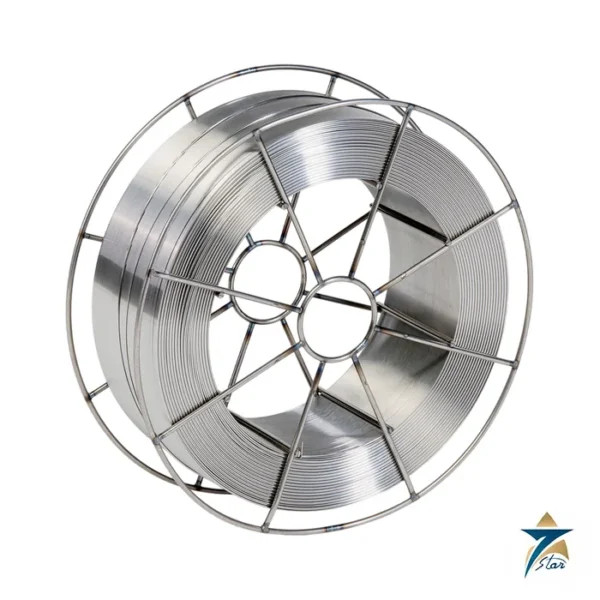
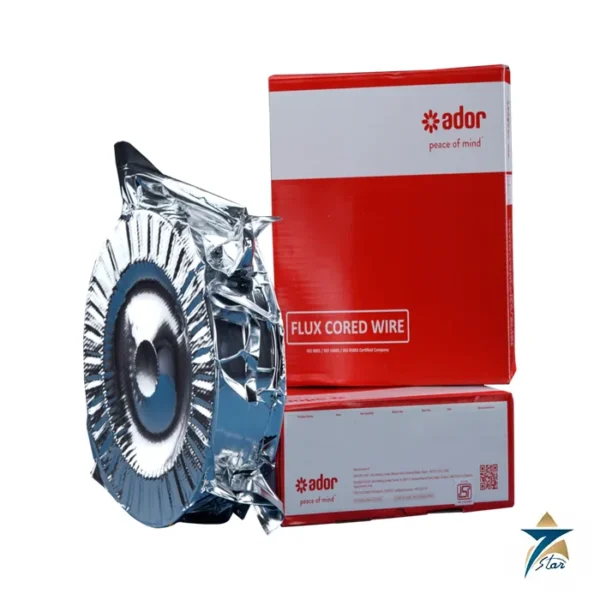
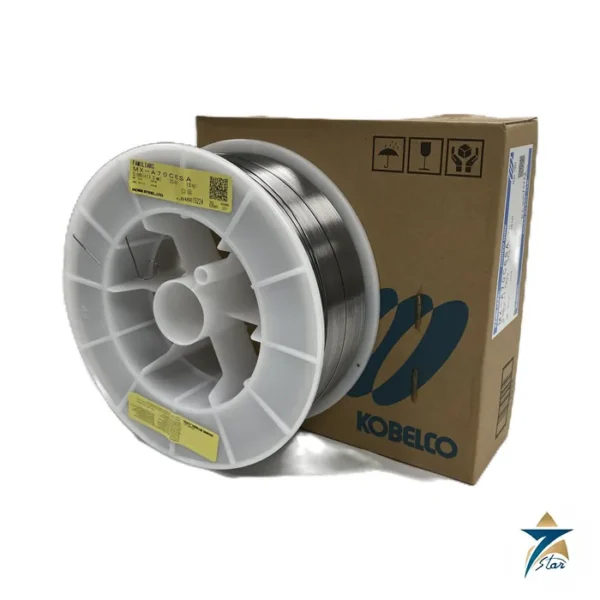
Nippon Steel SF-3 E71T-12C Low-Temperature Flux-Cored Wire
Description
Seamless rutile cored wire for low-temperature toughness
The Nippon Steel SF-3 is a rutile-type seamless flux-cored wire for CO2-shielded welding, classified AWS A5.20 E71T-12C-H4 and JIS Z 3313 T492T1-1CA-N1-UH5. Nippon Steel Welding & Engineering designed it for shipbuilding grade E steel: the weld metal shows excellent toughness in the -20 to -30 °C range, with good crack resistance and all-position weldability.
Applications are mild steel and 490 MPa high tensile steel for machinery, structures, steel frames, ships, bridges, towers, rolling stock and parts where toughness is especially important.
Technical specifications
| Parameter | Specification |
|---|---|
| Manufacturer / product | Nippon Steel Welding & Engineering / SF-3 |
| Process | FCAW, gas-shielded, seamless rutile wire |
| AWS classification | A5.20 E71T-12C-H4 |
| JIS classification | Z 3313 T492T1-1CA-N1-UH5 |
| Shielding gas | CO2 |
| Polarity | DC (+) |
| Typical weld metal, % | C 0.05, Si 0.42, Mn 1.30, P 0.013, S 0.004, Ni 0.44 |
| Typical mechanical properties | YS 545 MPa, TS 600 MPa, El. 27% |
| Charpy V-notch | 105 J at -30 °C; 130 J at -20 °C |
| Current, 1.2 mm | Flat and horizontal fillet 180–300 A; horizontal 180–300 A; V-up and overhead 180–260 A |
| Current, 1.4 mm | Flat and horizontal fillet 200–410 A; horizontal 200–350 A; V-up and overhead 180–260 A |
| Nozzle to base metal distance | Within 20 mm |
Where SF-3 fits against a general-purpose E71T-1C
The main difference from the general-purpose Nippon Steel SF-1 is the small nickel addition and the -12 designation, which in AWS A5.20 calls for tighter manganese limits and Charpy testing at -30 °C. That makes SF-3 the choice when a ship classification grade or project specification demands low-temperature impact values that a standard rutile wire may not reliably meet.
Being seamless, the wire keeps a low diffusible hydrogen level (H4) and does not pick up moisture through a seam during storage, an advantage on humid sites.
Usage guidelines from the handbook
Toughness depends on good gas cover. If shielding is insufficient, nitrogen from the air enters the weld and degrades toughness, so keep the nozzle within 20 mm of the base metal and protect the arc from draughts. Select heat input according to plate thickness and position; higher heat input lowers impact values. For one-side welding, the manufacturer recommends the SB-41 backing material. Other handling notes follow the SF-1 guidelines: looser feed roll pressure than for solid wire and slightly lower arc voltage.
The two published diameters suit different work. The 1.2 mm wire covers all positions with the same 180–260 A range in vertical-up and overhead, so one setting works for most positional joints in a ship block. The 1.4 mm wire extends the flat and horizontal fillet range to 410 A for higher deposition on downhand seams, while staying usable at 180–260 A out of position.
Documents and quotation
The official product page link is given below. Browse our Flux-Cored Welding Wire category for related consumables.
For a quotation, send the diameter, spool weight, quantity and any classification society approval or mill certificate requirement.
Nippon Steel SF-3 classification and typical properties
| Item | Manufacturer data |
|---|---|
| JIS | Z 3313 T492T1-1CA-N1-UH5 |
| AWS | A5.20 E71T-12C-H4 |
| Wire type | Rutile seamless flux-cored wire, CO2 shielding |
| Weld metal chemistry (%) | C 0.05, Si 0.42, Mn 1.30, Ni 0.44 |
| Yield / tensile strength | 545 MPa / 600 MPa |
| Elongation | 27% |
| Charpy impact | 130 J at −20 °C; 105 J at −30 °C |
Welding current ranges
- 1.2 mm: 180–300 A in the flat position
- 1.4 mm: 200–410 A in the flat position
- Vertical-up and overhead: approx. 180–260 A
How SF-3 works
SF-3 is a seamless flux-cored wire. Because the tube has no seam, the core is sealed against moisture pickup, which is why the wire reaches a diffusible hydrogen level suited to the H4 / UH5 designations. The rutile flux forms a fast-freezing slag that supports the weld pool in vertical and overhead positions, so one wire can be used in all positions. The small nickel addition in the weld metal is what gives the good toughness at −20 to −30 °C, the range needed for shipbuilding grade E steels and for structures that must meet low-temperature impact requirements. The low hydrogen level also reduces the risk of hydrogen-induced cracking on thicker sections when the correct procedure and preheat are followed.
Selection and usage guide for SF-3
- Choose SF-3 where all-position flux-cored welding is needed and the specification calls for impact toughness at −20 °C or −30 °C.
- Use 100% CO2 shielding gas, as the wire is designed for it.
- Keep the nozzle-to-work distance within about 20 mm to protect the weld from porosity.
- For one-side welding on ceramic backing, Nippon Steel lists the SB-41 backing material.
- Qualify the wire against the classification society or project WPS before production welding.
Storage and maintenance
- Keep spools in their original packaging until use and store them in a dry area away from condensation.
- Protect partly used spools from dust and humidity, which is important in coastal sites.
- Check the drive rolls, liner and contact tip regularly for smooth feeding.
- Protect the gas flow from wind on open sites, using screens where needed.
Typical SF-3 applications in Oman and the GCC
Shipyards, offshore fabricators, steel structure workshops and tank builders in Oman and the GCC use all-position CO2 flux-cored wires for hull blocks, decks, bridges and heavy structures. SF-3 suits work where low-temperature impact values are specified, such as ship hulls built to grade E steel, offshore modules and structures for export to colder regions.
Why source from Seven Star LLC
Seven Star LLC supplies welding consumables to shipyards, fabricators and contractors across Oman and the GCC. Send us the diameter, spool type and quantity to request a quote; our team can help confirm the correct ordering code.
Datasheets & Documents
- Datasheet Nippon Steel SF-3 handbook page (EN) Download
Reviews (0)
How would you rate this product? Cancel reply
About brand
Nippon Steel Welding & Engineering is a Japanese maker of welding consumables and equipment, part of the Nippon Steel group. Its roots go back to Toyo Welding Rod, established in 1934, and it took its current form in 2002, when Nippon Steel Welding and Sumikin Welding merged as Nippon Steel & Sumikin Welding. The company adopted its present name on 1 April 2019.
Seven Star LLC is an independent supplier in Muscat. We list Nippon Steel wires and electrodes for fabricators and contractors in Oman and the GCC.
Nippon Steel Welding & Engineering company profile
| Origins | Toyo Welding Rod, 1934 |
|---|---|
| Merger | Nippon Steel Welding and Sumikin Welding, 2002 |
| Current name | Since 1 April 2019 |
| Group | Nippon Steel Corporation |
| Product families | L-55 low-hydrogen and NS-03Hi covered electrodes, YM-26 and YM-28 solid MIG wires, SF-1, SF-3 and SF-308L flux-cored wires, submerged arc wires and fluxes, welding equipment |
Milestones
- 1934: Toyo Welding Rod is established.
- 1970: Nippon Steel Welding Products & Engineering is formed.
- 2002: Merger with Sumikin Welding.
- 2019: The company becomes Nippon Steel Welding & Engineering.
Nippon Steel Welding product series
Flux-cored wires include the SF-1 E71T-1C seamless wire, the SF-3 E71T-12C wire for low-temperature toughness and the SF-308L E308LT0-1 stainless wire. Solid wires include the YM-26 ER70S-G for CO2 shielding and the YM-28 ER70S-6 all-position wire.
Electrodes include the NS-03Hi E6013 lime-titania electrode and the L-55 E7016 low-hydrogen electrode.
Rutile flux-cored wires such as the SF-1 give smooth arc and easy slag removal in all positions, while low-temperature grades suit structures that need impact toughness. Low-hydrogen electrodes like the L-55 are used where hydrogen cracking is a risk, such as thicker sections and higher-strength steels.
Where Nippon Steel consumables are used
Structural steel, shipbuilding, tanks, pressure vessels and pipe work, and stainless steel fabrication.
Nippon Steel Welding & Engineering products we list
Ordering Nippon Steel consumables: what we need
Send the product name and AWS classification, diameter, spool or package size, quantity and any certificate required.
Facts checked against the company's own corporate profile (weld.nipponsteel.com), October 2026.
Browse Nippon Steel Welding & Engineering products by category: Flux-Cored Welding Wire, Solid Welding Wire, Welding Electrodes.
FAQ
Questions about the Nippon Steel SF-3 E71T-12C Low-Temperature
Answers from our engineering team on installation, compatibility and integration.
01What is the AWS classification of Nippon Steel SF-3?
AWS A5.20 E71T-12C-H4, with JIS Z 3313 T492T1-1CA-N1-UH5.
02What steel was SF-3 designed for?
Shipbuilding grade E steel, mild steel and 490 MPa high tensile steel.
03What impact values does it give?
Typically 105 J at -30 °C and 130 J at -20 °C.
04Which shielding gas is used?
CO2.
05Which diameters are listed?
1.2 and 1.4 mm.


Reviews
There are no reviews yet.