Low-hydrogen stick electrode for 490 MPa structural and pressure work
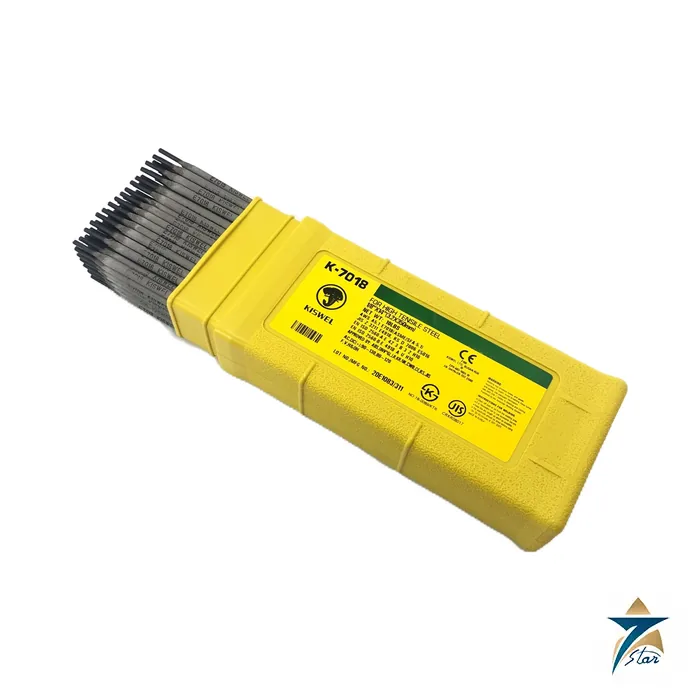
The KISWEL K-7018 is a covered electrode with a low-hydrogen, iron powder coating for welding 490 MPa class high tensile steel. KISWEL lists ships, bridges, storage tanks and industrial machinery as typical applications, and the datasheet adds base metals from general structural plate through ship plate, cast steel, line pipe and boiler and pressure vessel steels.
According to the manufacturer the electrode gives good mechanical properties and radiographic soundness, a satisfactory bead appearance with easy slag removal, and a stable arc across most of the current range. It runs on AC or DC electrode positive.
Technical specifications
| Parameter |
Specification |
| Manufacturer / product |
KISWEL / K-7018 |
| Process |
SMAW (stick, MMA), covered electrode |
| Coating type |
Low hydrogen, iron powder |
| AWS classification |
A5.1 E7018 |
| EN ISO 2560-A / -B |
E 42 3 B 32 H10 / E 49 18 A U H10 |
| JIS Z 3211 |
E4918 |
| Current |
AC or DC+ |
| Typical all-weld metal, % |
C 0.07, Si 0.61, Mn 1.00, P 0.015, S 0.011, Ni 0.01 |
| Typical mechanical properties (as welded) |
YS 480 MPa, TS 570 MPa, El. 30%, 90 J at -30 °C |
| AWS requirement |
YS ≥400 MPa, TS ≥490 MPa, El. ≥22%, ≥27 J at -30 °C |
| Diffusible hydrogen |
Average 9.2 ml/100 g weld metal (gas chromatography) |
| Sizes and current, flat/fillet |
2.6 mm 60–100 A; 3.2 mm 80–130 A; 4.0 mm 130–180 A; 5.0 mm 160–220 A |
| Current, vertical-up |
2.6 mm 50–80 A; 3.2 mm 80–110 A; 4.0 mm 90–140 A; 5.0 mm 120–190 A |
| Efficiency (3.2 mm) |
Nominal electrode efficiency 115–120%; deposition efficiency 65–70% |
| Redrying |
300–400 °C for 60–120 min |
| Packaging |
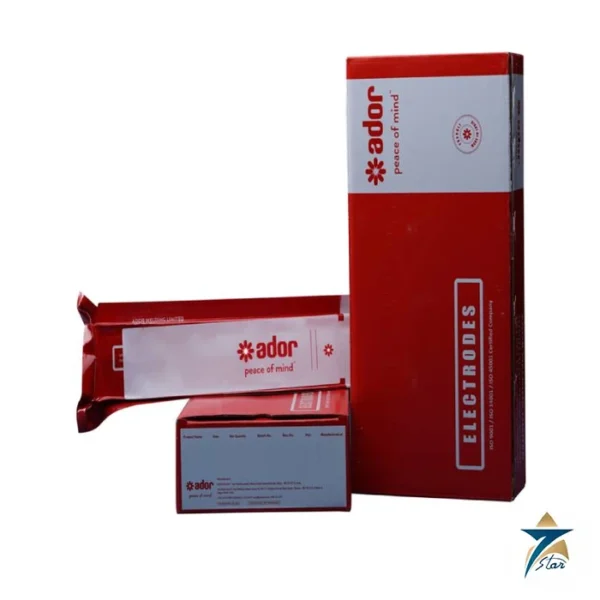
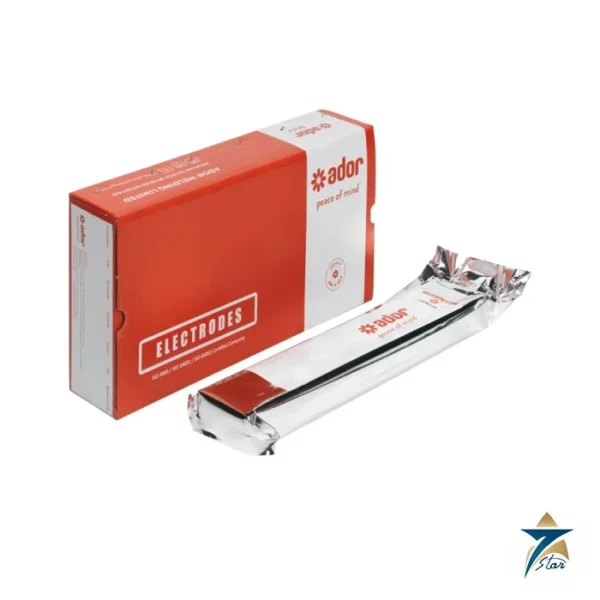
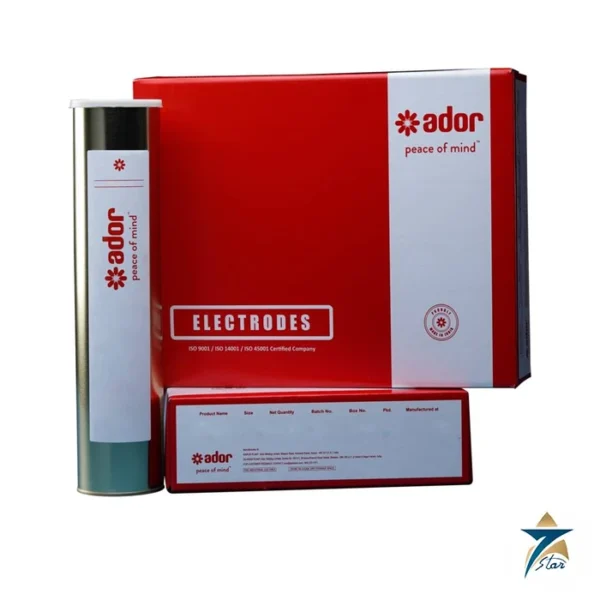
5 kg cartons (20 kg outer) or 2 kg / 5 kg vacuum packs; white tip colour |
| Approvals listed |
ABS 3Y H10, BV 3Y HH, DNV GL 3Y H10, LR 3Ym H15, NK KMW53H; also KS, JIS, CWB, CE |
Base metals, storage and redrying
The datasheet lists suitable base materials by industry: EN 10025 S185 to S355 structural steels, ASTM A131 ship plate grades A, B, D and AH32 to EH36, EN 10213-2 GP240R castings, EN 10208 L210 to L415 and API 5L X42 to X60 line pipe, and EN 10028-2 P235GH to P355GH boiler and pressure vessel plate. That range is why an E7018 electrode is often the default choice for fit-up, repair and structural welding where a low-hydrogen deposit is specified.
Low-hydrogen coatings only perform as intended when they are kept dry. KISWEL advises keeping electrodes in their original packing until use, storing them in a dry room on pallets or shelves, and keeping opened packs in a holding oven 30–140 °C above room temperature rather than in ambient air. Electrodes that have absorbed moisture should be redried at 300–400 °C for one to two hours immediately before welding, and electrodes that have been in direct contact with water, oil or grease should not be used.
The typical test values above come from a 4.0 mm electrode on A36 plate in the flat position at DC+ and a heat input of 14.6–16.3 kJ/cm. Procedure qualification on your own material, thickness and position is still required where a code applies.
On site, the most common causes of porosity and cracking with E7018 electrodes are damp coatings and long arcs. Keep a short arc, restrike on the joint rather than on the plate surface, and return unused electrodes to the holding oven at the end of each shift.
Documents and quotation
The KISWEL K-7018 datasheet is attached to this page. Other stick electrodes are listed in our Welding Electrodes category.
For a quotation, state the diameter and length, carton or vacuum packing, quantity, and any classification society approval or mill certificate your welding procedure requires.


Reviews
There are no reviews yet.