Brand:

Honeywell PUL4024S Spyder Lon Unitary Controller 4 UI 2 AO 4 DO

Description

Honeywell PUL4024S in one paragraph

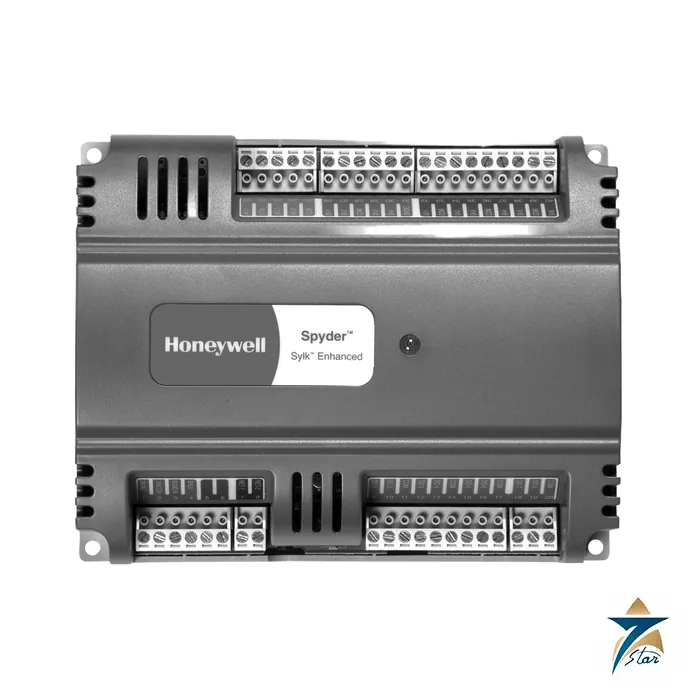
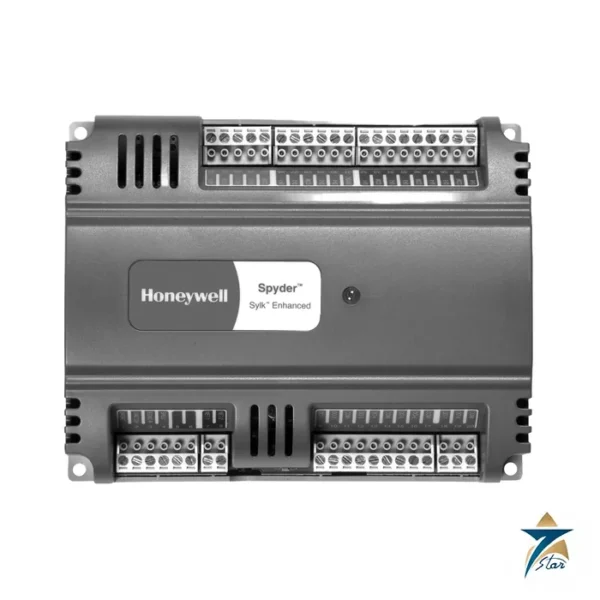
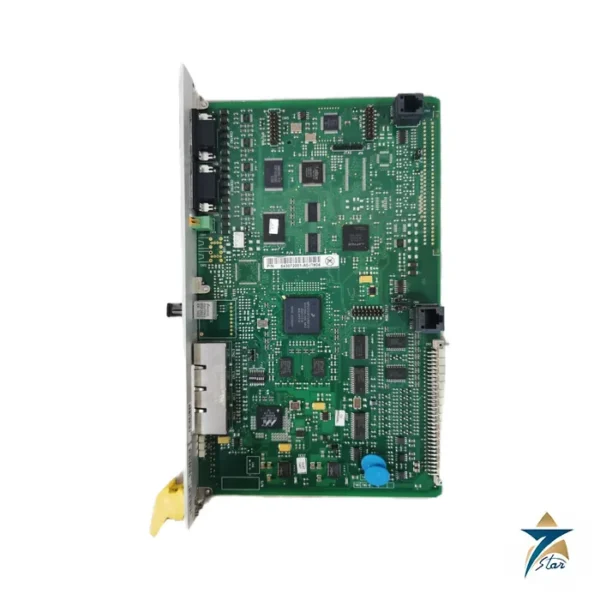
Honeywell PUL4024S is the mid-size Spyder Lon unitary controller, giving four universal inputs, two analog outputs and four Triac outputs on a single LONMARK-compliant board. In practice it is the model that fits a rooftop package with supply-air sensing, a mixed-air or economizer loop, two heating or cooling stages and a fan, without paying for the digital inputs and relay-style outputs of the largest unit.

This page reflects the manufacturer product data for the Spyder Lon family (form 63-2685). Seven Star LLC is an independent supplier serving Oman and the GCC and is not affiliated with the manufacturer.

Each controller in the family runs two microcontrollers, one for the HVAC application and one for LONWORKS traffic, and every wiring connection lands on a screw terminal block located at the top or bottom of the case. For PUL4024S that means a technician can pre-wire the blocks on the bench and plug them onto the controller later.

PUL4024S channel count compared with its neighbours

Controller UI DI AO DO
PUL1012S 1 0 1 2
PUL4024S 4 0 2 4
PUL6438S 6 4 3 8

The step from PUL1012S to PUL4024S triples the physical sensing capacity, and the step to PUL6438S adds the four dry-contact digital inputs. Table 1 of the datasheet also footnotes that on this model one universal input (marked UI-1) can be switched to a fast pulse meter, which is handy for an energy or water meter pulse feed.

Electrical and environmental data

Parameter Value
Model PUL4024S
Points 4 UI, 0 DI, 2 AO, 4 DO
Rated supply 20 to 30 Vac, 50/60 Hz, Class 2 energy-limited source
Maximum power draw incl. loads 100 VA
Network LONWORKS FTT-10A, 78 kbps, LONMARK compliant, communication terminals 7 and 8
Sensor power output 20 Vdc plus or minus 10 percent at 75 mA maximum
Triac digital output rating 20 to 30 Vac, 25 mA to 500 mA continuous, 800 mA for 60 ms
Analog output Configurable 4 to 20 mA (550 ohm maximum load) or 0 to 10 Vdc (10 mA maximum)
Operating and storage temperature minus 40 to 150 F (minus 40 to 65.5 C)
Humidity 5 to 95 percent, non-condensing
Real time clock backup 24 hours at 32 to 100 F, 22 hours at 100 to 122 F; accuracy plus or minus 1 minute per month at 77 F
Controller-only load 5 VA maximum
Universal input ranges 20K ohm NTC minus 40 to 199 F; C7031G minus 40 to 120 F; C7041F minus 40 to 250 F; 0 to 10 Vdc; generic resistive 100 ohm to 100K ohm; dry contact
Pulse input Counter or meter, 15 Hz, 20 ms minimum pulse

Honeywell rates the whole unitary group for minus 40 to 150 F, so PUL4024S can sit in a rooftop control box without a special enclosure heater in most Gulf locations, although panel temperature rise from sun load should still be checked against the 150 F ceiling.

How PUL4024S differs from other Spyder Lon variants

Mechanically PUL4024S shares the compact enclosure of the PUL1012S, shown in Fig. 6 of the datasheet with a depth of 2-1/4 in (57 mm), while the PUL6438S needs the wider enclosure of Fig. 7. Electrically, the difference that matters is the output side: with 2 analog outputs you can drive a modulating heating valve and a cooling valve or economizer damper at the same time, which the single-AO PUL1012S cannot do. Unlike the PVL VAV models, the PUL4024S has no velocity-pressure port and no actuator.

Where it is applied

Gulf buildings seldom run a unit at partial load for long, so the stage count matters more than loop tuning. Common jobs: a packaged rooftop unit with discharge-air temperature on UI-1, return-air on UI-2 and outdoor air on UI-3 using the weatherproof C7031G sensor; a two-pipe fan coil with a valve and a three-speed fan; a hospital or clinic zone that needs a modulating reheat output; or an industrial air handler in a utility or water-treatment building. The Triac outputs are sized for contactors and small actuators rather than for heavy loads.

Wiring and start-up

Run 24 Vac to terminals 1 and 2 with the earth ground on terminal 3. Hardware driven by Triac outputs must draw at least 25 mA and no more than 500 mA when energized, otherwise the Triac may not latch reliably. Analog current outputs must see no more than 550 ohm, which results in a maximum of 11 volts at 20 mA. If you exceed that resistance, voltage up to 18 Vdc can appear on the terminal. For the network, land the bus on terminals 7 and 8 and use a plug-in service tool on the bus jack when commissioning PUL4024S.

Keep Triac output wiring at least 3 in (76 mm) away from the LONWORKS cable, and run unswitched 24 Vac in the same conduit as the bus only when that spacing is respected. Use the heaviest wire available up to 14 AWG for power, never below 18 AWG, because line loss above two volts is not accepted in the Honeywell design guidance.

After the download, follow the Checkout section: confirm the status LED, the service pin message, and each output by manual mode before releasing control.

Maintenance guidance

The unit has no user-serviceable parts and no battery to replace. Inspect terminal screws at each seasonal changeover, keep the vents on the cover free of dust, and verify the clock after any long power outage; the clock is held for 24 hours between 32 and 100 F. For PUL4024S, replacement is simple because terminal blocks pull off with wires intact.

Compatible items to quote alongside

The datasheet lists Honeywell transformers such as AT40A (40 VA), AT72D, AT87A (50 VA) and the AK3310 assembly (100 VA) as meeting the NEMA DC20-1986 voltage regulation limits, plus the 209541B termination module and the Q7751 router for longer networks. Actuators referenced for power budgeting include ML6161, ML6464 and ML6474 dampers and the ML684 valve actuator.

Documents and quotation

Use the Honeywell Spyder Lon product data as the datasheet for PUL4024S. To receive a quotation, send the part number PUL4024S, the quantity, whether you need the -ILC variant and your delivery location in Oman or the wider GCC as an RFQ.

Other Models in the Spyder Lon Unitary Range

Seven Star LLC supplies models from the Spyder Lon Unitary range in Oman and the GCC. Compare the related models below and request a quote for the one that matches your application.

ModelCategory
Honeywell PUL1012S Spyder Lon Unitary Programmable ControllerControllers & Data AcquisitionView details
Honeywell PUL4024S Spyder Lon Unitary Controller 4 UI 2 AO 4 DOControllers & Data AcquisitionYou are viewing this model
Datasheets & Documents
  • PDF Datasheet Honeywell PUL4024S Spyder Lon Unitary Controller 4 UI 2 AO 4 DO Datasheet Download
Reviews (0)

Reviews

There are no reviews yet.

How would you rate this product?

It takes about 10 seconds — just tap a star. Your email is never published.

About brand

Honeywell is the American industrial technology group whose products on this site cover gas and flame detection, pressure transmitters, flow measurement, gas metering, fire alarm systems and helicopter rotor balancing equipment. Its roots go back to a thermostat business in Minneapolis in 1885 and to Mark Honeywell's heating company, which merged with it in 1927. Several brands we list have joined Honeywell over the years: Gent fire systems of Leicester (part of Honeywell since 2005), Chadwick-Helmuth (a Honeywell business unit from 2002) and Elster gas metering (acquired around the end of 2015).

Seven Star LLC is an independent supplier in Muscat. We list Honeywell gas detectors and sensors, transmitters, Elster gas meters and flow computers, Gent fire alarm equipment and Chadwick-Helmuth balancers, and supply them and their spares in Oman and the GCC by part number.

Honeywell company profile

Origins 1885, Minneapolis (Butz thermostat business); merged with Mark Honeywell's company in 1927
Brands in our range Honeywell Analytics gas detection, SmartLine transmitters, Elster gas metering, Gent fire detection, Chadwick-Helmuth rotor track and balance
Gent Founded in Leicester, UK, around 1872 by John Thomas Gent; part of Honeywell since 2005
Elster Gas, water and electricity metering; bought by Honeywell from Melrose, deal completed around the end of 2015

Milestones

  • 1885: The Butz thermostat business starts in Minneapolis.
  • 1927: It merges with Mark Honeywell's company.
  • 2005: Gent fire detection (Leicester, UK) becomes part of Honeywell.
  • 2015: Honeywell completes the purchase of Elster from Melrose around the end of the year.

Honeywell products we list

Family Models Typical use
Fixed gas detectors Searchline Excel, Searchline Excel Plus, 02104-N-XSSA, Sensepoint XCD RTD, Sensepoint XCD IR, XCD H2, Sensepoint XCL, Sensepoint XRL, OmniPoint, RAEGuard 2 PID Flammable, toxic and VOC gas detection in process areas
Sensors, flame detection and control SR-W-MP75C LEL sensor, SR-X2V O2 sensor, FS24X Plus flame detector, R4343E flame switch, System 57 card, 5704FS panel Replacement sensors, fire detection and gas detection control panels
Transmitters and flow SmartLine STG700, STG800, STR82D remote seal, VersaFlow Coriolis Process pressure and mass flow measurement
Elster gas metering Q.Sonic plus, TRZ2, Quantometer, RABO, IRM-3 DUO, EK280, EC 350, enCore FC1, enCore ZM1, gas-net F1, gas-net D2, GasLab Q2, USM display Gas meters, volume correction and fiscal flow computing
Gent fire alarm systems Vigilon Plus, Vigilon Compact Plus, Nano, Xenex, S-Quad detector, S-Cubed, ALD302 base, S4-34420 interfaces, loop card, repeat panel, mimic panel, XENS-850 call point, 74430 bell Addressable and conventional fire alarm systems in buildings and plants
Chadwick-Helmuth rotor track and balance 8500C, 8500C Plus, Vibrex 2000, Model 11, photocell system, printer, bracket, protractor Helicopter rotor track and balance and propeller balancing

Gas detection uses two basic approaches. Point detectors such as the Sensepoint XCD measure the gas at one location, with a catalytic or infrared sensor for flammable gas and an electrochemical cell for toxic gas such as H2S. Open path detectors such as the Searchline Excel send an infrared beam across an area up to a few hundred metres long and detect a gas cloud anywhere along it. Infrared sensors cannot be poisoned the way catalytic beads can, which matters on sites with silicones or H2S.

Where Honeywell products are used

In Oman and the GCC, Honeywell gas detectors protect wellheads, gas plants, refineries and tank farms. Elster meters and flow computers measure gas at city gate stations and in industry. Gent systems are installed in commercial buildings, hospitals and hotels, and Chadwick-Helmuth balancers are used by helicopter operators.

Ordering Honeywell products: what we need

Send the part number from the label (for example 02104-N-XSSA or SPXCDASMTXF). For gas detectors, add the gas, range, output and certification. For gas meters, add size (DN), flow range and pressure rating. For Gent equipment, add the panel type and loop protocol.

Facts checked against Honeywell press releases and SEC filings, and published histories of Gent and Chadwick-Helmuth, October 2026.

FAQ

Questions about the Honeywell PUL4024S Spyder Lon Unitary Controller 4

Answers from our engineering team on installation, compatibility and integration.

01What I/O does the Honeywell PUL4024S provide?
Four universal inputs, no digital inputs, two analog outputs and four Triac digital outputs, listed in Table 1 of the Spyder Lon data.
02Can PUL4024S control a heating and a cooling valve at once?
Yes in principle: two analog outputs can each be set as 4 to 20 mA or 0 to 10 Vdc, so two modulating devices can be driven, or digital outputs used for floating control.
03What is the Triac current rating on PUL4024S?
Each Triac output is rated 20 to 30 Vac with 25 mA to 500 mA continuous and 800 mA for 60 milliseconds.
04Does PUL4024S include an actuator or flow sensor?
No. It is a unitary controller with no velocity pressure sensor and no Series 60 actuator.
05Which sensors are recommended with PUL4024S inputs?
The datasheet recommends the C7031G outdoor sensor and C7041F duct sensor because they give better resolution than PT1000 elements.