Brand:

SICK WL12-3P2431S43 Retro-Reflective Photoelectric Sensor

Description

SICK WL12-3P2431S43 at a glance

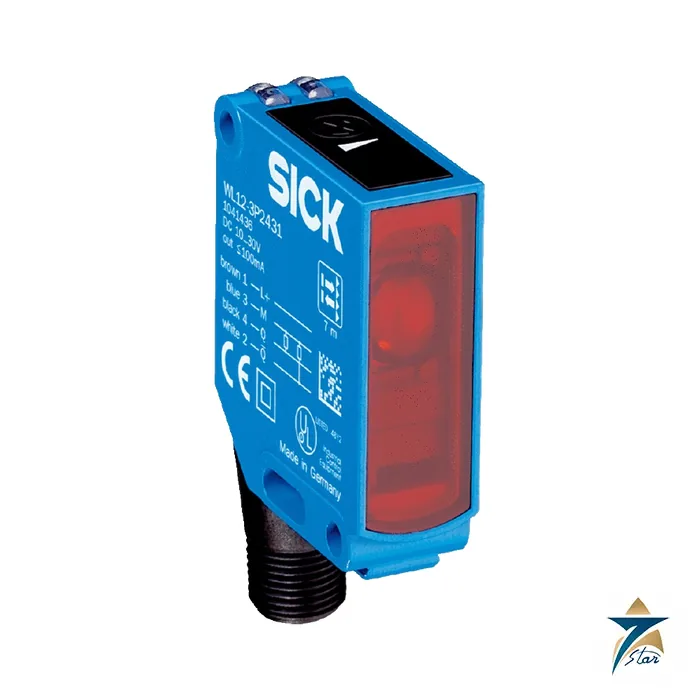
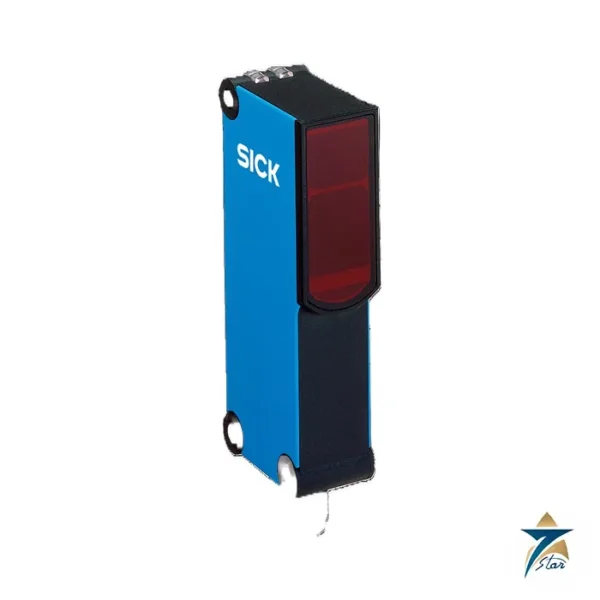
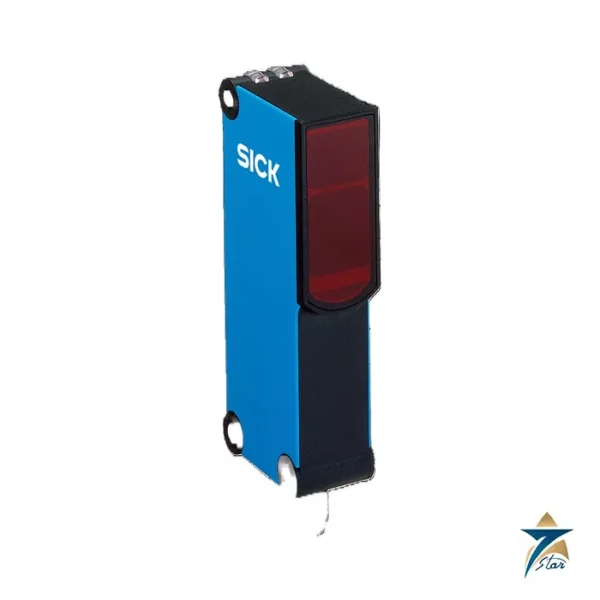
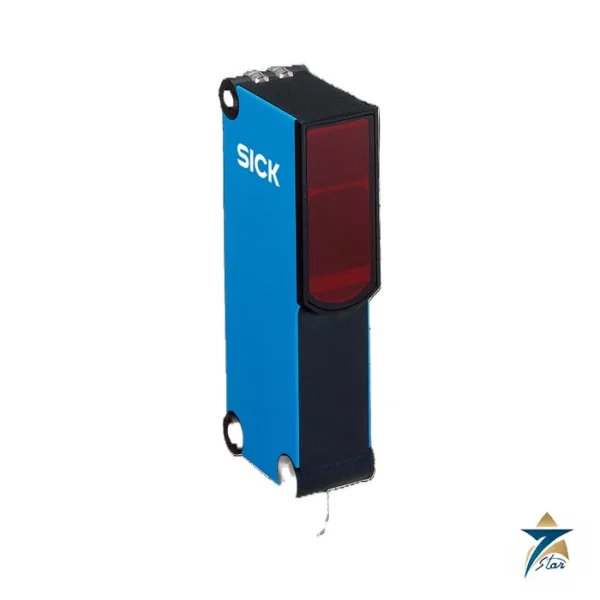
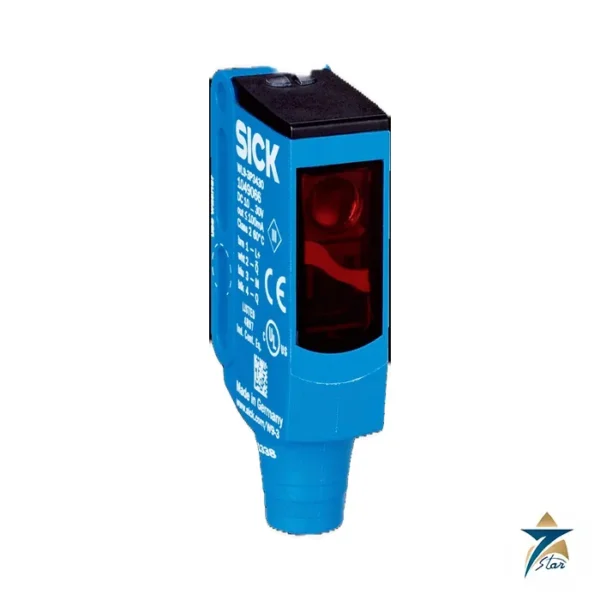
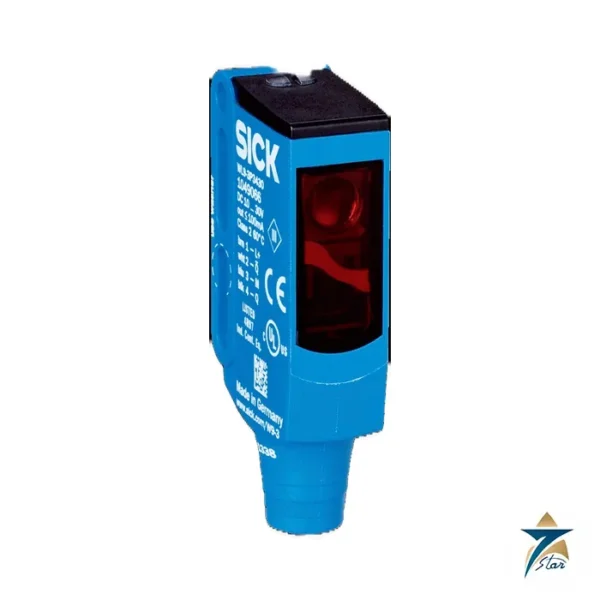
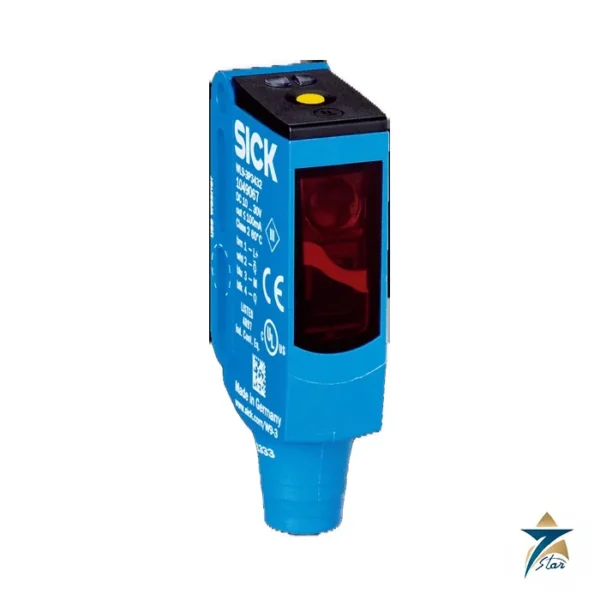
The SICK WL12-3P2431S43 (part number 1044113) belongs to the W12 miniature photoelectric family and works as a retro-reflective sensor with coaxial optics. Sender and receiver share one lens axis, so a single housing and a reflector on the opposite side are all the optical hardware a detection point needs. Because the optics are autocollimating, the sensor can read objects right up to its front window and does not suffer a dead zone close to the lens, which is the practical reason maintenance teams choose it for tight conveyor guides.

Its housing measures 15.6 mm wide, 48.5 mm high and 42 mm deep, so it slots into the same footprint as many older rectangular photo eyes found on packaging lines in Muscat, Sohar and Jebel Ali. Seven Star LLC lists this part number for buyers who need a like-for-like replacement from the W12 line without redesigning a bracket.

What the WL12-3P2431S43 optics deliver

A red-light LED with a 640 nm wavelength creates the visible spot, which is a real benefit during commissioning because a fitter can see where the beam lands. The datasheet gives a spot diameter of 100 mm at 3 m and an angle of dispersion of about 1.5 degrees. A polarisation filter is built in, so the receiver only reacts to light that the corner-cube reflector has rotated, which keeps shiny cartons or foil wrappers from faking a reflection.

  • Sensing range max.: 0 m to 7 m with reflector PL80A
  • Sensing range (typical): 0 m to 5 m with reflector PL80A
  • Light source: LED, visible red, average service life 100,000 h at 25 degrees Celsius
  • Adjustment: potentiometer, 5 turns
  • Mean time to dangerous failure (MTTFD): 1,543 years, DCavg 0 percent

Technical data for WL12-3P2431S43

Parameter Value
Part number 1044113
Functional principle Retro-reflective photoelectric sensor, autocollimation
Sensing range 0 to 5 m (max. 0 to 7 m), reflector PL80A
Light spot Diameter 100 mm at 3 m
Supply voltage 10 V DC to 30 V DC, ripple under 5 Vpp
Current consumption 30 mA without load
Output PNP, complementary, light or dark switching
Output current Up to 100 mA
Response time Up to 330 microseconds
Switching frequency 1,500 Hz
Protection class III
Circuit protection Reverse polarity, interference suppression, short-circuit and overcurrent
Dimensions (W x H x D) 15.6 x 48.5 x 42 mm
Connection M12 male connector, 4-pin
Housing / front screen Metal / PMMA plastic
Weight 120 g
Enclosure rating IP66, IP67, IP69K
Ambient temperature Operation minus 40 to plus 60 C, storage minus 40 to plus 75 C

How WL12-3P2431S43 differs from other W12 variants

Inside the W12 retro-reflective group, this model is the straightforward potentiometer version. The sister WL12C-3P2432A70 offers a single teach-in button and IO-Link at a typical 4 m with a PinPoint LED, while the WL12-3P2431S43 keeps the larger 5 m typical range with a standard LED. Choose it when a technician simply wants to turn a screw, with no master port or parameter files to manage.

Feature WL12-3P2431S43 Compared variant
Typical range 5 m 4 m (WL12C-3P2432A70)
Light source LED PinPoint LED
Adjustment Potentiometer, 5 turns Teach-in button, IO-Link
MTTFD 1,543 years 891 years

Typical applications in Oman and the GCC

Metal-housed IP69K photo eyes are popular where hoses are used for cleaning. In bottling and food plants around Sohar and Salalah the WL12-3P2431S43 can count crates at a washdown conveyor, and in date-packing lines it checks that trays are present before a labeller fires. Water-treatment and desalination sites use the same retro-reflective principle to detect gate or screen positions behind spray, because the polarised red beam stays stable when the front glass is wet. Light industrial lifting gear, car-wash tunnels and warehouse doors in the Gulf region are further habitats for a sensor with a minus 40 to plus 60 degree rating.

Selection and compatibility notes

Order the PL80A reflector with the sensor, since all range figures in the datasheet assume it; smaller reflectors will shorten the reach. The PNP output means the controller input must be sink-type, typical for European and Asian PLC cards, and the complementary output lets one device give both a light-switching and a dark-switching signal on separate pins. Supply should be a regulated 10 to 30 V DC source with ripple under 5 Vpp; the datasheet recommends operation only on short-circuit protected networks limited to 8 A.

Mounting and commissioning

Fasten the housing through its mounting holes, align the beam by eye on the reflector and rotate the 5-turn potentiometer until the output switches reliably with an object in the beam and holds with the beam free. Keep the reflector clean and angled within a few degrees of perpendicular. With a 100 mm spot at 3 m, small items may pass partly through the beam, so verify with the smallest real product before releasing the line.

Maintenance and troubleshooting

Wipe the PMMA front screen with a damp cloth; avoid solvents that attack plastic. Intermittent switching usually comes from a dirty reflector, a bent M12 plug or a supply dip rather than a failed LED, because the datasheet quotes an average LED life of 100,000 hours. Keeping the unit at 25 degrees Celsius mean temperature maximises that figure. Replace the sensor as a unit when the housing is cracked; the metal body and PMMA window are not serviceable.

Ordering notes for WL12-3P2431S43

State the full type code WL12-3P2431S43 and the part number 1044113 when you request a quote, together with the reflector you need and the cable or plug-in connector length. Seven Star LLC is an independent supplier serving Oman and the GCC and is not affiliated with the manufacturer.

Documents and quotation

The manufacturer datasheet for WL12-3P2431S43 is attached to this product page. To obtain a quotation, send an RFQ with the part number, the quantity and your delivery location in Oman or the GCC, and our team will confirm stock and lead time.

Datasheets & Documents
  • PDF Datasheet SICK WL12-3P2431S43 Retro-Reflective Photoelectric Sensor Datasheet Download
Reviews (0)

Reviews

There are no reviews yet.

How would you rate this product?

It takes about 10 seconds — just tap a star. Your email is never published.

About brand

SICK is the German maker of industrial sensors: photoelectric and proximity sensors, safety laser scanners and light curtains, encoders, distance sensors, code readers and gas analysers. Erwin Sick, an optics engineer, founded it in Munich in 1946, and in 1952 it introduced its first marketable accident-prevention light curtain, which protected press operators by stopping the machine when a hand broke the light beam. The company moved to Waldkirch in the Black Forest in 1956 and is still headquartered there. It is a privately held company, and has been an Aktiengesellschaft (AG) since 1996.

SICK company profile

Founded 1946, Munich, Germany, by Erwin Sick (1909–1988)
Headquarters Waldkirch, Baden-Württemberg, Germany (since 1956)
Ownership Privately held; after the founder's death in 1988 his widow Gisela Sick became the main shareholder. Legal form SICK AG since 1996
Size More than 12,000 employees and group revenue of about EUR 2.3 billion (company figures for 2023)
First breakthrough Accident-prevention light curtain for presses, shown in Hanover in 1952
International growth First foreign subsidiary in France in 1972, United States in 1976; today sales and service companies worldwide
Product families Photoelectric, inductive, capacitive, magnetic and ultrasonic sensors; safety laser scanners, light curtains, safety controllers and relays; encoders and motor feedback systems; distance sensors and LiDAR; barcode and 2D code readers and machine vision; gas analysers, dust and flow measurement for process and emissions monitoring

Milestones

  • 1946: Erwin Sick receives a licence to run his engineering firm in Munich.
  • 1952: The first marketable accident-prevention light curtain is presented in Hanover and goes into series production.
  • 1956: The company moves to Waldkirch with 25 employees.
  • 1972 and 1976: Subsidiaries are founded in France and the United States.
  • 1996: SICK becomes an Aktiengesellschaft.
  • Today: Sensors for factory and logistics automation, machine safety and process analysis, with a large share of revenue outside Germany.

Choosing a SICK sensor

For object detection, the sensing principle comes first. A retro-reflective sensor (WL series) sends light to a reflector and switches when an object breaks the beam; it is reliable over long distances and easy to align. A sensor with background suppression (WTB series) detects an object at a set distance and ignores what is behind it, which suits conveyors with shiny or dark backgrounds. A through-beam pair (WS/WE) gives the longest range and the highest reliability in dust. For transparent bottles and film, use a model built for transparent objects (for example WL12G-3B or WL150-P420). The digits in the code also matter: "P" usually means a PNP output and "N" NPN, and the last digits set the connector or cable. For machine guarding, a safety laser scanner such as nanoScan3 or microScan3 protects an area, while a safety controller such as Flexi Soft combines several safety devices.

Where SICK products are used

In Oman and the GCC, SICK sensors are used in packaging and bottling lines, food and beverage plants, logistics and airport baggage handling, cement and steel plants, ports and cranes, automated warehouses, and on machines built by European OEMs. SICK safety scanners guard robots and automated guided vehicles, and its encoders give position feedback on motors, hoists and conveyors.

SICK products we list

Family Examples
Photoelectric sensors WL12-3P2431, WTB12-3P2431, GTB6-P4211, VL18-4P3240, WL12G-3B2531, WS/WE100, KT5W contrast, W26 IO-Link
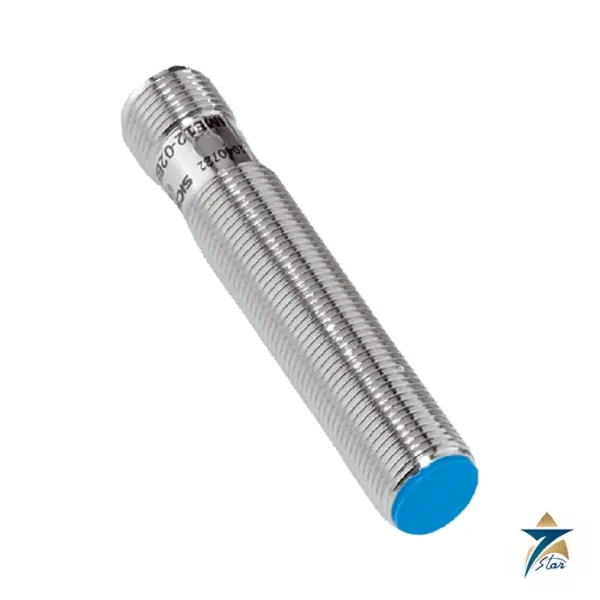
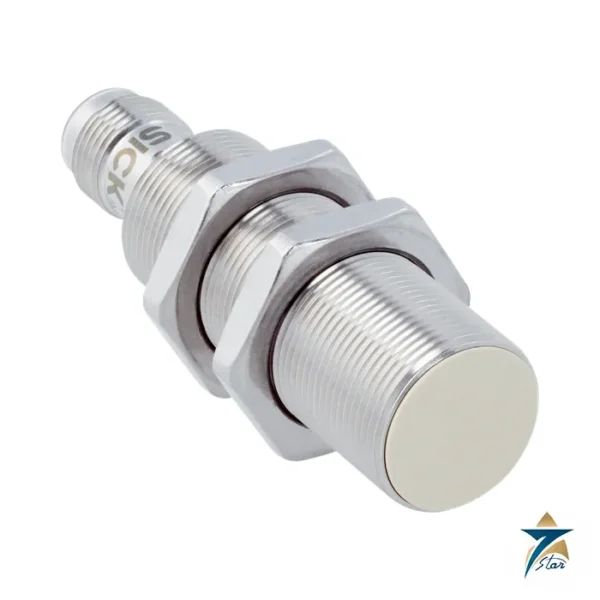
Proximity, cylinder and ultrasonic sensors IME12-08NPSZC0S, IME18-05BPSZC0S, MZT8, UM18 4-20 mA, UM30, UFN3 fork
Machine safety nanoScan3, microScan3, S300 Professional, Flexi Soft FX3-CPU1, FX3-XTIO, ReLy OSSD
Encoders and motor feedback DFS60B, AFM60 PROFINET, AFS60 SSI, ATM60 PROFIBUS, SRS50, EFS50
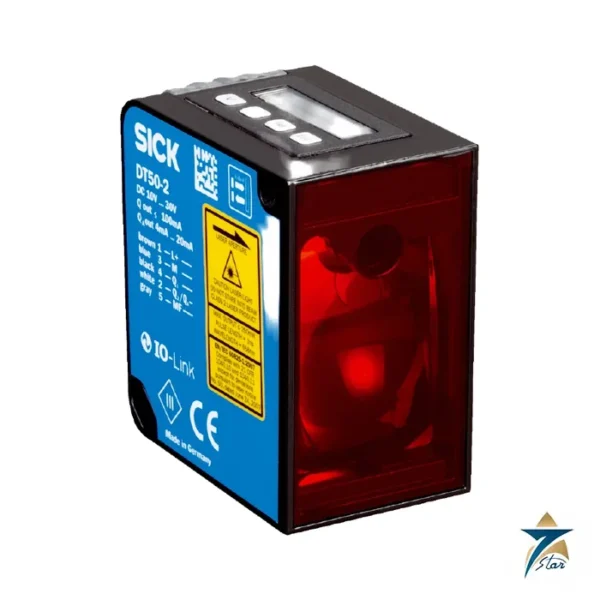
Distance sensors and code readers DT50, DL50, DT35, Lector632

Ordering SICK products: what we need

Send the type code and the 7-digit SICK part number from the label (for example WTB12-3P2431 together with its part number). For a replacement sensor, add the output (PNP or NPN), connection (M8, M12 or cable) and sensing distance. For encoders, add the interface (incremental, SSI, PROFIBUS, PROFINET), resolution and shaft type. For safety scanners, tell us the model and whether the existing configuration needs to be kept.

Frequently requested SICK models: SICK RT-P3231 ZoneControl Background Suppression Sensor.

Facts checked against SICK's published company history and annual figures, October 2026.

FAQ

Questions about the SICK WL12-3P2431S43 Retro-Reflective Photoelectric

Answers from our engineering team on installation, compatibility and integration.

01What reflector range does the SICK WL12-3P2431S43 reach?
The datasheet lists a maximum sensing range of 0 to 7 m and a typical sensing range of 0 to 5 m, both measured with the PL80A reflector.
02How is the SICK WL12-3P2431S43 tuned to the application?
Sensitivity is set with a 5-turn potentiometer, so there is no teach-in or IO-Link on this variant; the output is PNP with light or dark switching.
03Does the WL12-3P2431S43 housing suit washdown areas?
Yes in terms of ratings: the data sheet gives IP66, IP67 and IP69K, a metal housing, a PMMA front screen and an operating range of minus 40 to plus 60 degrees Celsius.
04What electrical connection does WL12-3P2431S43 use?
A 4-pin M12 male connector on the housing, with 10 to 30 V DC supply, about 30 mA current draw without load and up to 100 mA switching current.
05Which sensor from the same W12 line adds IO-Link to this basic type?
The WL12C-3P2432A70 shares the 15.6 x 48.5 x 42 mm body but adds IO-Link V1.1, a single teach-in button and a PinPoint LED, with a shorter 4 m typical range.