ATM60 PROFIBUS absolute encoder with 8,192 steps and 8,192 turns
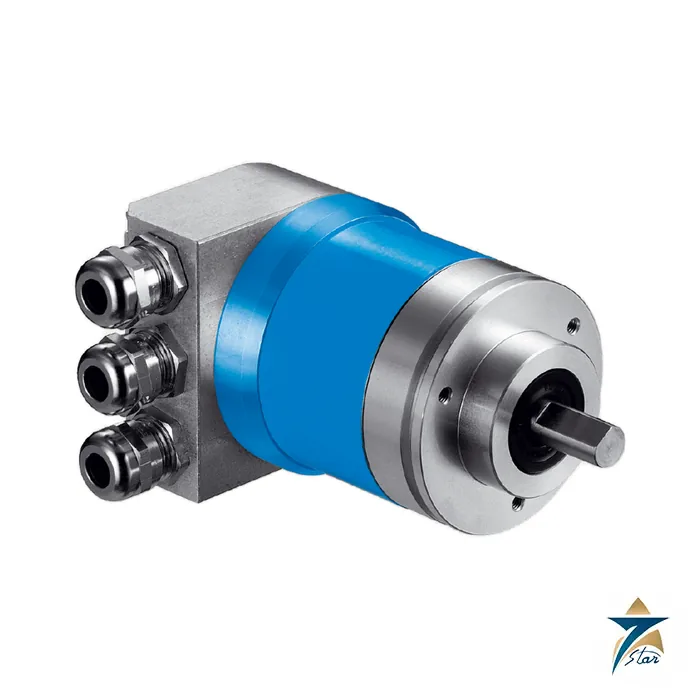
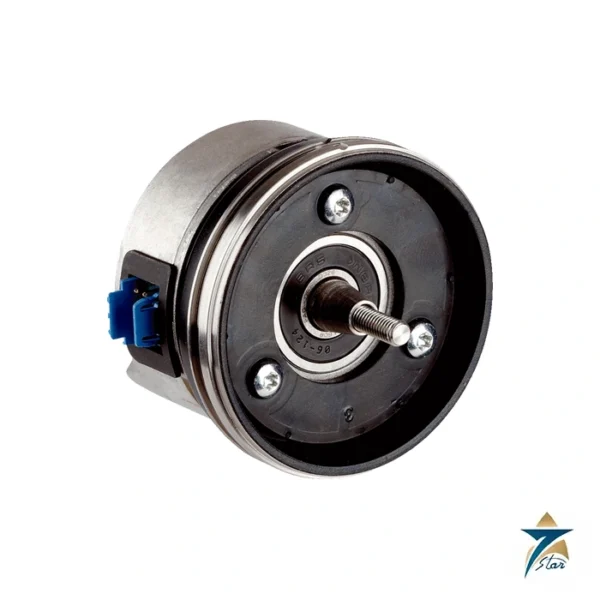
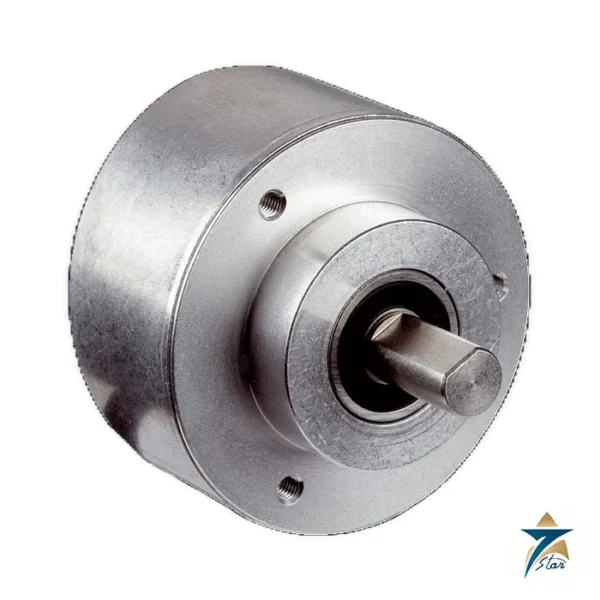
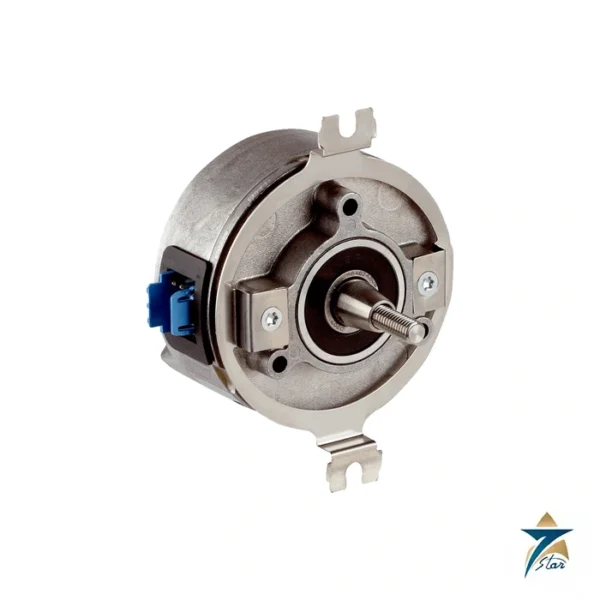
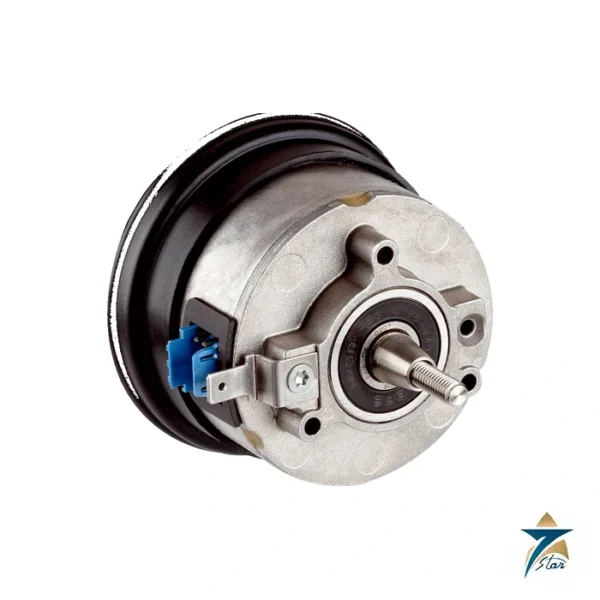
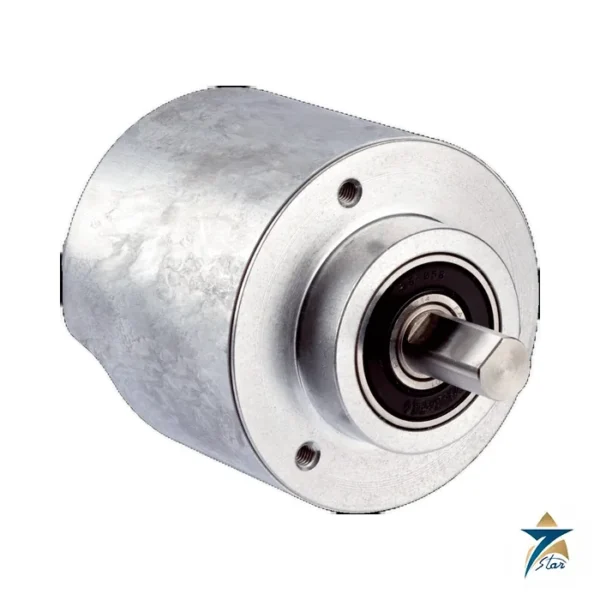
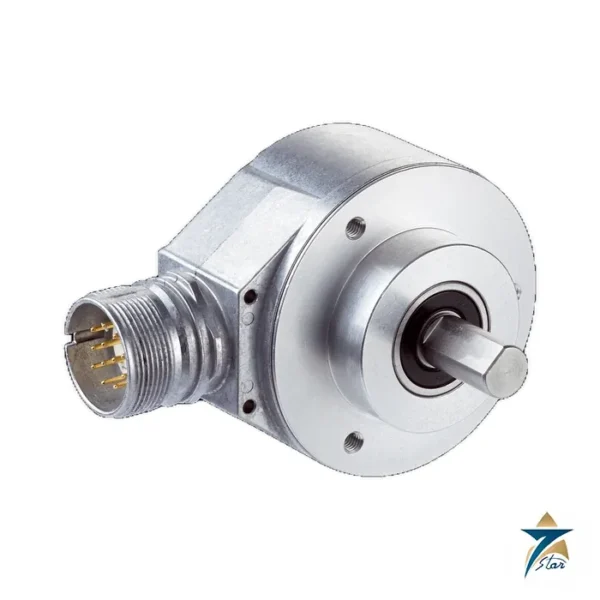
The SICK ATM60-P4H13X13 (part no. 1030013) is an ATM60 absolute multiturn encoder with a PROFIBUS DP interface (profile for encoders, class 2). Resolution is 13 bit per revolution (8,192 steps) and 13 bit revolutions (8,192 turns), giving 26 bit overall. The housing has a solid shaft of 10 mm and a face-mount flange, the electrical connection is via a bus adapter that must be ordered separately, and the enclosure rating with shaft seal is IP67.
SICK shows the type in the encoder archive on sick.com. Confirm availability and successor information before using it in new designs.
Technical specifications
| Parameter |
Specification |
| Manufacturer |
SICK |
| Type / family |
ATM60-P4H13X13 / ATM60 |
| Part no. |
1030013 |
| Communication interface |
PROFIBUS DP (DPV0), profile for encoders (07 hex) class 2 |
| Steps per revolution / revolutions |
8,192 (13 bit) / 8,192 (13 bit) |
| Measuring step |
0.043 degrees |
| Error limits |
plus or minus 0.25 degrees |
| Repeatability standard deviation |
0.1 degrees |
| Address setting |
0 … 127 via DIP switches or protocol |
| Data transmission rate |
9.6 kBaud … 12 MBaud, automatic detection |
| Initialisation time / position forming time |
1,250 ms / 0.25 ms |
| Status indication / bus termination |
LED green (operation), LED red (bus activity) / DIP switch |
| Preset |
PRESET push button or protocol |
| Connection |
Bus adapter (order separately) |
| Supply voltage / power consumption |
10 V … 32 V / up to 2 W without load |
| Mechanical design |
Solid shaft, face mount flange |
| Shaft diameter / length |
10 mm / 19 mm; stainless steel shaft, aluminium flange |
| Permissible shaft load |
300 N radial; 50 N axial |
| Operating speed |
up to 6,000 min⁻¹ |
| Start-up / operating torque |
2.5 Ncm / 1.8 Ncm with shaft seal at +20 °C |
| Moment of inertia of rotor |
35 gcm² |
| Weight |
0.59 kg |
| Enclosure rating |
IP67 with shaft seal (IP43 / IP66 without shaft seal) |
| Operating temperature |
-20 °C … +85 °C (storage -40 °C … +100 °C) |
| Shock / vibration |
100 g, 6 ms / 20 g, 10 Hz … 2,000 Hz |
| MTTFD |
150 years (EN ISO 13849-1) |
Using an ATM60 on a PROFIBUS network
The encoder is connected through a separate bus adapter that carries the PROFIBUS cable, address switches and terminating switch. Set the node address with the DIP switches (0 to 127) or via the protocol, and enable bus termination only if the encoder is the last node. The baud rate is detected automatically up to 12 MBaud, and valid position data are available after the initialisation time of 1,250 ms.
A PRESET push button or a protocol command zeros the position. The data sheet states that this is a standard product and not a safety component under the Machinery Directive. The mechanical loads of 300 N radial and 50 N axial and a speed up to 6,000 min⁻¹ must be observed, and a flexible coupling avoids overloading the bearings.
Ordering and lifecycle
The type code ATM60-P4H13X13 identifies a PROFIBUS version with 13 bit by 13 bit resolution; the part number 1030013 is the reference. The adjacent ATM60-P1H13X13 (part no. 1030014) is a different article. As SICK shows the type in its archive, ask for availability and the manufacturer-named replacement before ordering.
What 13 bit by 13 bit means in practice
The ATM60-P4H13X13 divides one shaft revolution into 8,192 positions, a measuring step of about 0.043 degrees, and counts up to 8,192 complete revolutions. The position is held as a 26 bit absolute value, so after a power failure the controller reads the true position immediately after initialisation, without a homing run. This is the main reason absolute multiturn encoders are chosen for cranes, hoists, gates, telescopic and linear axes where a reference run is impractical or unsafe.
When the encoder is coupled to a drum, lead screw or rack, the usable travel equals the number of turns multiplied by the travel per revolution. Check that the full mechanical travel fits within 8,192 turns, and use the scaling functions of the encoder profile or the PLC to convert counts into engineering units.
Key features
- PROFIBUS DP with the encoder profile, class 2, supporting scaling and preset functions.
- Automatic baud rate detection from 9.6 kBaud to 12 MBaud.
- Node address by DIP switch or protocol, bus termination by DIP switch in the bus adapter.
- PRESET push button for quick zeroing during commissioning.
- 10 mm stainless steel solid shaft with face mount flange.
- IP67 with shaft seal and -20 to +85 °C operating range.
- High shock and vibration resistance: 100 g and 20 g respectively.
Mechanical installation tips
- Use a flexible shaft coupling to compensate for misalignment; rigid coupling transfers shaft loads into the encoder bearings.
- Respect the 300 N radial and 50 N axial shaft load limits, particularly where the encoder is driven by a pulley or gear.
- Fix the face mount flange to a rigid bracket so that vibration of the bracket does not reach the encoder.
- Keep the shaft seal in place where the IP67 rating is required; without it the rating is lower.
Network and commissioning tips
- Load the GSD file for the encoder into the PROFIBUS master configuration.
- Use PROFIBUS cable and connectors, ground the shield at both ends and keep the bus away from motor cables and drives.
- Activate termination only at the physical ends of the segment.
- After setting the address, power cycle the encoder and wait for the initialisation time before reading position data.
Applications in Oman and the GCC
Typical uses in the region include crane and hoist positioning in ports and steel works, gate and valve actuator feedback in water and desalination plants, and positioning axes in cement, packaging and metal processing lines. Many of these installations still run PROFIBUS networks, so a like-for-like replacement keeps existing configuration and cabling. For outdoor or dusty installations, a protective cover helps keep sun and sand away from the housing and bus adapter.
What to include in your RFQ
- Type code ATM60-P4H13X13 and part number 1030013.
- Whether the bus adapter is required, and which version.
- Coupling and mounting accessories needed.
- Quantity, delivery location and required date.
- Whether a manufacturer-named successor is acceptable.
Documents and quotation
The official SICK data sheet for ATM60-P4H13X13 (part no. 1030013) is attached to this page, and the figures in the table above are taken from it. SICK lists this type in its catalogue archive, so lifecycle status and any named successor should be checked first. Seven Star LLC is an independent supplier in Muscat and quotes SICK items against a written request. In your enquiry, give the exact type code, part number, quantity and delivery location, and say whether you need accessories such as clamps, reflector or a cable with connector. Data sheets carry a note that content is subject to change without notice, so confirm current details before ordering. More items are listed under encoders, and you may also look at the SICK AFM60A-S4NB018x12 PROFINET encoder.





Reviews
There are no reviews yet.