UF fork sensor for transparent and metallised labels
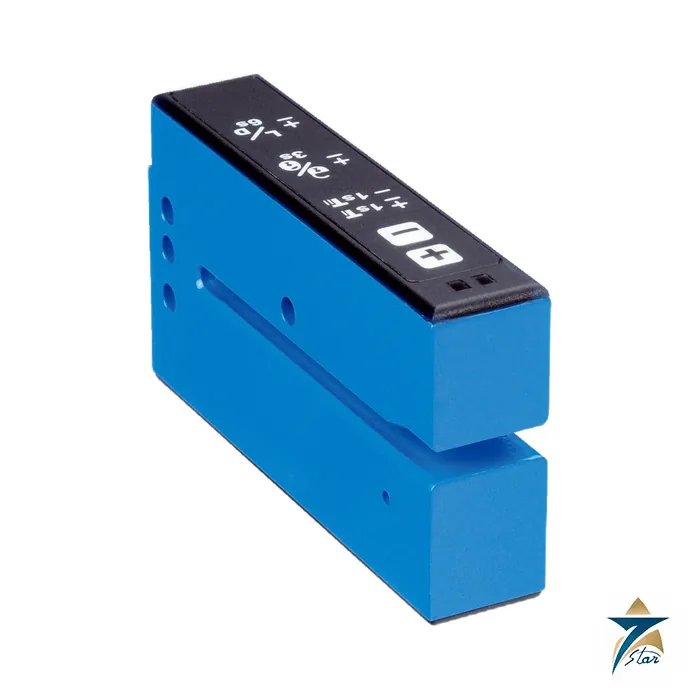
The SICK UFN3-70B413 (part no. 6049678) is a UF ultrasonic fork sensor for label detection. The fork has a 3 mm width and a 69 mm depth, and the sensor detects the gap between labels on a liner or the labels themselves, with a minimum gap and label size of 2 mm. Because ultrasound passes through the liner but is attenuated by the label, it works with transparent, metallised and printed labels that defeat optical forks.
The sensor is taught by plus/minus buttons, switches at up to 1.5 kHz with a 250 microsecond response time and offers PNP or NPN output on an M8 4-pin plug.
Technical specifications
| Parameter |
Specification |
| Manufacturer |
SICK |
| Type / family |
UFN3-70B413 / UF |
| Part no. |
6049678 |
| Functional principle |
Ultrasonic detection |
| Housing design |
Fork shaped |
| Dimensions (W x H x D) |
18 mm x 47.5 mm x 92.5 mm |
| Fork width / depth |
3 mm / 69 mm |
| Label detection (minimum) |
Gap between labels / size of labels: 2 mm (depends on label thickness) |
| Adjustment |
Plus/minus buttons (teach-in, sensitivity, light/dark switching) |
| Teach-in mode |
2-point teach-in; teach-in dynamic |
| Supply voltage |
10 V DC … 30 V DC |
| Ripple |
below 10 % |
| Current consumption |
40 mA |
| Initialisation time |
100 ms |
| Switching frequency / response time |
1.5 kHz / 250 microseconds max. |
| Switching output |
PNP or NPN |
| Output voltage |
PNP: HIGH = UV minus up to 2 V; NPN: LOW up to 2 V |
| Output current Imax. |
100 mA |
| Protection class |
III |
| Connection |
Male connector M8, 4-pin |
| Housing material |
Aluminium |
| Weight |
approx. 95 g |
| Enclosure rating |
IP65 |
| EMC |
EN 60947-5-2 |
| Ambient temperature |
+5 °C … +55 °C operation; -20 °C … +70 °C storage |
| MTTFD |
207 years (DCavg 0 %) |
Label detection with ultrasound
An ultrasonic fork transmits a sound signal across the 3 mm gap. The liner alone attenuates the signal only slightly, a label on the liner attenuates it more, and the sensor switches on the difference. Because the principle is independent of transparency, colour and surface, it is a standard choice in label applicators, printers and packaging machines for clear labels.
Teach-in is two-point or dynamic: run the liner with and without labels through the fork, and the sensor stores the thresholds. Set the plus/minus buttons for sensitivity and light/dark. The data sheet states that the detectable minimum depends on the label thickness, so verify with actual samples. The operating range starts at +5 °C, so avoid unheated cold-store installations.
Ordering information
Order UFN3-70B413 with part no. 6049678. SICK offers other UF types with different fork depth and output; confirm the exact article if your material width differs from the 69 mm fork depth.
Mounting the fork on a label machine
Mount the UFN3-70B413 on a rigid bracket close to the point where the labels are dispensed, so that the web position at the sensor matches the position at the peel edge. Guide the liner through the 3 mm fork without touching either arm; a liner that rubs or flutters inside the fork produces unstable signals. Set the insertion depth so that the labels pass well inside the 69 mm fork depth, and keep the web path the same each time a new roll is loaded.
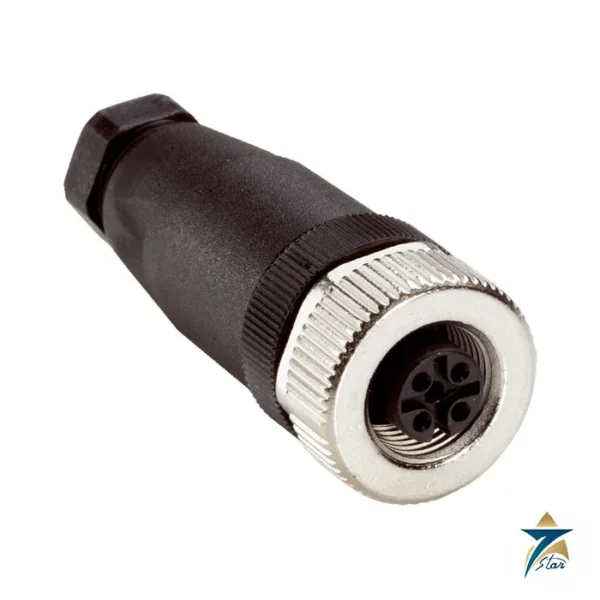
Connect the M8 4-pin plug with a cable rated for the machine environment and fasten it so that it is not pulled when the machine guards are opened. Confirm whether the controller input needs the PNP or NPN output before wiring, and keep the sensor cable away from servo motor and drive cables to reduce electrical noise.
Teach-in and commissioning
Commission with the actual label stock that will run in production. Perform the two-point teach-in with liner only and with label on liner, or use dynamic teach-in while the web moves, then check the switching point at low speed before running at full speed. Watch for missed or double counts across several rolls, because label thickness, adhesive and liner weight can vary between batches. If the result is marginal, adjust sensitivity with the plus/minus buttons and repeat the test. Document the setting and the label material reference so that the same values can be restored after a changeover.
Selection checks for label applications
Before ordering, compare the label and gap sizes with the minimum stated in the specifications and remember that the data sheet links that minimum to label thickness. Check that the web width and label position fit the fork depth, that the machine speed stays within the switching frequency, and that the supply voltage and output type match the controller. When labels are paper and opaque, an optical fork may also be an option, but for transparent and metallised labels the ultrasonic principle is usually the reason for choosing this sensor.
Operating environment in Oman and GCC packaging lines
Packaging halls in Oman and the GCC can be hot during summer, particularly near shrink tunnels, ovens or roof areas without air conditioning. Check the temperature at the sensor position, not only the hall average, and keep it inside the operating range given in the specification table. The aluminium housing and IP65 rating suit normal factory conditions, but dust and paper fibres collect inside a fork over time. Clean the fork arms gently with dry air or a soft cloth during routine stops, avoid aggressive solvents, and check the bracket for loosening, since a small shift in sensor position can change the switching point. In humid coastal plants, avoid condensation on the sensor when product is moved between air-conditioned and warm areas.
Documents and quotation
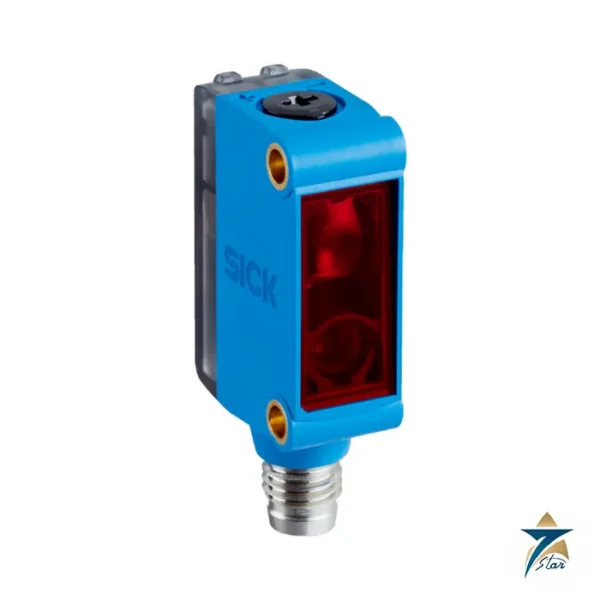
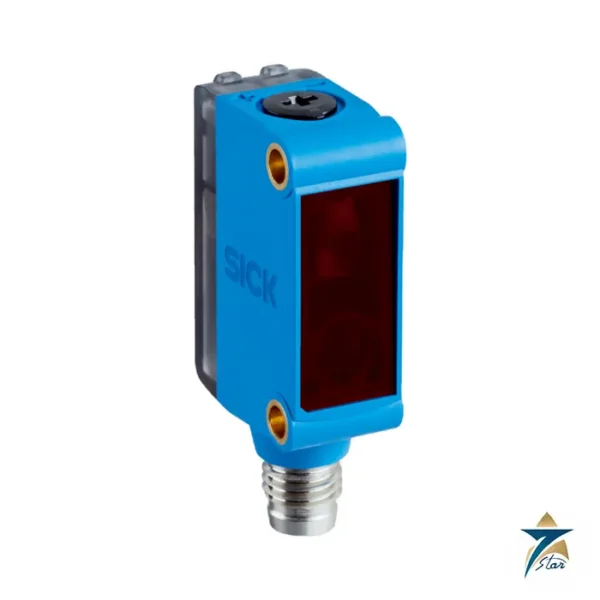
The official SICK data sheet for UFN3-70B413 (part no. 6049678) is attached to this page, and the figures in the table above are taken from it. Seven Star LLC is an independent supplier in Muscat and quotes SICK items against a written request. In your enquiry, give the exact type code, part number, quantity and delivery location, and say whether you need accessories such as a reflector, cordset or protective hood. Data sheets carry a note that content is subject to change without notice, so confirm current details before ordering. More items are listed under sensors and transmitters, and you may also look at the SICK WTB4-3 miniature photoelectric sensor.



Reviews
There are no reviews yet.