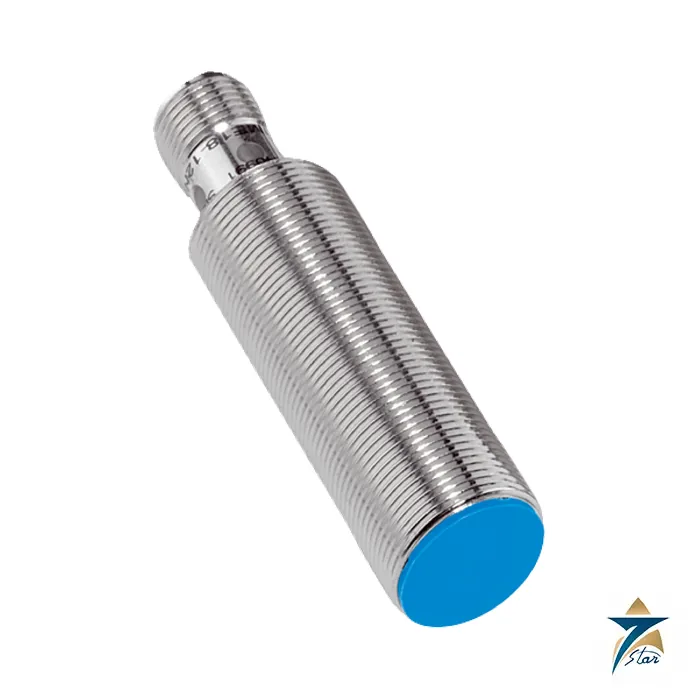
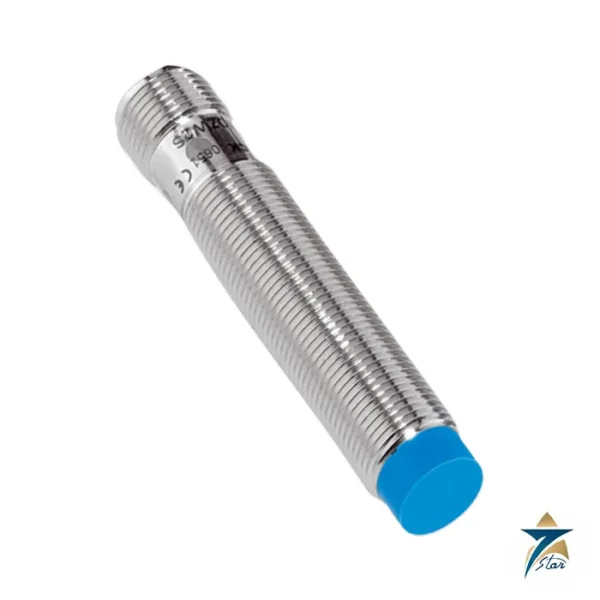
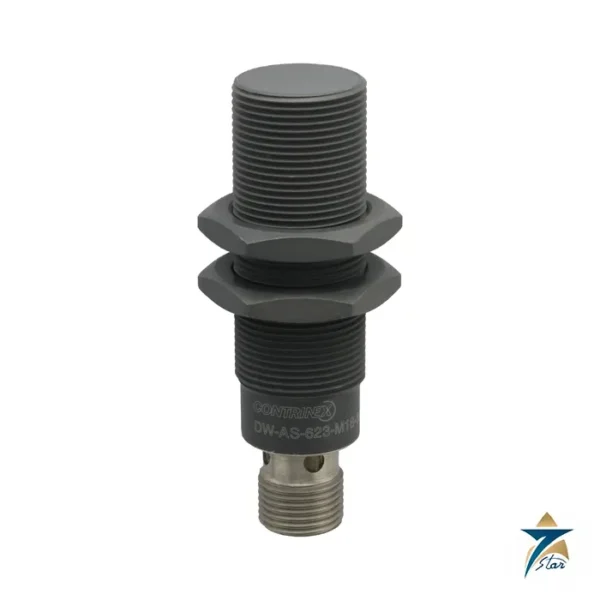
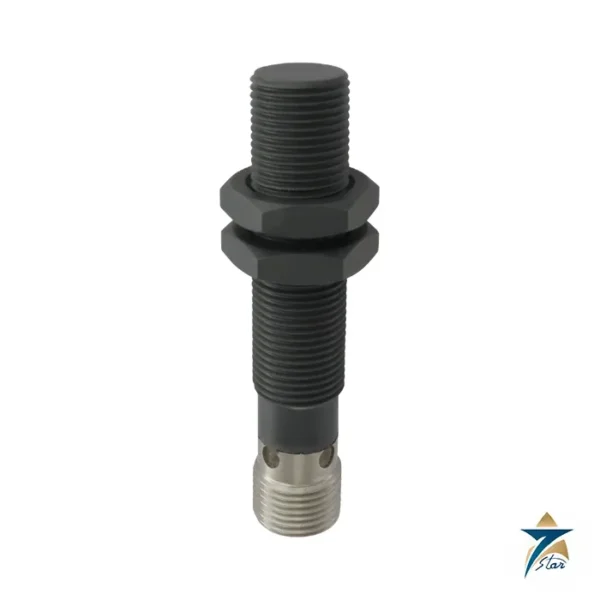
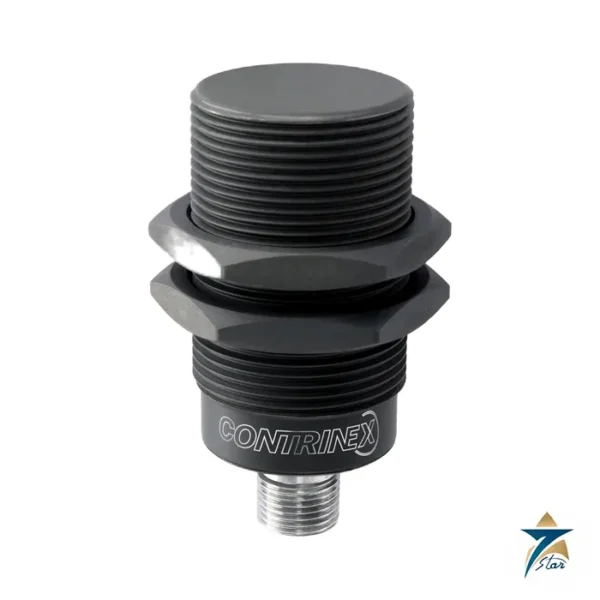
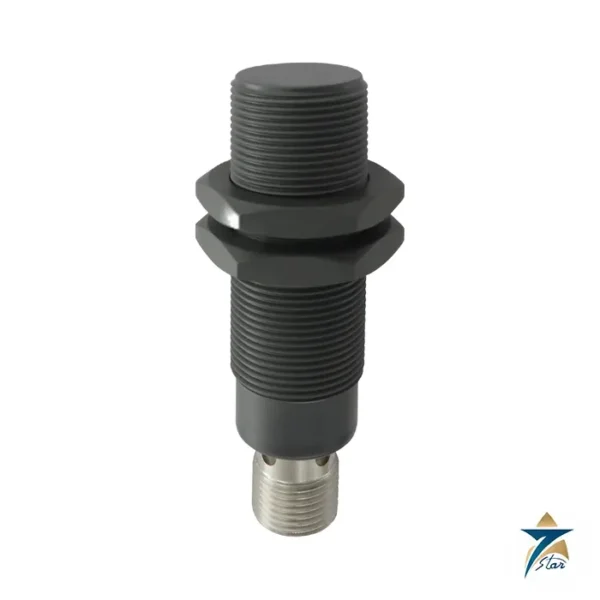
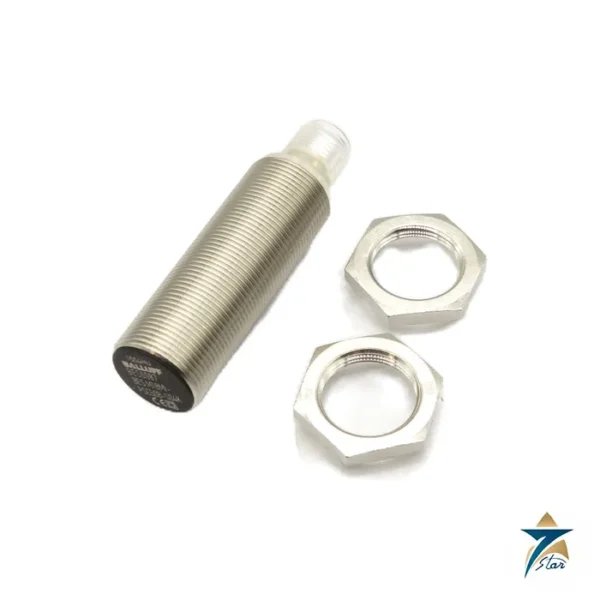
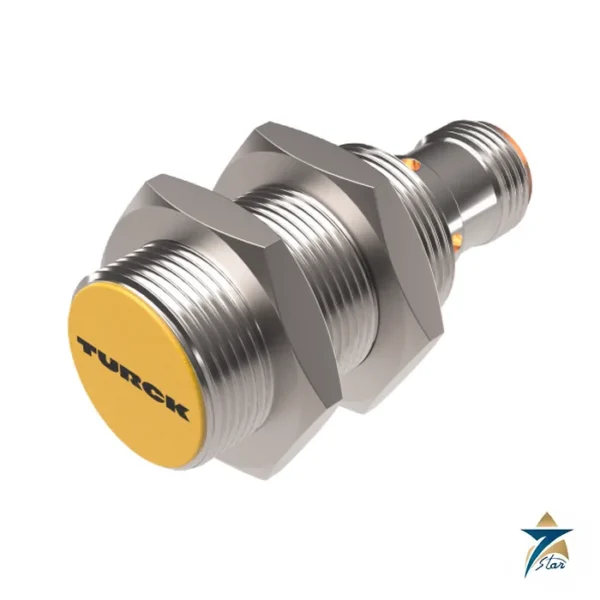
IME18-05BPSZC0S is a SICK IME inductive proximity sensor (part no. 1040934) with standard design housing, threaded M18 x 1 (Ø 18 mm), for non-contact detection of metal targets. The nominal sensing range Sn is 5 mm (safe sensing range Sa 4.05 mm), mounting is flush, and the output is PNP with nO and DC 3-wire wiring, connected through male connector M12, 4-pin.
IME sensing range, reduction factors and output
Reduction factors for other metals, as listed in the data sheet: Note The values are reference values which may vary; St37 steel (Fe) 1; Stainless steel (V2A, 304) Approx. 0.8; Aluminum (Al) Approx. 0.45; Copper (Cu) Approx. 0.4. An inductive sensor detects metal through the damping of a high-frequency field in front of its face, so it needs no contact and has no wearing parts. The nominal range Sn is quoted for a standard mild-steel target; other metals shorten the range by a reduction factor, which the data sheet lists, so aluminium or brass targets switch at a much shorter distance.
Installation type is flush, so surrounding metal may reach the face. It switches at up to 1,000 Hz, continuous current up to ≤ 200 mA, with a brass, nickel-plated housing (length 69 mm, thread length 52 mm) and a plastic, PA 66 sensing face. Supplied: mounting nut, brass, nickel-plated (2x).
Technical specifications
| Parameter |
Specification |
| Type code |
IME18-05BPSZC0S |
| Part number |
1040934 |
| EAN |
4047084257216 |
| Product family |
IME |
| Housing |
Metric |
| Housing material |
Standard design |
| Thread size |
M18 x 1 |
| Diameter |
Ø 18 mm |
| Sensing range Sn |
5 mm |
| Safe sensing range Sa |
4.05 mm |
| Installation type |
Flush |
| Switching frequency |
1,000 Hz |
| Connection type |
Male connector M12, 4-pin |
| Switching output |
PNP |
| Switching output detail |
PNP |
| Output function |
NO |
| Electrical wiring |
DC 3-wire |
| Enclosure rating |
IP67 |
| Items supplied |
Mounting nut, brass, nickel-plated (2x) |
| Supply voltage |
10 V DC … 30 V DC |
| Ripple |
≤ 10 % |
| Voltage drop |
≤ 2 V |
| Time delay before availability |
≤ 100 ms |
| Hysteresis |
5 % … 15 % |
| Reproducibility |
≤ 2 % ; |
| Temperature drift (of Sr) |
± 10 % |
| EMC |
According to EN 60947-5-2 |
| Continuous current Ia |
≤ 200 mA |
| No load current |
≤ 10 mA |
| Short-circuit protection |
Yes |
| Power-up pulse protection |
Yes |
| Shock and vibration resistance |
30 g, 11 ms/10 Hz … 55 Hz, 1 mm |
| Ambient operating temperature |
–25 °C … +75 °C |
| Housing material |
Brass, nickel-plated |
| Sensing face material |
Plastic, PA 66 |
| Housing length |
69 mm |
| Thread length |
52 mm |
| Tightening torque, max. |
≤ 40 Nm |
| MTTFD |
1,735 years |
| DCavg |
0 % |
| St37 steel (Fe) |
1 |
| Stainless steel (V2A, 304) |
Approx. 0.8 |
| Aluminum (Al) |
Approx. 0.45 |
| Copper (Cu) |
Approx. 0.4 |
| Brass (Br) |
Approx. 0.4 |
| B |
18 mm |
| C |
18 mm |
| D |
15 mm |
| F |
40 mm |
| Declarations and certificates in the data sheet |
EU declaration of conformity; UK declaration of conformity; ACMA declaration of conformity; Moroccan declaration of conformity; China RoHS; China Compulsory Product Certification (CCC) exempt; cULus certificate |
Type code IME18-05BPSZC0S and part number 1040934
In IME type codes the number after the family is the thread diameter, the next digits give the sensing range, and later letters describe output, wiring and housing. The code IME18-05BPSZC0S is a description, but the seven-digit part number 1040934 is the order key.
Other active types in the same SICK family, each with its own part number:
- IME18-05BPSZC0K (part no. 1040933)
- IME18-05BNSZC0K (part no. 1040941) – Switching output: NPN
- IME18-05BPPZC0K (part no. 1092476) – Electrical wiring: DC 4-wire, Output function: Complementary
- IME18-05BPOZC0K (part no. 1040937) – Output function: NC
- IME18-05BPOZC0S (part no. 1040938) – Output function: NC
Mounting, wiring and replacement notes
Plan for 10 V DC … 30 V DC at the terminals, IP67 enclosure protection and an operating ambient of –25 °C … +75 °C. Maximum tightening torque: ≤ 40 Nm. Confirm the PLC input type, the output function and the pin assignment of the M12 plug before ordering a replacement. Check the free-zone distances in the data sheet when sensors are mounted in pairs or next to metal.
Choosing an inductive sensor for the target and the mount
Selection begins with the target. Mild steel gives the full nominal range, but many machines detect stainless steel brackets, aluminium cams or copper parts, and the reduction factors above show how much shorter the effective range becomes. The practical switching gap should be designed inside the safe sensing range after the reduction factor is applied, which leaves margin for temperature drift and mechanical tolerance. Where the gap cannot be held tightly, for example on a rotating shaft with play, the design should favour a closer, steadier target position rather than relying on the maximum distance.
The flush design is an advantage when the sensor must sit inside a steel bracket or plate, because the face can be level with the metal without false triggering. The trade-off is a shorter range than non-flush designs of the same size, so it suits applications where protection of the sensing face matters more than distance.
Integration with PLC inputs and machine logic
A PNP, normally open output sources current to the input when a target is present, which matches the sinking inputs common on European-style PLC cards. If the controller uses the opposite logic, the sensor will not work as intended, so the input card type should always be checked. The switching frequency is high enough for counting teeth, detecting moving parts on conveyors or monitoring shaft speed at moderate rates, while the hysteresis prevents chatter when the target sits near the switching point. Typical uses include end-position detection on cylinders and slides, presence checks of metal parts, and speed or rotation monitoring.
Installation and commissioning practice
The sensor should be fixed with the supplied nuts, staying below the maximum tightening torque so the housing is not damaged. The free-zone distances in the data sheet should be respected when sensors face each other or sit side by side, otherwise mutual interference can cause unstable switching. Cables should be routed away from power wiring, and the M12 connector fully tightened so that the IP67 rating is maintained. During commissioning, the target is moved slowly towards the face to confirm switching, and the result is checked at the PLC input as well as on the sensor itself.
Service in hot, dusty and humid GCC sites
Machines in Oman and across the Gulf often run in high ambient temperatures, with dust, sand and, near the coast, salty humid air. The ambient temperature range on the data sheet should be compared with the real temperature at the mounting point, which can be higher near ovens, motors or sun-exposed steel. Inductive sensing is not affected by dust on the face in the way optical sensors are, but metal chips or swarf collecting on the face can cause false signals, so periodic cleaning is still needed. Connectors and cable entries should be inspected for corrosion and damage, especially in coastal plants.
Documents and quotation
The SICK data sheet for IME18-05BPSZC0S (part no. 1040934) is attached to this page as a PDF, exactly as SICK publishes it, so you can check it against your wiring and mounting drawings. To request a price, give us the part number, the quantity and where the goods should go, using the RFQ form. Related items are listed under Inductive Proximity Sensors. Confirm before ordering that the version matches your installation: connection, output type and ratings. The data sheet prevails over this summary.







Reviews
There are no reviews yet.