W26 IO-Link reflex sensor with BluePilot alignment aid
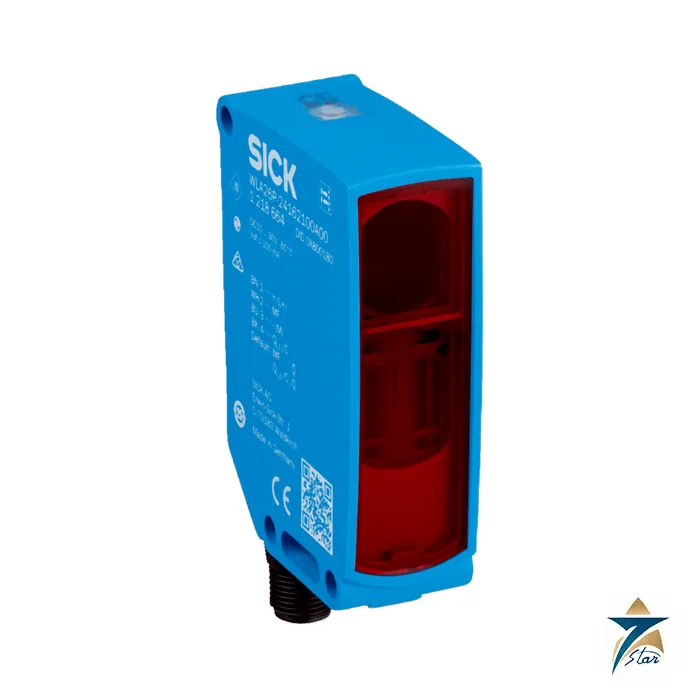
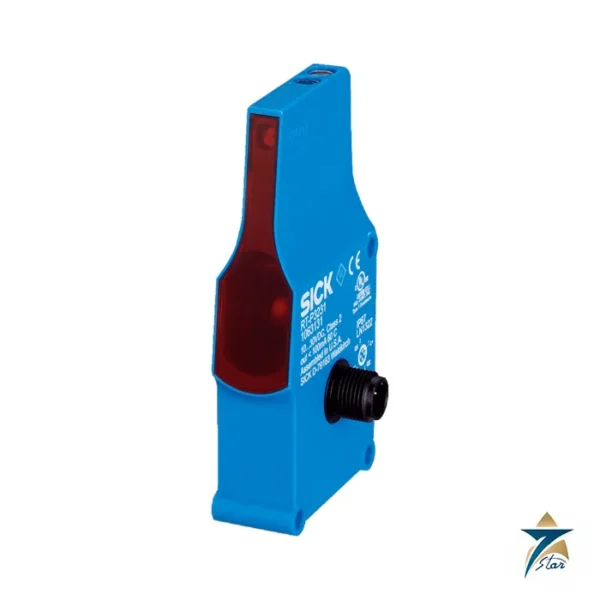
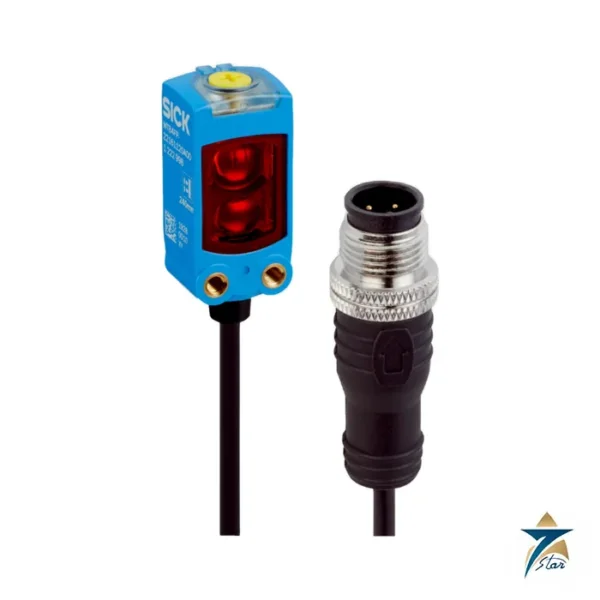
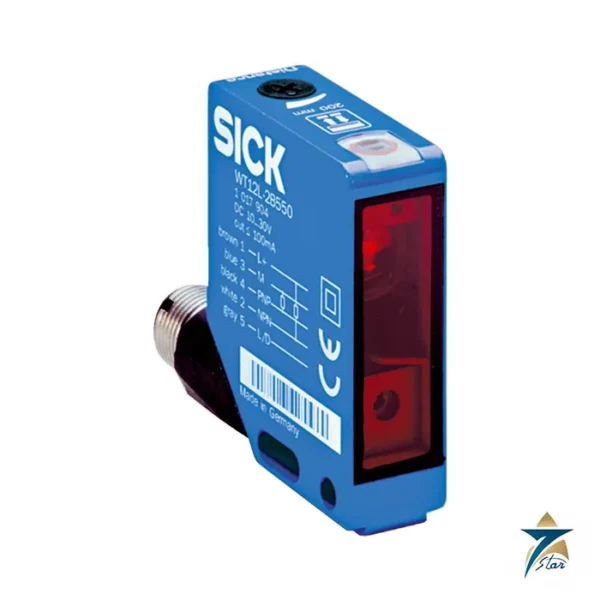
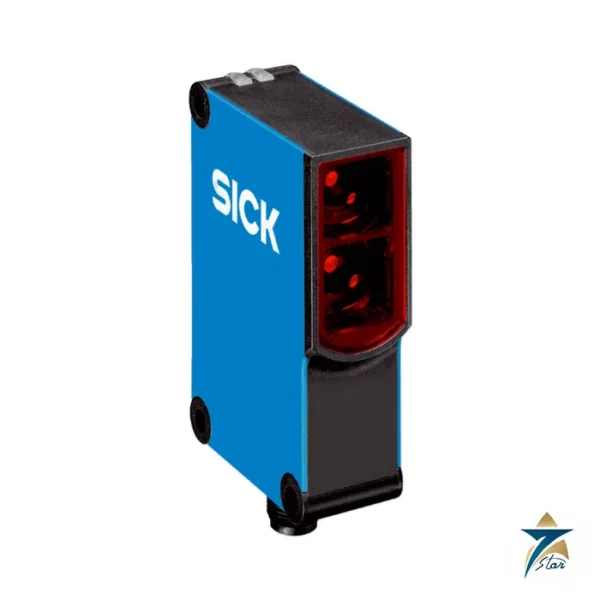
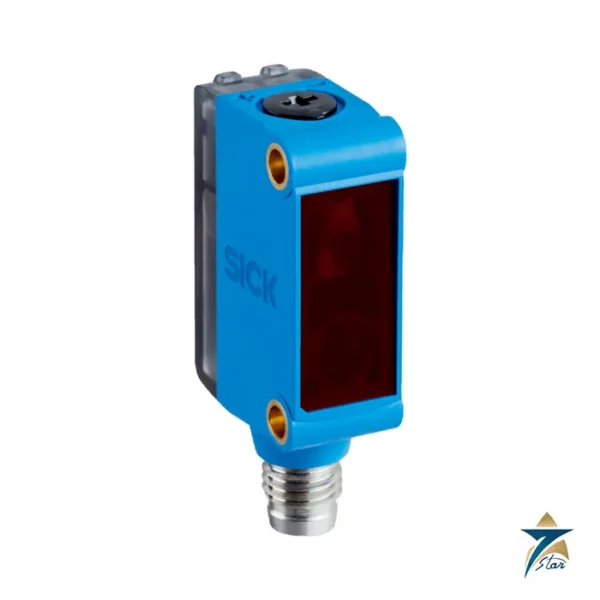
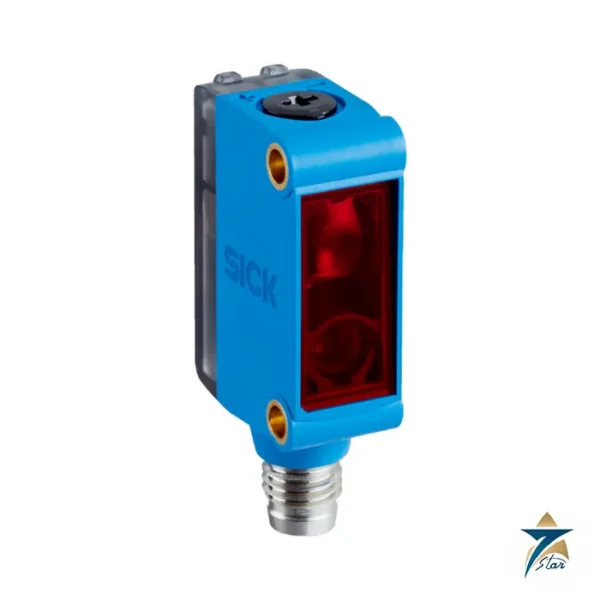
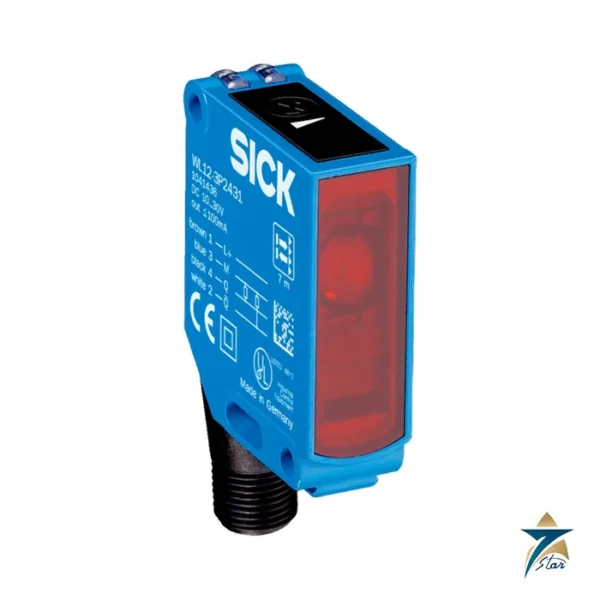
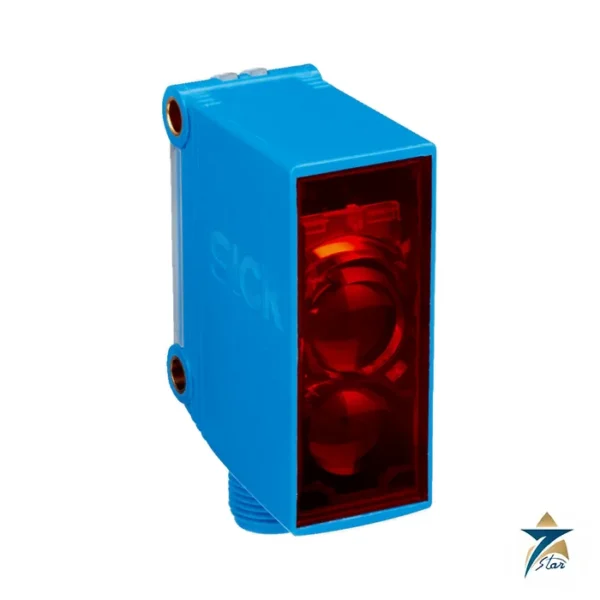
The SICK WLA26P-24162100A00 (part no. 1218664) is a W26 retro-reflective sensor with coaxial optics, polarisation filter, PinPoint LED and IO-Link V1.1. Maximum distance to the PL80A reference reflector is 18 m, with a recommended range of 0 m to 12 m for an operating reserve of 3.75. A blue BluePilot LED works as alignment aid, and the sensor delivers two complementary push-pull outputs.
Built in VISTAL plastic with an M12 4-pin plug, it is rated IP66, IP67 and IP69, handles -40 °C to +60 °C and weighs about 80 g.
Technical specifications
| Parameter |
Specification |
| Manufacturer |
SICK |
| Type / family |
WLA26P-24162100A00 / W26 |
| Part no. |
1218664 |
| Functional principle |
Photoelectric retro-reflective sensor, autocollimation (coaxial optics) |
| Max. distance to reflector |
0 m … 18 m (operating reserve 1) |
| Recommended distance |
0 m … 12 m (operating reserve 3.75) |
| Reference reflector |
PL80A |
| Polarisation filter |
Yes |
| Light source / type |
PinPoint LED, visible red light, 635 nm, free group (EN 62471) |
| Light spot size |
100 mm diameter at 10 m |
| Special application |
Detecting objects wrapped in film |
| IO-Link |
V1.1, COM2 (38.4 kBaud), cycle time 2.3 ms, 16-bit process data |
| Vendor ID / Device ID |
26 / 0x800180 (8388992) |
| Supply voltage UB |
10 V DC … 30 V DC |
| Current consumption |
30 mA max. without load at 24 V |
| Outputs |
2 complementary, push-pull PNP/NPN, 100 mA |
| Response time / switching frequency |
500 microseconds / 1,000 Hz |
| Dimensions (W x H x D) |
24.6 mm x 82.5 mm x 53.3 mm |
| Housing / front screen |
Plastic VISTAL / plastic PMMA |
| Connection |
Male connector M12, 4-pin |
| Weight |
approx. 80 g |
| Enclosure rating |
IP66, IP67, IP69 (EN 60529) |
| Shock / vibration |
50 g, 11 ms; 10 Hz … 2,000 Hz (EN 60068) |
| Ambient temperature |
-40 °C … +60 °C operation; -40 °C … +75 °C storage |
| Smart Task |
Base logics with window and hysteresis, timers, inverter |
| MTTFD |
690 years (DCavg 0 %, TM 20 years) |
Operating reserve, contamination display and IO-Link
The data sheet quotes two range figures: 18 m with operating reserve 1 (the theoretical limit) and 12 m with operating reserve 3.75, which is the recommendation for reliable operation in real conditions. The yellow LED flashes when the sensor falls below a function reserve of 1.5, and a contamination display is available through IO-Link diagnostics.
Through IO-Link you can read the switching state, adjust parameters and use Smart Task functions such as AND, OR, window and hysteresis, plus timer functions. Without an IO-Link master the sensor runs in SIO mode with push-pull outputs. Quality-of-teach and quality-of-run indicators help with preventive maintenance.
Reading the part number
Quote the full type WLA26P-24162100A00 and part no. 1218664. Several characters in the code relate to connection, optics and output options and are defined in the SICK type key; confirm the exact configuration with SICK if you need a sibling with a different cable or connector.
Choosing the WLA26P-24162100A00 for a conveyor or packaging line
A retro-reflective sensor works by sending its red PinPoint beam to a reflector and watching for the beam to be interrupted. That makes it a good match for presence checks across a conveyor, at a pallet wrapper outfeed, or at the entry to a shrink tunnel, where mounting a separate receiver on the far side would be awkward. Because this W26 variant is listed for detecting objects wrapped in film, it is a sensible choice when shiny stretch film or glossy packaging would otherwise bounce light back and confuse a simpler reflex sensor; the polarisation filter is what helps it tell the reflector apart from a glossy surface.
When sizing the gap, work from the recommended 0 m to 12 m figure rather than the 18 m limit. Keeping well inside the recommended distance leaves margin for dust on the front screen and for small shifts in bracket alignment. If the line you are equipping is wider or the reflector will be smaller than the PL80A reference, ask the manufacturer how the usable range changes before committing to a layout.
Points to settle on the drawing
- Which of the two complementary push-pull outputs your PLC card will read, and whether it expects PNP or NPN switching.
- Whether an IO-Link master is available, or whether the sensor will run in plain SIO mode.
- Where the reflector sits, and whether the beam path can be kept clear of forklift and operator traffic.
- The length and routing of the mating M12 4-pin cordset back to the junction box.
Mounting, alignment and commissioning
Fix the sensor and reflector to rigid brackets so the beam does not drift when the conveyor frame vibrates. With power applied at 10 V DC to 30 V DC, use the blue BluePilot LED to bring the beam onto the reflector, then watch the yellow indicator: if it flashes, the function reserve is below 1.5 and the alignment or distance should be improved before handover. Pass a real product, including a film-wrapped one, through the beam several times at normal line speed and confirm the PLC sees every transition.
If an IO-Link master is connected, record the parameter set once commissioning is complete. Smart Task settings such as timers, window and hysteresis can then be restored to a replacement unit quickly, and the quality-of-teach reading gives you a reference value to compare against at later inspections.
Maintenance and fault finding
Most dropouts on reflex sensors come from three causes: a dirty front screen or reflector, a bracket that has been knocked out of line, or a damaged cordset. Check them in that order. The contamination display and quality-of-run values available over IO-Link are useful here, because a gradual decline points to dirt building up, while a sudden change usually means something has moved. Clean the PMMA front screen with a soft cloth and a mild, non-abrasive cleaner rather than solvents.
Application notes for Oman and the GCC
Fine dust is the main enemy of optical sensing in warehouses and plants across the region, so plan a cleaning interval for both the sensor window and the reflector, and avoid mounting points directly below dusty transfer chutes. The IP66, IP67 and IP69 ratings make the housing suitable for wash-down areas in food and beverage plants, and the -40 °C to +60 °C operating range covers indoor production halls; where a sensor sits near a roller door, an oven or in direct sun, check that the local air temperature at the housing stays within that upper limit. In coastal sites, protect the M12 connection with a properly seated cordset so salty, humid air does not reach the contacts.
Documents and quotation
Download the manufacturer data sheet for WLA26P-24162100A00 (part no. 1218664) from this page; it is the source of every specification listed here. To request a price, send the type code and part number to Seven Star LLC, an independent supplier based in Muscat, together with the quantity and the site where the goods are needed. Please confirm before ordering that the version, connector and accessories (a reflector, bracket or mating cordset) match your drawings, because published data may change without notice. Related items can be found in sensors and transmitters and in the SICK WTB4-3 miniature photoelectric sensor.





Reviews
There are no reviews yet.