- Automation & ControlView all 2,766 products
- Automation Accessories
- AC Drives
- PLC & I/O Cards
- Industrial Communications
- Vibration Monitoring
- Controllers & Data Acquisition
- Isolator & Barrier
- Safety Switches & Guard Locking
- Motor Soft Starters
- CCTV & Security
- Encoders
- HMI Displays
- Pneumatic Cylinders
- Servo Drives
- Industrial Computers
- Machine Vision
- Automation Software
- Robotics
Brand: Endress+Hauser (E & H)
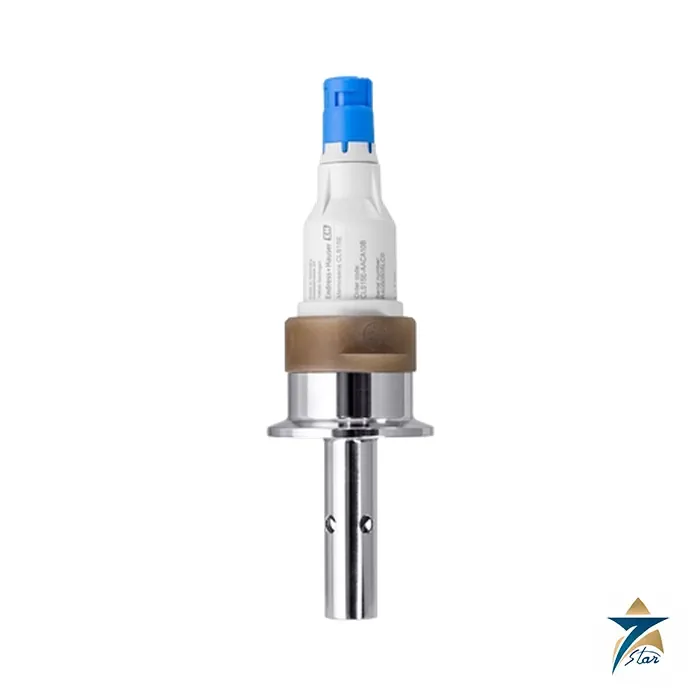
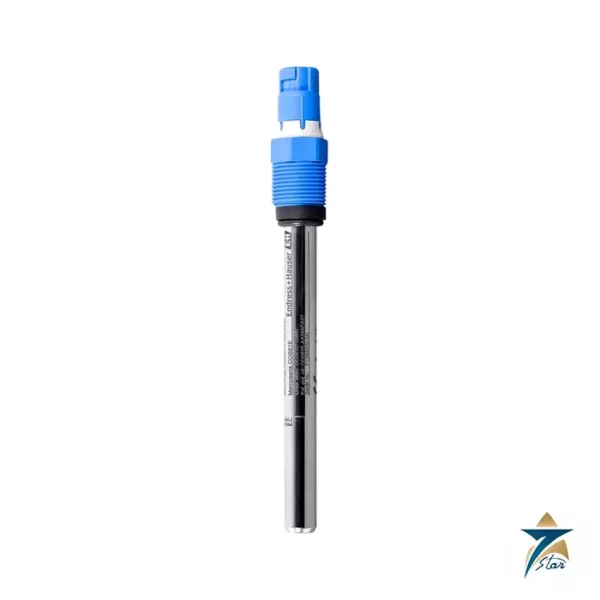
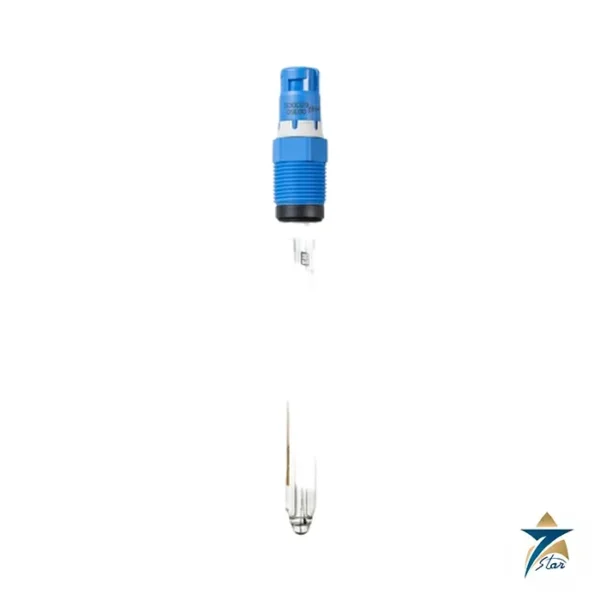
Endress+Hauser CLS15E Memosens Conductivity Sensor (Pure Water)
Description
Endress+Hauser CLS15E: Memosens conductivity for ultrapure water
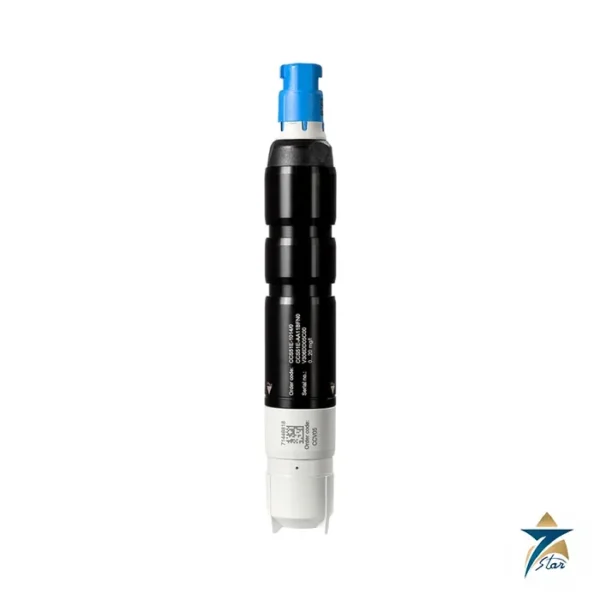
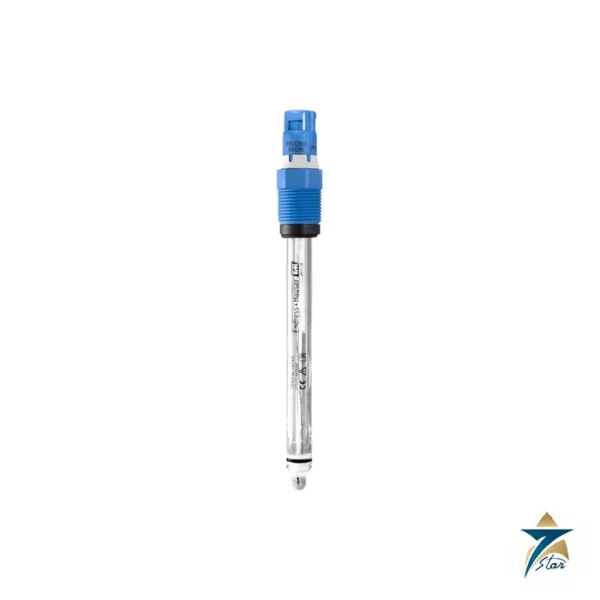
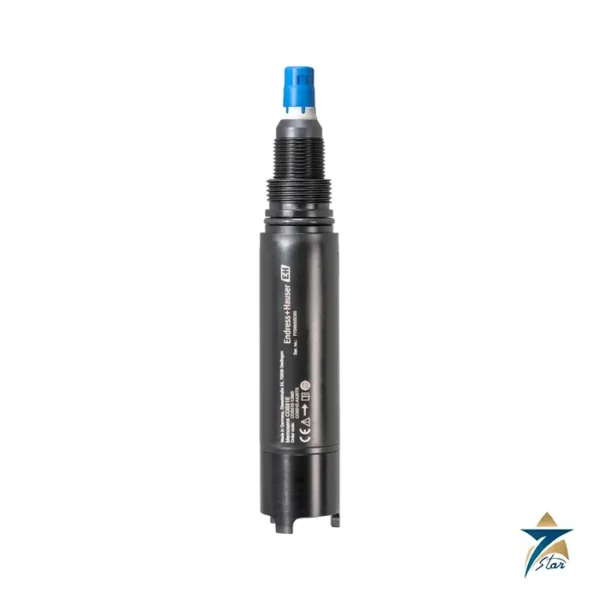
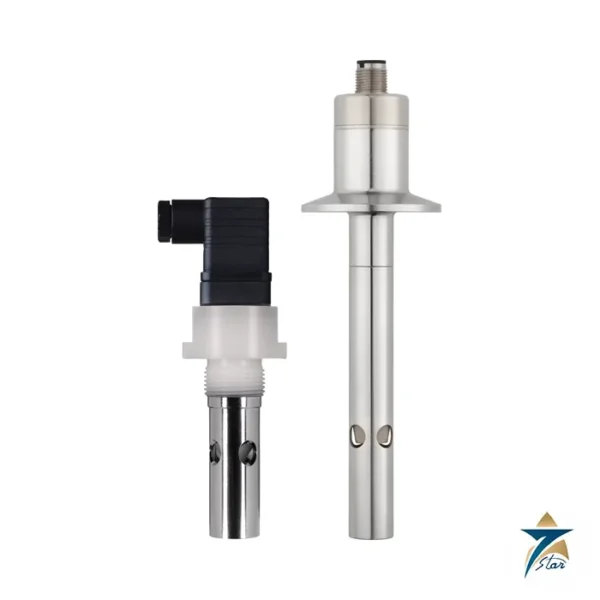
The Endress+Hauser CLS15E is a two-electrode conductivity sensor with Memosens 2.0 digital communication, made for pure and ultrapure water. It measures conductivity and temperature with a Pt1000 Class A element, so the transmitter can apply temperature compensation, and it is sold with a cell constant of either 0.01 per cm or 0.1 per cm. The datasheet lists ion-exchanger monitoring, reverse osmosis, distillation and chip cleaning as typical uses.
Power stations in the Gulf rely on high-purity water for boilers and steam cycles, and the CLS15E is the type that fits polishers, RO permeate lines and similar points where tiny changes in ion content matter.
CLS15E feature summary
- Individually measured cell constant with an inspection certificate
- Ranges: suffix A 40 nS/cm to 20 microsiemens per cm; suffix B 100 nS/cm to 200 microsiemens per cm
- Response time t95 of 2 seconds or less
- Pt1000 Class A temperature compensation (IEC 60751)
- Polished 316L electrodes, PES-GF20 shaft
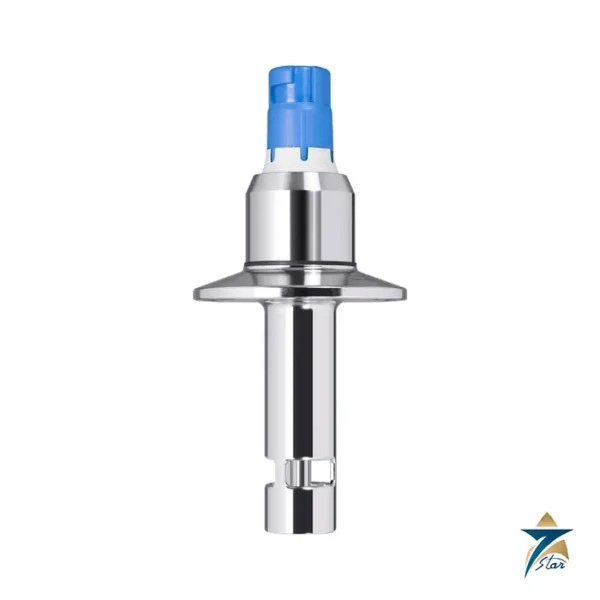
- Thread NPT 1/2 and 3/4 inch, or 1.5 inch clamp
CLS15E specification table
| Parameter | Value |
|---|---|
| Cell constant A | k = 0.01 per cm, 40 nS/cm to 20 microsiemens per cm |
| Cell constant B | k = 0.1 per cm, 100 nS/cm to 200 microsiemens per cm |
| Temperature measuring range | Minus 20 to 140 °C |
| Process temperature | Minus 20 to 120 °C normal; 140 °C for sterilization |
| Process pressure | 13 bar abs. at 20 °C; 2 bar abs. at 120 °C |
| Ambient temperature | Minus 20 to 60 °C |
| Storage temperature | Minus 25 to 80 °C |
| Electrodes | Polished stainless steel 1.4435 (AISI 316L) |
| Surface roughness | Ra 0.8 micrometre or better |
| Weight | About 0.3 kg |
| Connections | NPT 1/2 inch, NPT 3/4 inch, clamp 1.5 inch ISO 2852 |
How CLS15E differs from other conductivity sensors
Among Memosens conductivity sensors the CLS15E sits at the low end of the scale. The CLS16E has a single cell constant of 0.1 per cm and a wider 150 degree capability for hygienic fittings; the CLS21E, with k = 1.0 per cm, covers 10 microsiemens to 20 mS per cm and uses graphite; the CLS82E, with k = 0.57, spans 1 microsiemens to 500 mS per cm. Pick the CLS15E when your reading is mostly below 200 microsiemens per cm.
Where it is used in Oman and the GCC
Typical places are demineralized water plants for power and petrochemical sites, RO trains in desalination, condensate polishers, and electronics or lab water systems. A measuring point on a mixed-bed outlet is a classic use for the CLS15E.
Installation
Fit the CLS15E in a flow assembly with a short, constant flow path to avoid air bubbles, which disturb low-conductivity readings. Use a stainless-steel assembly where grounding is needed, and let the sensor equilibrate before reading.
Maintenance
Check the cell constant on a periodic basis with a conductivity standard, clean the electrodes only with agents compatible with 316L, and keep the plug-in head dry. A transmitter alarm on slow drift or a stuck value usually points to coating.
What the cell constant means for your reading
Conductivity sensors are chosen by cell constant, because the constant decides where on the scale the sensor is accurate. The CLS15E is delivered with k = 0.01 per cm (suffix A) for the very lowest conductivities, or k = 0.1 per cm (suffix B) for slightly higher values. The datasheet says every single sensor is measured at the factory against a reference system, in a solution of about 5 microsiemens per cm for the 0.01 type and about 50 microsiemens per cm for the 0.1 type, and a manufacturer inspection certificate states the individual cell constant. Enter that value in the transmitter and the loop is traceable from day one.
Because the transmitters listed for this sensor (Liquiline CM442, CM444, CM448, CM42 and CM14) can also show resistivity, plants can read the same measurement in megohm-centimetres, which is the usual unit for ultrapure water.
Process limits and sterilization
In normal operation the sensor runs from minus 20 to 120 degrees Celsius. Sterilization is allowed up to 140 degrees for a maximum of one hour, or 30 minutes on threaded versions. Pressure is 13 bar absolute at 20 degrees but falls to 2 bar absolute at 120 degrees, so check the pressure and temperature chart for your loop. The electrodes are polished stainless steel 1.4435 (AISI 316L) with surface roughness Ra of 0.8 micrometre or better, the shaft is polyethersulfone, and an EPDM O-ring is fitted on the clamp version.
Ordering and spares
State the cell constant suffix (A or B), the process connection (NPT 1/2 inch, NPT 3/4 inch or 1.5 inch clamp to ISO 2852) and the transmitter. The weight is about 0.3 kg. Keep one spare of each cell constant used on site, and file the inspection certificate with the measuring-point record. Note that the datasheet includes a REACH statement: an internal connector contains lead above 0.1 percent by weight, which poses no hazard when the product is used as designed.
Reading very low conductivity correctly
Pure-water readings are easily disturbed. Carbon dioxide from air dissolves in the sample and adds conductivity, air bubbles cut the effective cell area, and warm sample lines change the temperature rapidly. For the CLS15E, keep the sensor in a sealed flow path, avoid open drains upstream and let the Pt1000 follow the fluid temperature before trusting the reading. With a response time of 2 seconds or less at t95, the sensor itself will follow changes faster than the water temperature does.
The measuring ranges of 40 nS/cm to 20 microsiemens per cm (suffix A) and 100 nS/cm to 200 microsiemens per cm (suffix B) overlap in the region around 1 to 20 microsiemens per cm, so existing installations can choose either constant depending on the typical reading and the transmitter resolution.
Documents and quotation
The datasheet for the CLS15E is attached. Seven Star LLC is an independent supplier serving Oman and the GCC and is not affiliated with the manufacturer. Send your RFQ with CLS15E, cell constant suffix, connection and quantity.
Other Models in the Memosens Conductivity Range
Seven Star LLC supplies models from the Memosens Conductivity range in Oman and the GCC. Compare the related models below and request a quote for the one that matches your application.
| Model | Category | |
|---|---|---|
| Endress+Hauser CLS82E Memosens Wide-Range Conductivity Sensor | Liquid Analysis Sensors | View details |
| Endress+Hauser CLS15E Memosens Conductivity Sensor (Pure Water) | Liquid Analysis Sensors | You are viewing this model |
Datasheets & Documents
- Datasheet Endress+Hauser CLS15E Memosens Conductivity Sensor (Pure Water) Datasheet Download
Reviews (0)
How would you rate this product? Cancel reply
About brand
Endress+Hauser makes process measurement instruments for flow, level, pressure, temperature and liquid analysis. Georg H. Endress and Ludwig Hauser started the business in Lörrach, Germany, on 1 February 1953, first selling level meters, and the Endress+Hauser name has been used since 1957. The group is headquartered in Reinach, Switzerland, and has been wholly owned by the Endress family since 1975.
Seven Star LLC is an independent supplier listing Endress+Hauser flowmeters, level and pressure transmitters, temperature assemblies and liquid analysis products for buyers in Oman and the GCC. Instruments are matched from the full order code on the nameplate.
Endress+Hauser company profile
| Origin | Founded in Lörrach, Germany, on 1 February 1953 by the Swiss engineer Georg H. Endress and Ludwig Hauser |
|---|---|
| Headquarters | Endress+Hauser AG, Reinach (Basel-Landschaft), Switzerland |
| Ownership | Family owned; the Endress family has been the sole shareholder since 1975, and a family charter commits the company to stay family owned |
| Size | About 16,500 employees and sales of about EUR 3.7 billion (2023, as reported by the company) |
| Product families | Proline flowmeters, Micropilot and Levelflex radar, Liquiphant switches, Cerabar and Deltabar pressure, iTEMP and iTHERM temperature, Liquiline and Memosens liquid analysis |
Milestones
- 1953: Georg H. Endress and Ludwig Hauser start the business in Lörrach on 1 February, first selling level meters.
- 1957: The Endress+Hauser name comes into use.
- 1975: The Endress family becomes sole shareholder.
- 2023: About 16,500 employees and sales of about EUR 3.7 billion, as reported by the company.
Endress+Hauser product lines
| Line | Measuring principle | Typical use |
|---|---|---|
| Promass F 300, Promass 80F, 83F/84F | Coriolis mass flow | Direct mass flow and density of liquids and gases, hydrocarbon transfer and chemical dosing |
| Promag P 300, P 500, H 300, W 400, W 10, 50P | Electromagnetic flow | Water, wastewater, slurries and other conductive liquids |
| Prowirl F 200, 72F | Vortex flow | Steam, gas and low-viscosity liquids |
| Prosonic Flow 92F, t-mass 65F | Ultrasonic and thermal mass flow | Water lines; compressed air and industrial gases |
| Micropilot FMR62, FMR67, FMR60, FMR10B, FMR20, FMR50, FMR52 | Free-space radar level, 80 GHz and 26 GHz | Tanks, process vessels, silos and open water channels |
| Levelflex FMP51, FMP50, FMP54, FMP55 | Guided wave radar level | Level and interface in vessels, separators and bypass chambers |
| Liquiphant FTL51, Prosonic S FMU90 | Vibronic point level; ultrasonic level | High and low level alarms, pump protection, open channel flow |
| Cerabar PMC71B, PMP51B, PMP71, Deltabar PMD78B, PMD75 | Pressure and differential pressure | Process pressure, hydrostatic level and DP flow |
| iTEMP TMT82, TMT162, iTHERM TM101, TR66, TR10 | Temperature transmitters and thermometers | RTD and thermocouple points with thermowells |
| Liquiline CM444, CM442, Memosens CPS11E, Stamolys reagents | Liquid analysis | pH, ORP, conductivity, dissolved oxygen and nutrient analysis in water treatment and process |
Where Endress+Hauser instruments are used
In Oman and the GCC, Endress+Hauser instruments are common in oil and gas production and processing, refineries and petrochemicals, desalination and water networks, wastewater treatment, power plants and food and beverage plants. Coriolis meters measure hydrocarbon and chemical flows, electromagnetic meters cover water and wastewater, radar transmitters handle tank and silo level, and Liquiline analysers monitor water quality. Proline 300 and 500 flowmeters include Heartbeat Technology for in-situ verification, which reduces the need to remove a meter for checks.
Ordering Endress+Hauser instruments: what we need
The order code on the nameplate (for example PMP71-1QA1S11RDADU) defines every option: measuring range, process connection, materials, output, approvals and display. Send it with the serial number; Endress+Hauser can retrieve the original configuration from the serial number. For a new instrument add the medium, operating and design pressure and temperature, range, line size or tank geometry, process connection, wetted materials, output or protocol (4-20 mA HART, PROFIBUS, FOUNDATION Fieldbus, Modbus) and the hazardous-area approval required. Older models such as Promass 80/83 or Micropilot M are replaced by current Proline or 80 GHz Micropilot devices.
Facts checked against Endress+Hauser company history and product information, October 2026.
Browse Endress+Hauser products by category: Flowmeters, Level Transmitter, Pressure Instrumentation, Temperature, Liquid Analysis Sensors, Liquid Analytical Systems.
FAQ
Questions about the Endress+Hauser CLS15E Memosens Conductivity Sensor
Answers from our engineering team on installation, compatibility and integration.
01What cell constants does the CLS15E have?
It is available with k = 0.01 per cm (suffix A) or k = 0.1 per cm (suffix B), each measured and certified individually.
02What conductivity range does CLS15E cover?
Suffix A covers 40 nS/cm to 20 microsiemens per cm, and suffix B covers 100 nS/cm to 200 microsiemens per cm.
03Can the CLS15E be sterilized?
Yes, up to 140 °C for a maximum of 1 hour, or 30 minutes for threaded versions.
04What process connections does the CLS15E offer?
NPT 1/2 inch and 3/4 inch threads, or a 1.5 inch clamp per ISO 2852.
05Which transmitters work with the CLS15E?
Liquiline CM442, CM444, CM448, CM42 and CM14, which also apply temperature compensation and can display resistivity.


Reviews
There are no reviews yet.